What does it mean when you see a string of lights in the sky?
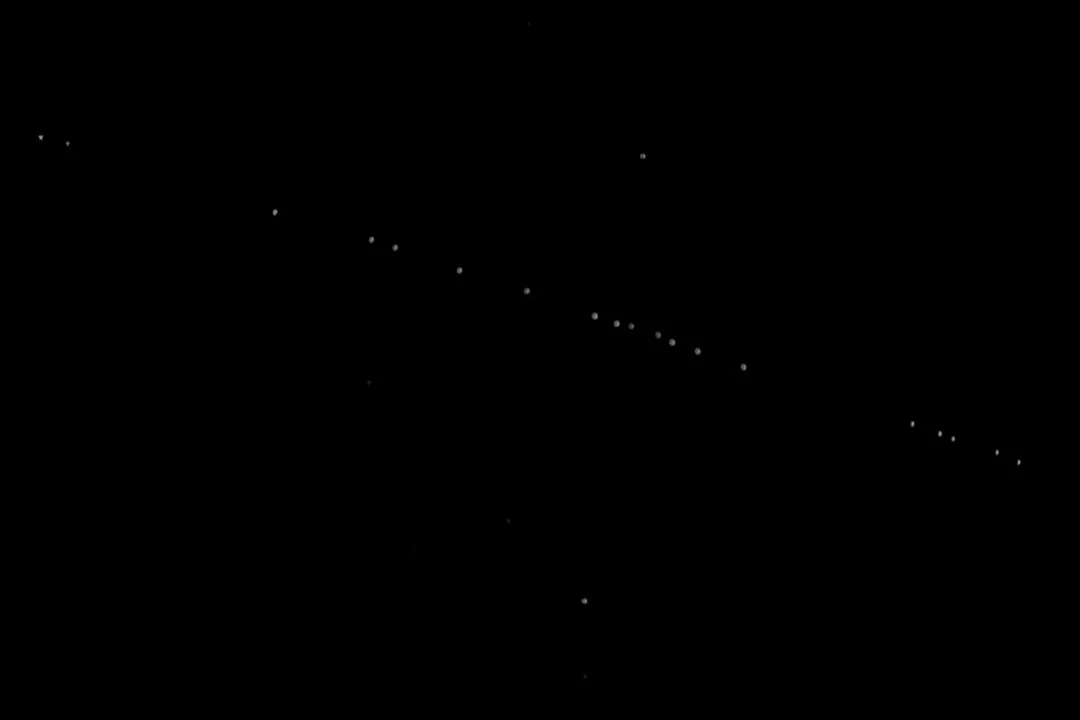
Seeing a long, unwavering string of lights marching silently across the night sky can be a genuinely arresting experience. For those unfamiliar with orbital mechanics or modern satellite deployments, the immediate reaction often leans toward surprise, confusion, or even a touch of alarm, leading many to share their sightings online seeking answers. [2][3][9] While the human imagination naturally turns to possibilities like secret military tests or, indeed, unidentified aerial phenomena, the vast majority of these phenomena have a concrete, scientific explanation tied directly to the growing infrastructure in low Earth orbit. [4]
# Satellite Trains
The most frequent cause for a clear, linear procession of lights appearing simultaneously is a launch from SpaceX’s Starlink mission. [5][6][9] When a batch of these small satellites is deployed from the Falcon 9 rocket, they are placed into an initial, tightly packed formation, often referred to by observers as a "train". [5] This visual characteristic—a neat line of bright dots moving in unison—is what distinguishes them from the more common, sporadic sightings of individual, isolated satellites or satellites that have already spread out across their operational orbits. [5]
These are not singular events; the sheer volume of launches means that these "trains" become a relatively regular occurrence depending on the launch schedule and local visibility conditions. [6] When you witness this formation, you are essentially watching dozens of newly launched satellites moving together before their onboard propulsion systems engage to push them farther apart into their final, operational slots. [5] It’s this initial post-deployment phase that creates the dramatic visual line, as they have not yet had time or impetus to disperse widely across the sky. [5]
# Viewing Conditions
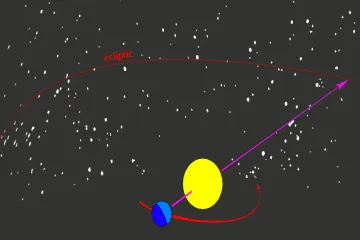
The reason these lights are often seen specifically in the hours shortly after sunset or just before sunrise is due to a trick of geometry involving the Sun. [5][6] For ground observers, the sky needs to be dark enough for the lights to be visible against the black backdrop. However, for the satellites to reflect sunlight brightly toward the observer, they must still be high enough in the atmosphere to be illuminated by the Sun, which has already set or has yet to rise for the person watching on the ground. [6] This twilight window is critical for catching the brightest and most cohesive "trains". [5] If the satellites are too high, they will remain lit for longer, but if you miss that prime window, the difference in orbital position and separation will quickly make the line look less distinct or render them completely invisible to the naked eye.
For instance, a sighting reported in one region noted the lights appearing around 9:15 PM local time, while those in a different time zone might have seen the same deployment an hour or so later, showcasing how geography dictates the exact time you catch the display. [9] Conversely, if you see a steady line of lights that seems to be moving very slowly or drifting aimlessly, it is less likely to be a new Starlink deployment and more likely something tethered, like a series of large party balloons or even paper lanterns, which move with the wind rather than in a predictable orbital path. [4]
# Differentiating Objects
While Starlink is the leading explanation for a distinct string, it is important to consider what else might create a similar effect, though typically less uniform. Conventional aircraft, for example, often fly in formation, but they usually have blinking navigation lights, often red or green, and their movement is rarely a perfect, continuous line extending across a vast portion of the sky like a satellite train. [4]
Meteors or fireballs, on the other hand, are transient; they burn up quickly and streak across the sky rapidly, leaving no sustained light pattern. [4] Drones, especially those flown in groups, can create a pattern, but they are generally much lower, slower, and often display colored navigation lights, unlike the steady, white points of light characteristic of satellites. [4]
One way to quickly assess the situation during a sighting is to judge the uniformity of movement. If the lights all appear to move at the exact same velocity and direction, maintaining their relative spacing, it strongly suggests a single orbital object or objects deployed together, like the Starlink satellites. [5] If the objects appear to wink out one by one after a short duration, it could be a different, less common type of release, but the sustained, uniform march points almost exclusively to a recent satellite deployment. [6]
If you are trying to confirm a sighting immediately, knowing the general trajectory and time of your observation can be key. Before you even begin searching online, take note of whether the line was moving East to West or North to South, and how long the entire string took to pass a recognizable landmark, like a large tree or building. A transit time measured in minutes, rather than seconds, usually eliminates meteors and points strongly toward orbital traffic. [5]
# Tracking Sightings
Fortunately, the widespread nature of these modern satellite constellations means that tools have developed specifically to help observers identify what they are seeing. Websites and smartphone applications are now dedicated to tracking the visibility of Starlink trains. [5] These trackers use publicly available orbital data to predict when and where the next visible passes will occur based on an observer's location. [5]
When using these services, inputting the general direction the lights were traveling and the approximate time of the sighting allows for a high degree of confirmation. If the predicted path and time for a Starlink pass on that date align almost perfectly with what you witnessed, the case is closed. [5] This ability to cross-reference a visual event with computational orbital models is a significant advancement over previous generations of unexplained aerial sightings, providing a layer of empirical verification for what was once purely anecdotal. [5]
# Public Response Analysis
The appearance of these bright, unannounced lines has generated significant discussion across social media platforms, demonstrating how quickly a common celestial event can be interpreted through various lenses. [2][3] On platforms like Reddit and Facebook groups dedicated to local sightings, posts frequently surface immediately following a major launch visibility window. [2][3] While many users quickly offer the correct Starlink explanation, others express awe or confusion, occasionally mentioning that the lights looked "too organized" to be natural or conventional aircraft. [2]
What's interesting in reviewing these public discussions is the rapid pivot in sentiment. Initially, there is often confusion bordering on anxiety, especially if the viewer is not familiar with the technology. [3] However, once one or two knowledgeable members of the community provide the SpaceX context and point toward a tracking website, the general consensus quickly shifts toward acceptance and fascination with the technology itself. [2][6] This community-driven verification process often happens much faster than official reporting, illustrating a modern form of public information dissemination where crowdsourcing quickly resolves initial mystery. It shows that when new phenomena enter the public eye, the shared experience compels rapid, if informal, knowledge exchange among strangers online. [3]
#Videos
Starlink satellites, the string of lights in the night sky. - YouTube
What was the string of lights in the sky over the Youngstown area ...
Related Questions
#Citations
Starlink satellites, the string of lights in the night sky. - YouTube
Saw a huge string of lights in the sky? Anyone else? : r/Virginia
What are lights moving across the night sky? - Facebook
People report line of lights in the night sky - WGAL
Starlink satellite train: how to see and track it in the night sky - Space
What Are Those Strange Moving Lights In The Night Sky? Elon ...
See a line of lights in the sky tonight? Here's what they were
Did you see the string of lights in the sky? - KELOLAND.com