What is a bright light in the sky at night?
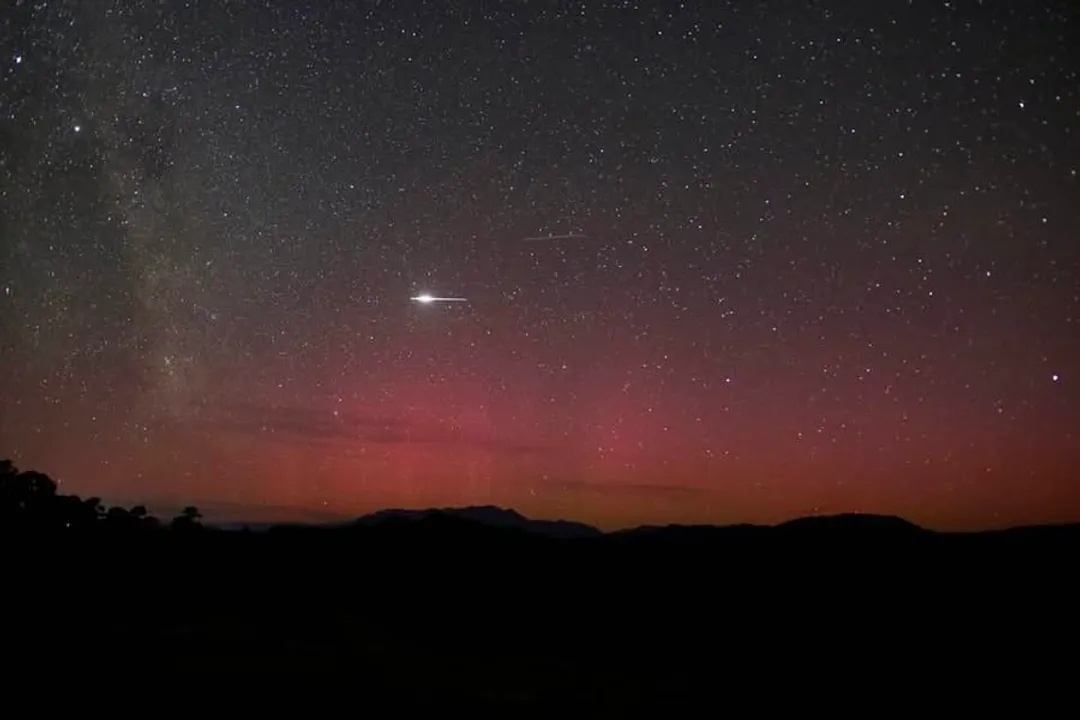
Seeing a brilliant, unmoving light hanging in the night sky can certainly prompt a moment of pause, or even confusion, especially when you are used to the general darkness away from city glow. What you are observing is rarely a single phenomenon; the possibilities range from very near neighbors in our own solar system to fleeting visitors from space, or even phenomena caused by our own planet’s interaction with the sun. [5] To make sense of that bright spot, it helps to categorize what you saw based on its behavior: stationary versus moving, flickering versus steady, and duration.
# Planetary Glow
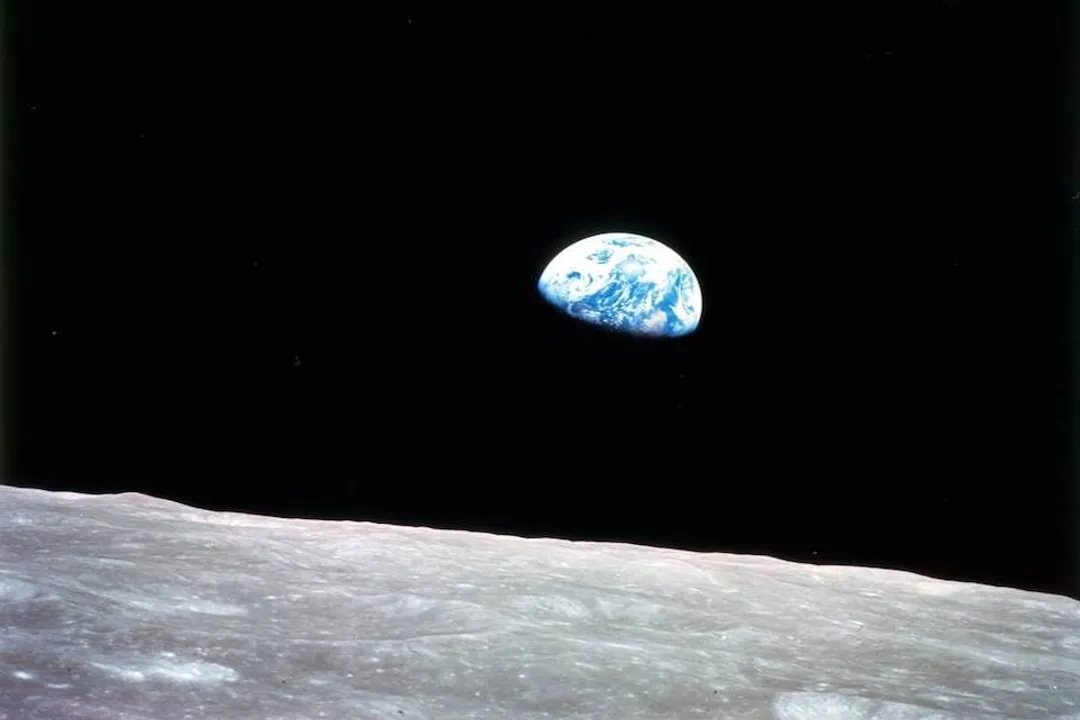
One of the most common explanations for a consistently bright, stationary light is a planet. [7] While we often think of planets as being distant, several of them are close enough and possess surfaces that reflect sunlight brilliantly, making them appear far brighter than the average star. [4]
Venus is frequently the culprit behind the most spectacular sightings. Often called the "Morning Star" or "Evening Star," Venus is the brightest natural object in the night sky after the Moon. [4] Its brightness can be so pronounced that it sometimes seems to float, rather than twinkle, distinguishing it from true stars. [4] Jupiter is another strong contender, known for its steady, intense glow. [4] Mars, while sometimes appearing reddish, can also be extremely bright during favorable oppositions. [4]
When looking up, it is helpful to note the light’s behavior. Stars generally appear to twinkle due to the distortion caused by Earth's atmosphere moving the starlight slightly as it travels. [5] A planet, being much closer and appearing as a small disk rather than a single pinprick of light, experiences less of this atmospheric turbulence across its surface, resulting in a much steadier, non-twinkling light. [5] If the bright object remained perfectly fixed in position relative to the background stars over the course of an hour, and maintained a pure, steady brilliance, you were almost certainly looking at one of the visible planets: Venus, Jupiter, Mars, Saturn, or Mercury. [4] It is a simple check—if the object doesn't move relative to the constellations over a few hours, look up current planetary positions for that date. [4]
# Terrestrial Travelers
If the light is moving, the next category to consider involves objects closer to Earth or within the atmosphere, primarily aircraft and satellites. [5]
Aircraft lights are usually recognizable because they flash different colors—red, green, and white—and their movement across the sky is often relatively slow and predictable, tracing paths between airports. [7] However, if the object is very high up or seen at a distance where the navigation lights are less distinct, a bright, steady white light could be mistaken for a star or planet if it is moving slowly enough or if the observer is looking directly toward it. [5]
Satellites, on the other hand, follow predictable orbital paths and typically move quite quickly across the sky. [5] While many are too small or dark to see, a satellite passing overhead that is catching the sun’s light—even after sunset on the ground—can appear as a brilliant, slow-moving point of light. [5] These objects generally maintain a steady path and brightness until they move into the Earth's shadow, at which point they disappear quite suddenly. [5] Occasionally, people report lights that appear to be moving upward constantly. [3] While unusual for typical low-Earth orbit satellites, this motion could describe a high-altitude balloon reflecting light or perhaps an object ascending through a viewing window, though identifying such specific upward motion without more data remains challenging. [3]
It’s worth noting that historically, certain satellite constellations, like the Iridium satellites, were famous for causing incredibly bright, brief "flares" when their large, flat antenna panels perfectly reflected sunlight toward Earth. [5] While the Iridium constellation has been largely replaced by newer models that minimize these flares, any large, highly reflective object orbiting Earth can create a brief, stunning flash. [5]
When you consider your local environment, the perceived brightness is often exaggerated by light pollution. In areas where the natural night sky is obscured by city lights, only the absolute brightest objects—Venus, Jupiter, or the International Space Station (ISS)—will be visible, making their presence feel much more dominant and singular than they might appear from a very dark location. [1] This local context means that an object easily overlooked elsewhere becomes the singular, bright focus of your attention at home.
# Atmospheric Visitors
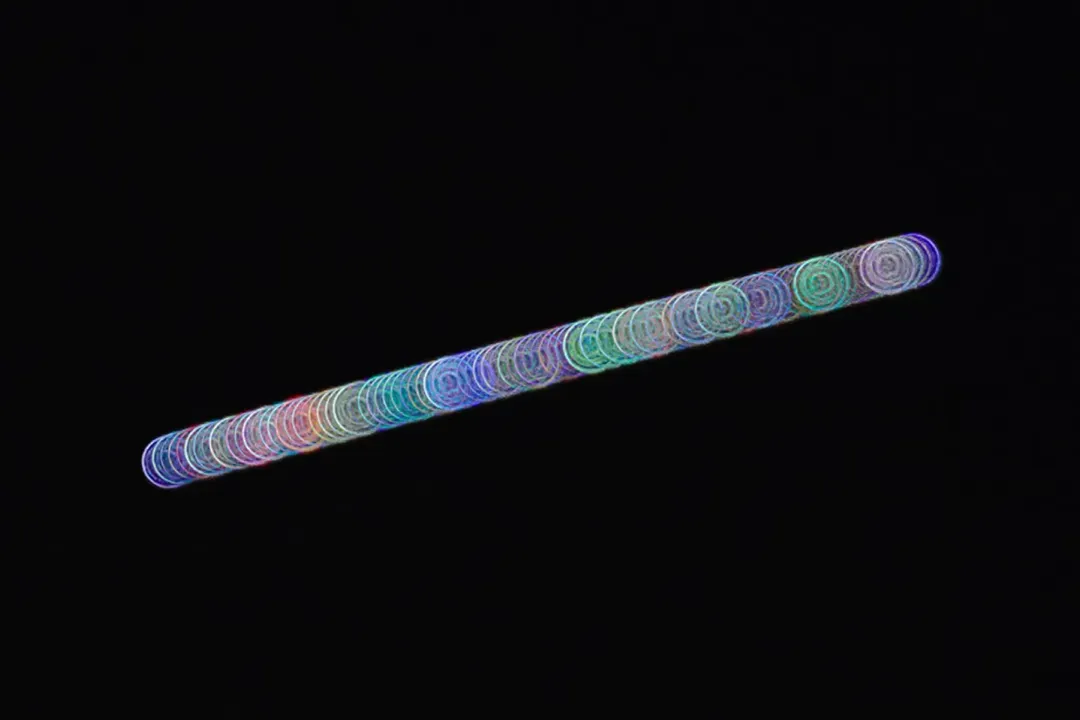
Not all bright lights originate from predictable orbits or distant worlds. Some are brief, fiery phenomena occurring within or just entering our atmosphere.
Meteors, commonly known as shooting stars, are characterized by their extreme speed. They appear as a streak of light that lasts only a second or two before vanishing. [5] A particularly large meteor, called a bolide, can be intensely bright, sometimes momentarily outshining Venus, though this is a very short-lived event. [2][5]
The observation of mysterious, bright flashes that seem to baffle observers and even astronomers presents a different puzzle. [2] These are not the quick streaks of a typical meteor. Some reports describe sudden, intense light bursts that don't fit known patterns of satellites or space debris re-entry. [2] While some of these peculiar events have later been attributed to things like meteors breaking up high in the atmosphere or even terrestrial lighting reflecting off high clouds, a small percentage of these unexplained bright flashes remain subjects of scientific curiosity. [2] They are fundamentally different from the steady glow of a planet or the slow transit of a satellite.
# The Earth's Own Radiance
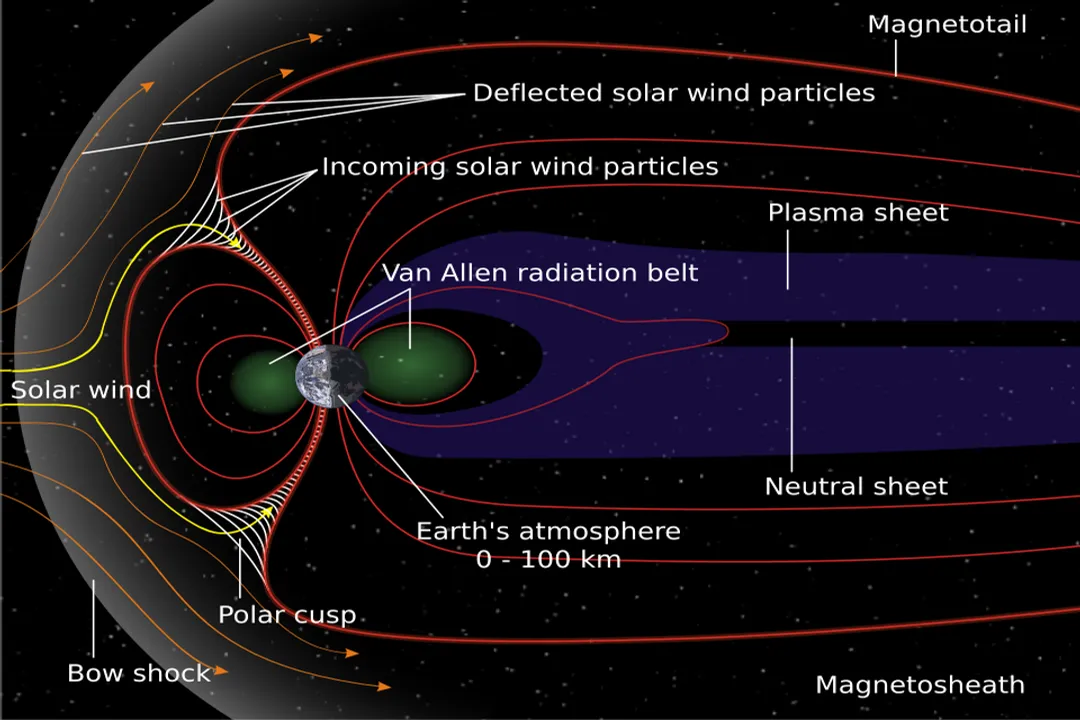
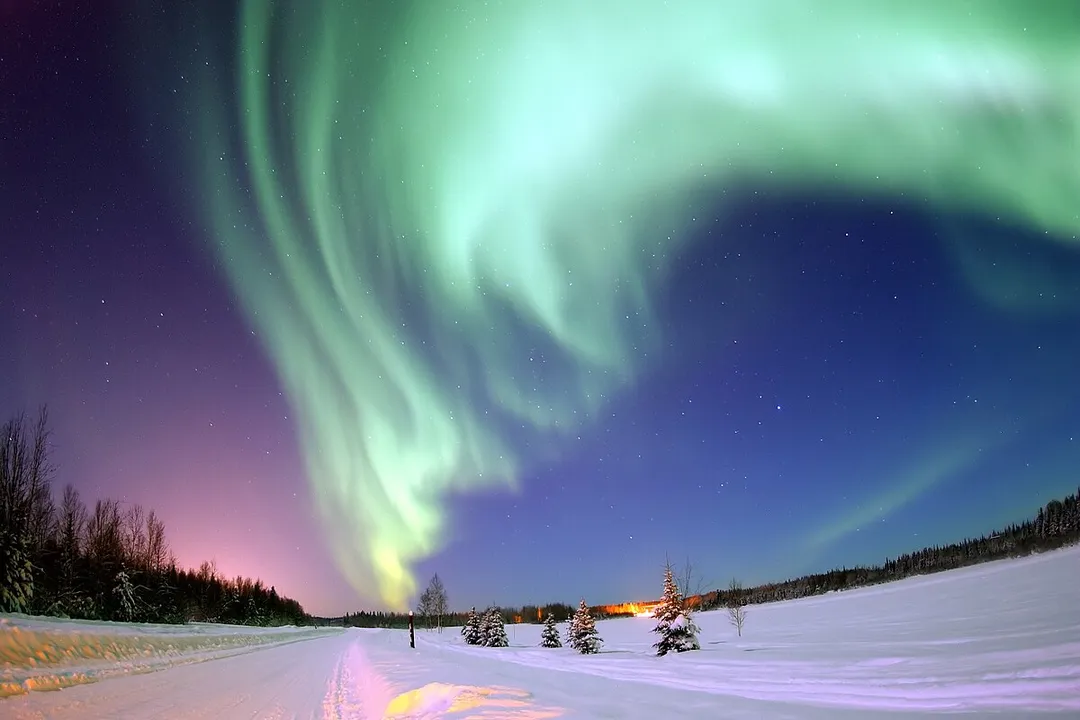
A less common sighting, but one that produces massive, diffuse lights, involves the aurorae—the Aurora Borealis in the North and the Aurora Australis in the South. [8] These are not point sources of light, but rather shimmering curtains or arcs of color, typically green, but sometimes showing reds or purples. [8] They are caused by energetic particles from the solar wind colliding with gases in the Earth's upper atmosphere, exciting those atoms to emit light. [8] For someone living at a very high latitude, an aurora could certainly be described as a massive, bright light show dominating the sky, though it wouldn't be confused with a single, tiny point of light unless it was a very faint, distant glow. [6][8]
# Classification Checklist
To move from speculation to probable identification, a systematic approach to observing the light is required. The difference between a planet and a satellite often hinges on subtle details of motion and appearance. [5]
Here is a simple comparison to help classify the sighting:
| Characteristic | Typical Planet (e.g., Venus) | Typical Satellite (e.g., ISS) | Meteor (Shooting Star) |
|---|---|---|---|
| Movement | Stationary relative to background stars | Moves steadily across the sky | Very fast streak, transient |
| Twinkling | Steady, non-twinkling glow | Steady, non-twinkling point | No time to judge twinkling |
| Duration | Visible for hours, all night | Visible for a few minutes | Less than two seconds |
| Color | Often pure white or yellowish | Usually white, sometimes reflecting sun color | Can be very bright white/green/red |
If you witness a light that appears to move up consistently over a few minutes, as some observers have noted, it is very important to document the direction and speed. Objects that are rapidly ascending or descending might be aircraft ascending through a lower layer of airspace or even a high-altitude balloon, though the latter are usually less brilliant than planets or well-lit satellites. [3] If you suspect you've seen something highly unusual, documenting the exact time, location (using a compass or an astronomy app), and apparent magnitude (brightness) provides valuable data that can be cross-referenced later with space agency tracking data or historical atmospheric event logs. [2] A bright, stationary object is almost always a planet, while a steady mover is usually artificial, and anything flashing or streaking is atmospheric or orbital debris burning up. [5]
#Videos
What's up with the lights in the night sky? - YouTube
Related Questions
#Citations
What Is That Stationary Bright Light in the Sky All Night? It Never ...
Mysterious Bright Flashes in the Night Sky Baffle Astronomers
What is this bright light in the night sky? It seems to be moving up ...
Visible planets and night sky guide for December and January
What's up with the lights in the night sky? - YouTube
What was the bright object I saw in the sky last night?
What is the bright light in the night sky, satellite, plane or ISS?
People report line of lights in the night sky - WGAL
Aurora - Wikipedia