Why is the sky still bright after sunset?
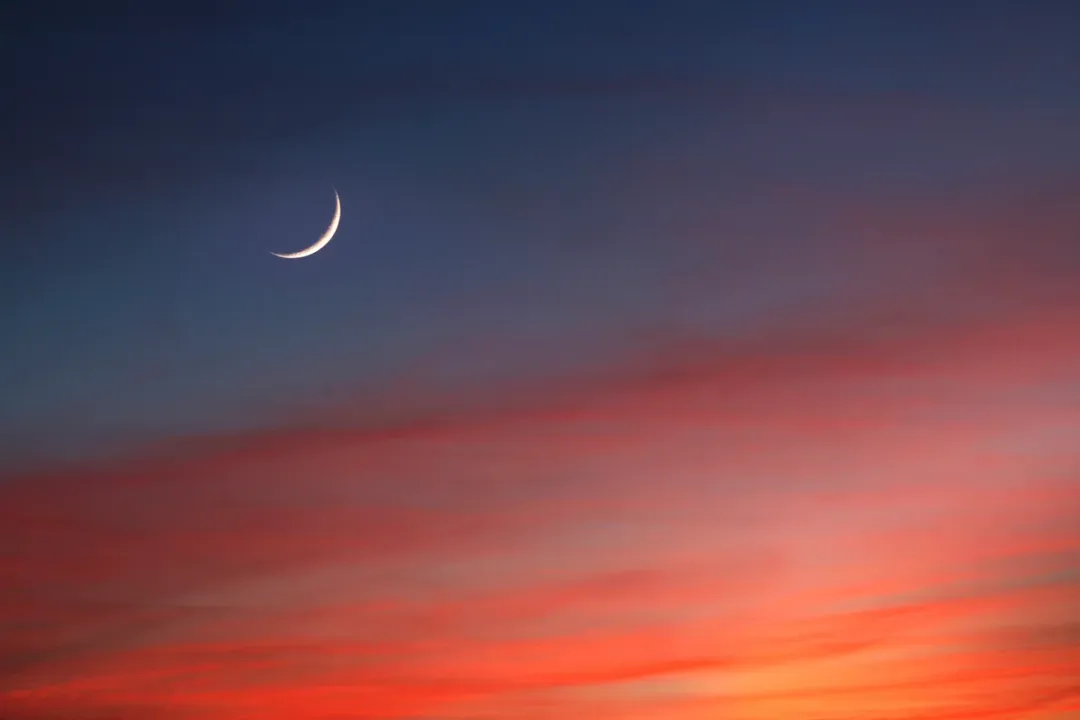
The sky doesn't simply switch off the moment the upper rim of the Sun dips below the visible horizon. That persistent illumination we observe for a period afterward, sometimes quite intense, is a direct consequence of how light interacts with our atmosphere, a phenomenon we generally group under the term twilight. [1][2] When we say the Sun has "set," we are usually referring to the moment it crosses the geometric horizon—the line where the Earth’s curve blocks our direct view of the solar disk. [6] However, the Sun’s light doesn't stop traveling; it continues to illuminate the higher layers of the atmosphere above us, which then scatter that light down toward the ground. [1][3]
# Geometric Shift
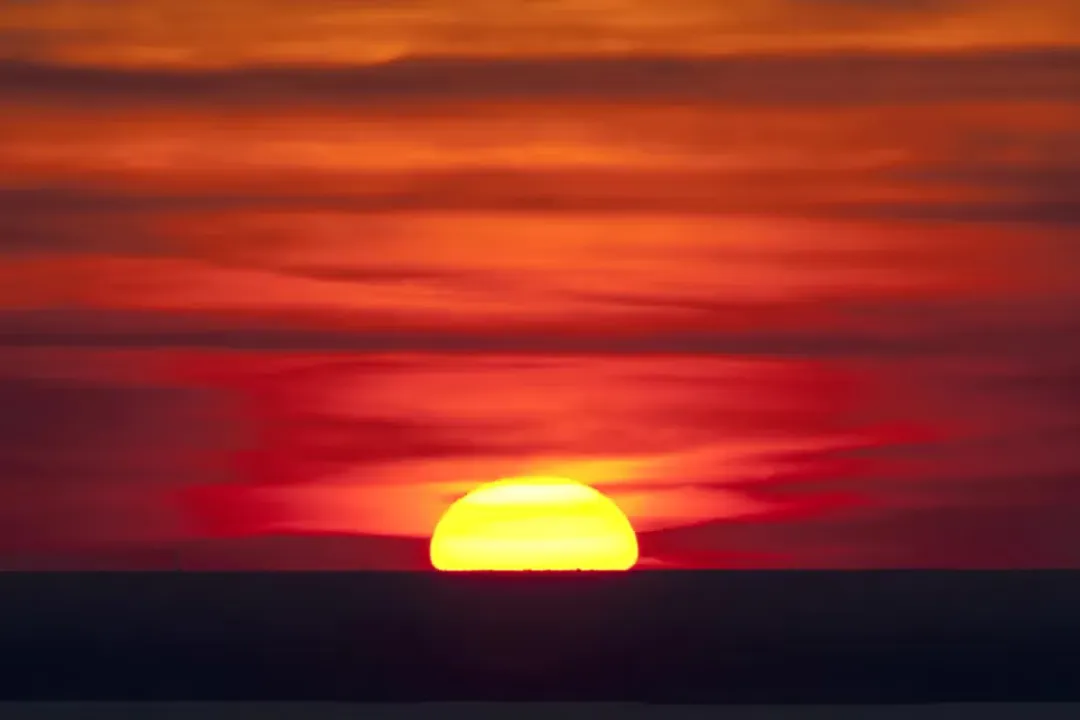
The primary reason the sky stays bright is simple geometry combined with atmospheric composition. Earth’s atmosphere acts like a vast, spherical diffuser. [5] Even though the Sun is physically below the horizon from our perspective, the light rays still have a long distance to travel through the upper atmosphere before they are completely blocked from reaching our location. [2] Imagine shining a flashlight onto a ceiling in a room; if you drop the flashlight below the line of sight of a camera aimed at the ceiling, the ceiling remains illuminated for a time because the light is still hitting it from an angle. [1] The atmosphere is doing the same thing, acting as a screen catching the sunlight that is no longer reaching us directly. [6]
This scattered light is what maintains the overall brightness, though its quality changes rapidly as the Sun sinks lower. [4] This transition period, where the Sun is below the horizon but still significantly affecting the sky's appearance, is formally categorized into distinct stages of twilight. [10]
# Twilight Stages
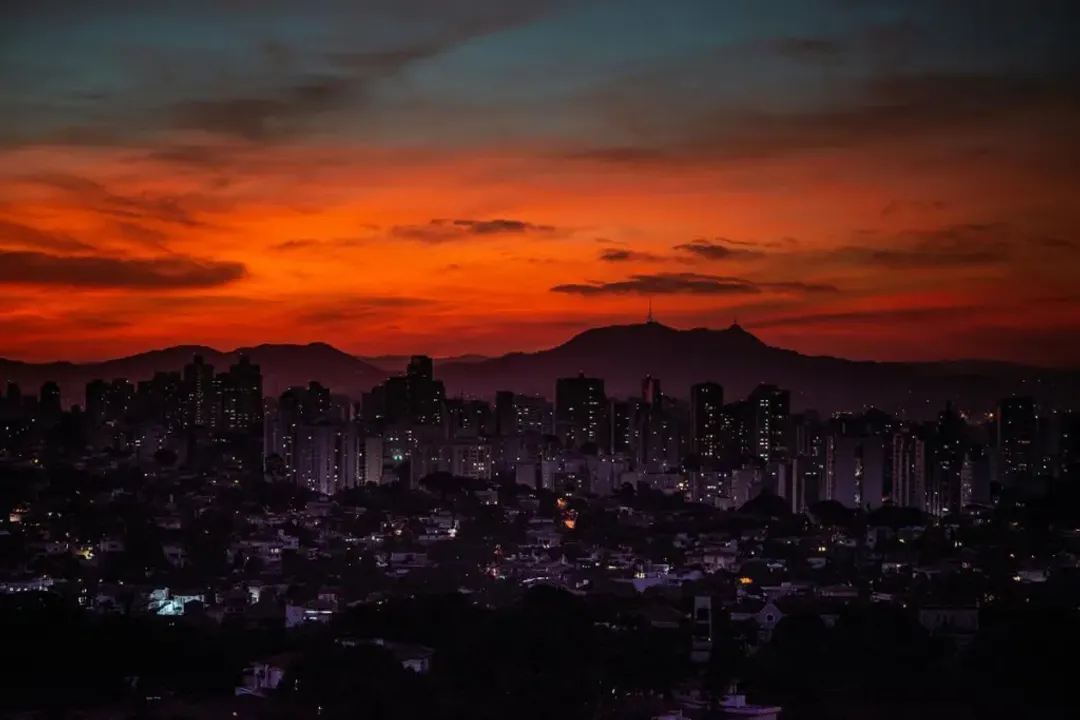
Astronomers and navigators rely on precise definitions for these post-sunset periods, based specifically on the angle of the Sun below the horizon. [10] The duration of these stages, and consequently how long the sky remains visibly bright, changes depending on the observer's latitude—near the equator, the Sun drops steeply, shortening twilight, whereas close to the poles, the Sun skims the horizon, making the transition last much longer. [1]
The three recognized stages are:
Civil Twilight: This is the brightest phase following sunset. It lasts until the center of the Sun is 6 degrees below the horizon. [10] During this time, the sky is still bright enough that outdoor activities can generally proceed without artificial lighting, and the brightest stars and planets become visible. [4][10] This is the period most people notice when they say, "It's still light out after sunset". [4]
Nautical Twilight: This phase begins when the Sun is 6 degrees below the horizon and ends when it reaches 12 degrees below. [10] The sky darkens noticeably, but the horizon line is still discernible against the sky, which is crucial for celestial navigation (hence the name). [10] The light remaining is much fainter than civil twilight, often appearing as a deep, rich blue. [10]
Astronomical Twilight: This final stage begins at 12 degrees below the horizon and concludes when the Sun is 18 degrees below the horizon. [10] Once astronomical twilight ends, the sky is considered truly dark because the faintest celestial objects can be seen without any residual atmospheric scatter interfering. [10] The faint illumination during this time is caused by light scattering off the very highest reaches of the atmosphere. [6]
# Scattering Science
The physics governing the lingering brightness comes down to scattering. [5] As sunlight enters the atmosphere, it encounters gas molecules (like nitrogen and oxygen) and various aerosols (like dust, water vapor, and pollutants). [5][8]
Rayleigh Scattering is responsible for the blue color of the daytime sky because the tiny gas molecules scatter shorter, bluer wavelengths of light much more effectively than longer, redder wavelengths. [5][8] When the Sun is high, blue light is scattered all around, making the sky appear blue everywhere. [5]
After sunset, the light reaching the upper atmosphere must travel a longer path, but the crucial difference is that the direct, shorter-wavelength blue light is scattered away before it reaches the lower atmosphere where we are observing. [8] What persists and reaches us is the longer-wavelength light—the oranges and reds—which scatter less intensely through the long path, creating the characteristic afterglow or redness near the horizon. [8][3] This is why the colors of sunset and afterglow are so similar. [8]
If the atmosphere is particularly clean, the transition between civil twilight and nautical twilight can be quite swift, as the blue light scatters away quickly and there are fewer particles to scatter the remaining warmer tones into the lower atmosphere. [1] Conversely, the presence of atmospheric aerosols, such as dust from a major dust storm or even fine particles from distant wildfires, can extend the period of noticeable brightness. [4] These larger particles cause Mie scattering, which is less dependent on wavelength and scatters light more broadly in the forward direction. [5] This means that on a hazy or dusty evening, the light that reaches you is more diffuse, potentially lingering longer into the deeper twilight phases because more of the spectrum is being redirected toward the observer. [5]
# Duration Factors
The perceived duration of the bright sky post-sunset is not static; it changes daily and seasonally, depending on three main interacting factors: geometry, atmospheric conditions, and observer location. [1][4]
For anyone observing from a mid-latitude location, like much of Europe or the central United States, the total time from sunset until astronomical twilight begins is roughly 70 to 90 minutes. [1] This total duration encapsulates civil, nautical, and astronomical twilight combined. [10]
However, the quality of the brightness matters. A summer evening in a humid, clean area might feel bright for a solid hour because the air is clear, allowing for a sharp color transition. Contrast this with an evening where fine, high-altitude dust—perhaps from a stratospheric event—is present. That dust acts like a high-altitude screen, catching sunlight long after the Sun has dropped deep below the horizon, keeping the sky visibly illuminated well past the typical 30-minute mark of civil twilight, sometimes blurring the line into nautical twilight with a pale, persistent glow. [4]
The rate at which the Sun appears to sink provides an interesting metric for understanding the geometry. In places close to the equator (low latitudes), the Sun's path relative to the horizon is nearly perpendicular, meaning it drops very quickly, cutting twilight short. In contrast, locations closer to the Arctic or Antarctic circles experience a grazing angle. Here, the Sun circles the horizon rather than plunging straight down, stretching civil and nautical twilight into hours rather than minutes. [1] If you live somewhere like northern Alaska in the summer, true darkness may not arrive for many hours, or even at all, because the Sun never dips below the 18-degree threshold for astronomical darkness. [1]
# Color Contrast
Observing the sky immediately after the Sun vanishes offers a striking visual comparison between the low-angle scattering occurring high up and the residual light hitting the lower atmosphere. The area directly on the western horizon where the Sun disappeared is often the last part to lose its warmth, typically displaying deep oranges, pinks, or reds. [8] This is the light that has traveled through the greatest density of atmosphere, scattering out nearly all the blue wavelengths. [8]
As you look higher and further away from the sunset point, the color shifts. The upper sky, catching the rays slightly more directly or from a slightly different angle relative to the observer, transitions to a deep, almost indigo blue—the color associated with nautical twilight. [10] This transition from warm color at the horizon to deep blue overhead perfectly illustrates the dual effect of scattering: the long-wavelength light making it through a thick layer, and the short-wavelength light being scattered down from higher, less dense layers. [5][8] This rapid change in hue from fiery color to deep blue over a short angular distance overhead is a key characteristic of the post-sunset sky that is often taken for granted.
It is worth noting the difference in light quality when comparing sunsets during the summer versus winter months at the same mid-latitude location. In summer, the Sun sets at a shallower angle relative to the horizon (though this varies significantly by latitude), meaning the amount of atmosphere the light passes through to illuminate the upper sky is slightly different than in winter when the path is steeper, often leading to faster fading in the winter months when the sun drops more directly toward the southern horizon. [8]
# Reading the Atmosphere
The appearance of the sky after sunset provides an immediate, although qualitative, assessment of atmospheric quality. A clear, crisp evening where the sky darkens quickly to black after civil twilight suggests a clean upper atmosphere with minimal aerosol loading. [5] You see the effects of pure Rayleigh scattering dominate.
However, if an observer notices that the colorful glow seems to hang in the sky for an unusually long time, remaining bright even as the celestial sphere darkens, it strongly suggests the presence of fine, suspended particles—be they volcanic ash, desert dust, or even pollution. [4] These particles are efficient scatterers across the visible spectrum, holding onto the light longer than pure air molecules can. For amateur astronomers, the end of astronomical twilight is the gold standard for true darkness. If you can still perceive a slight brightening toward the western horizon even 45 minutes after the Sun officially set, you know there is enough dust or moisture in the upper layers to impede observations, which is a reliable, if slightly frustrating, indicator of atmospheric turbidity. [10] This phenomenon shows us that while the Sun is gone, its light is still being diffused by everything between us and space.
Related Questions
#Citations
Why is it still "light" after sunset? : r/askscience - Reddit
How come it's still light for an hour after the Sun sets? - Quora
Afterglow - Wikipedia
6PM… AND IT'S STILL BRIGHT OUT! That extra glow after sunset is ...
The Appearance of the Sky - UCAR Center for Science Education
Why can we see the sunlight for over 20 minutes even after sunset?
Unusual Cloud-Glow After Sunset - Nature
Curiosities: What determines the colors of the sky at sunrise and ...
How can the sky glow even after sunset? - Rau's IAS
There Are Three Types of Twilight | Scientific American