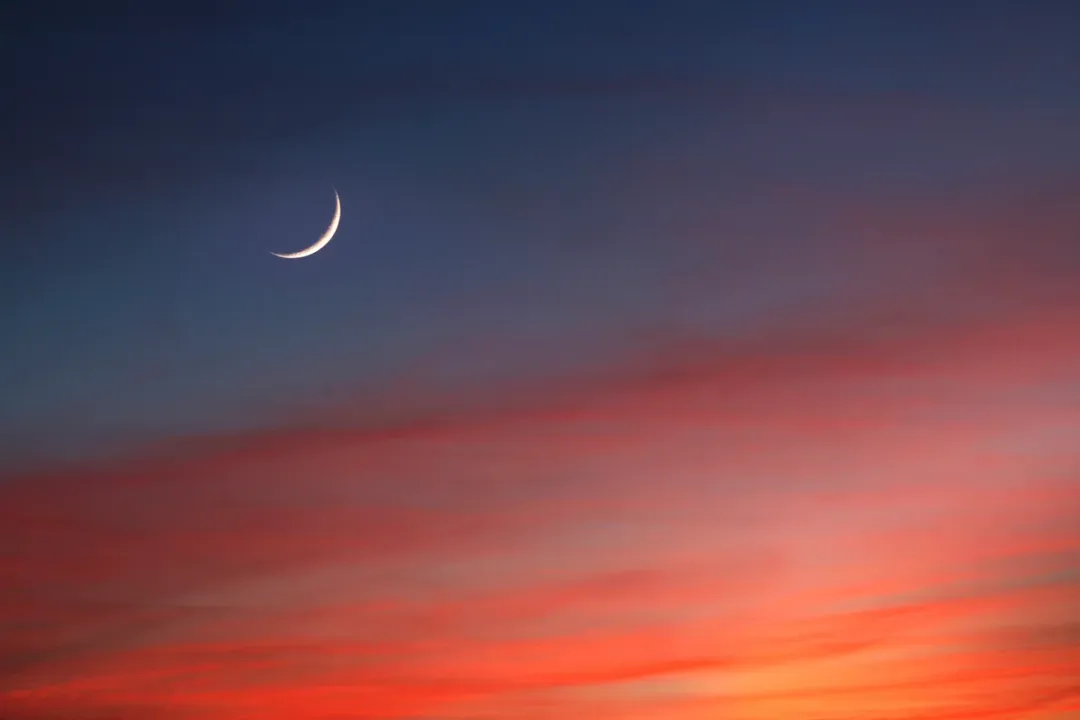
What visual color contrast characterizes the transition from the western horizon upward during Nautical Twilight?
Answer
Deep oranges/reds at the horizon shifting to deep, almost indigo blue overhead
The area near the horizon retains warm colors because that light has traveled through the densest atmosphere. Higher angles transition to deep blue as they catch light scattered from higher, less dense atmospheric layers.
Related Questions
What causes the sky to remain illuminated after the Sun dips below the geometric horizon?When does Civil Twilight officially end?What angular separation below the horizon marks the end of Nautical Twilight?What specific condition must be met for the sky to be considered truly dark for observing the faintest celestial objects?Which type of scattering causes the characteristic blue color of the daytime sky?Why do sunsets and the subsequent afterglow often feature reds and oranges?What phenomenon is caused by larger particles like dust or pollutants scattering light broadly, potentially extending brightness?If an observer lives near the equator, how does the Sun's path affect twilight duration?What visual color contrast characterizes the transition from the western horizon upward during Nautical Twilight?What does a persistent colorful glow hanging in the sky long after sunset suggest about the atmosphere?