Can the Chicxulub crater still be seen?
The massive scar left by the Chicxulub impactor $66$ million years ago is not something you can simply drive up to and look down into. The initial event that extinguished the non-avian dinosaurs and ushered in the age of mammals left an undeniable mark on our planet, but time, geology, and the ocean have conspired to hide the vast majority of the resulting cavity from casual view. [6][1]
# Impact Scale
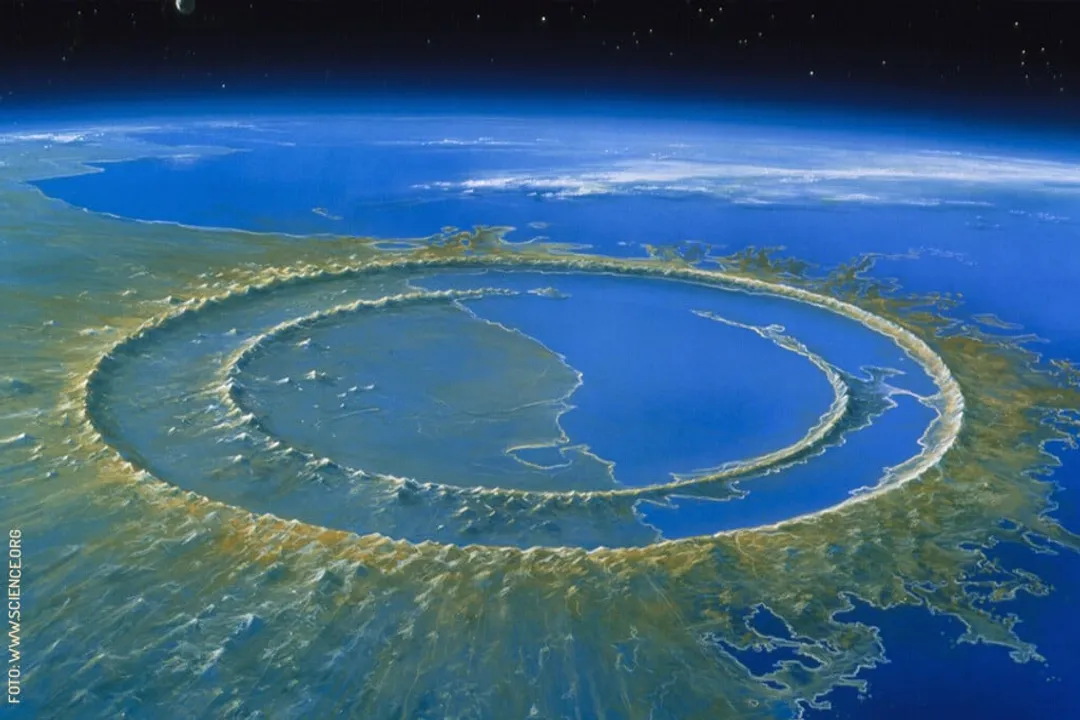
The event itself was staggering. Scientists estimate the object that struck the Earth was likely $10$ to across. [5] The resulting depression—the Chicxulub crater—is estimated to span about in diameter. [2] This impact is inextricably linked to the Cretaceous–Paleogene (K-Pg) extinction event, marking the geological boundary between those two periods. [2][5] It was a singular event of planetary consequence, not a mere geological feature that remains exposed on the surface like Meteor Crater in Arizona. [2]
# Subsurface Structure
The primary reason the crater isn't easily visible is burial and erosion. Located primarily beneath the northern Yucatán Peninsula and extending into the Gulf of Mexico, the impact structure has been inundated and covered by younger sediments over the intervening $66$ million years. [4][2] Furthermore, the immediate aftermath of such a high-energy impact involved massive collapse. The initial cavity created during the fleeting moments of impact was not stable; it collapsed inward, resulting in a complex, multi-ringed structure deep beneath the crust, rather than a simple bowl shape. [2] This deep, complex structure is what researchers are trying to map today.
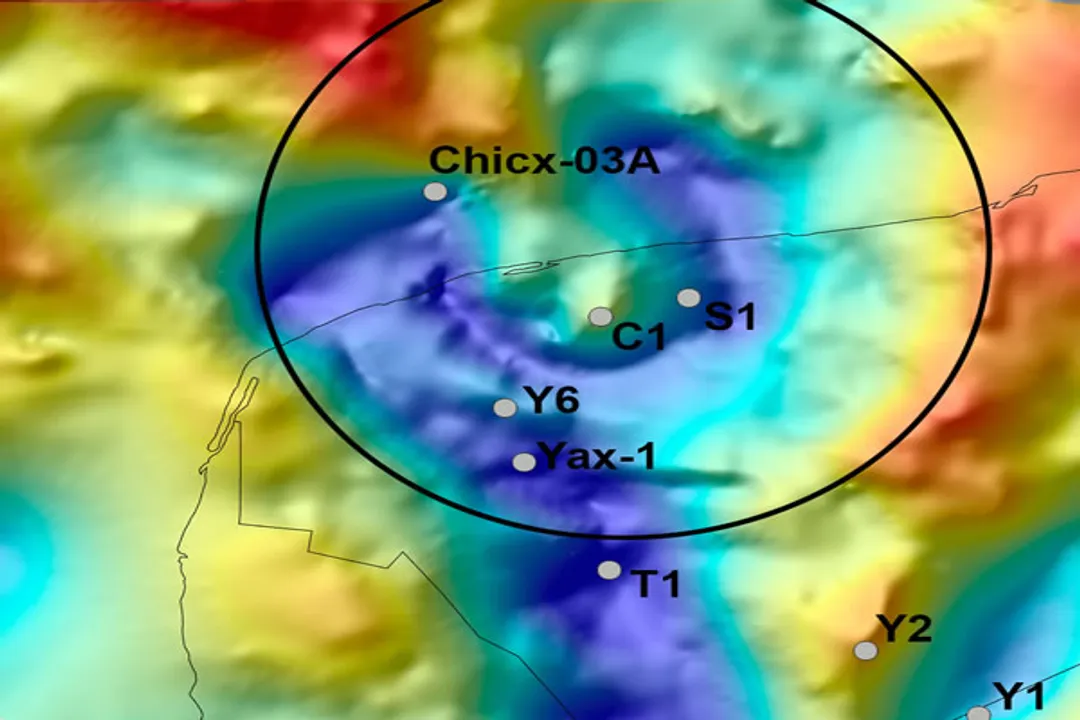
When comparing the expected crater profile to modern gravity maps, one realizes the sheer scale of crustal rebound and subsequent infilling. The visible "crater" today is less the void and more the ghost impression left by density variations in the rock column above the deeply fractured target rock, which influences gravity readings. [3]

# Seeing Now
If the crater is buried, how do we know it is there, and how can we "see" it in the modern era? The answer lies in advanced geophysical sensing rather than naked-eye observation. [3]
Geophysicists employ methods like gravity surveys and seismic reflection studies to map the subsurface structure. [3] These techniques reveal concentric rings and areas of density contrast that are consistent with a large impact structure that has since been modified by erosion and sedimentation. [3] Direct evidence, such as the discovery of shocked quartz and melt rock, found in wells drilled near the estimated center, confirms the location and violence of the impact long after the surface structure has vanished. [3]
For the layperson wanting a tangible connection, understanding the difference between the impactor's size (perhaps across) and the resulting crater's diameter () is crucial. If the asteroid were visible from Earth just before impact, it would have been a slow-moving, surprisingly large "star" for hours or days, not a brief flash, given its trajectory and distance from the moon relative to Earth's orbit. [8] This context helps frame why the structure itself is so immense that natural processes could easily obscure it.
# Surface Expression
While the entire ring is not visible, the impact did leave hints on the surface, particularly where the rim intersects the modern landscape of the Yucatán Peninsula. [4] There is no single, easily identifiable geological feature that screams "dinosaur killer crater rim" visible from a casual overlook. [1]
However, researchers have noted that the distribution of geological features can align with the buried structure. [1] For example, certain topographic variations or the way groundwater flows in the area might show subtle patterns that correlate with the buried impact structure, which is essentially a region of highly fractured and altered bedrock. [1] The location of the modern town of Chicxulub itself sits atop a portion of the rim structure. [9]

# Yucatán Site
Visiting the region today means visiting the Yucatán Peninsula in Mexico, the landmass most closely associated with the impact site. [4][9] Visitors interested in the geology often focus their attention around the town of Chicxulub, which gave the crater its name. [9]
You will not find a dramatic caldera or a designated national park centered on the physical crater itself because the structure is fundamentally buried. [9] Instead, visits to the area often focus on the cultural significance of the location or perhaps geological sites that have been studied by scientists investigating the K-Pg boundary layers. [9] Travelers looking for a visual representation of the event might instead look for information centers or museums that display the core samples and research findings that prove the crater's existence, rather than the crater itself. [3] The physical experience of being there is more about standing on the location where the crust was permanently altered than looking into a visible hole in the ground. [4]
#Videos
Scientists Finally Solved the Mystery Of The Missing Chicxulub Meteor
Related Questions
#Citations
Is it possible that the Chicxulub Crater didn't just kill the Dino's but ...
Chicxulub crater - Wikipedia
Discovering the Impact Site - Chicxulub Impact Event
The Chicxulub Crater - Yucatán Today
A 'Smoking Gun' for Dinosaur Extinction
Why isn't there a crater for the Chicxulub Asteroid? - Quora
Scientists Finally Solved the Mystery Of The Missing Chicxulub Meteor
Could the dinosaurs have seen the asteroid that killed them?
Chicxulub crater: How to visit the dinosaur-ending asteroid site in ...