Is Galileo still active?

The current operational status of "Galileo" is a question loaded with potential confusion, as the name has been applied to more than one significant space endeavor. For many space enthusiasts, the name immediately conjures images of the intrepid NASA probe that explored Jupiter, a mission that concluded years ago. However, in the context of modern global navigation and positioning, Galileo refers to the European Union’s independent Global Navigation Satellite System (GNSS), an active and evolving constellation providing positioning, navigation, and timing services worldwide. The reality is that while the probe is no longer active, the GNSS is very much alive, entering what its proponents describe as a new, more capable era. [1][7]
# Dual Missions
Understanding whether Galileo is "still active" requires distinguishing between these two major entities that share the name. The Galileo spacecraft, managed by NASA, was dedicated to an in-depth study of the planet Jupiter and its moons. This specific mission achieved its programmed end when the spacecraft was intentionally plunged into Jupiter's atmosphere in September 2003. [7] That particular scientific journey is definitively over, with its primary science objectives completed long ago. [7] This historical mission serves as a critical touchstone for understanding mission longevity and the end-of-life planning for space assets. [7]
In stark contrast, the European Galileo GNSS is not a single mission but an entire, complex satellite infrastructure built for continuous civilian use, rivaling systems like the American GPS. [1] This system is not just "active"; it is undergoing significant upgrades and expansion, marked by the ongoing commissioning of new satellites into the operational constellation. [3][6] While the older NASA probe’s operational chapter closed in 2003, the European GNSS is actively writing its next one, delivering services today. [1][3]
# System Expansion
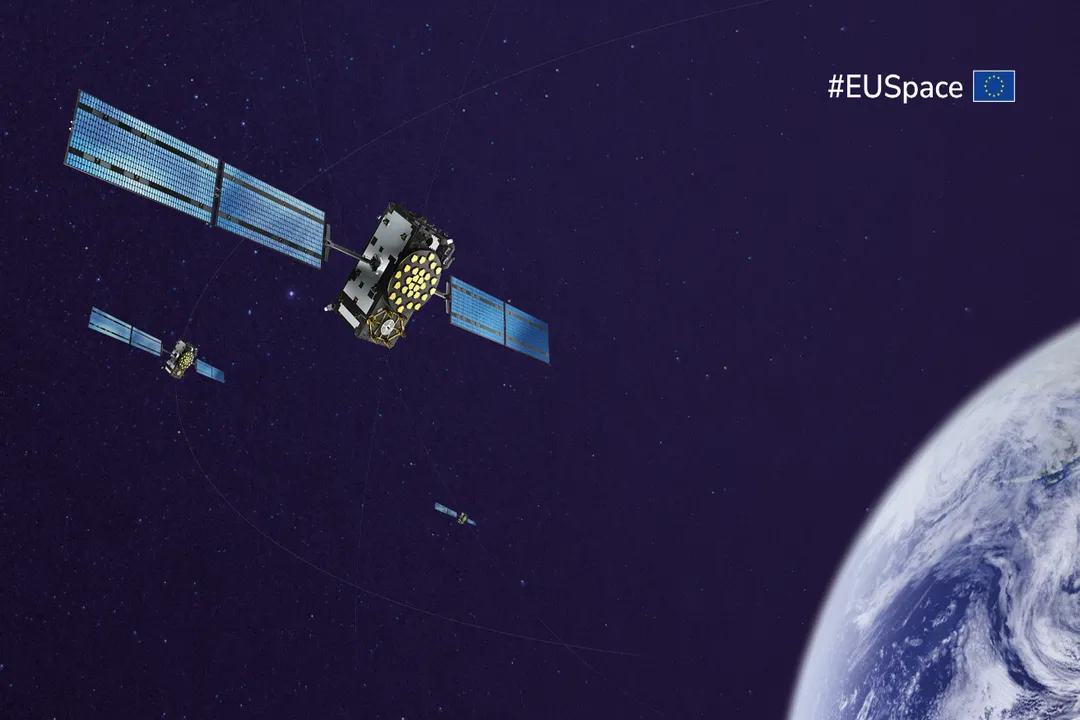
The evidence of the European Galileo system’s current activity is visible in the constant integration and deployment of new hardware. Engineers continue to work on integrating the newest generation of satellites, which are designed to enhance the overall performance and resilience of the constellation. [6] Following successful in-orbit testing, new satellites are progressively declared operational, slotting into the network to augment the existing space segment. [3] This process is not merely about replacing aging units; it is about an active upgrade cycle designed to push service capabilities forward. [2][3]
For example, the successful commissioning of recently launched units means the constellation is actively benefiting from newer technology, which improves signal stability and accuracy across the services offered. [3] This continuous commissioning phase confirms that the system is in a state of robust development, moving beyond its initial service definition toward a more mature and capable platform. [1]
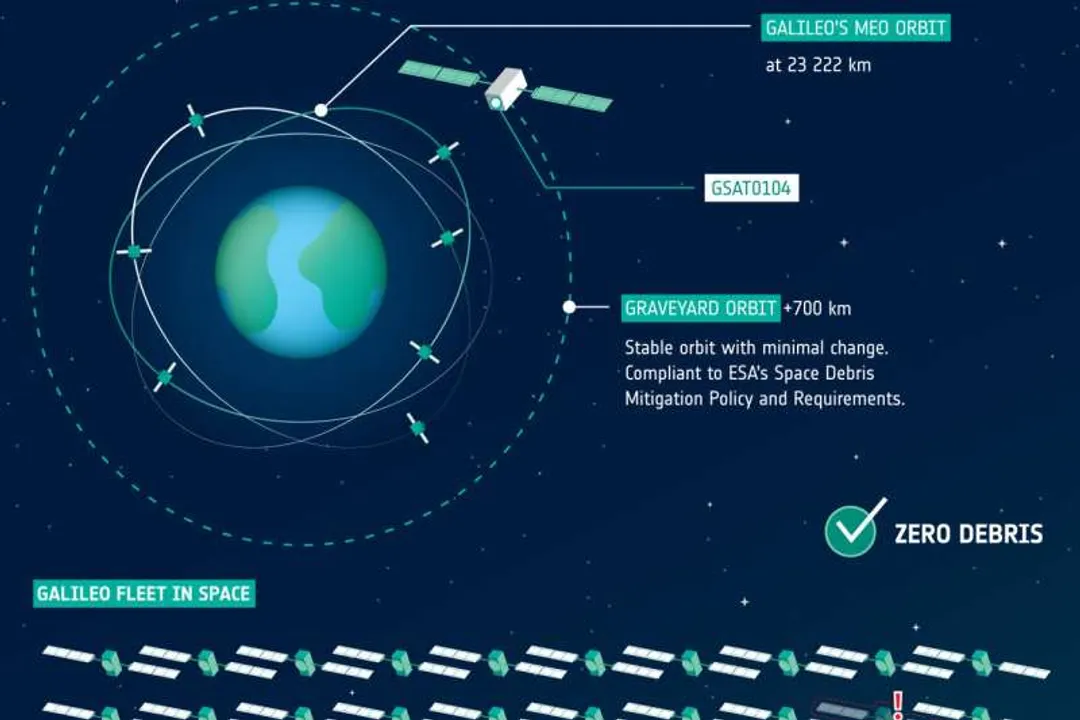
One might look at the projected operational life of individual components as a measure of system activity. Reports suggest that even newer satellites, such as GSAT0104, are expected to provide service for a significant duration, with projections pointing toward a lifespan exceeding twelve years. [2] While this is a projection for a single unit, it speaks to the long-term operational planning underpinning the entire GNSS network. When considering the system as a whole, this regular influx of upgraded, long-life satellites demonstrates an active, forward-looking operational commitment.

# High Accuracy
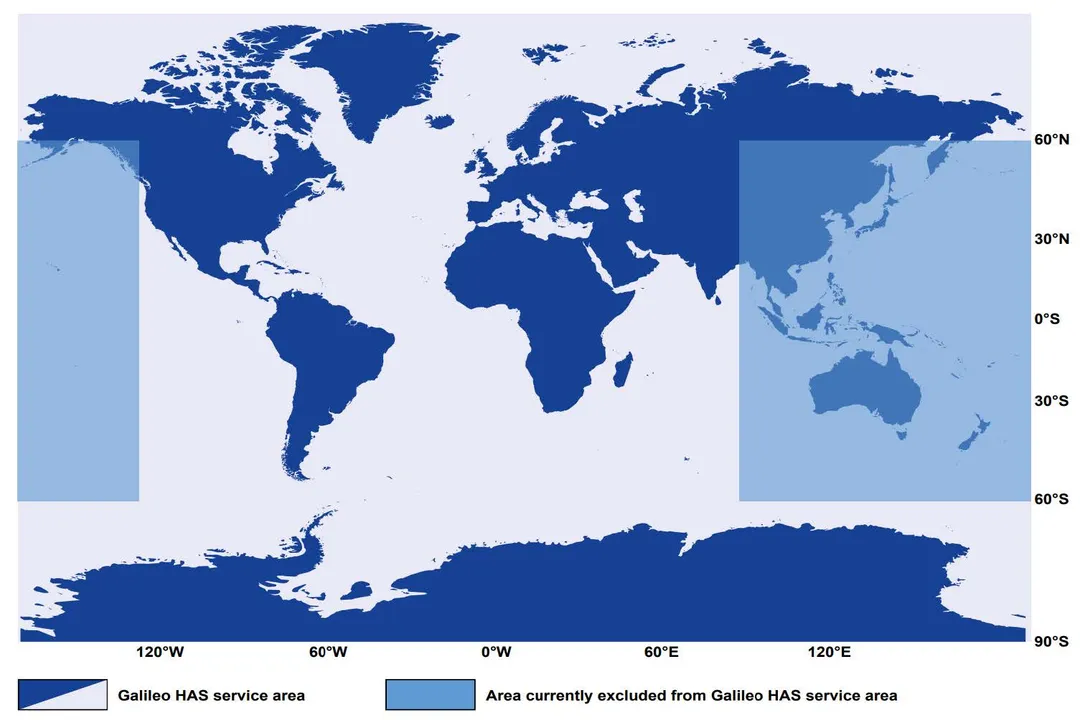
Perhaps the strongest indicator that Galileo is currently active and relevant is the public availability of its advanced positioning services. The system now offers a free, high-accuracy service—the Galileo High Accuracy Service (HAS)—available globally. [1][9] This service provides positioning accuracy down to the centimeter level, a capability that drastically changes the landscape for professional users and potentially for consumer applications as well. [1][9]
The HAS delivers correction data via two primary channels: the navigation message broadcast directly from the satellites and a separate, internet-based stream. [9] The fact that a service offering this level of precision is available free of charge to any user with compatible equipment marks a distinct strategic shift in global navigation availability. [1] This move positions Galileo directly at the forefront of high-precision GNSS offerings, signaling an active push to secure user adoption and relevance in professional sectors. [1]
It is interesting to consider the market dynamics this creates. While commercial entities often charge subscription fees for comparable centimeter-level accuracy, making Galileo HAS free creates a powerful incentive for industries like precision agriculture, surveying, and infrastructure monitoring to adopt the European standard quickly. [1] This suggests a calculated move to establish the Galileo signature within high-value applications, effectively using service quality as a metric of current activity and future authority in the sector.
# Operational Updates
The ongoing nature of the system is frequently showcased through public updates that confirm daily operational progress. These updates, often found on official platforms, detail everything from the integration of a new satellite awaiting launch to the passing of critical in-orbit tests for a newly commissioned unit. [3][6] The sheer volume of communication—from technical papers to social media reels documenting hardware preparation—points to a system that is managed with high visibility and constant activity. [8]
For instance, the process of a new satellite moving from being fully integrated on the ground, ready for launch preparation, to passing its final health checks in orbit, is a multi-stage operational pipeline. [6][3] This is not the static operation of a fully mature system; it is a system in motion, undergoing continuous replacement, testing, and integration to maintain and improve its stated performance levels. [3] The system’s ability to conduct these upgrades while maintaining the provision of its Standard Positioning Service (SPS) and Public Regulated Service (PRS) demonstrates a mature operational capability to execute complex, high-stakes maintenance without service interruption. [1]

# Engineering Scale
The scale of the ongoing work is perhaps best appreciated by looking at the sheer engineering required for a GNSS. Unlike the single-probe mission of the past, the GNSS requires maintaining a functioning constellation of dozens of satellites, managing global ground stations, and constantly updating the navigation algorithms sent to user devices. [1] When new satellites are brought online, they must be precisely calibrated not just individually, but relative to every other satellite in the constellation to ensure users receive a unified, coherent position fix.
Imagine the complexity of introducing a new component into a clock where every gear is moving simultaneously, and the final time shown must be perfect across all displays worldwide. This is the environment within which Galileo engineers operate. [3] The successful transition of new units into operational status, indicated by their passing of in-orbit testing, is a testament to the active management of this massive, intricate system. [3] The system’s current state isn't just "on"; it’s actively scaling and refining its capacity.
The fact that public sources refer to the "new era" driven by these updates suggests a significant leap in capability, especially concerning high-precision delivery, rather than just incremental maintenance. [1] This active transition into a new performance tier clearly demonstrates that Galileo is not merely maintaining past status but is actively defining future positioning standards. [1][9]
# Visibility and Presence
The system's current activity extends into public perception and engagement. Modern communication channels are actively used to showcase milestones, such as the final integration of new hardware or updates regarding the performance of the constellation. [6][8] While a simple social media post or a short video clip might seem minor, they reflect a deliberate effort to maintain public awareness and trust in an actively managed, high-value public service. [8] The continuous presence across various media formats supports the idea of an active, current infrastructure, contrasting sharply with a mission that has concluded its operational phase decades prior. [7] When viewing current media related to Galileo, the focus is almost exclusively on the GNSS, confirming its status as the relevant system today. [8][9]
Ultimately, the answer to whether Galileo is still active depends entirely on which Galileo one is referring to. If the subject is the pioneering NASA orbiter, its active service ended in 2003. [7] If the subject is the European Global Navigation Satellite System, it is not only active but is currently engaged in a major operational evolution, expanding its fleet and deploying next-generation, free high-accuracy services that aim to redefine precision positioning for users around the globe. [1][9] The modern Galileo is a system actively under construction and operation, confirming a very robust present and an ambitious future trajectory. [2][3]
#Videos
The Continuing Legacy of Galileo at 30 - YouTube
Related Questions
#Citations
Inside Galileo HAS: A new era of free high-precision GNSS
Galileo satellite GSAT0104 retires after 12 years of navigation service
New Galileo satellites operational after successful in-orbit testing
Galileo (spacecraft) - Wikipedia
The Continuing Legacy of Galileo at 30 - YouTube
New Galileo Satellite Integrated into Constellation, Enhancing ...
This Month in NASA History: Galileo Comes to an End
On 17 December, two Galileo satellites will be launched on Ariane 6 ...
Galileo High Accuracy Service (HAS) - GSC-europa.eu