How to identify an impact crater?
Identifying a genuine impact crater on our planet is a fascinating pursuit that blends geology, physics, and a bit of detective work. While bodies like the Moon and Mars are pockmarked with visible scars, Earth’s dynamic surface—constantly renewed by tectonic shifts, volcanic activity, and erosion—tends to erase these ancient records quite effectively. [1] Nevertheless, when an extraterrestrial object strikes our world, it leaves behind a set of unique signatures that scientists look for to confirm the event, moving beyond mere surface depressions to find the true fingerprints of hypervelocity collisions. [2]
# Surface Form
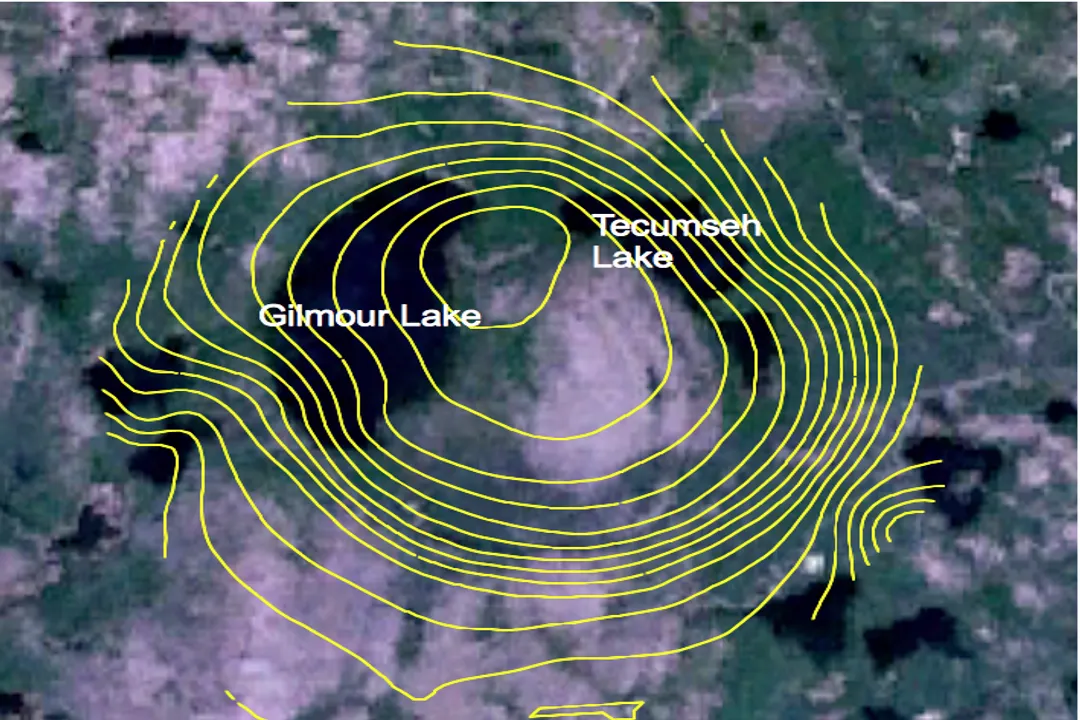
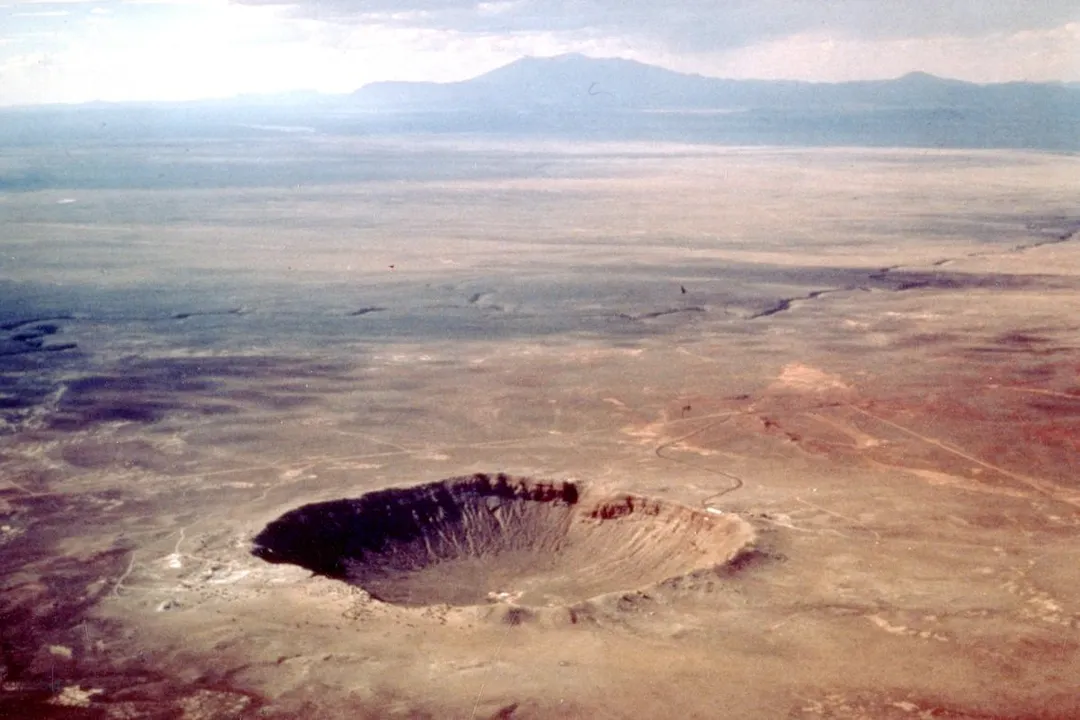
The most immediate characteristic one might notice is the shape. Craters are generally roughly circular features excavated by the impact event. [5] This circularity is key, but it arises not because the incoming object was spherical—in fact, most impactors are not—but because the immense energy of the impact creates an explosion that distributes force outward symmetrically. [4][5] This symmetrical energy dispersal results in a nearly perfect circle for most impacts, unless the object strikes at a very low angle, perhaps below 20 degrees, which can result in a more oblong shape. [5]
Geologists categorize impact structures based on their resulting morphology, which is largely determined by the size of the impactor. [1]
Simple Craters: These are generally the smaller structures. They present as a straightforward, bowl-shaped depression. [1][5] A rule of thumb for simple craters is that the diameter might be about five to seven times the depth of the pit. [1]
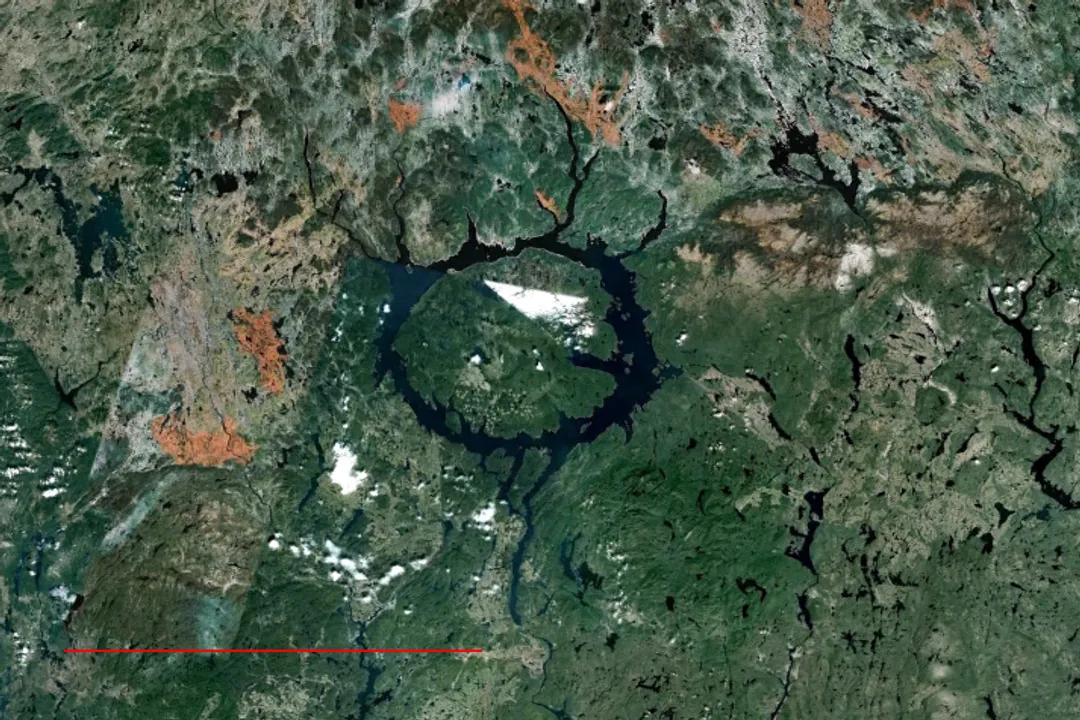
Complex Craters: When the impactor is larger, the excavated cavity collapses under its own weight. This results in more intricate formations. [1] Complex craters are often shallower relative to their width—sometimes up to twenty times as wide as the pit is deep—and they feature collapsed interior walls, which can form step-like terraces, or even a pronounced high central peak formed by material rebounding from the crater floor. [1][5] For the largest impacts, the resulting structure is called an impact basin, sometimes marked by multiple rings of mountain chains surrounding the main depression. [5]
However, recognizing structure alone is often insufficient for an Earth impact structure. [2] Terrestrial features formed by processes like volcanism, glaciation, or the rise of salt domes can also create circular depressions, making visual morphology only a starting point. [3] Furthermore, on Earth, weathering, erosion, and tectonic deformation can obscure the original shape, complicating identification purely by outline. [2] For instance, buried craters may only be revealed through geophysical mapping, though drilling is usually required for definitive proof. [2]
# Rock Signatures
To move past guesswork, scientists must examine the rock record for evidence of the extreme pressures and temperatures generated by the impact—a process known as shock metamorphism. [1] This evidence is divided into macroscopic (visible without magnification) and microscopic findings. [2]
# Microscopic Proof
The definitive evidence often lies at the microscopic level, stemming from the shock wave traveling through the target rocks. [2]
- Planar Deformation Features (PDFs): These are microscopic markings or features within mineral grains that are created under intense shock. Their presence in the in-situ lithologies (the rock that hasn't moved from its original spot) is strong evidence. [2]
- High-Pressure Mineral Polymorphs: When rocks are subjected to pressures far exceeding normal geological conditions, their mineral structure can change into forms that are only stable under those extreme stresses. Key examples include coesite and stichovite, two forms of silica never found naturally without a shock event. [1] Finding these requires confirmation, often via X-ray diffraction. [2] Some impact-melted rocks may even contain micro-diamonds formed during the impact's intense heat and pressure, as seen in rocks near the Ries structure in Germany. [4]
# Macroscopic Clues
At a scale visible to the naked eye, specific rock types and structures point toward an impact origin. [2]
- Shatter Cones: These are distinctive, cone-shaped fractures found in the target rock, often marked by ridges radiating from an apex. [1][2] The presence of in-situ shatter cones is considered a primary criterion for confirming an impact structure. [2] If bedrock like limestone is subjected to extreme, rapid pressure, shatter cones form, similar to those created by underground nuclear detonations. [4]
- Impact Melt Sheet and Breccias: The impact can generate sufficient heat to melt local crustal rock, forming an impact melt sheet or related dike intrusions. [2] When rock fragments are broken, fused, and cemented together by impact energy, they form breccias. [1] One specific type is impact melt breccia. [2] Another common feature is suevite, which is a type of fallback breccia associated with melt sheets. [2] It is important to note that breccias and even the rock pseudotachylyte (formed by frictional melting along faults) can also result from non-impact tectonic activity, so they require careful interpretation alongside other criteria. [2]

# Ejecta and Impact Materials
The excavation stage of crater formation violently throws material—called ejecta—outward from the impact site. [1][5] This material can blanket the surrounding area, thinning as distance increases. [5]
A critical finding when searching for evidence is the material composition compared to the local bedrock. The discovery of allochthonous material (rock formed elsewhere) containing nickel-iron alloys, which are rare on Earth's surface but common in meteorites, provided early proof for structures like Meteor Crater in Arizona. [1]
One of the fascinating aspects of identifying an impact site is understanding the sheer size disparity between the cause and the effect. The kinetic energy of objects traveling at cosmic velocities, often around for Earth strikes, is so enormous that the impactor is typically shattered, pulverized, melted, or entirely vaporized. [4][5] This leads to the general observation that the resulting crater diameter is about 20 times larger than the impacting object. [4][7] For example, the object that created the wide Meteor Crater was likely only about across. [1][4] This vaporization explains why, despite the massive energy release, finding the bulk of the impactor at the center of the crater is rare; it is usually dispersed as melt droplets or small fragments. [4]
When you observe a large impact structure, try to mentally scale the impactor down significantly. If you see a wide crater, the object responsible might have only been around in diameter, similar in size to the medieval wall surrounding the town of Nördlingen, which sits inside the Ries impact structure in Germany. [4] This vast difference between the size of the projectile and the size of the resultant hole highlights the fundamental role of kinetic energy transfer rather than simple physical displacement.
# Geophysical Detection
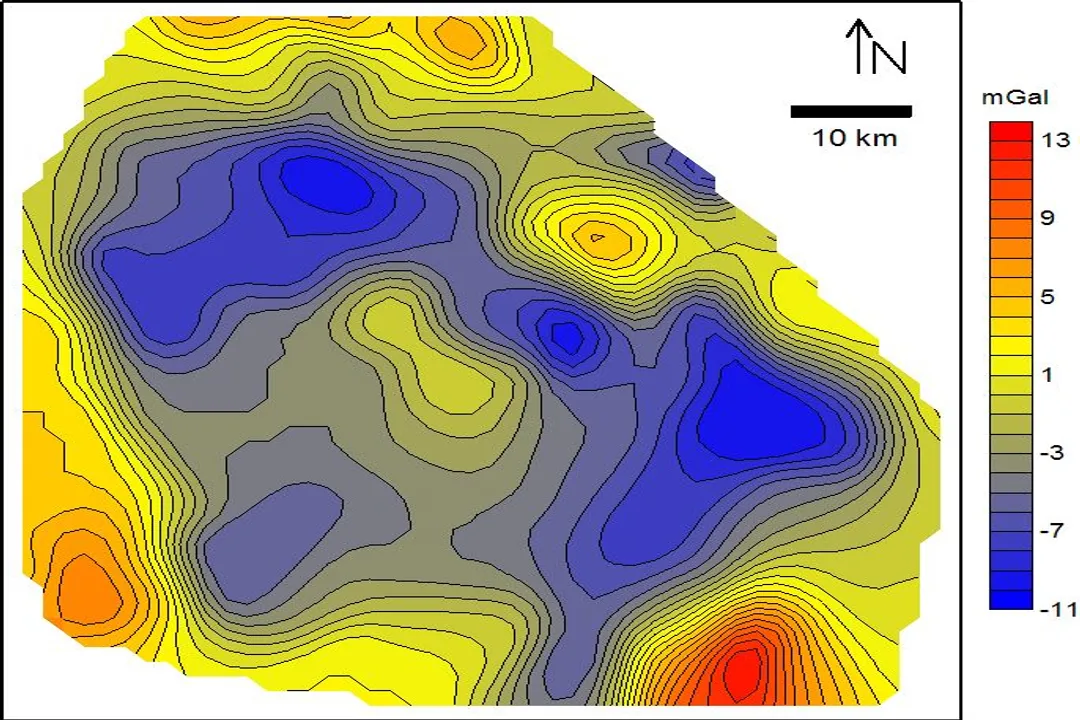
For older, heavily eroded craters, or those buried beneath younger sediments or water—like the massive Chicxulub structure beneath the Yucatán Peninsula—visual identification is impossible, and scientists turn to geophysics. [2][5]
Gravity Surveys are a particularly valuable tool for probing subsurface structures.
- Simple Craters: These usually exhibit a roughly circular negative gravity anomaly. This mass deficit results from the low-density breccia lens that forms on the crater floor, fractured rock beneath the structure, and any post-impact sediments filling the depression.
- Complex Craters: These show more complicated gravity anomalies. While they also exhibit negative anomalies due to fractured rock and impact melt, they can sometimes display relatively positive anomalies where denser, uplifted rocks have formed central uplifts or rings during the modification stage.
By mapping these anomalies—often using the horizontal gradient to accentuate boundaries—scientists can trace the original extent of deeply eroded craters or definitively map buried structures, which can then be verified with core sampling.

# Distinguishing from Earth Processes
Because processes like volcanism or hydrothermal explosions can create circular features, establishing a truly impact-related origin requires ruling out terrestrial sources and confirming the shock evidence. [3][2]
One way to differentiate a fresh impact structure from a volcanic crater is by looking at the floor's elevation relative to surrounding terrain. A classic impact crater floor, like that of Meteor Crater, dips below the surrounding ground level, unlike a volcanic crater, which typically sits atop a peak. [1] Furthermore, the target rocks found at an impact site are allochthonous—they have been ejected from elsewhere or structurally deformed by pressure, which is distinct from how rocks are altered by typical magmatic processes. [1]
When examining rocks, look for signs of intense, instantaneous crushing pressure. While large earthquakes can generate pseudotachylyte, impact events produce a specific suite of shock features that, when found together (shatter cones, PDFs, impact melt), confirm the hypervelocity event. [2] For example, even an airburst, which doesn't create a crater, can cause widespread vitreous rock (glassy material) from melted terrestrial rock, but a full impact cratering event involves deeper geological transformation. [4]
Ultimately, identifying an impact crater is a multi-stage investigation. It begins with recognizing the macroscopic shape, narrows down the possibilities by looking for common terrestrial mimics, and culminates in the conclusive, microscopic proof found within the rock matrix itself—the evidence that only a body traveling at cosmic speed, arriving in mere seconds, can leave behind. [2][4]
Related Questions
#Citations
How can I tell if I have found an impact crater? - USGS.gov
Criteria for the identification of an impact structure
Question about impact crater locations : r/geology - Reddit
FAQ – impact craters - Buseck Center for Meteorite Studies
Shaping the Planets: Impact Cratering - Lunar and Planetary Institute
Asteroid impact craters | Research Starters - EBSCO
Gravity surveys - METEORITE CRATERS