How did the invention of the telescope impact the Scientific Revolution?
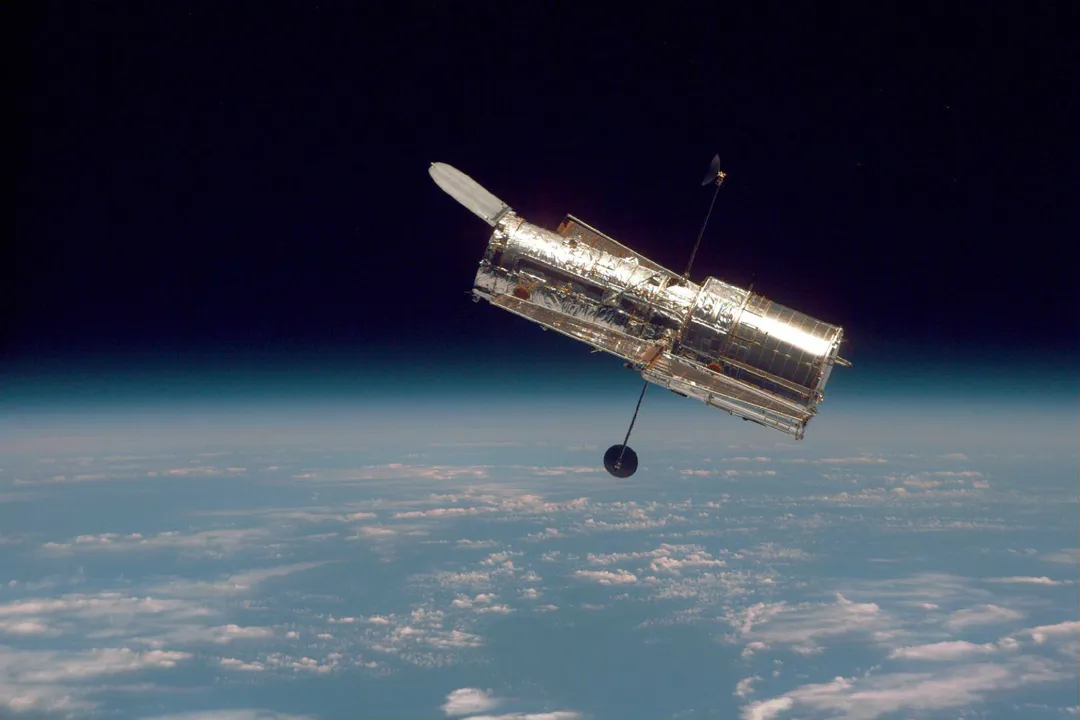
The world before the telescope was one ruled by antiquity, where the heavens were a realm of divine perfection, distant and utterly separate from the imperfect Earth. [1] For centuries, the accepted cosmology, rooted in the writings of Aristotle and Ptolemy, depicted Earth fixed immovably at the center of the universe, orbited by perfect, crystal spheres carrying the Sun, Moon, and planets. [1][2] This worldview was not merely an abstract astronomical model; it was fundamental to theology and philosophy, reinforcing a specific, orderly placement of humanity within the cosmos. [7] The arrival of a simple optical instrument in the early seventeenth century did more than just let people see farther; it ripped that established order apart, fundamentally altering not just what people knew, but how they knew it, fueling the very engine of the Scientific Revolution. [6]
# Glass and Lenses
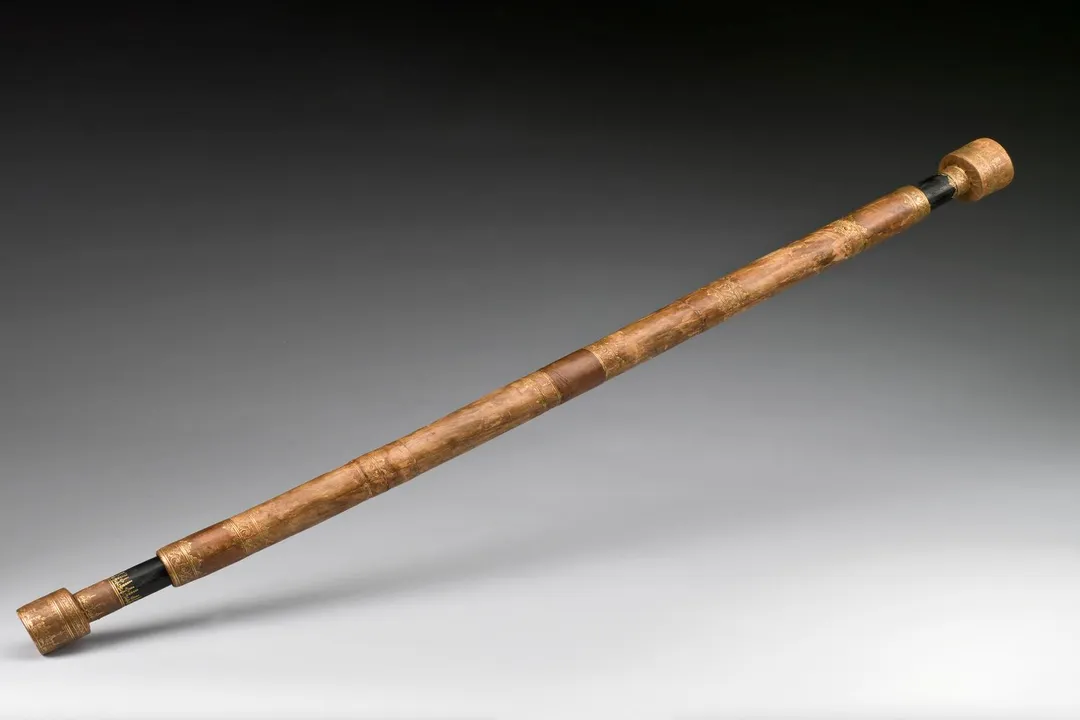
The precise moment of the telescope's invention remains contested, often attributed to spectacle makers in the Netherlands, with Hans Lippershey frequently mentioned around the year . [5] Initially, this device—a tube containing lenses that magnified distant objects—was viewed primarily as a terrestrial tool, useful for military reconnaissance or maritime navigation. [5] It was a novelty, a clever piece of optics, but not immediately recognized as the cosmic key it would become. [6] While the concept of using ground lenses to magnify images had been developing for some time, the arrangement necessary to achieve true telescopic magnification represented a significant technological step. [5]
Before the telescope made direct observation a scientific mandate, advancements in navigation (like better clocks or astrolabes) had already started placing a premium on accurate measurement, setting the cultural stage for accepting an instrument that offered superior measurement of the heavens, even if the results were shocking. [4] The leap from these terrestrial applications to astronomical scrutiny was almost immediate for the intellectually curious.
# Galileo's Moons
The instrument itself was imperfect when it first appeared, offering magnifications of only about three times. [3] However, it was Galileo Galilei who, upon hearing reports of the invention, quickly refined the design, grinding his own lenses to achieve magnifications up to twenty or thirty times power. [2][3] In , Galileo turned this improved instrument towards the night sky, an act that marks one of history’s great observational turning points. [2][6]
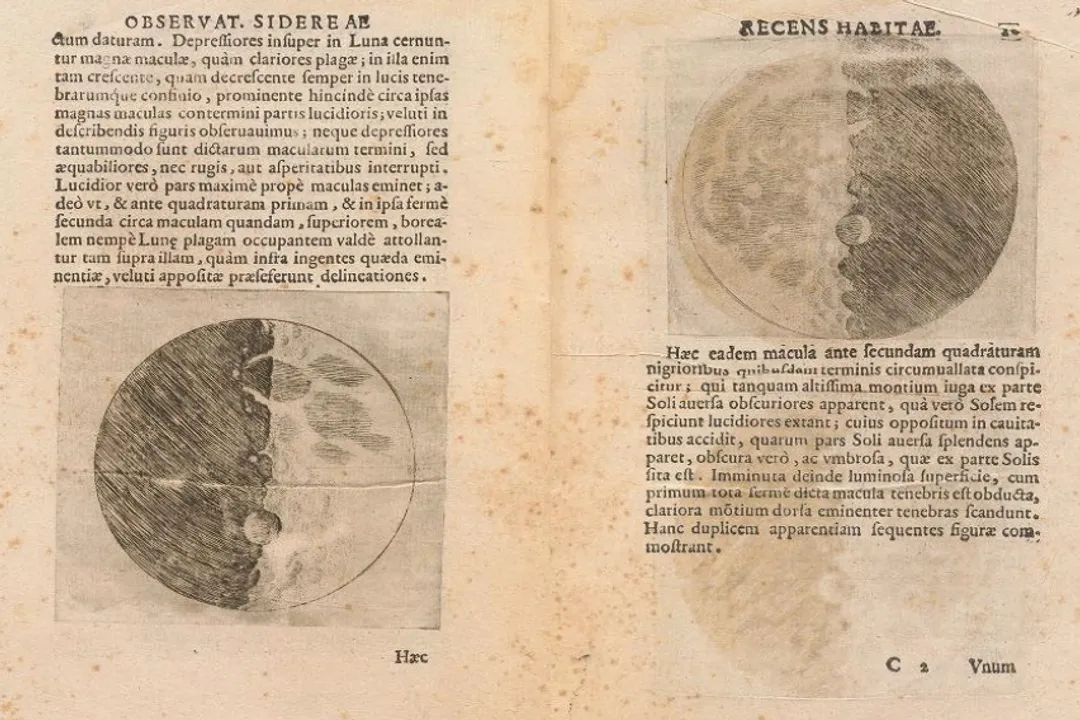
His initial observations immediately contradicted accepted doctrine. The Moon, long believed to be a perfectly smooth, ethereal orb, was revealed to have mountains, valleys, and craters, appearing much like the Earth itself. [1][2] This discovery shattered the Aristotelian distinction between the corruptible, changing sub-lunar world and the unchanging, perfect celestial realm. [2]
More profoundly, Galileo observed four distinct "stars" orbiting Jupiter: Io, Europa, Ganymede, and Callisto. [2][3] He chronicled these observations in his publication, Sidereus Nuncius (Starry Messenger). [2] The existence of celestial bodies that clearly did not revolve around the Earth provided powerful, observable evidence against the long-held geocentric model, a system that required everything to circle our planet. [4]
# Earth Centrality Fails
The data gathered through the telescope provided empirical support for the controversial Copernican theory, which placed the Sun, not the Earth, at the center of the solar system. [1][6] While Copernicus’s ideas had circulated mathematically for decades, they lacked compelling physical proof accessible to the common observer. [4] The telescope offered that proof in startling clarity.
Perhaps the most decisive observation was that of Venus. Galileo observed that Venus goes through a complete set of phases, much like the Moon, including a thin crescent and a full phase. [2][6] In the strict Ptolemaic model, Venus orbits between the Earth and the Sun, meaning an observer on Earth should only ever see it in crescent or new phases, never fully illuminated. [2] The fact that Venus displayed a "full" phase proved that it must, at times, be on the far side of the Sun relative to the Earth, a feature only possible if the Earth itself was orbiting the Sun. [2][6] This evidence was so concrete that it was difficult for even staunch defenders of the old system to dismiss entirely, though many political and religious authorities refused to look through the instrument at all. [4]
The telescope was a fascinating paradox: a simple combination of lenses that yielded complex, paradigm-breaking data. Unlike theoretical shifts requiring years of complex mathematics (like Kepler's laws that followed), the telescope offered instant visual proof, which democratized discovery, forcing authorities to contend with evidence they could potentially see for themselves, even if they refused to look. [6]
# Celestial Imperfection
The physical nature of the heavenly bodies became a central focus, replacing abstract speculation with direct evidence of their composition. Beyond the rugged surface of the Moon, the telescope revealed that the Sun itself was not pristine; Galileo observed sunspots, temporary blemishes that moved across its surface. [1] This further cemented the idea that the heavens were dynamic and subject to change, just like the Earth. [1]
Consider the implications for understanding scale and distance. When Galileo turned his telescope toward the Milky Way, he did not see a smooth band of light, but rather countless individual stars, previously invisible to the naked eye. [1] This implied that the universe was vastly larger and more populated with celestial bodies than anyone had previously conceived. [7] If the apparent scattering of stars was so much greater when magnified, it suggested that the apparent distances between them—and between Earth and the visible planets—were far greater than the established, tightly-packed Ptolemaic spheres allowed for. [7] The sheer number of observed stars suggested a universe of immense, almost incomprehensible volume.
# Observation Mandate
The impact of the telescope transcended astronomy; it fundamentally changed the method of acquiring knowledge, pushing empiricism to the forefront of the Scientific Revolution. [4] It marked a critical shift from deduction based on accepted ancient authority to induction based on repeatable, tangible observation. [4][5]
This emphasis on direct observation created a new standard for scientific credibility. If a claim could be verified using a universally replicable instrument—the telescope—it carried more weight than a claim supported only by textual tradition. [4] The instrument served as a powerful check against pure speculation, demanding that new theories align with what could be seen, rather than what was traditionally believed. This establishment of observational verification as the gold standard is perhaps the most enduring legacy of the telescope's introduction to science. [6] It validated the use of instruments as extensions of the human senses, laying groundwork for future scientific tools across all disciplines.
The initial response was often one of resistance, as accepting the telescopic data required admitting that philosophers and authorities from the classical era had been fundamentally mistaken about the structure of reality. [1] The telescope was not just an object; it was a conceptual weapon that forced thinkers to confront the limitations of unaided human perception and established textual authority simultaneously. [7] Its success in overturning cosmology set a powerful precedent for how subsequent scientific challenges to established dogma would proceed, demanding proof over pronouncement. The revolution ignited by the lens in was, therefore, as much a revolution in methodology as it was in astronomy. [4][6]
Related Questions
#Citations
The Telescope & the Scientific Revolution
Galileo and the Telescope | Modeling the Cosmos | Digital Collections
Science | Telescope - The Galileo Project
The Telescope – Science Technology and Society a Student Led ...
The Telescope – Science, Technology, & Society: A Student-Led ...
How the Telescope Revolutionized Our World and Ignited…
[PDF] - How Telescopes Changed our Understanding of our Universe
Telescope | Smith | Encyclopedia of the History of Science
History Matters: Sky's the Limit With Telescopes