What limits the certainty of scientific knowledge?
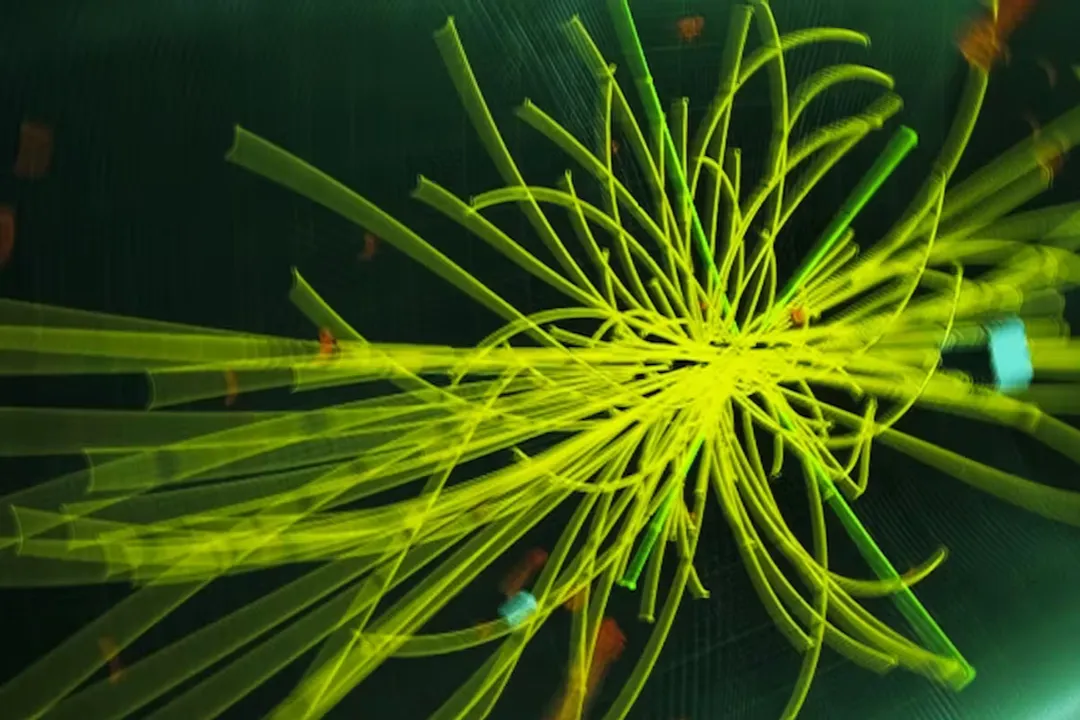
Science rarely delivers absolute, unimpeachable truth in the way that pure mathematics might offer certainty; rather, it provides the most reliable provisional explanation we have at any given moment. [5][10] The pursuit of knowledge through scientific means is characterized by constant refinement, self-correction, and an acknowledgment that today's accepted theory might be superseded tomorrow. [9] This inherent tentativeness is not a failure of the method, but rather a defining feature of its success, reflecting the limits placed on our ability to know anything with complete, final certainty. [5] Understanding these constraints is key to appreciating what science can tell us and, just as importantly, what it cannot. [3]
# Mathematical Limits
Some limitations on knowledge are not derived from observational constraints or faulty instruments, but from fundamental, mathematically provable boundaries within complex systems. [1] Recent theoretical work has demonstrated that for certain classes of problems—those involving many interacting components, such as in complex systems—there are inherent, fundamental limits to what can be known about their future states, even if we know all the starting conditions perfectly. [1] This is distinct from being limited by our inability to measure those initial conditions precisely; the limit is baked into the structure of the problem itself. [1]
This idea connects to concepts in chaos theory, where systems exhibit extreme sensitivity to initial conditions, making long-term prediction practically impossible, even if theoretically describable. [1] While an engineer building a bridge might rely on physical laws being certain to a very high degree—knowing that will hold within measurable tolerances—the complex web of interactions governing a hurricane’s path or the exact price of a stock market index tomorrow operates under a different kind of knowledge boundary. [1] The knowledge itself, even when perfectly formalized, cannot yield complete certainty about the outcome of such systems due to their internal informational structure. [1]
# Methodological Boundaries
The scientific method, a powerful tool for investigating the natural world, is deliberately constrained in what it can address. [3] Science concerns itself with phenomena that are observable, testable, and falsifiable through empirical means. [3][7] This inherently excludes questions that fall outside the realm of the physical, testable universe.
For instance, science is ill-equipped to answer questions of inherent morality or objective value. [3][6] A chemist can describe the molecular structure of a substance, but they cannot scientifically determine whether that substance should be used for a specific purpose; that is a question of ethics, values, and policy. [3][4] Similarly, questions about the meaning of life, the existence of a supernatural being, or ultimate purposes are outside the scope of empirical investigation because they cannot be subjected to repeatable, controlled testing. [3][6] Science is a method for describing how the world works, not why it exists in a philosophical sense, or what we ought to do within it. [3][4]
Another key boundary involves statements that are unfalsifiable. [7] If a hypothesis cannot, in principle, be proven wrong through observation or experiment, it is not considered a scientific claim. [7] Claims that are entirely self-sealing—where any possible observation can be interpreted as confirming the hypothesis—function more like dogma than scientific theory. [7]
# Subjective Experience
A significant class of phenomena science struggles to fully capture relates to subjective, first-person experience, often termed qualia. [6] While neuroscience can map brain activity associated with the feeling of "redness" or the experience of pain, it cannot convey the actual feeling of redness or pain to someone who has never experienced it, nor can it definitively prove that two individuals’ internal experiences of the same stimulus are identical. [6] Science deals in measurable, third-person data, while much of human existence is defined by first-person subjectivity. [4] A scientist can know everything about a sunset—its spectral composition, atmospheric refraction, and biological effect on the retina—but this comprehensive description does not equal the experience of watching it. [4]
# Observational Constraints
Even when dealing with physical phenomena that are scientifically tractable, our means of observation introduce limitations that preclude absolute certainty. [8] The act of observation itself can alter the system being observed, a concept famously highlighted by the uncertainty principle in physics, but it applies more broadly. [8] To measure something, we must interact with it, and that interaction constitutes a change, however minute. [8] This is true not just at the quantum level, but at macroscopic levels where, for example, taking a temperature requires placing a thermometer (a system at a different temperature) into the substance being measured. [8]
When we observe the world, we are always dealing with mediated data, translated through instruments and our sensory apparatus. [2] This process introduces unavoidable noise, error, and limitations on resolution. [2] We cannot know the precise state of something without affecting it, and we cannot gather information without some form of interaction that disturbs the original state. [8] This forces science into a realm of reasonable certainty rather than absolute proof. [10] Scientists often speak in terms of confidence intervals and probabilities, reflecting that their knowledge is based on statistical likelihoods derived from limited sampling and observation, not exhaustive knowledge of every particle at every time. [10]
A point worth considering for the general reader is how this translates to everyday scientific acceptance. When you read that a study "proves" a health link, the actual scientific certainty is often akin to saying: "Given the parameters of this study, the chance that this result occurred randomly is less than one in twenty (or one in a thousand)." It is a statement about the data, not a statement about an eternal, unchangeable law of nature. [9][10] This gap between statistical certainty and absolute truth is frequently misunderstood when findings transition from the laboratory to the news cycle. [2]
# Paradigm Shifts
Scientific knowledge is inherently tied to the current conceptual structures, or paradigms, within which scientists operate. [5] A paradigm dictates the kinds of questions asked, the methods considered valid, and the accepted explanations for phenomena. [5] While this structure allows for focused, incremental progress—the daily work of science—it also imposes blinders. [4]
Major scientific revolutions occur when the accumulation of anomalies—observations that stubbornly refuse to fit the existing paradigm—forces a fundamental restructuring of understanding. [5] Before the shift, the knowledge within the old paradigm was considered certain and complete by its adherents. For example, Newtonian mechanics was certain until Einstein’s relativity provided a deeper, more accurate framework under different conditions. [9] The current framework, while demonstrably more powerful than its predecessor, is still subject to the same limitation: it might only be an approximation of a deeper reality we have yet to conceive. [5]
It is a subtle but important distinction: science is limited by its current successes. The better a theory explains the known data, the more securely it anchors the scientific community, making the eventual recognition of its limits that much harder. [4] The very success that validates a paradigm also makes its eventual overthrow more jarring. [5]

# The Problem of Induction
Philosophy has long wrestled with the problem of induction, which fundamentally limits the certainty of drawing universal conclusions from finite observations. [4] Science operates almost entirely on induction: observing many instances of event A being followed by event B, and concluding that A causes B, or that the law governing A and B is universal. [4] However, no matter how many white swans you observe, you can never be certain that a black swan does not exist until you have observed every swan that has ever existed and ever will exist—an impossibility. [4]
This logical structure means that scientific knowledge is always, in principle, open to refutation by a single contradictory observation that falls outside the scope of the existing framework. [9] We operate under the assumption that the laws observed yesterday will apply tomorrow, an assumption that has proven immensely useful but remains an assumption, not a logically proven necessity. [4] This leads to the idea of reasonable certainty: we are very confident in gravity, but that confidence is pragmatic, not metaphysical. [10]
If we examine this pragmatically, consider how scientific knowledge is applied in fields requiring long-term planning, like climate modeling or materials science. An engineer designing a building expects the strength of concrete to remain constant over fifty years. This expectation is not a certainty derived from pure logic; it is an extrapolation based on a highly successful, but finite, history of observation. [2] The certainty is high enough to build upon, but it is never absolute certainty in the way that $1+1=2$ is certain. [2][10]
# Ethical and Social Overlays
Beyond the physical and logical constraints, the application and communication of science introduce limitations on what constitutes "knowledge" in a societal sense. [3] Science itself does not dictate which lines of inquiry are worth pursuing; that is a societal or ethical choice. [3] Funding priorities, cultural acceptance, and the availability of technology determine what knowledge is gained in the first place. [6]
Furthermore, scientific findings are rarely communicated in their pure, probabilistic form to the public. [2] Data is filtered through interpretation, media representation, and political framing, often leading to an oversimplification that suggests a level of certainty far higher than what the original researchers intended. [2] This phenomenon creates a gap: the scientific community operates with probabilistic understanding and known caveats, while the public sphere often treats consensus findings as established fact, limiting the scope for productive public discourse about uncertainty. [2]
Science also cannot directly address questions of meaning or significance. [3] While biology can detail the mechanics of life, it cannot assign intrinsic value to that life. [3][4] Science informs our decisions, but it cannot make the final moral choice about which path to take when multiple scientifically viable options exist. [3] These are normative judgments that require different modes of reasoning altogether. [4]

# The Nature of Scientific Confidence
The distinction between absolute truth and scientific confidence can be summarized by contrasting two modes of knowing. Absolute certainty, the kind sought by pure mathematics or logic, is deductive: it moves from established axioms to necessary conclusions. [10] Scientific knowledge, conversely, is largely inductive and abductive (inference to the best explanation). [4] It builds models that fit the evidence best, knowing that a better model might emerge. [9]
In the context of scientific discovery, the phrase "we now know" should often be interpreted as "our current best model, refined through rigorous testing, overwhelmingly predicts X". [5] This is why the scientific community values replication and peer review so highly; these processes are designed not to prove a result true forever, but to ensure that the finding is robust within the current epistemic context and is unlikely to be an artifact of error or chance. [7] A well-replicated finding reduces the probability of error, but it does not eliminate the logical possibility of a future, more comprehensive theory that incorporates and supersedes the current one. [9]
The limits on certainty are thus woven into the fabric of the scientific enterprise itself. They are imposed by the mathematical structure of complex systems, the methodological mandate to only test empirical claims, the unavoidable disturbance caused by observation, and the inherent philosophical vulnerability of induction. [1][4][8] Accepting these boundaries is not a mark of scientific weakness; it is the hallmark of scientific maturity, ensuring that the system remains dynamic, open to revision, and ultimately, capable of generating ever-finer approximations of reality. [5][10]
Related Questions
#Citations
New proof reveals fundamental limits of scientific knowledge
What are the limits of scientific knowledge? : r/AskScienceDiscussion
Science has limits: A few things that science does not do
What Are The Limits of Knowledge? | Issue 159 - Philosophy Now
Can We Ever Know Anything for Certain? The Limits of Scientific ...
What are the limits of scientific knowledge? Are there phenomena ...
Is Uncertainty a Barrier or Resource to Advance Science? The Role ...
The Limits To Science - Context Institute
A Theoretical Physicist Explains Why Science Is Not About Certainty
Reasonable certainty in science and philosophy. Fernando Sols ...