How old is the oldest crater on Earth?
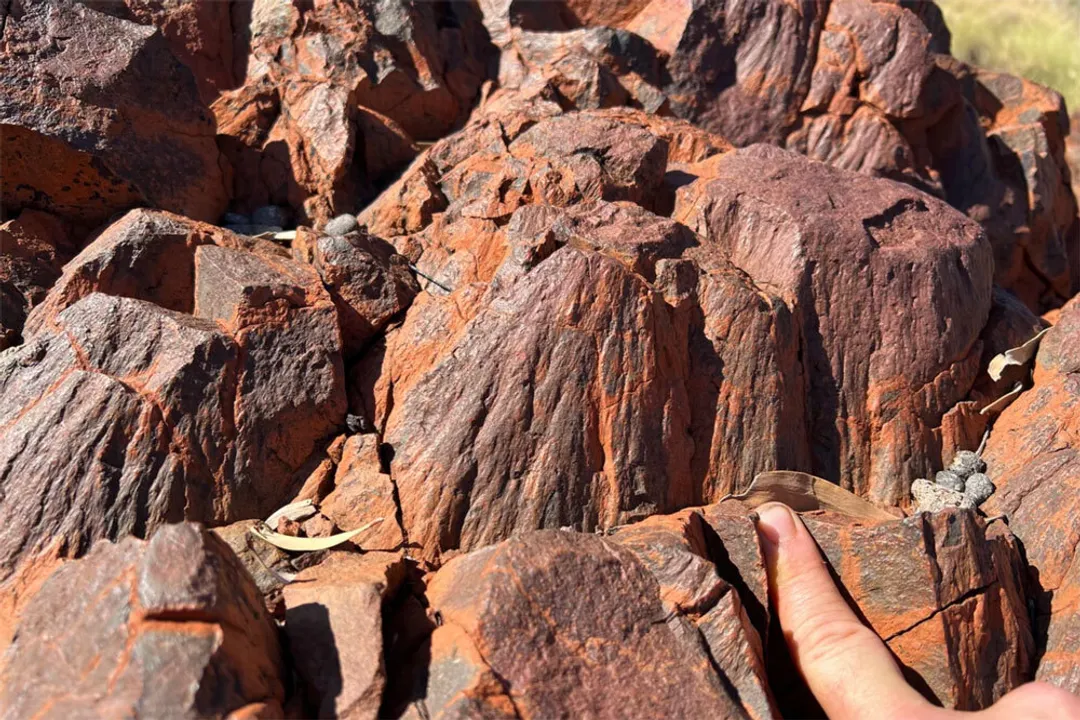
Determining the age of the oldest impact crater on Earth is a constant pursuit in geology, as nearly all evidence of ancient, violent impacts has been scrubbed away by billions of years of plate tectonics, erosion, and metamorphism. For a long time, the Vredefort impact structure in South Africa held the title of the oldest confirmed impact event, estimated at about 2.02 billion years old. [8] However, recent work has rewritten that timeline significantly, pushing the confirmed record back by over a billion years to a site in Western Australia.
The current title holder for the oldest known impact structure is the Yarrabubba impact structure, situated near the East Pilbara Craton in the outback of Western Australia. [1][3][4] This structure now represents an impact event that occurred approximately 3.5 billion years ago. [2][5] Finding an event of this antiquity preserved in the rock record is a monumental feat, given that the Earth's crust has been constantly recycled and reshaped since the Paleoarchean era. [2][4][7]
# Geologic Erasure
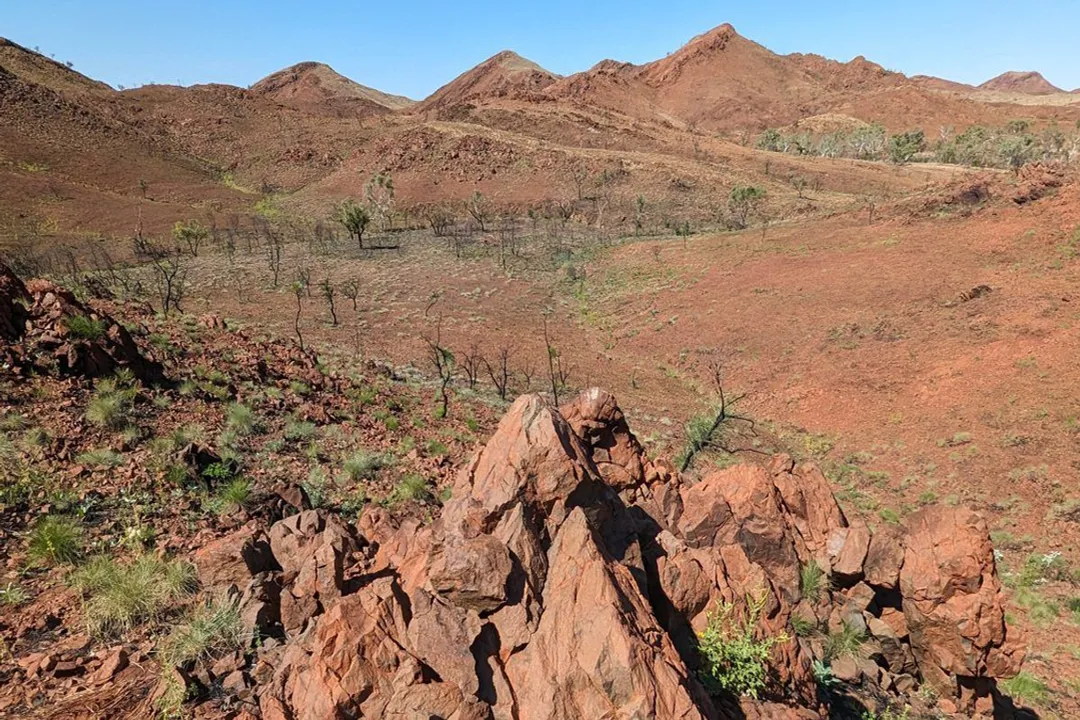
The difficulty in dating these ancient scars lies in the very nature of our planet. Unlike the Moon, Earth’s surface is dynamic. Continents drift, mountains rise and fall, and rock layers are buried under kilometers of sediment or subjected to intense heat and pressure that destroys original mineral signatures. [5] An impact crater that formed 3.5 billion years ago is not visible on the surface as a defined bowl or rim; rather, it exists only as a subtle chemical and structural signature locked deep within the crust. [2][3]
It is important to note the difference between the oldest confirmed impact event and the largest preserved structure. While Yarrabubba is the oldest confirmed event, the Vredefort structure in South Africa remains the largest confirmed impact feature still visible on Earth today, spanning about 300 kilometers across. [8] Yarrabubba, in contrast, is heavily eroded. While the initial event may have created a feature up to 90 kilometers wide, scientists today can only detect the subtle remnants of this ancient collision. [2][3][5] The fact that any verifiable evidence remains after 3.5 billion years of geological churning speaks volumes about the initial violence and scale of the original impact.
# Zircon Clocks
Pinpointing the exact age of the Yarrabubba event was an incredible technical achievement, relying on the resilience of tiny mineral grains called zircons. [1][5] Zircons are notoriously tough minerals that lock in radioactive elements like uranium when they crystallize, and they resist changing their internal structure unless subjected to extreme heat and pressure. [2][7]
Researchers were able to date the impact by studying zircons found in the impact melt rocks, which are rocks that were melted by the heat of the collision and then quickly cooled. [1][2] The uranium within these zircon crystals decays over time into lead at a known, steady rate—this functions as a geologic clock. [1][7] When scientists measured the ratio of uranium to lead in the Yarrabubba zircons, they found evidence of a massive thermal shock consistent with an impact event, with the crystallization age pointing firmly to 3.5 billion years ago. [1][2][5] This dating technique, utilizing uranium-lead chronology on impact-related minerals, provides a precise, verifiable timestamp for the collision. [7]
# Scale of Collision
Based on the analysis of the site, the impactor that created the Yarrabubba structure is estimated to have been roughly 70 kilometers (43 miles) in diameter. [2][3] A collision of this magnitude would have been catastrophic to the regional environment, vaporizing vast quantities of rock and sending shockwaves across the planet. [5]
To put this into perspective, the smaller, younger Vredefort impact was caused by an object estimated to be 10 to 20 kilometers across. [8] While Yarrabubba's subsequent erosion has made definitive sizing difficult, the fact that an impactor this large occurred so early in Earth's history is significant.
| Feature | Yarrabubba Structure | Vredefort Structure |
|---|---|---|
| Location | Western Australia | South Africa |
| Age (Approx.) | 3.5 Billion Years | 2.02 Billion Years |
| Impactor Size Estimate | ~70 km diameter | 10–20 km diameter |
| Current Status | Heavily eroded chemical signature | Largest preserved structure |
| [1][2][3][8] |
# Ancient Environment
The dating of Yarrabubba to 3.5 billion years ago places the impact squarely in the Paleoarchean Era. [2][7] At this point in Earth's history, life on the planet consisted of microbial communities, likely concentrated in shallow oceans or near volcanic vents. [2][4] There were no complex, multi-cellular organisms, and critically, this impact occurred before the Great Oxidation Event (GOE), when free oxygen levels in the atmosphere began to rise significantly. [7]
This timing prompts an interesting line of geological contemplation: how did these fragile, early biospheres cope with such intense bombardment? While the impact occurred before the GOE, which dramatically altered atmospheric composition, an event this size would have likely injected massive amounts of dust and aerosols into the atmosphere, potentially causing a temporary, albeit intense, impact winter. [7] For the nascent microbial life struggling to establish stable ecosystems, such sudden environmental swings, even temporary ones, represent a major hurdle in planetary development. The planet had to survive not just the creation of the structure, but the immediate aftermath of vaporized rock raining back down onto the surface. [5]
Furthermore, considering the extreme age, we must ask what this implies for the rest of the ancient crust. If a 3.5-billion-year-old event can leave behind enough evidence to be dated via zircon analysis, it suggests that if larger or more perfectly preserved craters existed before this time, they have been rendered completely unrecognizable by subsequent activity. It establishes a benchmark for how quickly Earth can recycle its surface evidence, making any impact older than Yarrabubba exceedingly difficult, if not impossible, to identify using current techniques based on mineral alteration. The discovery of Yarrabubba shows that the window for finding ancient, pre-Cambrian impact signatures is narrow, relying on fortunate geologic preservation in ancient cratons like the East Pilbara. [4]
The confirmation of the Yarrabubba structure serves as a powerful reminder that early Earth was a far more violent place than our modern, relatively placid world suggests. It pushes back the history of large impacts and provides critical data points for modeling the bombardment history of terrestrial planets, reinforcing the idea that the Moon's heavily cratered surface may not be the only place that saw major collisions billions of years ago. [5][7]
Related Questions
#Citations
Yarrabubba impact structure
World's oldest impact crater found, rewriting Earth's ancient ...
Earth's Oldest Crater May Have Jumpstarted Life
New record for oldest impact crater on Earth
Oldest Known Impact Crater Discovered in Australia
Earth's oldest asteroid crater found... (BBC News) - NCBI
Earth's oldest crater found! - Bad Astronomy Newsletter
Scientists discover Earth's oldest impact crater in Australia