sunset articles
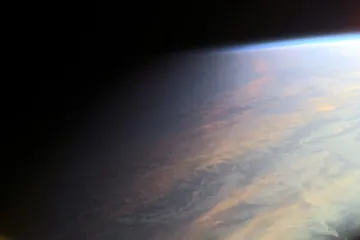
What is the broad, casual term used to describe the illumination remaining in the sky after the sun sets?
Until what angular distance below the horizon does Civil Twilight last?
What primary limitation characterizes the visibility during Nautical Twilight?
When is the sky considered fully dark, or night, setting in based on the sun's position?
Which color wavelengths are filtered out by atmospheric scattering as the sun sets, allowing warmer colors to dominate near the horizon?
Where is the phenomenon known as Alpenglow typically observed?
What causes the predominant blue hue observed during the Blue Hour?
What key activity can still be conducted without artificial illumination during Civil Twilight?
How does the duration of twilight stages generally change when moving from the equator toward higher latitudes?
Why might the evening afterglow potentially show deeper red hues compared to the pre-dawn glow?
What is the angular range of the sun's center below the horizon during Nautical Twilight?
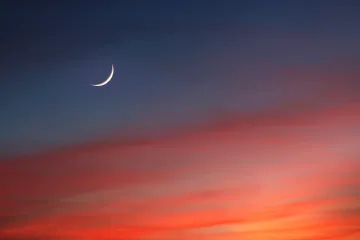
What causes the sky to remain illuminated after the Sun dips below the geometric horizon?
When does Civil Twilight officially end?
What angular separation below the horizon marks the end of Nautical Twilight?
What specific condition must be met for the sky to be considered truly dark for observing the faintest celestial objects?
Which type of scattering causes the characteristic blue color of the daytime sky?
Why do sunsets and the subsequent afterglow often feature reds and oranges?
What phenomenon is caused by larger particles like dust or pollutants scattering light broadly, potentially extending brightness?
If an observer lives near the equator, how does the Sun's path affect twilight duration?
What visual color contrast characterizes the transition from the western horizon upward during Nautical Twilight?
What does a persistent colorful glow hanging in the sky long after sunset suggest about the atmosphere?
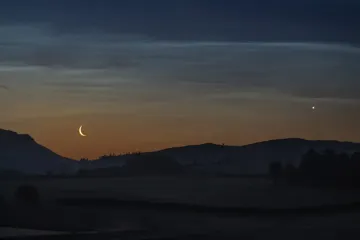
What celestial object is usually the brilliant beacon seen low in the western sky shortly after sunset?
Besides the Sun and the Moon, what rank does Venus hold in terms of brightness among natural objects in the sky?
What is the primary reason for Venus's exceptional luminosity as viewed from Earth?
What component of Venus's thick atmosphere is responsible for reflecting about 70% of incoming sunlight?
How does Venus earn the title 'Morning Star' versus 'Evening Star'?
How does the light from Venus typically appear compared to distant stars when observed?
What term measures the angular distance between Venus and the Sun as viewed from Earth?
Approximately how often does Venus reach its greatest elongation, positioning it perfectly for evening viewing?
If an observer sees a widespread, pinkish or reddish horizontal band above the eastern horizon after sunset, what phenomenon are they likely observing instead of Venus?