What is the bright light in the sky looking west?

The very bright light seen low in the western sky shortly after the Sun dips below the horizon is one of the most common astronomical queries from casual observers. [1][2][5] For many people, especially when looking in that direction following sunset, that brilliant beacon is almost certainly the planet Venus. [3][5][7][8][9] It frequently captures attention because it is incredibly luminous, often outshining every star visible in the night sky. [7]
# Evening Star
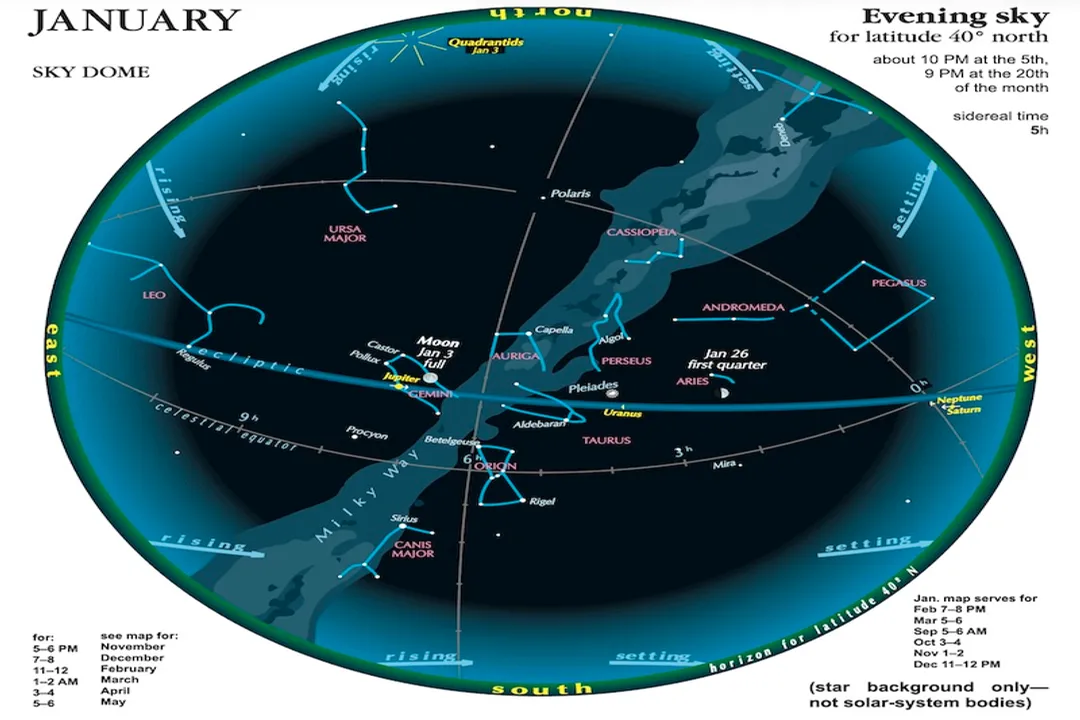
Venus holds a special distinction in our solar system as the second planet from the Sun, but its apparent brightness to us on Earth far exceeds that of any other planet or star. [3][5][9] It earns the nickname the "evening star" when it appears in the west after sunset, or the "morning star" when it rises in the east before dawn. [5][8] This visibility window, tied to its orbit, means it is rarely visible high in the sky at midnight; it is primarily an object of twilight viewing. [8] Observers note that it can be the brightest object after the Moon itself. [9]
The sheer intensity of Venus is not due to it being intrinsically brighter than other celestial bodies, but rather a combination of its proximity to Earth and the nature of its atmosphere. [3] Venus is covered by thick clouds composed primarily of sulfuric acid droplets. [3] These clouds are extremely good reflectors of sunlight, boasting an albedo (reflectivity) close to 0.7, meaning about 70% of the sunlight that hits those clouds is bounced back toward Earth. [3] This combination of being relatively close and possessing a super-reflective surface allows it to blaze so brightly in our sky. [3]
# Planetary Brightness

While Venus is the usual suspect, the identity of a bright light in the west is always time-dependent. [4] If you look up on a different night, or even an hour later, you might see something else entirely. Astronomy is dynamic, and what you see depends on the specific alignment of Earth, the Sun, and the other planets at that moment. [4]
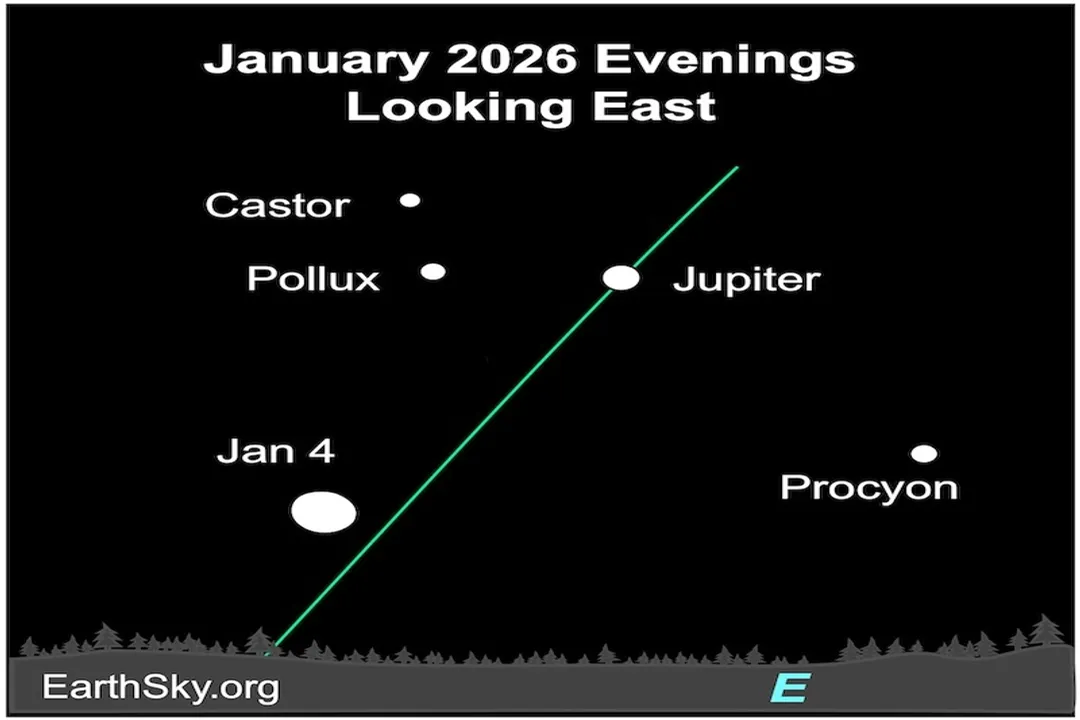
For instance, sometimes Jupiter or Mars can also appear quite bright in the western sky, depending on their current position in their respective orbits relative to Earth. [4] Jupiter, being a massive planet, is intrinsically bright, though it doesn't possess the same reflective cloud deck as Venus. Mars, which appears reddish, can become very conspicuous when it is near opposition (when Earth passes directly between Mars and the Sun). [4]
To truly know what you are seeing, one must consult an up-to-date guide or application showing the positions of the planets for that specific evening. [4] If you are seeing two very bright lights in the western sky, for example, it is highly likely that one is Venus, and the other is either Jupiter or Mars, or perhaps a particularly luminous star very close to the horizon. [1] Understanding the difference in appearance can sometimes offer a quick clue, even without consulting an ephemeris.
| Celestial Object | Typical Appearance Notes | Common Visibility Timeframe |
|---|---|---|
| Venus | Exceptionally bright, steady light; often appears white or slightly yellowish [3][7] | Evening twilight (West) or Morning twilight (East) [8] |
| Jupiter | Very bright, but generally less brilliant than peak Venus; steady light [4] | Varies based on orbital position [4] |
| Mars | Noticeably dimmer than Venus or Jupiter, often shows a distinct reddish hue [4] | Varies based on orbital position [4] |
| Bright Stars | Can be very bright but usually exhibit noticeable twinkling [1] | Visible throughout the night, depending on constellation position |
# Orbital Dance
Venus’s visibility changes significantly throughout the year because it orbits the Sun inside Earth’s orbit. [3] This orbital arrangement means that Venus goes through a cycle of phases, much like our Moon, as viewed from Earth. [3] When Venus is on the far side of the Sun from us, it appears nearly full but is very small and dim because of the great distance. When it is between the Earth and the Sun, it appears as a thin crescent but is much closer, making it appear larger. [3]
The brightest phase—the point where it maximizes its visibility for evening viewers—occurs when it is at its greatest elongation from the Sun. [3] Elongation is the angular separation between the planet and the Sun as seen from Earth. When Venus is at maximum eastern elongation, it sets after the Sun and is visible as the "evening star." When it reaches maximum western elongation, it rises before the Sun and is visible as the "morning star". [8] This orbital dance dictates that the time you see this bright light in the west is transient; it may be prominent for several months and then disappear from the evening sky entirely for a period as it swings around to become visible in the morning, or vice versa. [3] This transition period, when it is too close to the Sun to see, can sometimes lead observers to wonder where their bright "star" has gone. [8]
For instance, if you are looking west after sunset and see a brilliant object, you are seeing Venus when it is favorably positioned in the sky relative to the Sun, appearing at an angle that allows it to linger above the horizon after twilight begins. [7]
# Atmospheric Interference
A helpful, practical distinction an observer can make without consulting a star chart involves observing how the light behaves as it passes through our atmosphere. [1] Stars, being immensely distant point sources of light, are more susceptible to disruption from pockets of turbulent air in Earth's atmosphere, commonly called "seeing" conditions. [1] This turbulence causes starlight to bend slightly and rapidly, which we perceive as twinkling.
Planets, on the other hand, are close enough that they appear as tiny disks rather than perfect points of light, even through small telescopes. [1] This slightly larger apparent size means that the light entering our eyes is less easily disturbed by atmospheric turbulence. Therefore, a key indicator for identifying Venus (or Jupiter/Mars) is its steady light. [1] If the bright western light remains consistently bright and does not seem to flicker or sparkle like a nearby star, it strongly suggests you are looking at a planet rather than a star. [1]
It is a good idea to train your eye to notice this difference. Pick a bright, known star that is relatively low in the sky—perhaps one near the horizon where atmospheric distortion is highest—and compare its scintillation to the steady glow of the bright object in the west. [1] If the western object is significantly more stable, you can be fairly confident it’s a planet like Venus, which due to its high reflectivity, will dominate that comparison regardless of the time of year. [3]
# Confirmation Steps
When an object is this bright and commonly seen, verifying its identity is straightforward, especially if you are dedicated to making regular observations. Since the bright light is most likely Venus, a good approach is to establish a routine for observing it during its visible period. [8]
First, note the exact time and date you see the light and its compass direction. [4] If it is visible for a couple of hours after the Sun has set, that strongly points to Venus as the evening object. [8] If you happen to look before sunrise in the east, and it’s equally bright, that confirms it is Venus in its morning star phase. [8]
If you are unsure, the most reliable method involves using digital tools. Modern astronomy apps designed for smartphones or computers are excellent resources. [4] These tools use your current GPS location and the exact time to model the sky above you, accurately labeling every star, planet, and constellation visible. [4] By opening the app and pointing your phone toward the bright light, it will instantly tell you if you are looking at Venus, Jupiter, or something else entirely. [4]
While Venus is the overwhelming favorite for the brightest object in the west after sunset, remember that its reign in the evening sky is temporary. [3] It might vanish for a few weeks or months, only to reappear on the opposite side of the sky in the east before dawn. [8] This absence is as important a clue as its presence, as it confirms the object is an inner planet following an orbit faster than Earth’s. [3] If the light disappears entirely from both the morning and evening sky for an extended period, you are observing the natural rhythm of the solar system as dictated by Venus's orbital path. [3]
Related Questions
#Citations
What Are Those Two Bright Lights on the Western Horizon?
What's that very bright light in the western sky? - Eugene - Reddit
Why is Venus so bright in the night sky? - Cool Cosmos
Visible planets and night sky guide for December and January
Is it a planet or something else in the western sky? - Facebook
The bright point of light in the west after sunset is Venus
What's That Bright White 'Star' In The West After Sunset? - Forbes
That bright light you can see in the western sky? That's Venus
I keep seeing this light in the sky. I think it's the brightest light after ...