What is the sudden flash of light in the sky?
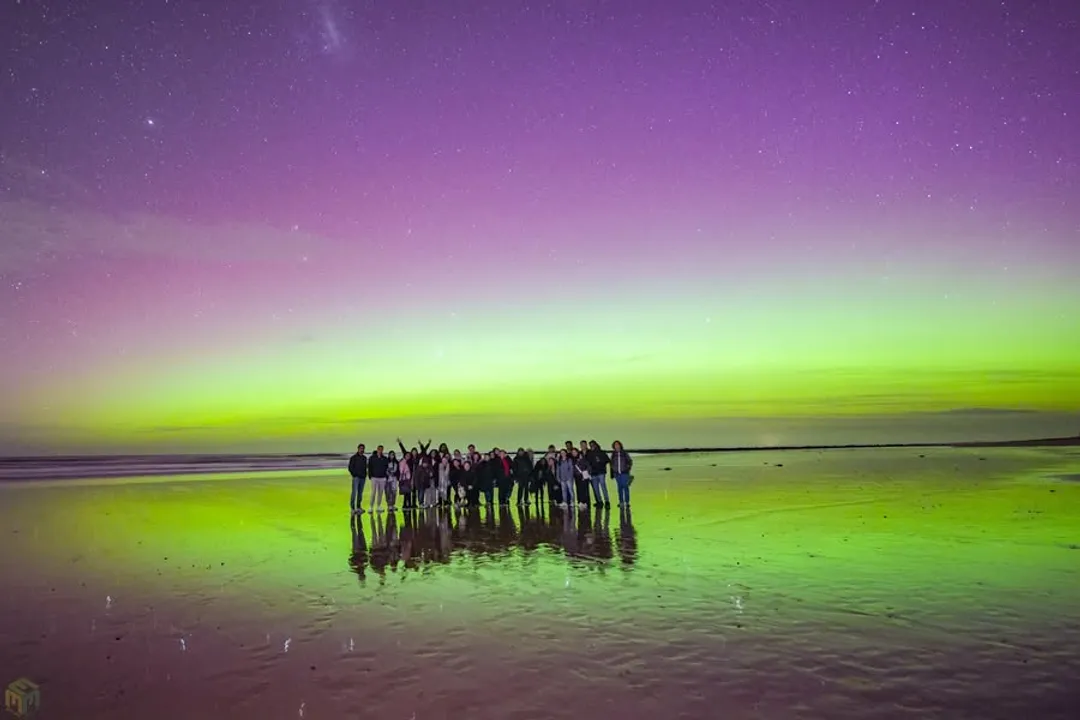
Seeing a sudden, brilliant flash of light streak across the night sky is an arresting experience, often leaving the observer wondering exactly what they witnessed. These momentary illuminations, ranging from brief sparkles to lingering, colorful glows, spur immediate questions about their origin. While the immediate reaction might lean toward the extraordinary, the actual explanations often fall into several familiar, though still fascinating, categories involving natural phenomena, human technology, or, very rarely, deep-space occurrences. [2][3]
# Common Sightings

The most frequent cause for a sudden, bright flash in the sky is often related to space debris entering Earth's atmosphere, commonly known as a meteor. [1][4] When small particles from space slam into the atmosphere at high velocity, the friction heats the air around them intensely, causing them to glow brightly. [7] If the object is large enough to produce a flash brighter than the planet Venus, it earns the designation of a fireball. [1][7]
When these fireballs are exceptionally bright, sometimes causing a visible trail or even breaking apart, they are called bolides. [7] These events can be dramatic, with the light often being described as white, blue, or sometimes green, depending on the chemical composition of the burning material. [1] Unlike aircraft lights, these flashes are typically transient—lasting only a few seconds—and often appear to travel in a straight path across a broad section of the sky before fading as the object either burns up completely or is too small to generate visible light. [4] Occasionally, observers report hearing a faint sound associated with a very large fireball after the light has disappeared, which is the sound wave from the object’s passage finally reaching the ground. [7]
# Human Technology
Beyond natural space visitors, many sudden flashes can be traced back to artifacts launched by humanity. [2] One historical example, which still occurs in modified forms, involves satellite flares. [4] While the most famous were caused by the large, flat solar arrays on older Iridium satellites reflecting sunlight directly toward the ground like a mirror, newer satellites can also create brief bright spots when the angle of the sun relative to the satellite and the observer aligns perfectly. [4] These reflections are distinct because they tend to appear suddenly and then vanish as the satellite moves out of the perfect reflection geometry, often appearing as a single, slow-moving point of light rather than a streak. [1]
A related, yet often more dramatic, possibility is the re-entry of space debris. [2][4] This can involve discarded rocket stages, defunct satellites, or even fragments from larger space accidents. As these objects fall through the atmosphere, they heat up and fragment, which can result in multiple, slightly delayed flashes as the pieces burn up at varying altitudes. [4] Unlike a small meteor that burns out quickly, large debris re-entry can sometimes produce a prolonged, slow-moving arc of light, occasionally accompanied by audible sonic booms if the object is substantial. [2] If you notice the light appears to be too slow or follows a path that seems unusually controlled or steady before illuminating, technology is a strong candidate. [1]
# Deep Space Events
While most visible flashes are relatively close to Earth, the universe occasionally sends us a signal so powerful it can momentarily compete with our local explanations. [3] Astronomers study unexplained bright phenomena that baffle even experts, sometimes requiring comparisons with known, yet rare, deep-sky events. [3]
One such category involves Tidal Disruption Events (TDEs). [8] These occur when a star wanders too close to a supermassive black hole at the center of a galaxy and is torn apart by the gravitational forces, resulting in a massive burst of energy. [8] In incredibly rare circumstances, the resulting emissions, sometimes channeled into powerful jets of plasma, can be aimed directly at Earth, appearing as an intense, transient flash of light to ground-based or orbital telescopes. [8] While a TDE is typically observed over days or weeks in professional surveys, a highly energized jet pointing exactly along our line of sight could, theoretically, present as an extraordinarily bright, but brief, flash to an observer. [3]
Another, though less likely for a casual observer to attribute a flash to, is the light from a super-luminous supernova. [3] These stellar explosions are far brighter than standard supernovae, and if one occurred in a relatively nearby galaxy, its peak brightness could certainly register as a powerful flash, although usually persisting longer than a few seconds. [3]
# Event Differentiation
Understanding the source often comes down to analyzing the light's duration, color, and movement. [7] It can be useful for personal observation to create a mental checklist when such an event occurs.
| Characteristic | Common Meteor/Fireball | Satellite Re-entry/Debris | Black Hole Jet/TDE (Extremely Rare) |
|---|---|---|---|
| Duration | Seconds, brief streak [7] | Several seconds to a minute; may appear as multiple flashes [4] | Days/Weeks usually; theoretical brief flash would be exceptionally bright [3] |
| Movement | Fast, straight line across the sky [1] | Can be slower, more deliberate, or appear to vanish suddenly [4] | Depends on observation method; professional observation notes slow changes [8] |
| Color | Often white, blue, or green [1] | Usually steady white or yellowish [2] | Could span the spectrum depending on energy output [3] |
When you see a bright flash, consider the local context. If it occurs during the day, it is highly likely to be an aircraft, or perhaps a reflection off a distant object like a plane or drone, as atmospheric scattering makes brief deep-space events less visible in daylight. [2] At night, if the light seems to appear, brighten rapidly, and then disappear without a trail, it leans toward a very small meteor or a satellite moving rapidly out of a sunlight reflection angle. [1] A key difference I have noticed when reviewing amateur observations is that the human eye often overestimates the speed of a meteor, making a slow re-entry look much faster than it truly was in the context of the whole sky. [4]
For those trying to record these events with a camera, capturing the context is essential. Don't just look for the light; try to note its position relative to fixed stars or constellations. Even capturing a few seconds of video before or after the flash—showing the darkness—can help analysts later determine the approximate altitude and trajectory of the object, distinguishing between something burning up high (meteor) versus something breaking up lower down (debris). [7] Recording the exact time and location using a smartphone's GPS metadata is incredibly valuable, even if the resulting image is just a black screen with a single bright streak. [3]
# Observing Best Practices
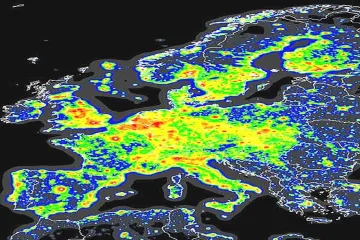
If you are frequently in areas with low light pollution, being prepared can turn a startling moment into a data point. Since many events are short-lived, the primary actionable step is immediate memory retention and documentation. [1]
- Note the time: Use a precise clock or, ideally, a phone synced to network time.
- Identify the direction: Use a compass app or note the object's relation to known constellations or landmarks, like a prominent hill or building.
- Estimate duration and color: Was it instantaneous (like a camera flash) or did it persist for a second or more? What was its dominant color?
- Check local reports: Soon after the event, check local social media groups or weather reports. If others saw it, confirmation helps rule out highly localized phenomena, though widespread reports often point toward a significant atmospheric event or large debris re-entry. [5]
While the vast majority of these flashes are harmless, fleeting displays caused by space dust or man-made remnants, [2][4] the sheer variety of potential causes—from a tiny grain of sand burning up to the distant death of a star—is what makes looking up at the night sky an endlessly engaging prospect. [3] The sudden flash serves as a brief, unintended window into the vast and active environment both above and far beyond our atmosphere.
#Videos
What's That In The Sky? How To Identify That Flash of Light You Just ...
Related Questions
#Citations
Can anyone please explain these flashes of light I've been seeing ...
I was driving home at night and I saw a random burst of light ... - Quora
Mysterious Bright Flashes in the Night Sky Baffle Astronomers
Sudden flashes in the sky, what are they? - Cloudy Nights
What are the flashing lights in the sky? - Facebook
What's That In The Sky? How To Identify That Flash of Light You Just ...
Flashes in the Sky - Astronomy Stack Exchange
Mysterious bright flash is a black hole jet pointing straight at Earth