Why is there a random light in the sky at night?
Seeing a sudden, unannounced burst of light streak across the night sky can be jarring. One moment you are looking at familiar stars, and the next, a brilliant, momentary flash or a slow-moving beacon appears, leaving you questioning what you just witnessed. This common experience often sparks immediate curiosity, sometimes leading to confusion or concern, as evidenced by numerous public discussions online seeking explanations for these aerial anomalies. [1][2][5] While the possibilities range from the perfectly mundane to the genuinely rare, most random night lights fall into a few distinct scientific categories relating to debris, reflections, or local atmospheric conditions.
# Celestial Debris
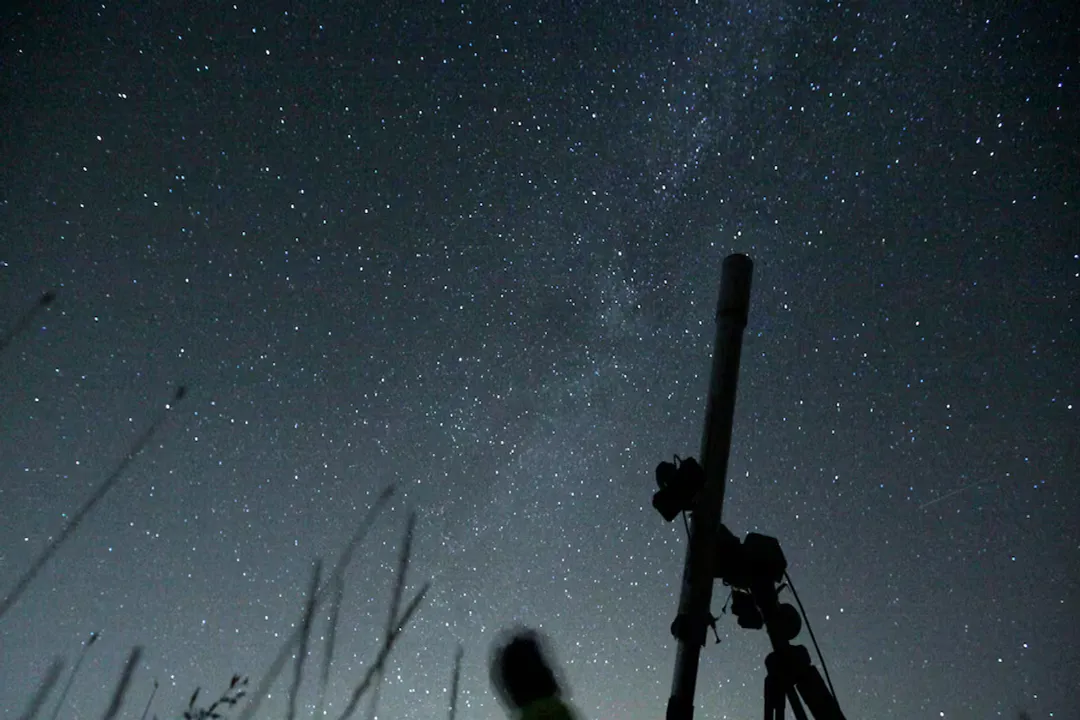
The most frequent cause for a quick, bright flash that seems to vanish as quickly as it appeared is usually space rock entering our atmosphere—a meteor. [8] Technically, these objects are called meteoroids when they are still in space, but once they hit the friction of Earth’s atmosphere, they become meteors. [8] Most meteors are minuscule, often no larger than a grain of sand, and they burn up harmlessly high above the ground, producing a faint streak we call a shooting star. [8]
However, sometimes the object is larger, perhaps the size of a pebble or even a small boulder. When these larger pieces collide with the atmosphere at high speed, the resulting friction generates immense heat and light, creating what is known as a fireball or a bolide. [9] These events can be astonishingly bright, sometimes briefly outshining Venus or even the full moon, causing significant alarm to anyone who sees them. [9] A key characteristic of these bright meteors is their rapid, non-linear path; they streak across the sky and disappear, perhaps leaving behind a brief afterglow. [8] One way to gauge the event is to consider the timing. If you notice an unusual number of these flashes over several days or weeks, you might be observing an annual meteor shower, like the Ursids, which peaks around mid-December. [10] Even during quieter times, sporadic meteors are always burning up, meaning a random flash can happen on any given clear night. [9]
If you observe a light, consider this simple differentiator: did it flash once and disappear, or did it move steadily for several seconds? A single, sudden, brilliant flash strongly suggests an ablating piece of extraterrestrial material. [8]
# Orbital Reflections
Not all moving lights are meteors burning up; many are objects we put there ourselves. A light that moves slowly and steadily across the sky, often appearing as a bright star that gradually moves over several minutes, is very likely a satellite reflecting sunlight. [2][9]
Satellites, including large constellations like Starlink or individual orbital platforms, do not produce their own light; they are visible because they are high enough in orbit to catch the sun’s rays even after the ground below has fallen into darkness, or before the sun has risen high enough to illuminate them fully. [9] The visibility of these objects depends entirely on the geometry between the observer, the satellite, and the sun. [9]
Sometimes, these reflections are not gradual but sudden and intense. In the past, certain types of satellites, like the older Iridium communication satellites, were notorious for creating what were called "Iridium flares". [6] These flares occurred when the satellite’s three large, flat antenna panels perfectly angled sunlight toward the ground observer, causing an extremely brilliant, short-lived flash across the sky. [4][6] While the specific Iridium constellation responsible for the most famous flares has been largely deorbited, other satellites can still cause unpredictable bright reflections, or "flashes," if their reflective surfaces catch the light just right. [6] Users reporting moving lights often try to determine if the light maintains a steady path or if it suddenly disappears, which might indicate it has passed into the Earth’s shadow. [2]
Contrast this with aircraft. While planes are also common moving lights, they usually exhibit distinct behaviors: they often blink with colored navigation lights (red, green, white), may change direction abruptly, or you can hear the sound of an engine if they are low enough. [2] A silent, perfectly straight path often rules out conventional aircraft.
# Atmospheric Glow
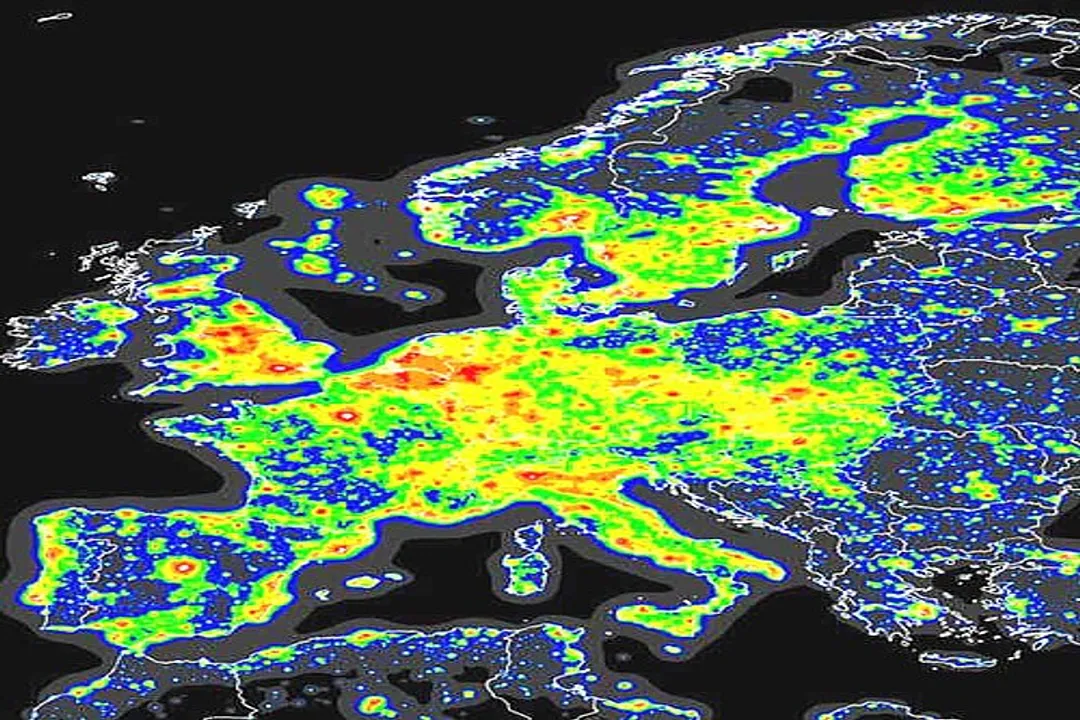
While most inquiries concern momentary flashes or distinct moving points, sometimes the "random light" is less of a point source and more of an illumination of the sky itself. This phenomenon is known as skyglow. [7] Skyglow is the brightening of the night sky caused by artificial light pollution scattering off airborne particles and gas molecules in the atmosphere. [7] For those living near large metropolitan areas, this scattering effectively creates a permanent, low-level dome of light visible above the city horizon, which can sometimes be mistaken for an unusual atmospheric condition if one is not accustomed to it. [7]
This is distinct from a flash or a moving object, as skyglow is persistent. It generally makes fainter objects harder to see, but in rare circumstances involving very specific weather conditions—like low clouds acting as a mirror—terrestrial lighting can be focused or reflected in ways that appear momentarily odd to an observer looking up. [7] If you notice a general, diffuse illumination rather than a distinct point of light, considering local light sources and weather patterns offers a reasonable explanation. [7]
# Interpreting the Observation
When trying to diagnose what you saw, documenting the event with simple observational parameters can narrow down the possibilities significantly. For instance, understanding the duration is crucial. A light lasting less than a second is likely a very small meteoroid flash or an extremely brief satellite reflection anomaly. A light that moves for several seconds is almost certainly a larger fireball or a satellite/aircraft. [8]
Here is a brief guide to help contextualize the sighting based on duration and movement:
| Observation Trait | Most Likely Source | Key Characteristics |
|---|---|---|
| Single, Intense Flash | Fireball/Bright Meteor | Extremely fast, non-linear path, vanishes completely. [9] |
| Steady Movement (Minutes) | Satellite | Constant velocity, disappears when it enters shadow. [9] |
| Slow, Changing Movement | Aircraft | May blink navigation lights, often changes course, potential engine noise. [2] |
| General Illumination | Skyglow | Diffuse, broad area of light, persistent. [7] |
If you were driving late at night and saw the light, your peripheral vision might have registered the event before your conscious mind could process the details, leading to the need for later analysis. [2] If the observation was over a body of water or open field, the absence of foreground objects makes assessing altitude and trajectory more difficult, potentially leading to overestimation of size or speed. [1] My experience suggests that people often overestimate the altitude of objects unless there is a clear reference point, making ground-based lighting appear much higher than it actually is. [5]
For instance, if you noticed the light seeming to wobble slightly or change color rapidly, it might suggest a much lower-flying object, perhaps even a drone operating high enough to catch the sun’s light, although reports of satellites and meteors dominate the discussion of high-altitude, unexplained lights. [2][6] Because many people report these sightings across social media groups seeking immediate answers, the initial wave of explanations often leans toward the dramatic, but cross-referencing reports with known astronomical events or orbital tracking data often provides a straightforward resolution. [1][5] Observing the sky consistently allows an observer to become familiar with the typical paths of visible satellites, making truly anomalous events stand out much more clearly later on. [9]
#Videos
What's up with the lights in the night sky? - YouTube
Related Questions
#Citations
Can anyone please explain these flashes of light I've been seeing ...
I was driving home at night and I saw a random burst of light ... - Quora
People report line of lights in the night sky - WGAL
What's up with the lights in the night sky? - YouTube
Does anyone know what the odd stationary light in the night sky over ...
Sudden flashes in the sky, what are they? - Cloudy Nights
Single Flashes of Light in Night Sky - Backyardastronomy.net
Skyglow - Wikipedia
What could be an explanation for a satellite-like moving light in the ...
Catch the Ursid meteor shower as it peaks just before Christmas