What kind of light does the Earth emit?
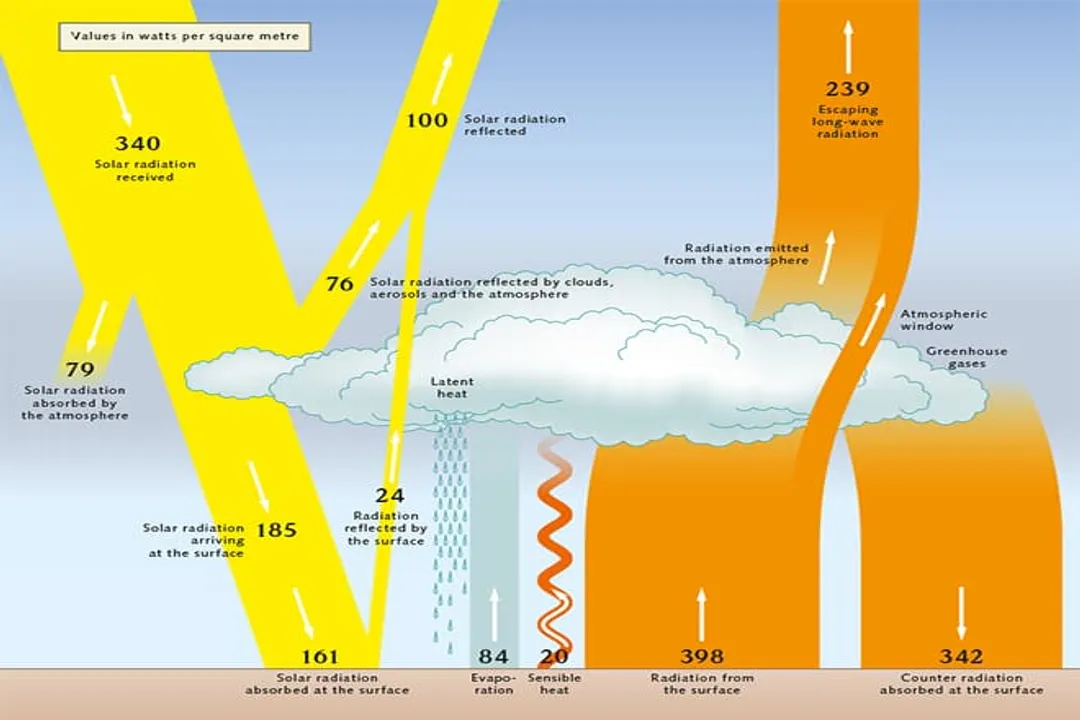
The Earth is constantly interacting with light, but the light it sends back into space is fundamentally different from the light it receives from the Sun. When we think of light, our minds often jump to the visible spectrum—the colors of the rainbow that pour down during the day. However, the light the Earth emits is mostly invisible to our eyes, composed overwhelmingly of different forms of electromagnetic radiation, chiefly heat.[5][7]
This outgoing radiation is critical because it is how our planet sheds the energy it absorbs, keeping global temperatures relatively stable over time. If the Earth absorbed energy continuously without radiating an equivalent amount back out, its temperature would climb indefinitely. [6] Understanding what kind of light the Earth emits is therefore central to understanding Earth's climate and energy balance. [4][8]
# Energy Exchange
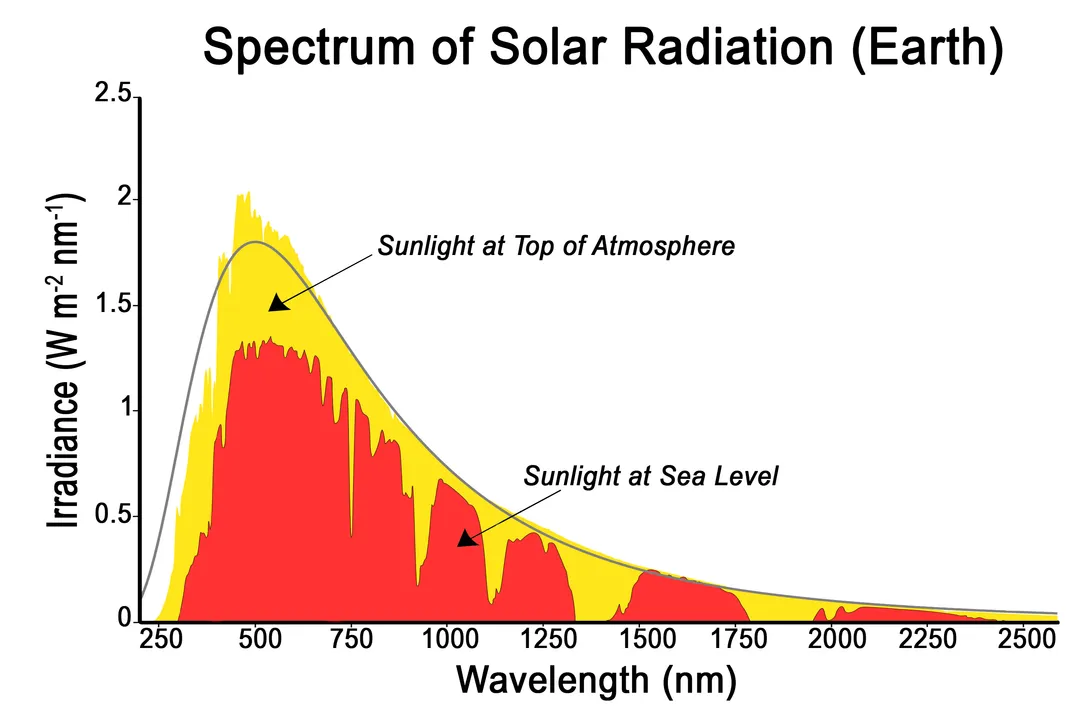
The dynamic between incoming and outgoing energy is often described as the Earth’s radiation balance. [8] The energy arriving from the Sun is categorized as shortwave radiation, which includes visible light, ultraviolet (UV), and near-infrared radiation. [1][5] The Earth's surface, once warmed by this incoming solar energy, must then radiate that energy back out. This outgoing energy is classified as longwave radiation. [5][8]
The difference in wavelength is directly tied to the object's temperature. The Sun is incredibly hot—its surface temperature is around 5,778 Kelvin—which causes it to emit energy predominantly at shorter, high-energy wavelengths (visible light). [7] In contrast, Earth’s average surface temperature is much cooler, hovering near 288 Kelvin (about 15 degrees Celsius). [5] Objects at this relatively cool temperature emit energy primarily in the infrared portion of the spectrum, which we experience as heat. [3][7]
If we were to look at the Earth using instruments sensitive to these different parts of the spectrum, we would see a planet that is glowing, but not with colors visible to the human eye. The vast majority of this glow occurs in wavelengths longer than what our eyes can detect. [7]
# Heat Radiation
The light the Earth emits is almost entirely infrared radiation (IR), sometimes referred to as thermal radiation. [3] This is the fundamental mechanism by which the planet cools itself and regulates its temperature. [6] The infrared spectrum itself is broad, encompassing several regions, including near-infrared, mid-infrared, and far-infrared. [3]
For an object like Earth, the dominant emission falls into the thermal infrared range, typically corresponding to wavelengths between about 4 and 100 micrometers (). [3] This is what satellites measure when assessing the planet's outgoing energy budget. A significant portion of this emitted energy is in the mid- and far-infrared bands. [3]
It is important to recognize that every object with a temperature above absolute zero (0 Kelvin) emits some form of thermal radiation. [7] This is a constant process. However, the specific wavelength profile of that radiation depends strictly on the object's temperature. Because the Earth is so much cooler than the Sun, its radiant output peaks at wavelengths much longer than sunlight, meaning the Earth is radiating energy primarily as heat, not as visible light. [7]
To put the difference in perspective using rough measurements, the Sun's energy output peaks around (in the visible green/yellow part of the spectrum). [1] Earth's output, however, peaks much further out, typically around (in the thermal infrared region). [3] This significant shift in peak emission due to the temperature difference is why the light we receive is so different from the light we send back.
# Balance Required
The concept of a required balance dictates the amount of light Earth must emit. The Earth system constantly seeks equilibrium where the energy gained from the Sun equals the energy lost through outgoing radiation. [8] This balance determines the planet's long-term average temperature. [6]
If, for instance, the concentration of greenhouse gases in the atmosphere increases, these gases trap more outgoing longwave infrared radiation, preventing some of it from escaping to space. [5] This is analogous to putting a thicker blanket around the planet; less energy escapes, so the surface must warm up until it emits enough additional infrared radiation to match the incoming solar energy once more. [6] Conversely, features that increase the Earth's reflectivity, such as expanding ice sheets in polar regions, increase the albedo, causing more incoming sunlight to be reflected rather than absorbed. This reduced absorption means the surface ultimately radiates less heat until a new, usually cooler, equilibrium is reached. [10][8]
Consider the difference between a dark asphalt parking lot and a bright, snow-covered field. The asphalt absorbs much more incoming shortwave radiation and consequently heats up more significantly. Because it is hotter, it also emits a stronger stream of longwave infrared radiation compared to the reflective snow, which keeps more energy reflected back to space and maintains a lower surface temperature. [8] The required emission level is thus a direct function of the surface temperature, which itself depends on the initial absorption versus reflection of solar energy. [10]
# Minor Emissions
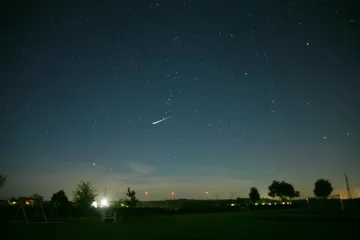
While the vast majority of Earth’s emitted light is non-visible infrared radiation, there are natural phenomena that produce visible light emissions, though these are negligible in the context of the global energy budget. These events are localized and often transient.
For example, lightning produces intense, short bursts of visible light as superheated air rapidly emits radiation. [7] Bioluminescence, generated by living organisms like certain fungi or deep-sea creatures, also results in the emission of visible light, a byproduct of chemical reactions within the organism. [7] In these cases, the emission is not the result of the object being hot enough to glow like the Sun, but rather the result of specific chemical or electrical energy conversions that happen to release photons in the visible range. [7]
It is a common misconception that Earth glows visibly at night. Because the planet's temperature is too low, any visible light it produces naturally is overwhelmed by the reflected sunlight during the day or is simply absent at night, save for those rare, localized exceptions. [7]
# Monitoring Outgoing
The ability to measure the infrared light the Earth emits is fundamental to modern climate science. [4] Instruments aboard satellites measure the upwelling longwave radiation across various infrared channels to determine how much energy is actually leaving the planet versus how much is being returned to the surface by atmospheric gases. [4][8]
These measurements allow scientists to quantify the impact of the atmospheric composition on the planet’s thermal state. If the total outgoing flux of longwave radiation suddenly decreased while solar input remained the same, it would be direct evidence that something—like increased greenhouse gases—is trapping more heat. [4] The specific structure of the outgoing infrared spectrum can even tell researchers what is causing the change, as different gases absorb and re-emit radiation at specific, unique infrared wavelengths. [3]
For instance, specialized sensors can monitor the spectral signature of cloud tops versus the surface beneath them. Clouds have a distinct IR signature compared to clear ground, and this distinction is vital because clouds play a complex role, both reflecting incoming solar energy and trapping outgoing thermal energy. [8] By carefully mapping the outgoing infrared spectrum, scientists can create models that accurately track heat movement, essential for accurately predicting future climate scenarios. [4]
Related Questions
#Citations
Sunlight - Wikipedia
Section III: Light & the Atmosphere - NASA PACE
Infrared Waves - NASA Science
Measuring & Analyzing Greenhouse Gases: Behind the Scenes
Electromagnetic Spectrum | EARTH 103: Earth in the Future
ELI5: Does the Earth accumulate the energy it receives from the Sun ...
Does everything on Earth emit some kind of visible light? - Quora
An idealized spectrum of electromagnetic radiation from the Sun ...
Solar Radiation & Photosynthetically Active Radiation
The Earth's heat and radiation balance - World Ocean Review