What does it mean when the Sun is in a constellation?
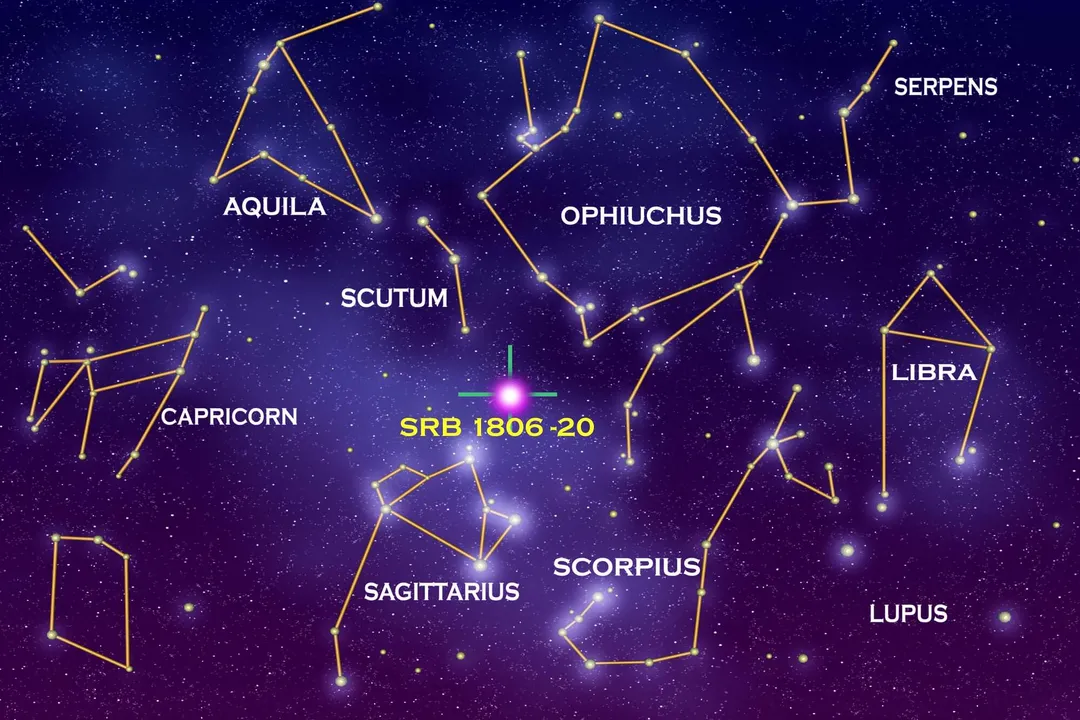
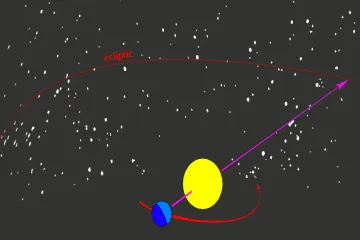
When people discuss the Sun "entering a constellation," they are often blending two distinct concepts rooted in different traditions: modern astronomy and ancient astrology. At its most basic, the Sun being in a constellation means that from our perspective on Earth, the Sun appears to be directly in front of the pattern of stars we call by a specific constellation's name. [3] This movement is tracked along a specific path across the sky called the ecliptic. [3]
However, the true meaning of this event is far more nuanced than a simple monthly shift because the definitions used by astronomy and astrology for these celestial divisions are fundamentally different, leading to considerable discrepancies over time. [4][7]
# Signs Versus Boundaries
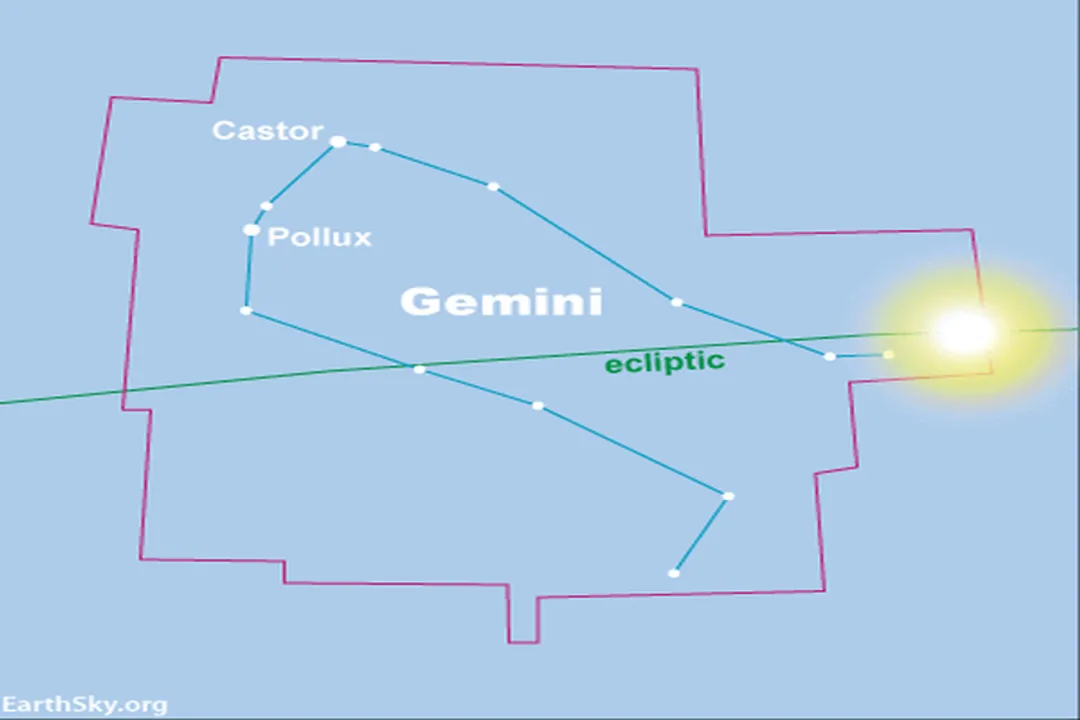
The confusion largely stems from the names: we have twelve astrological signs and twelve primary zodiacal constellations that share nearly identical names, such as Aries, Taurus, and Gemini. [7]
In astrology, the zodiac is divided into twelve signs, each covering exactly 30 degrees of the sky, creating an even division that totals 360 degrees. [4] These signs were established thousands of years ago based on where the Sun appeared to be on specific dates. [4]
Astronomy, on the other hand, defines a constellation as an officially recognized area of the celestial sphere delineated by the International Astronomical Union (IAU). [1] These boundaries are irregular, based on the established, ancient patterns of stars, and they are not equal in size. [1][7] Because the constellation boundaries are based on the actual, visible scattering of stars, some constellations cover much larger or smaller swathes of the ecliptic than the neat 30-degree segments used by astrology. [7]
This means that when the Sun is in the sign of Leo, it is not necessarily in the constellation of Leo at the same time, due to two major factors: the uneven size of the constellations and the slow, long-term shift in the Earth’s axis. [1][4]
# Axial Wobble Precession

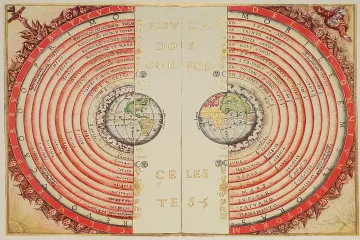
The key reason the Sun's current position relative to the constellations is different from what historical texts suggest is a phenomenon known as the precession of the equinoxes. [1] Earth does not spin perfectly upright; its axis slowly wobbles like a slowing top over a cycle lasting approximately 26,000 years. [1]
This wobble causes the location where the Sun crosses the celestial equator (the vernal equinox) to drift backward, moving against the backdrop of the fixed stars. [4] When the zodiacal signs were originally codified, the dates for the Sun entering a sign aligned almost perfectly with the Sun entering the corresponding constellation. [4]
However, due to precession, this alignment has drifted by about a month over the last two millennia. [1][4] For example, around the time of the original astrological calculations, the Sun would enter the constellation Aries near the spring equinox; today, the Sun enters Aries about a month before the spring equinox, as the equinox point has moved back into Pisces. [1]
This drift is a fundamental astronomical reality that separates the observational position of the Sun from the traditional, date-based astrological framework. [4]
# Varying Residency Times
Because the astrological signs are fixed at exactly 30 degrees each, while the astronomical constellations have boundaries set by the IAU that are not equal, the amount of time the Sun spends in each constellation varies considerably. [1][5]
While traditional systems assign roughly 30 days to each sign, the Sun's actual transit through the constellations along the ecliptic is uneven. [5]
One striking example of this variation is found when comparing the time spent near constellations like Virgo versus Scorpio. The Sun spends a substantially longer period traversing the area designated as the Virgo constellation than it does crossing the relatively small region defined as Scorpio. [1] In fact, the Sun spends only about six days in the constellation Aries, but it spends nearly 45 days in the constellation of Virgo. [1]
This uneven transit time demonstrates the practical difference between an artificially equal division (the 30-degree sign) and the real, uneven arrangement of star patterns in the sky (the constellation). [1][7]
| Constellation (approximate residency) | Duration (Days) | Comparison to 30-Day Sign |
|---|---|---|
| Aries | ~6 days | Significantly shorter |
| Taurus | ~25 days | Shorter |
| Gemini | ~22 days | Shorter |
| Cancer | ~20 days | Shorter |
| Leo | ~31 days | Nearly equal |
| Virgo | ~45 days | Significantly longer |
| Libra | ~23 days | Shorter |
| Scorpius | ~6 days | Significantly shorter |
| Ophiuchus (Non-Zodiacal) | ~18 days | Shorter |
| Sagittarius | ~23 days | Shorter |
| Capricorn | ~21 days | Shorter |
| Aquarius | ~21 days | Shorter |
| Pisces | ~19 days | Shorter |
| [Note: The inclusion of Ophiuchus, which the ecliptic passes through but is not counted in the traditional twelve, highlights the non-uniform nature of the celestial map used by astronomy [1].] |
When observing the Sun's position, it's important to remember that this is a continuous movement, not a sudden switch. One evening, the Sun is aligned with the stars of Constellation A; a few weeks later, it is aligned with Constellation B, simply because the Earth has moved along its orbit, making the Sun appear to slide past the background stars. [3]
# Invisibility During Transit
A key feature of the Sun being in a constellation is that the constellation itself becomes completely invisible during that time. [2]
If the Sun is positioned directly in front of the stars that form, say, Taurus, then the brilliance of the Sun completely overwhelms any faint starlight coming from that direction. [2] For an observer on Earth, the stars of Taurus are located in the same part of the sky as the Sun during the daytime, making it impossible to see them at night because the Sun's light dictates the sky's appearance in that region. [2]
This is why, when someone asks what constellation the Sun is in, the practical answer for stargazers is often "the one you can't see right now."
To see the constellation the Sun just left, you would look at the sky opposite the Sun's current location. For example, during the time the Sun is passing through the general vicinity of Leo (in the Northern Hemisphere summer), the constellation Aquarius, which is approximately opposite Leo in the celestial sphere, is best viewed at midnight. [2]
This phenomenon gives rise to a simple rule of thumb for the night sky: the constellation that is prominent overhead at midnight is generally the one that is opposite the Sun’s current position, reflecting the constellation the Sun was passing through roughly six months prior, adjusted for the current date and the precession effects. [2]
# Constellation Residency Today
Given the current positions defined by the IAU, the Sun passes through a total of 13 constellations along the ecliptic, not the twelve traditionally recognized by astrology. [1] The extra constellation is Ophiuchus, the Serpent-Bearer, located between Scorpio and Sagittarius. [1]
When discussing what it means for the Sun to be in a constellation today, we must refer to these modern astronomical boundaries. If a person relies on a general guide for the Sun's movement through the astrological signs, they might be off by several weeks regarding the actual star pattern the Sun is currently superimposed upon.
For instance, if someone checks an almanac and sees the Sun entering the sign of Gemini around May 21st, they might naturally assume the Sun is near the stars of the Gemini constellation. However, the Sun is actually continuing its journey through the constellation Taurus for several more days before entering Gemini's boundaries, and then it spends less than a month in Gemini before moving into Cancer. [1]
This layered understanding—the fixed path of the ecliptic, the irregular shapes of the constellations, and the slow shift caused by precession—shows that "when the Sun is in a constellation" is a precise astronomical marker of the Sun's current angular position against the fixed stellar background, a marker that has steadily decoupled from the familiar calendar dates of human history. [1][4] The real utility for an observer is not knowing where the Sun is, but knowing where the Sun is not—that opposite location is where the most interesting night sky viewing will occur during the dark hours.
#Videos
Constellations and Why They Move Across the Night Sky - YouTube
Related Questions
#Citations
How does the sun "enter" a constellation? : r/askscience - Reddit
When the sun "enters" a constellation, doesn't it make it impossible ...
What Constellation is the Sun in? - Universe Today
Sun entering signs and constellations - Universal Workshop
Solstice sun near Taurus-Gemini border | Tonight - EarthSky
Is the sun part of a constellation? - Quora
AstroPages | Zodiac | Western Washington University
What constellation are we in? - The Astro Lounge
Constellations and Why They Move Across the Night Sky - YouTube