Why can't you take a picture of the Sun?
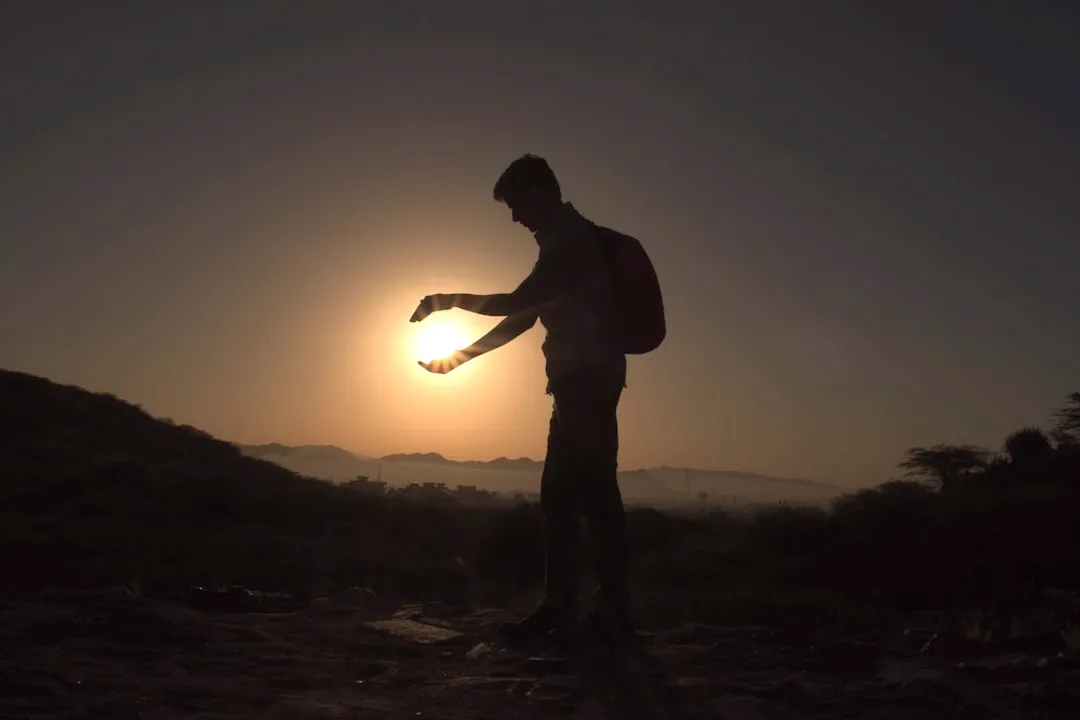
It seems impossible, or at least incredibly frustrating, to point a standard camera at the Sun and come away with anything resembling the spectacular images we see from space agencies. The issue isn't usually that the camera refuses to take a picture—most modern devices will capture an image—but rather that the resulting photograph is either a useless, blinding white blob, or worse, the process permanently damages the recording equipment or the photographer’s eyes. The Sun is fundamentally different from any terrestrial subject, presenting a massive challenge in light intensity and energy delivery that casual photography simply isn't equipped to handle.
# Intensity Physics

The core difficulty lies in the sheer, uncompromising brightness of our star. The Sun is the single brightest object visible from Earth, and it radiates an overwhelming amount of energy across the entire electromagnetic spectrum. When you photograph a scene during the day, your camera measures the ambient light reflecting off objects. When you aim at the Sun, you are measuring the light source itself, which is orders of magnitude brighter than anything else in the frame.
For any standard camera—whether a modern smartphone or a DSLR—the sensor has a defined dynamic range. This is the measurable spectrum between the darkest detail it can record and the brightest detail it can record without "clipping" (where the signal is so strong it reads as pure white, losing all detail). The Sun’s brightness pushes the sensor far past its upper limit instantly, resulting in that featureless white disk. Even if you use the best automatic settings, the camera will struggle to balance the blazing solar disk with the blackness of space or the color of the sky around it, leading to a highly overexposed image of the star itself.
# Sensor Risk
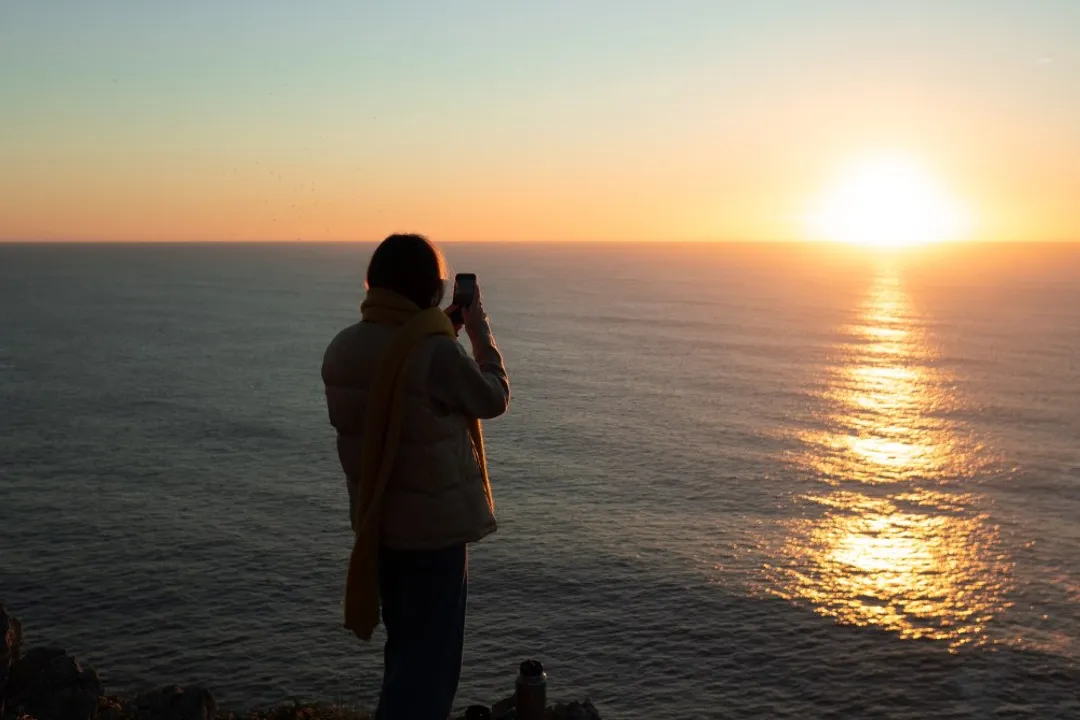
While a smartphone might be somewhat protected by internal software that limits exposure time aggressively, dedicated cameras and those using telephoto lenses face significant hardware risks. Directing the Sun's focused energy through a lens concentrates that energy directly onto the camera’s imaging sensor or, in older film or DSLR models, the internal mirror and viewfinder.
When using a long telephoto lens, the situation becomes exponentially more dangerous for the hardware. A longer focal length acts like a magnifying glass for solar energy. While the apparent size of the Sun in the frame increases, the intensity hitting the sensor area increases dramatically because that light energy is being compressed onto a smaller physical target area on the sensor chip. This intense, focused energy can physically damage the delicate circuitry of the sensor, leading to permanent "dead pixels" or complete sensor failure. In older optical viewfinders, intense sunlight focused through the eyepiece can potentially burn the user’s retina or damage the internal optical coatings if a person accidentally looks through the viewfinder while the camera is pointed at the Sun without a proper filter.

# Vision Hazard

The danger isn't confined to the equipment; looking at the Sun directly is hazardous to human vision, and this risk is amplified when using optical aids like cameras, binoculars, or telescopes. Looking at the Sun, even briefly, can cause a condition called solar retinopathy, which is essentially a sunburn on the retina. Because the Sun's light is so powerful, this damage can happen almost instantaneously, and often painlessly, leading to permanent blind spots or loss of central vision.
This is why specific warnings are issued regarding solar eclipses. During a partial eclipse, the moon only covers part of the Sun, leaving a sliver of intense light visible. Viewing this sliver through a camera viewfinder, or even a smartphone screen held up to your eye while the camera is recording, exposes the eye to that concentrated, unfiltered light, causing irreversible damage. The general rule remains: never look directly at the Sun or view it through any optical device unless that device is specifically outfitted with certified solar safety filters.
# NASA Techniques
The stunning, detailed images of the Sun that NASA releases are captured using technology fundamentally different from what is available to the general public. They do not simply use a dark filter on a standard lens; they employ dedicated solar observatories and instruments designed specifically to handle this extreme energy.
One major difference is the spectral range they capture. While our eyes and standard camera sensors capture visible light, NASA instruments often rely on observing specific wavelengths outside the visible spectrum, such as extreme ultraviolet (EUV) or specific narrow bands of light emitted by hydrogen or calcium atoms in the Sun's atmosphere. By isolating these narrow bands using high-precision filters, scientists can observe specific layers of the solar atmosphere—like the chromosphere or corona—without being overwhelmed by the total intensity of the visible light.
Furthermore, the equipment used by agencies like NASA is constructed with materials and cooling systems that can withstand immense thermal loads, and the entire optical path is protected by specialized filters that block nearly all incoming radiation except the exact wavelength they intend to study. The resulting digital data is then processed extensively, often combining multiple exposures taken across different wavelengths to create a single, scientifically accurate, and visually compelling final image. They are not just taking a "snapshot"; they are gathering specific spectral data.

# Safe Imaging
For the everyday photographer wanting to capture the Sun without damaging their gear or eyes, the approach must shift from brute force to careful attenuation. Since an immediate hardware risk exists for dedicated cameras when using high magnification, the first step is always protection, not exposure setting.
A great starting point, if using a DSLR or mirrorless camera, involves using a high-quality Neutral Density (ND) filter rated for solar observation, often marked with density ratings like ND-3.0 or higher, or specifically labeled for solar viewing. This filter drastically reduces the amount of light hitting the sensor, making it manageable. After the filter is safely attached, you must manually dial in the camera settings for maximum suppression: set the ISO to its base level (often ISO 100 or 200), and then choose the fastest possible shutter speed your camera allows, often 1/4000th of a second or faster. This aggressive combination of physical blocking (the filter) and electronic/mechanical speed (ISO and shutter) prevents sensor saturation and heat buildup. If the image still appears blown out, you may need an even stronger filter, or you must accept that you are only capturing a small sliver of the Sun's dynamic range.
For those relying on smartphones, the situation is slightly different because the phone's processing unit automatically intervenes, prioritizing eye safety and preventing sensor burnout by aggressively limiting exposure time. The failure here is less about hardware destruction and more about image quality. While you might not break your phone pointing it at the midday Sun, you will almost certainly capture a washed-out, featureless white circle—a tiny, overexposed dot against a sea of black or deep blue sky. The phone's processing chip cannot compensate for the vast disparity between the Sun's absolute brightness and the subtle features you might be seeking, like sunspots or limb darkening. To get any recognizable detail on a smartphone, you often need to rely on extreme digital zoom combined with very short exposure times, which often results in highly pixelated or blocky images once you crop in, precisely because the software couldn't gather enough information in the millisecond it allowed the sensor to record the light.
Another interesting observation when trying to photograph the Sun during non-eclipse times is the color rendering. Even with a protective filter, the resulting image often carries an unnatural, slightly muddy tone because the filter, designed primarily to block damaging radiation, also alters the spectral balance reaching the sensor in ways the camera's auto white balance struggles to correct. Professional astrophotographers often bypass this by shooting in RAW format and manually setting the white balance based on reference shots taken of the clear, open sky immediately before or after the solar target acquisition, giving them far more control in post-processing than simple JPEG capture allows. This fine-tuning step is what separates a simple snapshot from a controlled scientific or artistic record.
In essence, you can take a picture of the Sun, but the reason it's famously difficult is that you are trying to capture a phenomenon that exists at the extreme upper limit of physics and hardware capability. It requires either specialized, energy-blocking equipment or an acceptance that the resulting image will be an artifact of the camera’s failure to cope with overwhelming luminance.
#Videos
How to Photograph the Sun Safely - YouTube
Related Questions
#Citations
why can I film/take photos of the sun on a normal day but risk ruining ...
When I take a photo of the sun, does it hurt my eyes if I look at it?
Will I hurt my camera if I take a picture of the Sun? [duplicate]
Photographing The Sun? Then Don't Make These 10 Mistakes
How to Photograph the Sun Safely - YouTube
If the Sun Is 93 Million Miles Away, Why Can't We Look Directly at It?
How are people taking photos of the sun. When I try the screen is ...
How NASA Photographs the Sun - The Atlantic
How Does NASA Take Photos of the Sun? - Reviewed