How did they discover that the Earth revolves around the Sun?
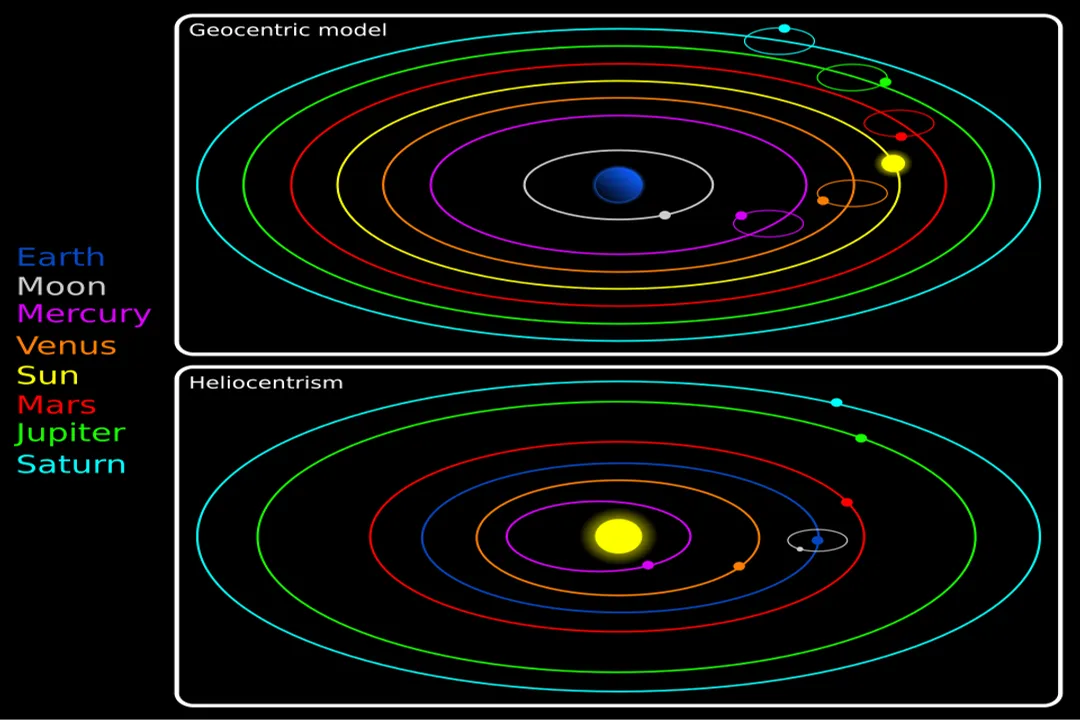
The transition from believing the Earth was the stationary center of the cosmos to accepting that it orbits the Sun represents one of science's most profound intellectual shifts. For millennia, direct observation strongly suggested a geocentric system: the Sun, Moon, and stars all appeared to rise in the east and set in the west, moving reliably across the sky. [1] This intuitive arrangement, which placed humanity at the very heart of creation, was supported by ancient philosophical and astronomical models, becoming deeply embedded in cultural understanding. [1]
# Ancient Belief
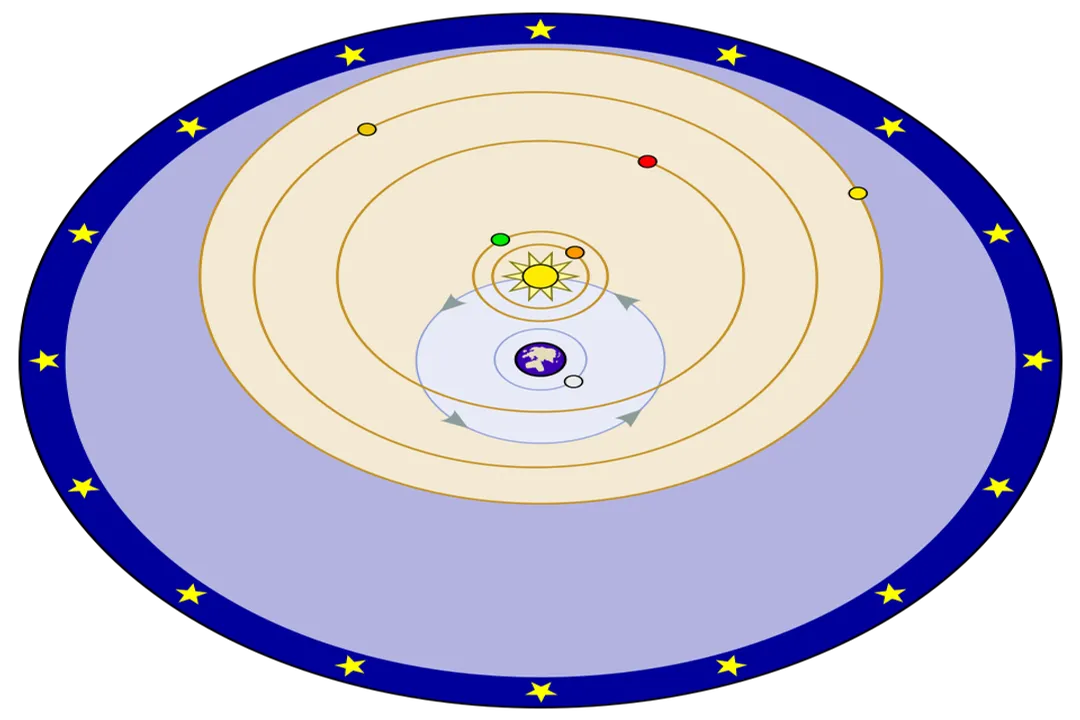
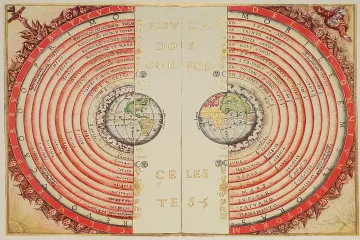
The prevailing ancient view, often associated with Ptolemy, centered the Earth in the universe. [1] While this model held that celestial bodies moved in perfect circles around us, it quickly ran into observational problems. To accurately predict where planets like Mars would appear—especially during periods when they seemed to temporarily reverse direction, known as retrograde motion—astronomers had to introduce increasingly complicated mechanisms, such as epicycles, onto the system. [1] These mathematical patches worked well enough for prediction but lacked a simple physical elegance.
# Copernicus Model
Centuries later, in the 16th century, Nicolaus Copernicus, a Polish astronomer, revived and formalized a sun-centered (heliocentric) concept, though the basic idea had ancient Greek precedents. [5][6] Copernicus was driven partly by the desire to simplify the mathematics that plagued the existing system. [1] He proposed that the Sun remained stationary at the center, and the Earth, along with the other planets, revolved around it. [5]
What Copernicus’s model achieved most elegantly was explaining retrograde motion. Under his system, retrograde motion was not a real reversal but an illusion created when the faster-moving Earth overtook slower-moving outer planets, much like passing a slower car on the highway makes the other car appear to move backward momentarily. [1] While Copernicus’s mathematics were simpler in concept, his model still initially required perfect circles for the planetary orbits, which meant his predictions were not significantly more accurate than the older Ptolemaic system without still incorporating some epicycles. [1] His primary contribution was providing a mathematically plausible, alternative structure for the cosmos. [5]
# Galileo Observations
The real shift from a plausible mathematical theory to an observable scientific fact largely rests on the shoulders of Galileo Galilei in the early 17th century. [4] Galileo did not invent the telescope, but he was among the first to turn it systematically toward the heavens, providing observational evidence that directly contradicted the strict geocentric view. [4]
Two of Galileo’s key findings were devastating to the old model:
- Moons of Jupiter: Galileo observed four objects orbiting Jupiter regularly. [4] This demonstrated clearly that not everything in the heavens orbited the Earth, suggesting Earth was not the unique center of all motion. [4]
- Phases of Venus: This was arguably the most direct evidence against the Ptolemaic system. [4][7] In the old model, Venus would always appear as a crescent because it orbited between the Earth and the Sun, meaning we would never see it fully illuminated from our perspective. [7] Galileo, however, observed Venus going through a full set of phases, similar to the Moon, including a gibbous phase and a nearly "full" phase. [4][7] This is only possible if Venus orbits the Sun, allowing us to see it from different angles as it moves around the Sun relative to Earth’s own orbit. [4][7]
It is interesting to consider that while Galileo provided phenomenal observational proof, his interpretation of the observations was sometimes flawed. For instance, he reportedly misinterpreted the discovery of sunspots, viewing them as features on the Sun rather than understanding them as evidence that the Sun itself was rotating—a concept that further solidified the idea that celestial bodies were not perfect, unchanging spheres as previously assumed. [7]
# Missing Proofs
Despite Galileo's strong observations, the astronomical community was slow to adopt the full heliocentric model because a critical piece of direct, geometric proof remained elusive for centuries: stellar parallax. [8]
If the Earth orbits the Sun, our viewing position changes drastically over six months (the distance across Earth's orbit is about 300 million kilometers). [8] This change in vantage point should cause nearby stars to appear to shift their position slightly against the background of very distant stars—this apparent shift is parallax. [8]
The reason this proof wasn't immediately secured lies in technology. While the Earth is moving, the stars are so incredibly far away that this apparent shift is minute. [8] Early astronomers simply lacked telescopes precise enough to measure this tiny angular displacement. [8] The lack of measurable parallax was often cited by opponents as definitive proof that the Earth was stationary, as a moving Earth should produce a measurable shift. [8] It took until Friedrich Bessel in 1838 to successfully measure stellar parallax for the first time, definitively confirming the Earth's annual movement through space. [8]
The historical process highlights a necessary sequence: an intuitive idea (geocentrism) is challenged by a mathematically simpler theory (Copernicus), which is then supported by new, powerful observations (Galileo), but only cemented by overcoming technological barriers to obtain definitive geometric proof (Bessel and parallax). [1][8]
# Modern Confirmation
The narrative did not end with geometry; physics provided the mechanism. While Copernicus and Galileo established where things moved, it took later figures, like Johannes Kepler, who refined the orbits to be ellipses rather than perfect circles, and Isaac Newton, who defined the force governing that motion, to explain why they moved that way. [1] Modern science describes planetary motion based on gravity. [2]
Today, the evidence for Earth’s orbit is overwhelming and comes from multiple independent avenues that go far beyond simple telescopic observation. For instance, scientists observe stellar aberration, which is the apparent shift in the position of a star caused by the finite speed of light combined with the Earth's orbital speed. [8] This effect, first measured in the early 18th century by James Bradley, provides a direct, measurable confirmation of Earth's speed as it circles the Sun. [8]
When we compare the historical arguments, the key differentiator is often the quality of the model’s predictive power versus its physical basis. The early geocentric models were effective description tools requiring many arbitrary rules, whereas the heliocentric model, even in Copernicus's initial iteration, offered a unified explanation for several observed phenomena through a single change in perspective. [1] The real victory, however, came when that perspective change was backed by physical laws—gravity—and measurable geometric data like parallax and aberration. [2][8] Understanding the scale of the universe, something beyond the grasp of early observers, is what finally made the Earth’s movement undeniable. For example, if we use the Earth's orbital radius as a baseline (roughly one Astronomical Unit, or about 150 million kilometers), measuring parallax angles that small requires an accuracy of less than one arcsecond for nearby stars, a feat unimaginable in Galileo’s time. [8]
#Videos
How We Figured Out That Earth Goes Around the Sun - YouTube
#Citations
Heliocentrism - Wikipedia
The History of an Idea That Launched the Scientific Revolution
How We Figured Out That Earth Goes Around the Sun - YouTube
eli5: How did Galileo figure out the Earth revolved around the sun?
Nicolaus Copernicus - New Mexico Museum of Space History
Who first claimed planets go round the Sun?
Galileo's Big Mistake | PBS LearningMedia
What is the simplest way to prove that Earth orbits the Sun?
Earth Goes Around the Sun? What's Your Best Evidence?