How does the Sun move through the zodiac sign?
The path the Sun appears to take across our sky throughout the year is fundamental to how we map time, seasons, and astrology. This apparent movement is not a literal orbit around the Earth, of course, but rather the result of Earth's orbit around the Sun, viewed from our moving perspective. [4] When we talk about the Sun "moving through the zodiac sign," we are actually referring to this defined track across the celestial sphere over the course of twelve months. [3]
# Celestial Path
The specific track that the Sun follows relative to the background stars is called the ecliptic. [9] This path is the plane of Earth’s orbit projected onto the sky. [9] Because the Earth revolves around the Sun, the Sun appears to trace this great circle over the course of one revolution, a period that defines our year. [3]
This ecliptic path is significant because it is divided into twelve segments, which we recognize as the constellations of the zodiac. [9] While the physical constellations are vast groupings of stars, the astrological signs are arbitrary, equal $30$-degree divisions of the ecliptic that are fixed relative to the Earth's seasons. [1]
# Annual Circuit
The Sun’s movement along this $360$-degree circle is relatively constant, taking approximately one year to complete the circuit. [3][6] This translates to the Sun spending roughly a month in each of the twelve segments that make up the zodiac. [3]
If you consider the total degrees ($360$) divided by the days in a typical year (about $365.25$), the Sun moves, on average, a little more than one degree across the sky each day. [5] This steady, measurable progression dictates when a person’s "Sun sign" changes, which astrologically often occurs around the $20$th or $21$st of the month, marking the Sun's entry into the next sign. [6][7]
# Seasonal Anchors
The movement through the zodiac is strongly anchored to the four cardinal points that define our seasons: the equinoxes and the solstices. [6][7]
- The Sun enters the sign of Aries as it crosses the vernal equinox (around March $20$ or $21$), marking the beginning of spring in the Northern Hemisphere. [7]
- It reaches the summer solstice (around June $20$ or $21$) when it enters Cancer, marking the longest day of the year. [7]
- The autumnal equinox (around September $22$ or $23$) sees the Sun enter Libra, signaling the start of autumn. [7]
- Finally, the winter solstice (around December $21$ or $22$) occurs when the Sun enters Capricorn, bringing the shortest day. [7]
These points are the fixed markers for the tropical zodiac signs, which are based on the relationship between the Earth and the Sun relative to the seasons, not the actual position of the stars in the background. [1]
# Precession Shift
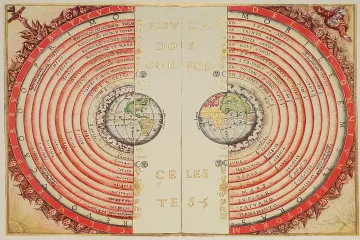
This is where the astronomical reality and the traditional astrological mapping diverge significantly. The Sun moves through the $12$ constellations of the zodiac in the same general order, but the timing relative to the seasonal markers has changed over millennia due to a phenomenon called the precession of the equinoxes. [1][2]
Precession is a slow wobble in the Earth’s rotational axis, much like a spinning top slowing down. [5] This wobble means that the point where the Sun crosses the celestial equator to begin spring—the vernal equinox point—is not fixed against the background stars. [1][2] Over a cycle of about $25,800$ years, this point slowly shifts backward through the constellations. [5]
Because the tropical zodiac signs (tied to the equinoxes) have remained fixed relative to the seasons, but the constellations (tied to physical star locations) have shifted backward, the Sun now enters the physical constellations at much later dates than the traditional dates associated with those signs. [2]
For example, the astrological sign of Aries begins when the Sun hits the vernal equinox point. However, due to precession, the Sun is actually physically located in the constellation of Pisces at that moment. [1][2] The Sun only enters the constellation of Aries much later in the year. [1] This ongoing discrepancy means that the Sun is no longer situated in the constellation that shares its astrological sign's name for most of the year. [5]
# Sign Versus Constellation
To fully grasp the Sun's movement, it is helpful to contrast the two systems of measurement used to map its path:
| System | Basis of Measurement | Duration in Segment (Approx.) | Key Characteristic |
|---|---|---|---|
| Tropical Zodiac Signs | Seasonal relationship (Vernal Equinox at Aries) [1] | Days [3] | Fixed relative to Earth's seasons [1] |
| Sidereal Zodiac/Constellations | Position relative to distant background stars [1] | Varies (constellations are not equal-sized) [5] | Shifts due to Earth's axial precession [2] |
Astrology predominantly uses the tropical system because it aligns with the cyclical nature of the seasons, which the ancient observers noted held the most immediate influence on life. [1] In this framework, the Sun always enters Aries on or around March $21$st, regardless of which stars are behind it. [6]
Astronomically, however, the Sun moves strictly through the recognized constellations. [5] The actual time the Sun spends within the boundaries of a constellation varies because the constellations are not equal $30$-degree slices of the sky; they are irregularly sized areas defined by stellar boundaries. [5]
A practical way to view this movement is to understand that for any given date on the calendar, the constellation the Sun is currently transiting is generally offset by about one full sign, or approximately $30$ degrees, behind the sign traditionally assigned to that date range. [1][2] If your conventional Sun sign is Taurus, the Sun, from an astronomical perspective, is likely moving through the constellation Aries or perhaps just entering Taurus, depending on the precise date and how the boundaries are defined for the sidereal map. [1]

# Timing The Transit
The moment the Sun crosses from one $30$-degree segment to the next is calculated precisely for any given year. [6] For example, the dates provided for a specific year show the Sun entering Gemini around May $20$th or $21$st and leaving around June $20$th or $21$st. [6] These ingress dates mark the start of the Sun's residency in that segment according to the tropical system. [7]
It is important to note that these dates are not absolute across history; they shift slightly year to year due to leap years and the Earth's orbital eccentricity. [6] For instance, a specific date for a sign change might occur at noon one year and then shift to $3$ AM the next year for the same sign entry, depending on the accumulated fractional time from the previous year's circuit. [6]
This movement through the signs dictates the overall energetic quality of the time period. When the Sun moves into Leo, for instance, that segment of the year is associated with Leo qualities in astrological interpretation, based on the $30$-degree framework tied to the seasonal start. [3]
# Observing The Path
While we cannot see the Sun's background constellations easily during the day, the steady, forward motion is what drives our calendar system. The Sun's movement defines the tropical year, the cycle that governs agriculture and civil timekeeping. [4] Understanding this transit is recognizing that the Sun is continually marking its progress along the ecliptic, segment by segment. [9] Whether one follows the traditional timing tied to the equinoxes or acknowledges the physical drift caused by precession, the Sun remains the central clock governing the $12$-part division of the heavens as seen from Earth. [1][5] The core mechanism—the Earth’s orbit—ensures the Sun covers exactly $360$ degrees over approximately $365$ days, maintaining the predictable $30$-day period per astrological sign regardless of the shift in stellar backdrop. [3]
#Videos
The Sky Part 7: the Sun's Annual Motion - YouTube
Related Questions
#Citations
What is meant by sun's path through zodiac
Sun entering signs and constellations - Universal Workshop
Sun Transits in Astrology: The Sun in the Houses & Zodiacs
The Path of the Sun | ASTRO 801 - Welcome to EMS Online Courses
AstroPages | Zodiac | Western Washington University
Passing of the sun through the zodiac signs in 2025
Sun's entry into zodiac signs, 2021 | Human World - EarthSky
The Sky Part 7: the Sun's Annual Motion - YouTube
How the Ecliptic and the Zodiac Work - Space