Does the color of a star tell you if it's moving?
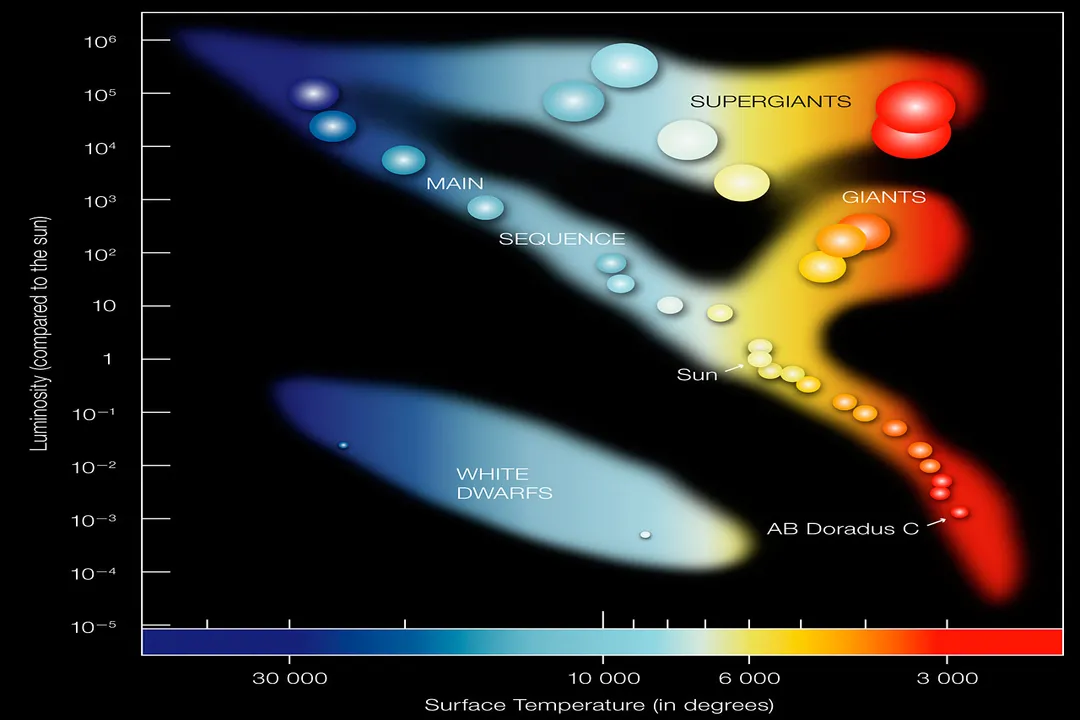
The actual color of a star, the hue that catches an observer's eye, is primarily a readout of its surface temperature, not its current trajectory relative to us. [4] Hotter stars burn with a blue or white light, while cooler stars radiate with an orange or red tint. [4] This relationship is governed by the physics of blackbody radiation; the peak wavelength of the light emitted tells us its temperature, which is an intrinsic property of the star itself. [4]
This seems straightforward, but the story gets complicated when we introduce motion. Light, like any wave, changes its perceived properties if the source is moving toward or away from the observer. This phenomenon is known as the Doppler effect. [2]
# Doppler Effect
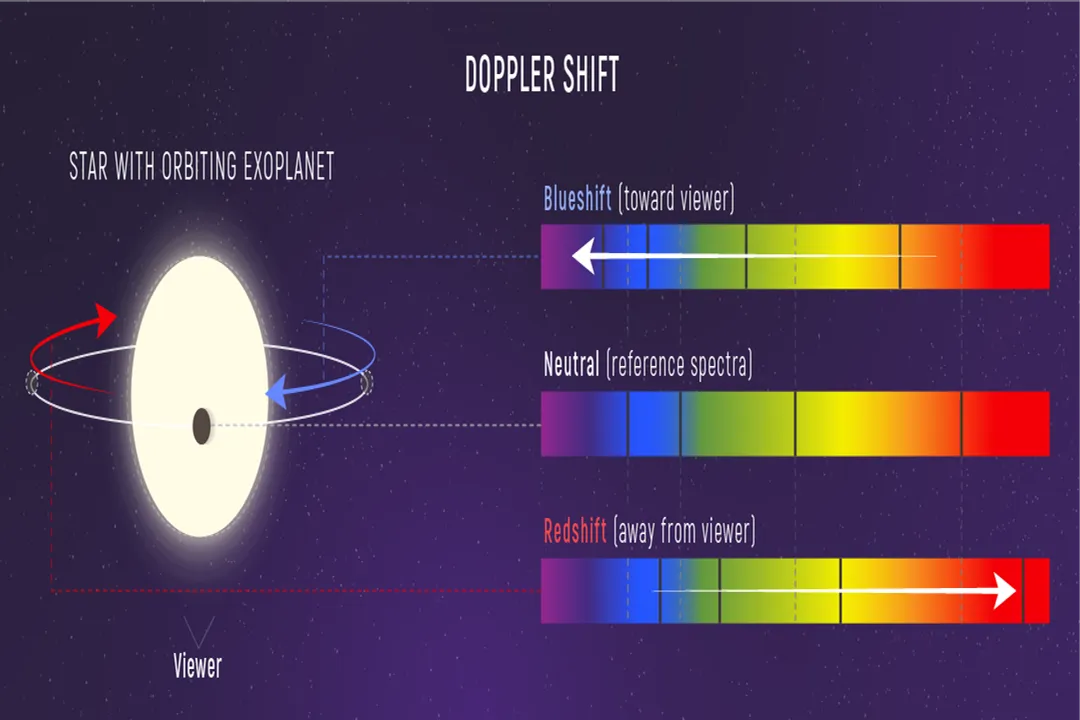
When a star is moving away from Earth, its light waves are stretched out, lengthening the wavelengths. This stretching shifts the observed light toward the longer, red end of the electromagnetic spectrum—a situation astronomers call redshift. [1][2][9] Conversely, if a star is hurtling toward us, its light waves are compressed, shortening the wavelengths and shifting the observed light toward the shorter, blue end of the spectrum, resulting in a blueshift. [1][2]
These shifts are certainly real and measurable. The radial velocity method, used to determine how fast a star is moving toward or away from us, depends entirely on detecting these shifts. [2] However, here is where the crucial distinction lies: these shifts are usually not dramatic enough to turn a yellow star into a distinctly red one, or a blue star into a clearly violet one, based on visual inspection alone. [5][6]
# Spectrum Versus Sight
If a star is intrinsically yellow, like our Sun, and moving away, the light it emits is redshifted. While the entire spectrum is shifted to longer wavelengths, the star will still predominantly appear yellow to the naked eye, perhaps shifting slightly toward orange or red, depending on the speed. [6] If it were moving toward us, it would blueshift, appearing a tiny bit bluer, but it would still look yellow. [6]
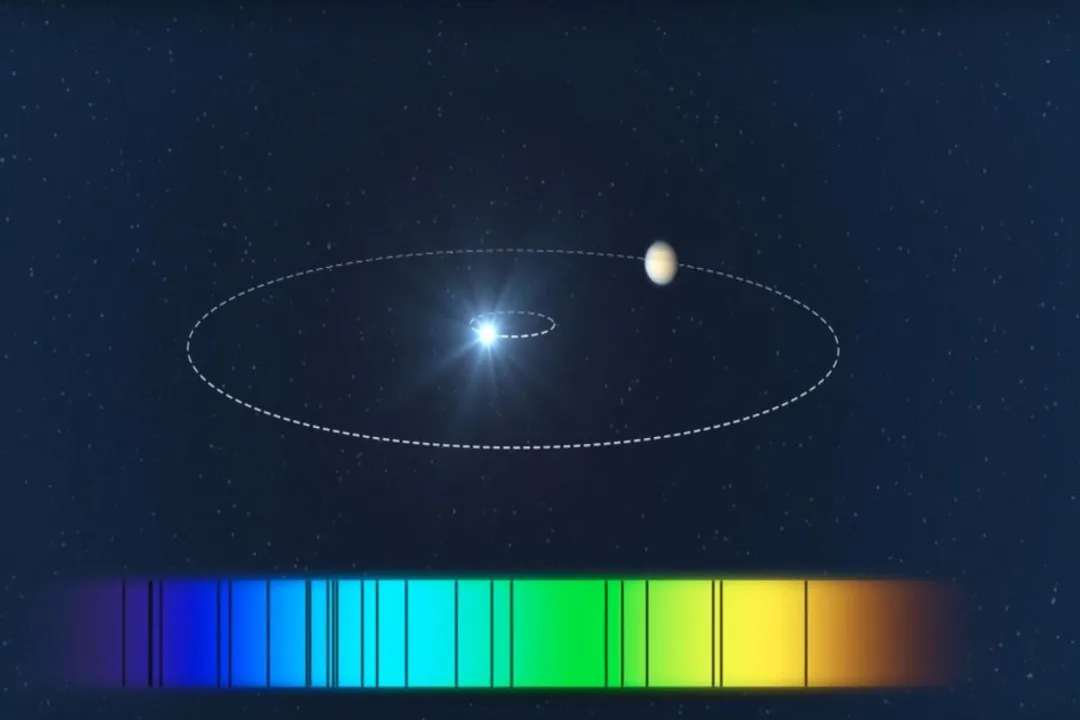
The real giveaway for astronomers isn't the general visual color; it's the detailed structure of the star's spectrum. [5][6] A star's spectrum is a continuous rainbow overlaid with dark lines, known as absorption lines. [7] These lines occur because specific elements in the star's outer layers absorb light at precise, characteristic wavelengths. [5]
Consider this practical comparison: Imagine looking at a road sign. The color of the sign (say, green) tells you what kind of information it carries (like regulatory or directional). The position of the text on the sign tells you its overall message. For a star, the overall brightness and hue (the general color) are analogous to the sign's color, telling you its temperature. The precise pattern and location of the absorption lines are like the individual letters on the sign; if the entire sign (spectrum) has moved slightly left or right, you know the sign itself has been transported, even if the word on it still reads the same general way. [5]
The movement shifts the position of those absorption lines in the spectrum relative to where they would be if the star were stationary. [2][7] A receding star shifts all its spectral lines toward the red end, and an approaching star shifts them toward the blue end. [9] This is how scientists quantify motion—by measuring these line displacements, not by simply noting if the star looks a shade redder or bluer than expected for its classification. [2]

# Line Analysis
Distinguishing between the star’s inherent color (temperature) and the spectral shift (motion) requires careful analysis of the entire spectral fingerprint. [5][6] Astronomers use known laboratory measurements of elements like hydrogen or calcium to establish where their spectral lines should fall for a stationary source. [7] They then compare these expected positions with the lines measured in the star's actual spectrum. [5]
If a star is classified as a main-sequence A-type star (which are intrinsically blue-white), it should have a specific temperature and a corresponding spectral pattern. If the measured absorption lines are all shifted consistently toward the longer (red) wavelengths, we conclude the star is receding, even though it still looks blue-white because its high temperature dictates that dominant visual color. [6]
Astronomers have never really observed a massive, unambiguous violet shift—the extreme opposite of a redshift—in the same way they observe a redshift or blueshift, primarily because the intrinsic color and temperature variations across the range of observable stars tend to dominate any minor shift that might push the visible light significantly into the shorter wavelengths. [3] The universe is currently expanding, meaning most distant galaxies exhibit a net redshift, but for individual stars within our own galaxy, the motion can be toward or away. [9]
# Separating Causes
To be absolutely certain that a measured spectral shift is due to radial velocity rather than an intrinsic feature of the star, the process relies on consistency across multiple spectral features. [6] If every known spectral line shifts by the same amount—say, 0.1 nanometers toward the red—this strongly indicates a Doppler shift caused by motion. [7] If only one line shifted randomly, it might suggest contamination or an unrelated physical process within the star itself. [5]
When we look at a star, its color tells us about its temperature, which dictates its energy output and lifespan; its spectrum tells us about its composition and, through the shifting of its spectral lines, its velocity toward or away from us. [2][5]
For instance, a cool, intrinsically red giant moving slowly away will remain visibly red, but its spectral lines will be slightly redshifted. [4][6] Meanwhile, a scorching hot, intrinsically blue star moving slowly toward us will still appear blue, but its spectral lines will exhibit a measurable blueshift. [1][6] The key takeaway is that while motion affects the light observed, it usually does not overwrite the primary color cue given by the star's immense surface temperature when viewed with the human eye. [5] The true speed measurement comes from analyzing the precise map of the light, not just its general visual tone. [2][7]
Related Questions
#Citations
Physics question, if stars moving away/towards Earth appear blue ...
Color-Shifting Stars: The Radial-Velocity Method
Have astronomers ever observed a violet shift like they have blue ...
The Mystery of Star Colors - The Physics of the Universe
How do scientists determine if a star's color is due to Doppler shift vs ...
If stars moving away/towards Earth appear blue/red shifted ... - Quora
Doppler Shift of a Star's Spectrum - NASA Science
Everyday Doppler Shift Activity
Redshift - Wikipedia