Which color type of star is hotter?
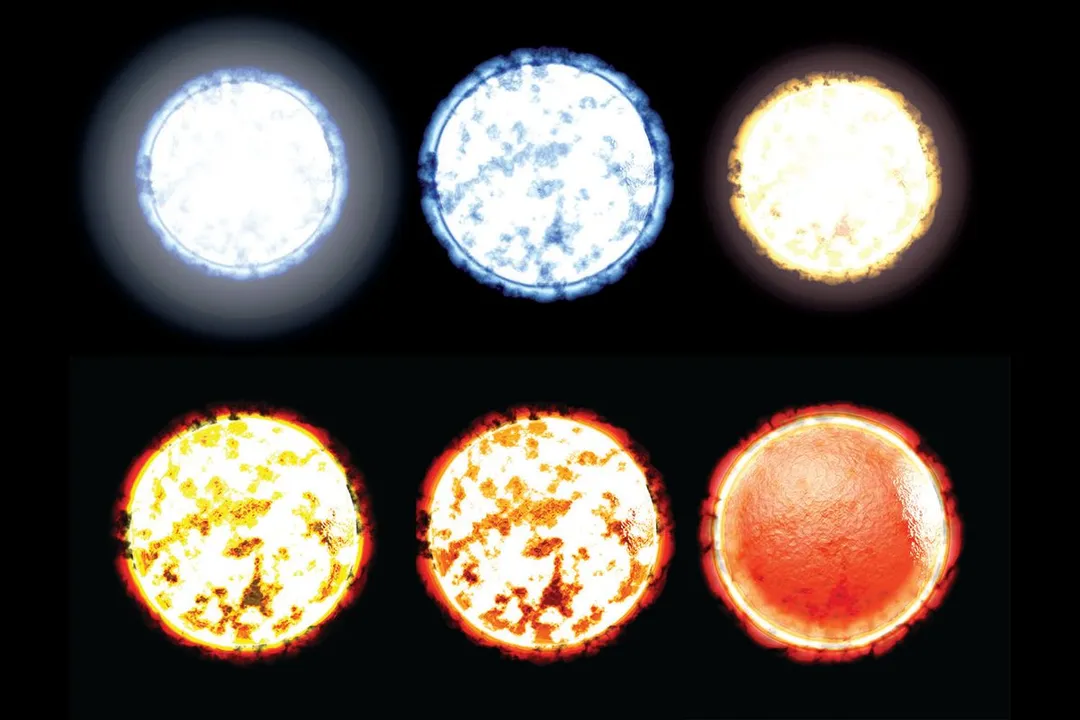
The color emanating from a star offers a direct and immediate indication of its surface temperature. [1] When observing the night sky, the different hues we perceive—from brilliant icy blues to deep ruddy oranges—are not merely aesthetic variations; they are physical manifestations of how hot that stellar body truly is. [3][4] To answer which color type is hotter, one simply needs to look toward the blue end of the visible spectrum.
# Color Reveals Heat

The fundamental principle linking a star's hue to its heat is rooted in blackbody radiation physics. Every object with a temperature above absolute zero emits light, and the peak wavelength of that emission shifts based on the object's heat. [1] In the context of stars, the surface temperature dictates the color we see. [1]
Stars that are incredibly hot radiate most of their energy at the shorter, higher-energy end of the light spectrum, which our eyes interpret as blue or blue-white light. [3][5] Conversely, stars that are relatively cool emit most of their light at longer, lower-energy wavelengths, appearing red. [3][4] This relationship establishes a clear thermal gradient mapped directly onto the colors visible to us. [6]
# Stellar Temperature Sequence
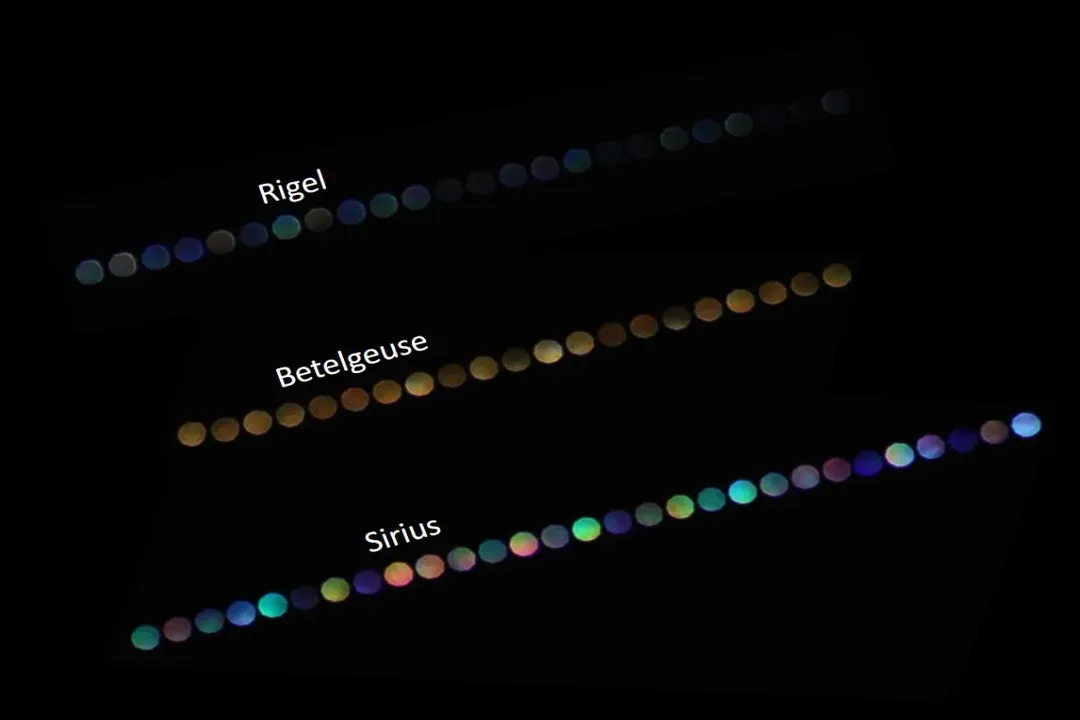
Astronomers have established a reliable sequence for star colors corresponding to decreasing surface temperatures, moving from the hottest stellar objects down to the coolest ones currently known. [4][5]
A comprehensive sequence detailing these color types from the extreme heat downwards looks like this:
- Blue: These are the stars at the very top of the temperature scale. [3][5]
- Blue-White: Still intensely hot, just a step below the pure blue giants. [4]
- White: Representing a middle-ground intensity compared to the extremes. [4][6]
- Yellow-White: A transition color leading toward the yellow range. [4]
- Yellow: The color associated with stars like our own Sun. [4][5]
- Orange: Noticeably cooler than the white and yellow stars. [4][5]
- Red: These stars occupy the coolest tier of the main sequence stellar classification. [3][5]
While apparent brightness—how bright a star looks from Earth—is related to both the star's actual luminosity and its distance, the color itself is an intrinsic property tied to temperature, independent of how far away it is. [2] Distance and apparent magnitude tell us about visibility, but only the color tells us the surface heat. [2]

# Hot Blue Giants

The clear winner in the heat contest is the blue star. These stellar furnaces possess surface temperatures that can be tens of thousands of degrees Kelvin, sometimes exceeding . [3] They burn through their fuel supply at an astonishing rate precisely because their cores must maintain such extreme pressures and temperatures to sustain that high rate of fusion and energy output. [6]
When you spot a brilliant, piercing blue star in the night sky, you are looking at a star that is exceptionally massive and consequently, extremely short-lived when compared to dimmer, cooler neighbors. [6] Their radiant energy output is immense, making them not just the hottest by color but often the most luminous overall among the observable stars. [3]
# Cool Red Dwarfs
At the opposite end of the spectrum lie the red stars. These objects are characterized by their relatively low surface temperatures, often hovering around or even less. [4][5] These are generally the smallest and least massive stars, known as red dwarfs, which exist in vast numbers throughout the galaxy. [5]
Because their fuel consumption rate is so slow due to their lower core temperatures, red dwarfs have lifespans that stretch into the trillions of years—far longer than the current age of the universe. [5] Their dimness means that while they are numerically abundant, they are difficult to spot from Earth unless they are relatively close by.

# The Yellow Sun Context
To put this stellar color-temperature relationship into perspective, consider our own Sun. Our Sun shines with a distinct yellow hue. [4][5] Based on the established thermal sequence, this places it comfortably in the middle range of stellar temperatures. [6] The Sun’s surface temperature is approximately . [4] This position makes it considerably cooler than the blazing blue stars but significantly hotter than the dim, deep-red stars. [3][5]
An interesting comparative calculation reveals the dramatic difference between the extremes. If a star is (blue) and another is (red), the ratio of their temperatures is exactly ten to one. Due to the relationship between temperature and the peak wavelength of emitted light, the blue star's peak emission is shifted dramatically toward the high-energy end of the spectrum compared to the red star's output, which peaks toward the lower-energy infrared. [1] This is why the color difference appears so stark, even though the temperature ratio might seem linear at first glance. The energy difference in their radiated light is actually much more pronounced than the simple temperature ratio suggests.
# Interpreting Star Classification
While we can generally tell the temperature by eye using color—blue is hot, red is cool—professional astronomers use a more granular system based on spectral lines, often summarized by the mnemonic "O B A F G K M". [6] These letters directly correlate to the color sequence described earlier. [4] Stars classified as 'O' are the hottest and bluest, while 'M' stars are the coolest and reddest. [4][6]
If you ever look up star charts or data for observational astronomy, you might see temperature data presented with immense precision, but the underlying truth remains simple: if you want the hottest object, search for the blue light it emits. This inherent property—that color is an unambiguous thermometer for a star's surface—is one of the most dependable tools in astrophysics, allowing scientists to determine the fundamental state of distant suns without needing to send a probe anywhere near them. [1]
Related Questions
#Citations
The color of a star is a function of its surface temperature : r/spaceporn
Magnitude and Color - Las Cumbres Observatory
Why Blue Stars Are Hotter Than Red Stars When it comes to stars ...
The Colors of the Stars From Hottest to Coldest - Science Notes
The Colours and Temperatures of Stars
Star colours explained for beginners | BBC Sky at Night Magazine
At a Glance: Star Color and Temperature - ViewSpace
Colors, Temperatures, and Spectral Types of Stars | ASTRO 801
️The color of a star is related to how hot it is. If we think ... - Instagram