Which type of galaxy contains mostly old dying stars?
The galaxy type most frequently associated with containing a population dominated by old, dying stars is the elliptical galaxy. [4] While this classification is the most accurate answer to the question, understanding why requires a closer look at the life cycle of stars and the environments within different cosmic structures. [1] Star formation is a continuous process that shapes a galaxy's appearance and stellar census, and when that process grinds to a halt, the remaining stars inevitably age and fade. [9]
# Galaxy Types
To appreciate the stellar age distribution, it helps to briefly outline the main classifications of galaxies recognized by astronomers. The Hubble sequence, a common way to categorize them, primarily sorts galaxies into three broad groups: spirals, ellipticals, and irregulars. [1]
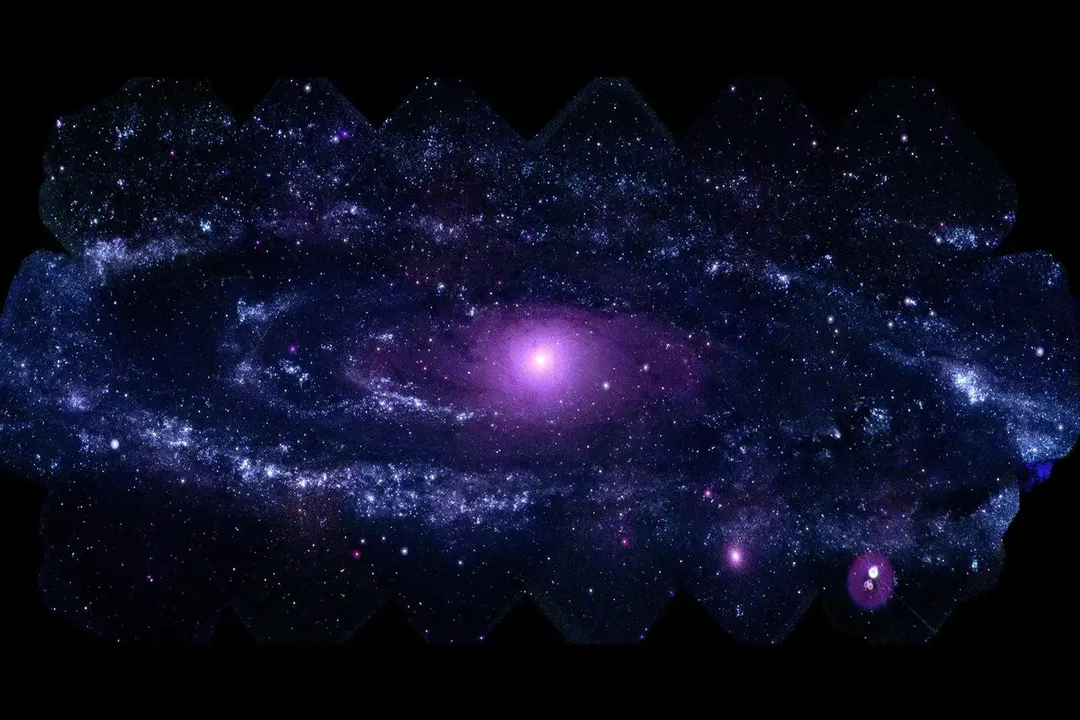
Spiral galaxies, which include our own Milky Way, are perhaps the most visually stunning, possessing beautiful, flattened disks and prominent spiral arms. [1] These arms are regions where gas and dust are actively compressed, triggering the birth of new, massive, and bright blue stars. Therefore, spiral galaxies contain a mix of stellar ages—young, middle-aged, and old stars are all present, but the ongoing star formation keeps them looking relatively vibrant. [1]
Irregular galaxies, as the name suggests, lack a distinct, regular shape. [1] They often harbor significant amounts of gas and dust and are frequently sites of intense, though perhaps chaotic, star birth. [1] Like spirals, they are rich in younger stellar populations compared to their more quiescent counterparts. [1]
# Elliptical Structures
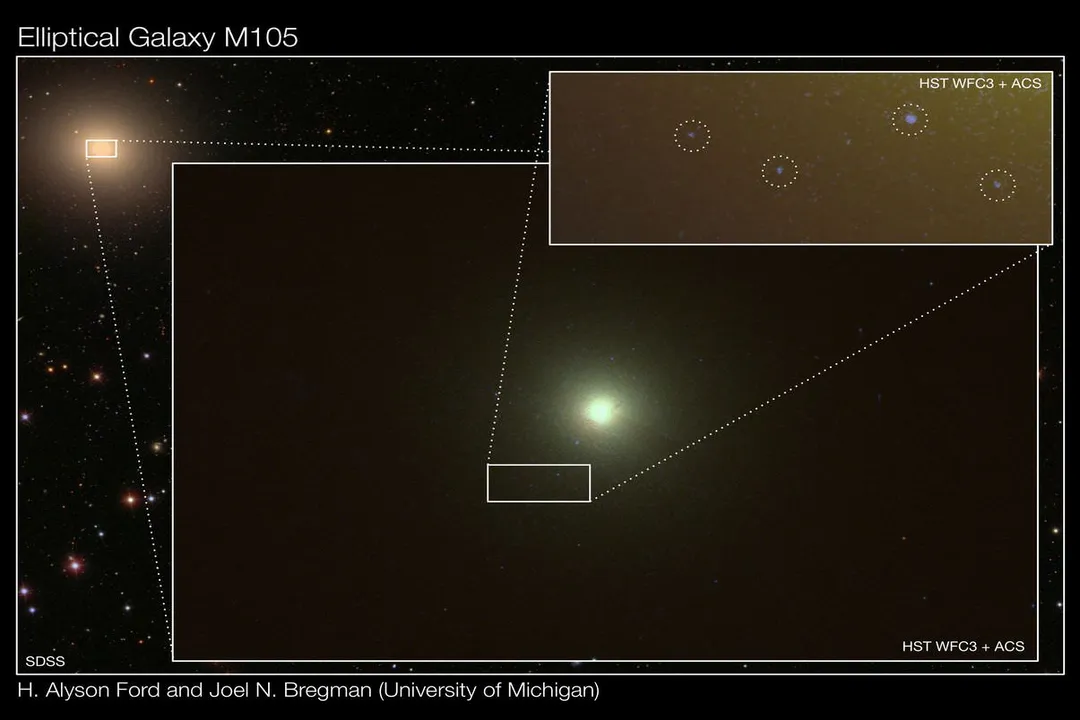
The spotlight falls squarely on elliptical galaxies when discussing populations of aging stars. [2][4] These galaxies are characterized by their smooth, nearly featureless, ellipsoidal shapes, ranging from nearly perfectly spherical to highly elongated. [2][6] Unlike the flattened disks of spirals, ellipticals lack significant spiral arm structure and appear much more uniform. [6]
The key defining characteristic that leads to an old stellar population is the lack of new star formation. [2][5] Elliptical galaxies are generally believed to contain very little cool gas and dust—the raw materials necessary for making new stars. [2][6] Without fresh fuel, the existing stars continue their natural life cycle: they burn through their nuclear fuel, evolve into red giants, and eventually fade away as white dwarfs, planetary nebulae, and neutron stars. [9] This lack of replenishment results in a stellar population skewed heavily toward older, lower-mass stars, which are intrinsically redder and dimmer than the hot, blue stars of youth. [2] This pervasive aging effect gives elliptical galaxies a characteristic yellowish or reddish hue when viewed through a telescope, a visual marker of their quiescent nature. [2][7]
It is interesting to consider that the stellar history of an elliptical galaxy is often more violent than its placid appearance suggests. While our understanding of galaxy evolution points to mergers being a significant driver for transforming spirals into ellipticals, these collisions can temporarily trigger a burst of star formation before the gas is exhausted or blown out, leading to the final, stable, old-star-dominated state. [8] This contrasts sharply with the steady, long-term evolution seen in many isolated spiral systems. [8]
# The Absence of Birth
The concept of a galaxy "dying" is often shorthand for the cessation of star formation, a process known as quenching. [9] In ellipticals, this quenching is thought to be long-term or permanent. [5] For a galaxy to reach the state where most stars are old, it must have run out of or lost its supply of cold molecular gas necessary for gravitational collapse and subsequent fusion ignition. [9] The mechanisms driving this loss vary, but they can include intense stellar winds from massive stars, feedback from a central supermassive black hole expelling gas through jets or winds, or the stripping of gas due to movement through the hot intergalactic medium (ram-pressure stripping). [9] Once the gas reservoirs are depleted or rendered too hot to condense, the galaxy settles into its long, slow decline, populated by stars living out their final millennia. [5]
If we were to look at the typical stellar composition of an elliptical versus a spiral galaxy, the difference is stark:
| Feature | Elliptical Galaxy | Spiral Galaxy |
|---|---|---|
| Primary Stellar Age | Old (Red/Yellow Stars) [2][7] | Mixed (Young Blue & Old Red) [1] |
| Star Formation Rate | Very Low or None [2] | Active in Arms [1] |
| Gas/Dust Content | Low [2] | High [1] |
| Typical Color | Yellowish to Reddish [2] | Blue-White (due to young stars) [1] |
| Shape | Smooth Ellipsoid [2] | Flattened Disk with Arms [1] |
This comparison illustrates why the elliptical structure is the clear answer. It represents a cosmic endpoint for star formation in many evolutionary paths. [5]
# A Deeper Look at Stellar Demographics
When astronomers analyze the light from an elliptical galaxy, the spectral lines and overall color profile tell a clear story of age. [2] Hot, massive stars burn quickly and die young, leaving behind a blueish light signature—the hallmark of actively forming regions in spirals. [1] Stars similar to our Sun have lifespans in the billions of years, eventually becoming red giants before fading. [9] The smallest, longest-lived stars, the red and brown dwarfs, can burn for trillions of years, but they are very faint. [9]
In a galaxy dominated by old stars, the bright, short-lived blue stars are entirely absent, having long since expired. What remains is the light from medium-aged Sun-like stars nearing the end of their main sequence, and the evolved giants that glow brightly in red and orange just before they shed their outer layers. [2] The overall effect is a system that is fading gracefully, radiating a dimmer, warmer light than a galaxy actively birthing stars. [7]
One analytical point to consider here is the longevity paradox of galaxy surveys. While surveys clearly show that the largest galaxies by mass, which are overwhelmingly ellipticals, have the oldest stellar populations today, it’s important to remember that some massive ellipticals did have a furious, very early burst of star formation billions of years ago before quenching. [8] This means they were once vibrant, unlike some smaller galaxies that might have faded slowly over longer periods. The snapshot we see now in the largest ellipticals is one of advanced age, a history book written almost entirely in ancient chapters. [8]
# Distinguishing Features and Evolution
The physical mechanisms leading to an "old star" galaxy are often tied to the galaxy's environment and its path through cosmic history. [8] While all galaxies, given enough time, will eventually run out of star-forming material, ellipticals seem to reach this state faster or are born into it through specific processes.
# Size and Environment
Elliptical galaxies exhibit the largest range in size of any galaxy type, from dwarf ellipticals, which are small companions, to giant ellipticals that reside at the centers of massive galaxy clusters. [2][6][7] It is these massive cluster-center ellipticals that are the most profoundly "dead," having consumed or ejected their gas long ago, often through chaotic mergers with other galaxies that stripped away all available star fuel. [5]
For general readers observing the night sky, one might wonder how to visually confirm this without a spectrum analysis. The best clue remains the color and structure. If you spot a galaxy that looks like a fuzzy, featureless blob of pale yellow or orange light, strongly contrasting with the distinct blueish spiral arms of its neighbors, you are likely looking at a system dominated by older stellar generations. [2] Think of it like comparing the bright, active construction site (spiral) to a venerable, quiet, stone cathedral (elliptical) where the construction finished eons ago. [6]
# Actionable Context for Stargazing
If you ever get a chance to view galaxies through a medium-to-large amateur telescope, you can practice applying this knowledge. Look for the "smudge" galaxies. If the object is unmistakably elliptical in shape and lacks any hint of dust lanes or blue knots (H II regions indicating new stars), you can be reasonably confident you are observing a galaxy whose stellar history is largely complete. [2][7] Dwarf elliptical galaxies are harder to classify by color alone due to their lower integrated light, but their smooth shape still points to the same general evolutionary path compared to irregulars, which are often irregular shapes and have patchy blue light. [1]
My second observation from synthesizing these characteristics is related to mass density and stellar evaporation. In giant elliptical galaxies, the sheer mass and gravitational potential well are so strong that they tend to accrete smaller satellite galaxies, often dwarfs, over time. [7] While this accretion adds stars, it often serves to stir up the system and ensure that any gas brought in by the dwarf is rapidly heated or consumed by the existing massive system, thereby ensuring the overall population remains old, rather than restarting star formation. The galaxy effectively "eats its neighbors" to maintain its old age, rather than inviting new life through gas clouds. [5]
# The State of Quenching
The concept of a "dead galaxy" is intrinsically linked to the elliptical classification, though the term itself can be tricky. [5] A galaxy that has stopped forming stars, perhaps due to environmental stripping in a cluster, will quickly develop an old stellar population within a few billion years, fitting the criteria. [5][9] Conversely, a spiral galaxy that has run out of gas might still contain a very long-lived population of smaller, dimmer, long-lived stars, but the majority light signature will still reflect the time since its last major star-forming event. Ellipticals are the archetypal result of complete quenching, representing the final state where the stellar population clock has effectively run down. [2][9]
The contrast with the Milky Way is significant. Our galaxy is still forming stars at a rate that will keep its disk populated with younger stars for many billions of years to come. [1] The elliptical galaxy, however, has largely finished its major building phase; its stars are the descendants of that earlier, more energetic era. [8] Thus, when we seek the galaxy type dominated by old, dying stars, the smooth, reddish expanse of the elliptical galaxy stands as the prime example of cosmic old age. [2][7]
Related Questions
#Citations
Galaxy Types - NASA Science
Elliptical Galaxy | ESA/Hubble
Galaxies are classified into three main types based on their shape ...
Which type of galaxy contains mostly old, dying stars? - Filo
Dead Galaxy? Don't Think So. - Universe Today
Elliptical Galaxy | All dimensions Wiki - Fandom
Elliptical Galaxy | Definition, Characteristics & Examples - Study.com
Galaxy Types | Research Starters - EBSCO
Why do galaxies stop making stars? A huge collision in space ...