What stabilizes galaxies over time?
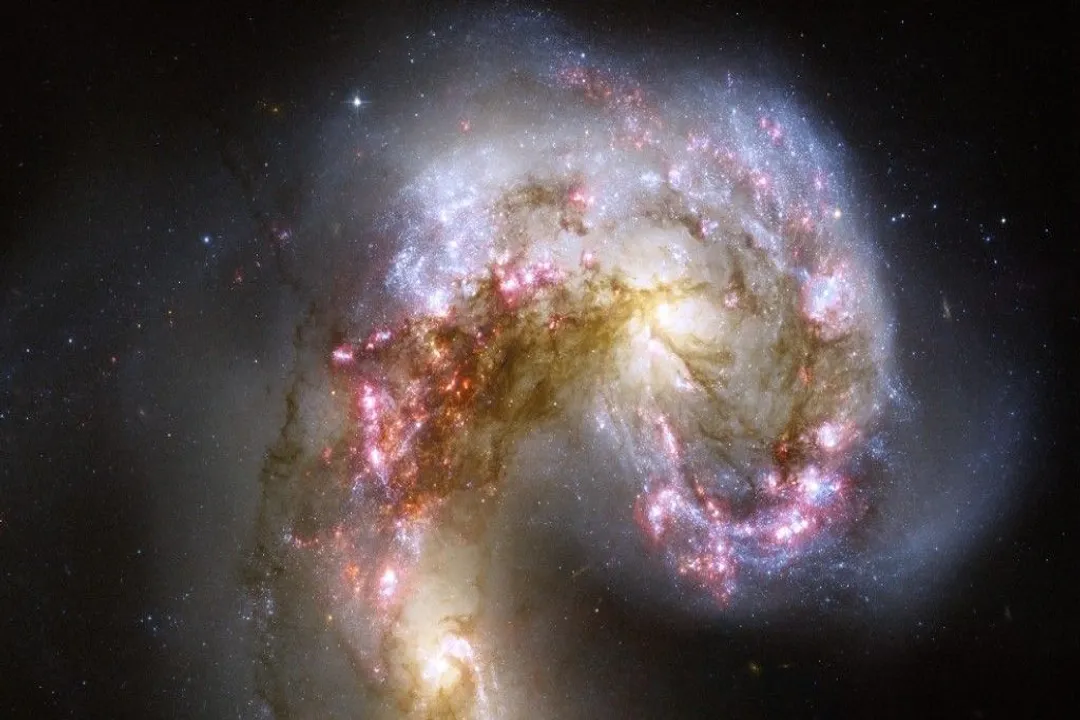
The enduring structure of galaxies, vast collections of stars, gas, and dust stretching across unimaginable distances, is not maintained by static perfection but by a continuous, fine-tuned gravitational negotiation that spans the age of the universe. These colossal systems, whether the flat, swirling spirals or the amorphous, glowing ellipticals, remain bound together and maintain their general shape over timescales far exceeding human comprehension, thanks primarily to the overwhelming influence of gravity, largely sourced from invisible material. [2][6]
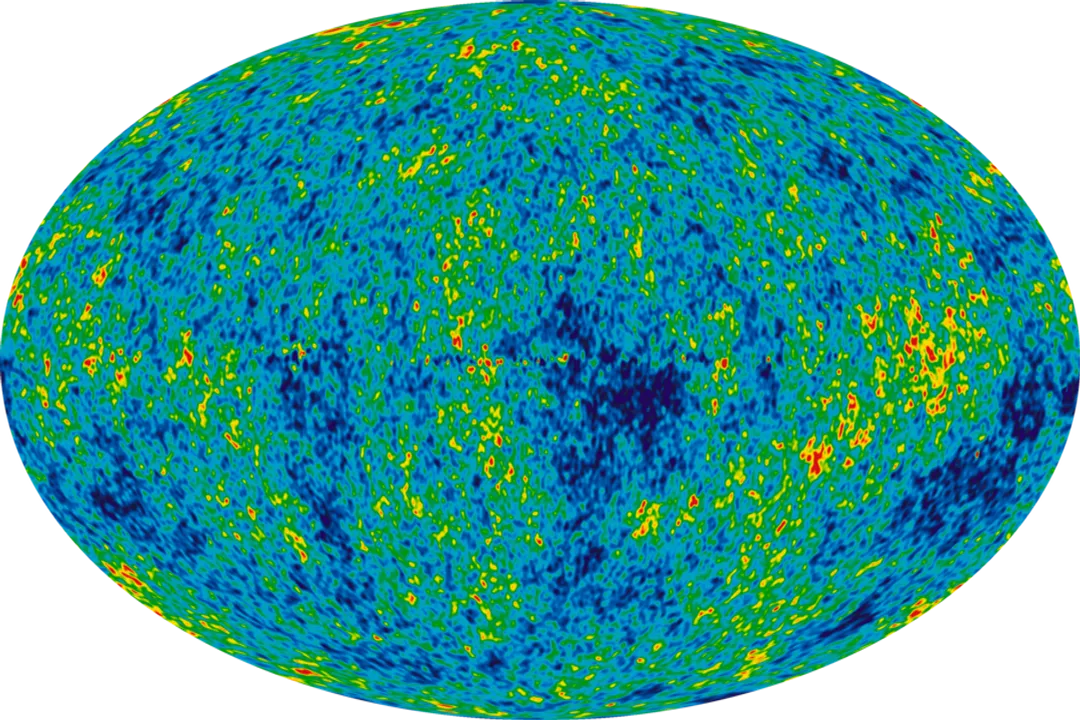
The story of galactic stabilization begins in the very early universe, shortly after the Big Bang. While the universe expanded rapidly, tiny fluctuations in density existed in the primordial soup of matter and energy. [2] Over cosmic time, gravity acted relentlessly on these slightly denser regions, pulling in surrounding material. This process of gravitational collapse forms the initial scaffolding upon which visible galaxies are built. [2][5]
# Dark Matter Scaffolding

The most critical component for the long-term survival and stability of any galaxy is its surrounding dark matter halo. [6] Dark matter, which does not interact with light but possesses mass, accounts for the vast majority of the mass in galactic systems. [2][5] This invisible halo functions as the gravitational anchor, providing the deep gravitational potential well necessary to keep the rapidly orbiting stars and gas clouds from flying off into the intergalactic medium. [5][6] The visible stars and gas—the baryonic matter—are essentially tracers moving within the gravitational structure set by this dark matter. [2]
If a galaxy like the Milky Way formed roughly 13 billion years ago, the ratio of dark matter mass to baryonic mass dictates the escape velocity required to prevent the outermost stars from drifting away. This ratio, set early on, is the ultimate long-term stabilizer; without the mass contributed by the dark matter, the rotational speeds observed in spiral arms would tear the visible structure apart almost instantly. [4] The initial density fluctuations that seeded galaxy formation determined this mass distribution, and that distribution is what arrests structural decay across eons. [2]
# Balancing Forces
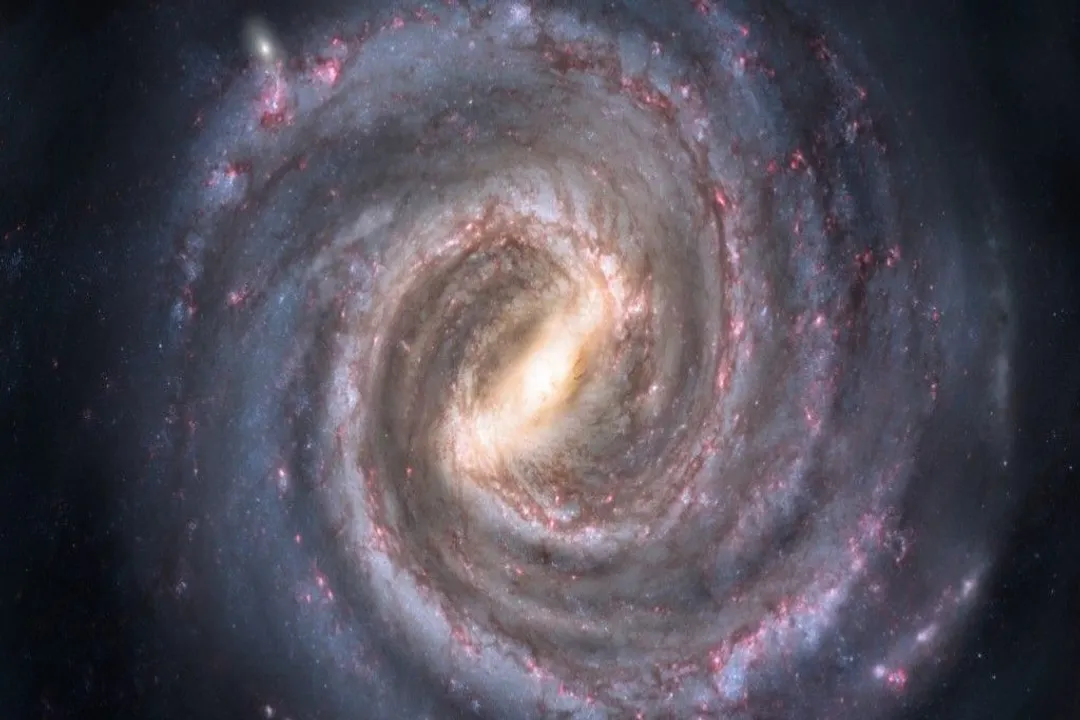
Within a rotating spiral galaxy, stability is achieved through a dynamic equilibrium between two opposing forces. The immense gravitational pull exerted by the galaxy’s mass works inward, trying to cause collapse. [4] Counteracting this pull is the centrifugal force generated by the constant, high-speed rotation of the stars and gas within the disk. [4] This balance allows spiral arms to persist, albeit with internal movement and evolution. The orbital paths of stars are generally circular and co-planar, maintaining the thin disk structure against gravitational instability. [8]
Elliptical galaxies, however, achieve stability through a different dynamic mechanism. They generally lack the organized rotation characteristic of spirals. [8] Instead, the stars within an elliptical galaxy move on highly randomized, often elongated orbits, supporting the system against collapse in three dimensions, similar to how gas pressure supports a star. [4][8] While spirals rely on rotational support, ellipticals rely on velocity dispersion—the random motions of their constituent stars—to maintain their shape. [8]
# Mergers Shape Fate
Galaxies are not hermetically sealed; they grow and change shape through interactions with their neighbors. [2][7] Accretion, where smaller galaxies or gas clouds are gravitationally cannibalized, is a continuous process. [2] Major mergers—the collision of two similarly sized galaxies—represent a dramatic restructuring event. When two spirals merge, the violent gravitational interaction scrambles the organized, rotational orbits of the stars. [3] The resulting system typically settles into a new, more spheroidal configuration, forming an elliptical galaxy. [3][8] This transformation stabilizes the system into a new, often denser, equilibrium state supported by randomized stellar motions rather than organized rotation. [3]
The early universe was notably more chaotic, characterized by a higher frequency of these high-velocity, gas-rich interactions. This intense merging period established the fundamental mass and morphological types we see today. [5]
| Galaxy Type | Primary Stabilizing Dynamic | Typical Mass Assembly |
|---|---|---|
| Spiral | Rotational Support (Centrifugal Force vs. Gravity) | Gradual Accretion |
| Elliptical | Velocity Dispersion (Randomized Orbits) | Major Mergers |
# External Pressures
While internal dynamics dictate the shape, the galactic neighborhood dictates the long-term evolutionary state, which indirectly contributes to structural persistence by halting disruptive star formation. [3] This is particularly relevant for galaxies residing in dense cosmic environments, such as galaxy clusters. [3]
In these crowded regions, galaxies are subjected to intense external forces. One significant process is ram pressure stripping. [3][8] As a galaxy plows through the superheated, thin gas that permeates the cluster—the intracluster medium—this medium acts like a powerful cosmic wind, physically stripping the galaxy's cooler gas reservoir away from its disk. [8] When a galaxy loses its star-forming fuel, it effectively "quenches," ceasing the birth of new, blue stars and transitioning into a red, dead system. [8] This state is structurally stable because the energy input from new star formation is eliminated, allowing the existing gravitational structure to persist without further rapid transformation driven by gas dynamics. [3]
Tidal forces from close gravitational encounters with massive neighbors can also stretch and distort a galaxy, pulling material outward and potentially leading to the formation of tidal tails. [8] Over many passes, these interactions contribute to the smooth, featureless nature of many large ellipticals found in cluster cores. [3]

# Early Maturity
New observations continue to refine our understanding of how quickly these stabilization mechanisms took hold. Data from advanced observatories, such as the James Webb Space Telescope (JWST), has revealed surprisingly massive and structurally mature galaxies existing much earlier in cosmic history than older models predicted. [1] These early findings suggest that the process of mass assembly and the establishment of the necessary dark matter halos, coupled with efficient early star formation, happened faster than previously modeled. [1] This forces astronomers to reconsider the timescale over which the initial conditions allowed for the rapid sedimentation into gravitationally bound systems. [1]
When studying the evolution of cluster galaxies, it is important to separate two kinds of stabilization: structural stabilization and evolutionary stabilization. A bright, blue spiral galaxy is structurally stable due to its rotational speed resisting immediate collapse, but it is evolutionarily unstable because it is actively consuming its fuel and changing its composition over time. [8] Conversely, a red elliptical galaxy, stabilized by randomized orbits, is evolutionarily stable because it has already consumed or lost its gas supply, effectively freezing its morphological state in time. [8] The mechanisms responsible for these two forms of stability—internal dynamics versus external environmental effects—often work in concert over billions of years to produce the seemingly eternal structures we observe today. [3]
Related Questions
#Citations
Galaxies Over Time - NASA Science
Galaxy formation and evolution - Wikipedia
The evolution of galaxies - Max-Planck-Gesellschaft
The formation and evolution of galaxies is a complex process that ...
ELI5: galaxy formation? do galaxies go from a Larger radius ... - Reddit
How galaxies form: Theories, variants and growth - Space
5.4: Evolution of Galaxies and the Universe Itself - Physics LibreTexts
Evolution of galaxies - UA Astronomy
Galaxy - Evolution, Quasars, Structure | Britannica