Was time or space first?
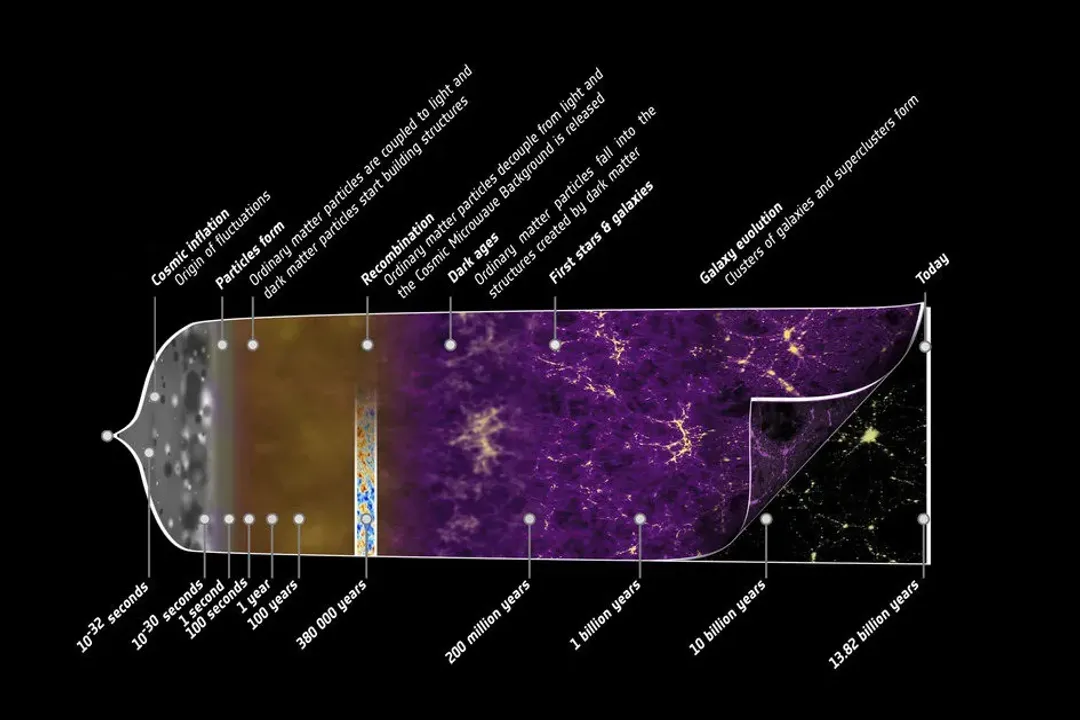
The contemplation of whether space existed before time, or vice versa, has long occupied thinkers, presenting a profound riddle about the fundamental nature of our reality. It is an inquiry that naturally arises when considering the universe's most dramatic starting point. However, the modern understanding supplied by physics suggests that separating these two concepts—space and time—is a mistaken premise from the outset. They are not independent variables waiting their turn to appear; rather, they emerged together, inextricably bound as a single entity. [1][4][8][9]
# Unbound Dimensions
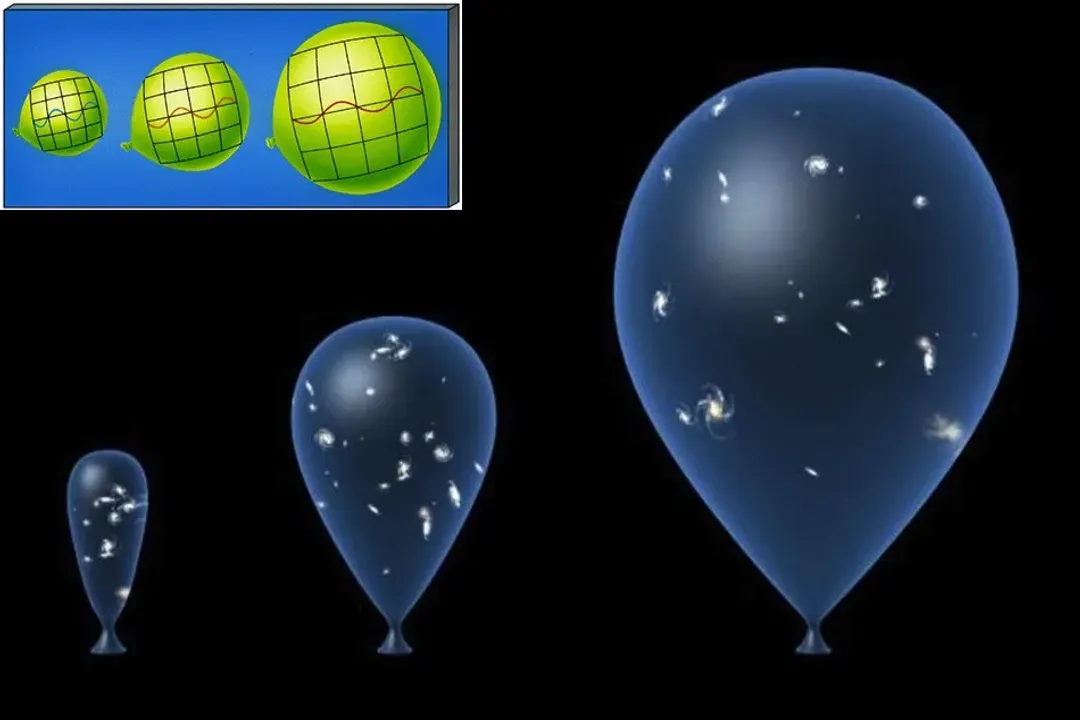
Asking which came first assumes a sequence, a preceding moment where one entity existed without the other. This linear thinking applies well to our everyday experience—a chair occupies space, and it exists for a certain duration of time—but it collapses when we approach the extreme conditions described by Einstein’s theories. [8] In our familiar macroscopic world, we intuitively treat space as the stage and time as the unfolding script. Space is where things happen; time is when they happen. This division is useful for navigation, measurement, and daily planning, but it is an approximation of a deeper reality. [8]
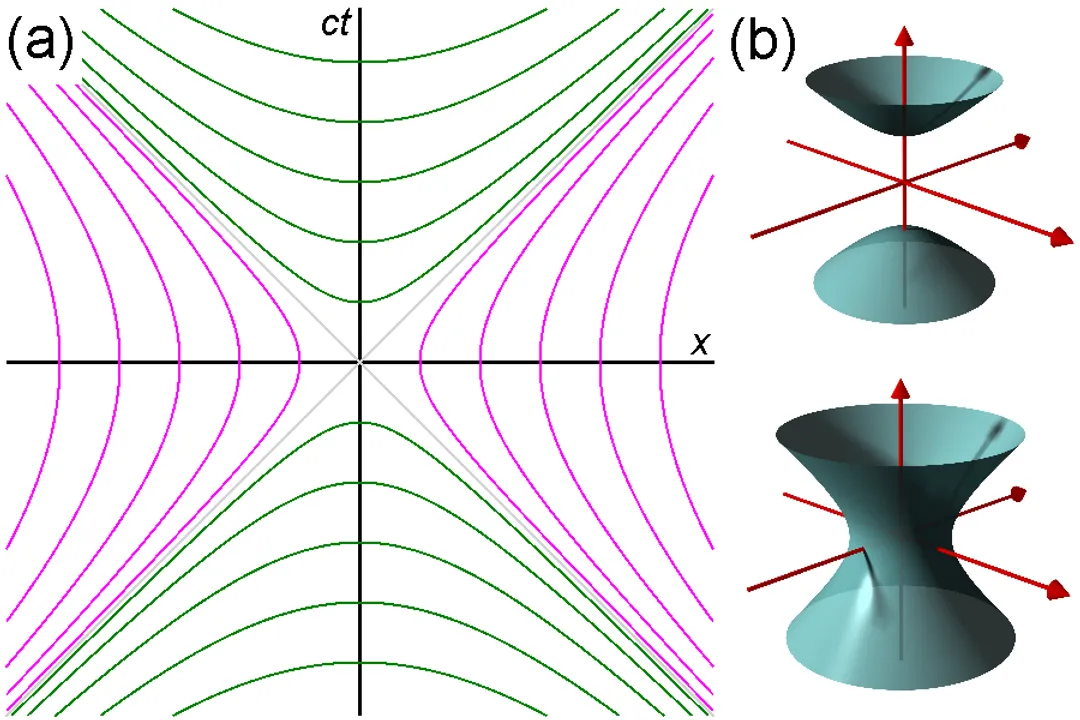
The very structure of the cosmos, as revealed by relativity, shows us that space and time are intertwined, forming a four-dimensional fabric known as spacetime. [8] To fully describe an event—say, catching a baseball—one must specify three coordinates in space (where it was caught) and one coordinate in time (when it was caught). You cannot have a 'where' without a 'when,' nor a 'when' without a 'where' in the context of the universe’s structure. [8]
# Spacetime Unity
The concept of spacetime, mathematically formalized by general relativity, demonstrates that the properties of space and time are mutually dependent. [8] Changes in one affect the other, manifesting as phenomena like time dilation or length contraction when objects approach the speed of light. If space were to vanish, the dimension we call time would also lose its meaning, as there would be no distance to traverse or positions to occupy between events. [1][7] Similarly, if time stopped, all motion and change would cease, effectively freezing all spatial relationships into one timeless configuration. [7] They are, as some descriptions put it, "joined at the hip" during the universe's earliest moments. [9]
This unification is not just a theoretical curiosity; it is the operational rule governing gravity and cosmology. Mass and energy warp this spacetime fabric, and what we perceive as gravitational pull is simply objects following the shortest possible path, or geodesic, through the resulting curves and dips in spacetime. [8] This makes the idea of time preceding space, or vice versa, akin to asking which dimension of a rectangle—length or width—is more fundamental. [1]
# Big Bang Genesis
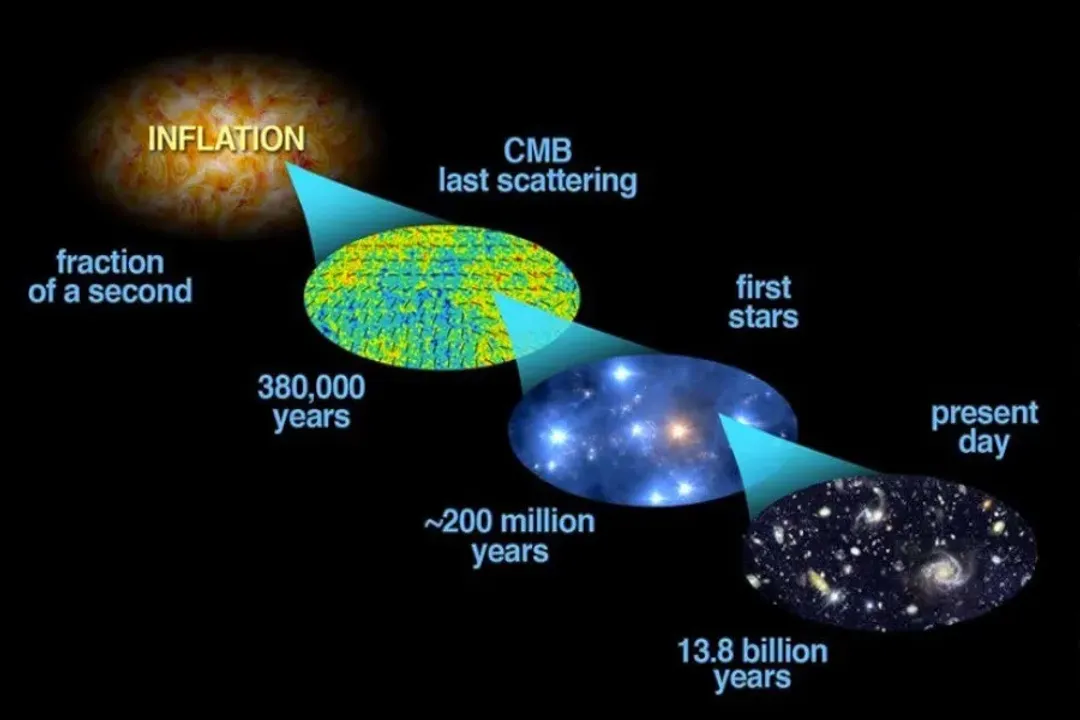
The scientific starting gun for this discussion is the Big Bang. According to the prevailing cosmological model, the universe began approximately $13.8$ billion years ago from an incredibly hot, dense state known as a singularity. [1][4] It is crucial to understand that the Big Bang was not an explosion in space, like a bomb going off in an empty room. Instead, it was the rapid expansion of space itself, carrying all matter and energy along with it. [4][5]
Since space itself was created in this event, there was no pre-existing spatial container for it to expand into. Furthermore, since time is a property intrinsically woven into this spatial expanse, time must also have begun at that same instant. [4][5] Therefore, the beginning of our universe is the beginning of spacetime. Asking what came before is conceptually problematic because the very concept of 'before' requires time to have been flowing, which it only began to do at . [5]
# Pre-Bang Limits
When physicists discuss the moment of the Big Bang, they often point to a breakdown in our current laws of physics—specifically, general relativity. At the initial singularity, density and curvature become infinite, indicating that the theory itself can no longer accurately describe conditions. [1] This moment, often denoted as , represents the boundary of our current physical description. [1][4]
It is a common analogy used to illustrate this boundary: asking what is north of the North Pole. [5] The question is grammatically sound, but the concept fails because the North Pole is the definition of the northernmost point; there is no further 'north' to find. Similarly, asking what existed 'before' the universe began is nonsensical within the framework that defines 'before' as the progression of time, which started with the universe. [5] We simply lack the validated physics, such as a working theory of quantum gravity, to peer into that initial state or what, if anything, preceded it. [1]
# Time Defined
Focusing on time's nature can provide another angle. Time, as we experience and measure it, is inextricably linked to the concept of change. [7] For time to pass, something must move, transform, or evolve. This implies that for time to be meaningful, there must be space for objects to move within or configurations to change across. [7] If there were no space—no distances or locations—what would constitute a change in time? An event requires location, and the difference between two states (i.e., the passage of time) requires the potential for spatial configuration change. [7]
This leads to a useful way to frame the debate: if you imagine a state with no space, the concept of motion ceases, thus rendering time inert or nonexistent. If you imagine a state with no time, all motion stops, and the universe exists in a static, timeless configuration—but even that configuration requires space to exist in. The symmetry suggests an equal footing for their creation. [9]
# Conceptual Leap
When trying to internalize this, many people struggle because our minds are hardwired for Newtonian physics, where time is an absolute, external clock ticking uniformly everywhere. [8] We picture the Big Bang as a point appearing on a pre-existing, infinite black canvas (space), and then the clock starting. The necessary mental shift is to recognize that the canvas and the clock were fabricated simultaneously. [4] To help visualize this, consider that every point in space today has a corresponding history back to the Big Bang, and this history is time. The universe isn't just an object in spacetime; it is spacetime itself.
This interdependence means that if we were to mathematically remove the spatial dimensions from the metric describing the universe, the temporal dimension would mathematically collapse as well, and vice versa. For instance, in the standard spacetime model used in special relativity, the coordinates are , where is the speed of light and is time. [8] The mathematical structure ensures that time is treated as a fourth dimension, fundamentally equivalent to the three spatial dimensions in how they contribute to the spacetime interval, though with a negative sign in the metric signature, which gives time its unique characteristics. [8]

# Four-Dimensional View
To better grasp this unity, one can imagine reality not as a sequence of 3D snapshots but as a single, static 4D block universe. [8] In this block, the entire history of the cosmos, from the Big Bang to its furthest future, exists simultaneously as one complete object. Our subjective experience of time passing—the feeling that the future is becoming the present, which then becomes the past—is an artifact of consciousness moving along the time dimension within this unchanging block. [8]
If you were an entity existing across all four dimensions at once, you would see the entire lifespan of a star, from stellar nursery to supernova, all laid out like a giant piece of cosmic ribbon. The star doesn't become a supernova later; its supernova phase is simply another fixed coordinate on the space-time axis, just as its location in space is a fixed coordinate on the spatial axes. [8] This perspective solidifies the idea that space and time are inseparable components of the same structure; one cannot be considered 'first' when they constitute the whole. For any physical event, the coordinates are necessary components of its address. [8] In essence, the question of which came first between space and time dissolves when physics reveals they are fundamentally the same thing, originating together at the dawn of the cosmos. [1][4][5]
#Videos
Did Time Start at the Big Bang? - YouTube
Related Questions
#Citations
Which came first – time or space? - BBC Science Focus Magazine
What came first, time or space? : r/AskReddit
To the finest minds out there (anybody), what existed first, time or ...
Ask Ethan #63: The Birth of Space and Time | Starts With A Bang!
What came first: time or space? - Science Alerts - Quora
Did Time Start at the Big Bang? - YouTube
How did time begin, and how will it end? - BBC
Spacetime - Wikipedia
Which came first, space, or time - and were the two joined at the hip ...