Who first discovered the nebula?

The moment a fuzzy patch of light in the night sky was recognized as something other than a comet, a star cluster, or a distant star system marked the beginning of modern study into the vast clouds of gas and dust we now call nebulae. Pinpointing a single, definitive "first discoverer" is less about naming one person and more about tracing the evolution of observation itself—moving from vague celestial sightings to systematic cataloging of these nebulous objects [cite Encyclopedia Britannica].
# Celestial Fuzz
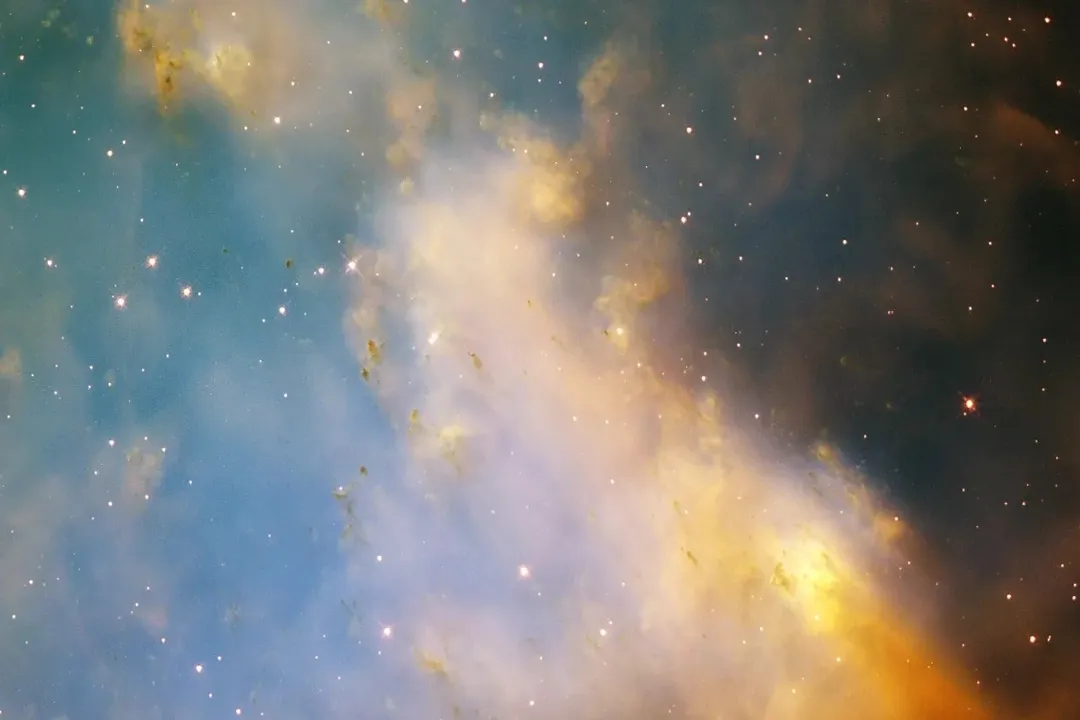
Before the invention and widespread adoption of the telescope, seeing a nebula required extraordinary luck or the object being exceptionally bright, like the one in Orion. The naked eye can detect this object, known today as the Orion Nebula (M42), as a faint, indistinct patch in the sword of Orion. However, the ancient Greeks and Romans often described the Orion Nebula simply as a "smudge" or a "cloudy spot" [cite Encyclopedia Britannica]. It wasn't until detailed telescopic observation that its true nature—a vast region of glowing gas—began to be hinted at.
When astronomers first turned lenses toward the sky, they encountered many objects that defied easy classification. These "fuzzy stars" or "nebulous spots" were confusing because they didn't move like comets, the primary celestial objects of interest in the 17th and 18th centuries [cite Encyclopedia Britannica].
Galileo Galilei, for instance, observed the Orion Nebula through his early telescope around 1610. He was able to resolve the central stars but still perceived the surrounding glow as a mere faintness surrounding them, failing to grasp that the entire structure was one cohesive entity [cite Quora]. This highlights a crucial point: discovery often required not just seeing the object, but possessing the optical power and conceptual framework to understand what was being seen.
# Messier's Goal
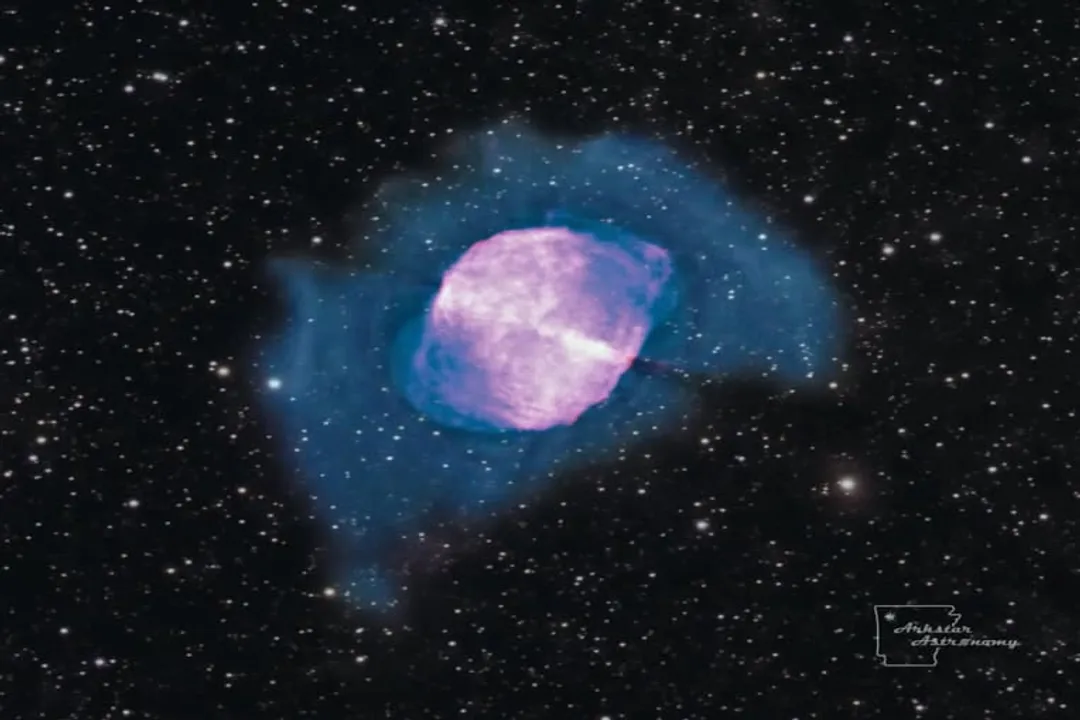
The most significant step toward formally identifying and tracking these objects came from French astronomer Charles Messier. His work was not initially driven by a desire to find new deep-sky objects, but rather the opposite: he wanted to create a catalog of fixed celestial objects so that he, and others, would not confuse them with the new comets he was actively searching for [cite Encyclopedia Britannica][cite Hubble NASA]. This motivation is a key piece of context for understanding early nebula discovery. Messier was an anti-discoverer, in a sense, seeking to document things not to chase.
By the time Messier finalized his famous catalog, it contained over 100 objects, many of which we now definitively classify as nebulae, star clusters, or galaxies (which were then often referred to as "spiral nebulae") [cite Encyclopedia Britannica].
One of the earliest and most famous objects in his list, Messier 42 (M42), the Orion Nebula, was clearly cataloged by him as M42, though others had observed it earlier [cite Quora]. However, his catalog also firmly established the existence of objects like Messier 27 (M27), the Dumbbell Nebula, which is a prime example of a planetary nebula—a distinct class of object formed by a dying star [cite Hubble NASA]. While Messier recorded these phenomena, he often couldn't distinguish between a distant galaxy and a local cloud of gas; for him, they were all "nebulosities" [cite Encyclopedia Britannica].
# Distinguishing Categories
The subsequent history of nebula study involved separating these objects into meaningful physical categories. This separation required generations of astronomers working with progressively better instrumentation.
William Herschel, working in the late 18th century, began systematically charting the sky and was instrumental in classifying nebulae based on their appearance, dividing them into nebulous (diffuse) and resolvable (which he correctly suspected were star clusters) [cite Encyclopedia Britannica]. It was Herschel who began to theorize about the true nature of these faint glows.
The term planetary nebula itself originated from the appearance of certain brighter, rounder nebulae, such as M27, which looked like faint, non-stellar planets when viewed through the smaller telescopes of the day [cite CFA Harvard][cite UT Planetary Nebulae]. The name is now a historical artifact, as we know they have nothing to do with planets, but rather represent the final stages of sun-like stars shedding their outer layers before becoming white dwarfs [cite CFA Harvard][cite UT Planetary Nebulae].
This transition in understanding is reflected in the sheer variety of objects Messier unknowingly grouped together. While M42 is a stellar nursery—a diffuse emission nebula—M27 represents stellar death. The earliest observers were only capturing the visual effect, not the underlying astrophysics.
# Early Cataloging Comparison
To illustrate the scope of early efforts, it is helpful to look at the types of objects that early observers were documenting, even if they didn't know the modern classifications.
| Cataloger | Key Contribution | Type of "Nebula" Documented | Approximate Date of Cataloging |
|---|---|---|---|
| Charles Messier | Systematically cataloged fixed deep-sky objects to avoid confusing them with comets. | Diffuse nebulae (e.g., M42), Planetary Nebulae (e.g., M27), and Galaxies (e.g., M31). | Late 18th Century |
| William Herschel | Created the first extensive, detailed survey of the deep sky, classifying objects by shape. | Recognized structural differences between diffuse clouds and resolved clusters. | Late 18th/Early 19th Century |
| Early Telescopists (e.g., Galileo) | First visual confirmation of structure in bright objects like M42. | Unresolved "fuzzy" light surrounding central stars. | Early 17th Century |
It is clear that while individuals like Galileo saw nebulae first, Charles Messier was the first to document a significant collection of them systematically, giving them the numerical designations that persist today [cite Encyclopedia Britannica]. If the question of "first discovery" means the first time a celestial phenomenon was systematically recorded and acknowledged as a separate class of object, Messier’s catalog is the recognized starting point for formal astronomical study of these objects [cite Encyclopedia Britannica].

# Beyond the Cloud
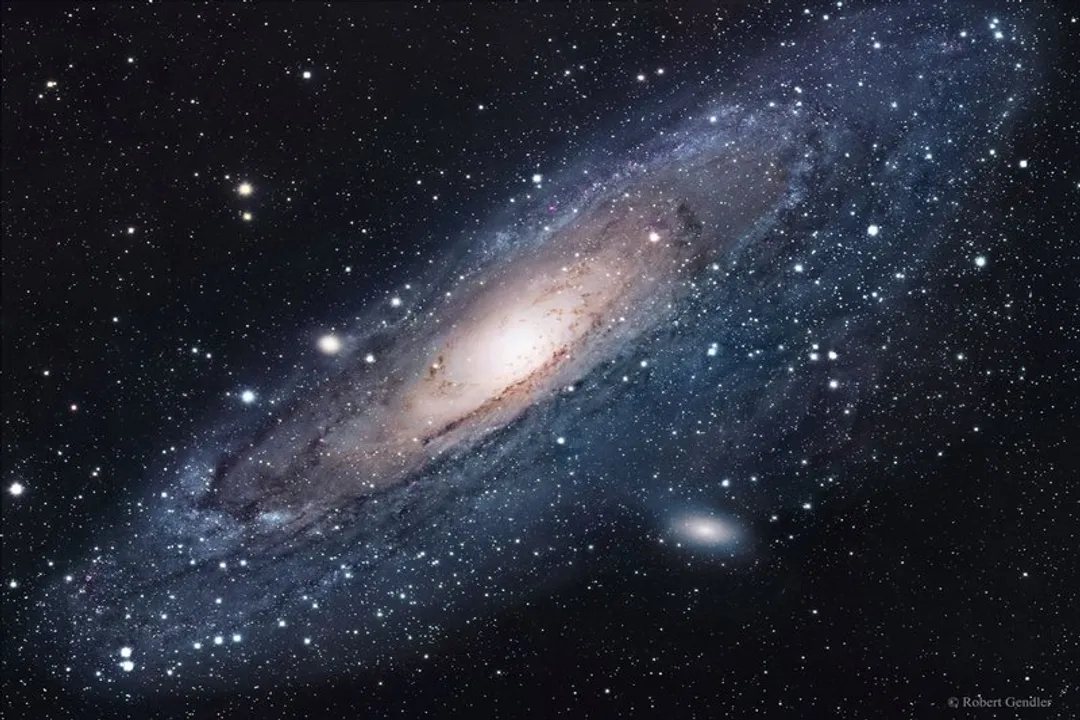
One particularly interesting analytical aspect of this history is how the concept of the "nebula" immediately created a conceptual problem in astronomy that lasted for centuries. When Messier cataloged objects like M31 (the Andromeda "Nebula"), he grouped it with true gas clouds like M42. This ambiguity fueled what became known as the Great Debate of the 1920s: Are these nebulae all small gas clouds within our own Milky Way galaxy, or are some of them vast, independent "island universes" far beyond it? [cite LCO Global].
The eventual resolution, largely thanks to Edwin Hubble's work, confirmed that many of Messier's nebulae were, in fact, other galaxies entirely. This means that the true "first discovery" of a galaxy is often intertwined with the first discovery of a nebula in the historical record, as the observers lacked the necessary tools to make the physical distinction at the time of observation [cite LCO Global]. Messier’s catalog, therefore, is a mixed bag of both local cosmic clouds and distant stellar islands.
Furthermore, consider the motivation behind the subsequent deep-sky surveys undertaken by people like the Herschels. After Messier provided the initial list, the focus shifted from avoiding them to understanding them. The sheer visual difference between a faint, uniform glow (like a dark nebula or a distant galaxy) and the vibrant, structured light of a planetary nebula (like M27, which is still visible today for dedicated observers) suggests that the earliest "discoverers" were not seeing one thing, but many, through the same optical distortion of the early telescope. A backyard astronomer today looking at M27 through a modest telescope can clearly see the planetary nebula structure, a detail that Messier and his contemporaries were only just beginning to map out against the backdrop of comets [cite Hubble NASA].
# Modern Legacy
Today, instruments like the Hubble Space Telescope reveal nebulae not as faint smudges, but as breathtaking structures—the birthplaces of stars, the remnants of stellar explosions, and complex chemistry labs operating on galactic scales [cite NASA Science]. Yet, every Hubble image of the Pillars of Creation or the Ring Nebula traces its lineage back to those first blurry sightings recorded by an 18th-century comet hunter trying to keep his night sky clear of nuisance objects. The first discovery was less a flash of singular brilliance and more a gradual accumulation of sightings that forced astronomy to redefine the boundaries of the known universe.
Related Questions
#Citations
Nebula - Wikipedia
Messier 27 (The Dumbbell Nebula) - NASA Science
Nebula - Astronomy, Formation, Gas & Dust - Britannica
What is the first planetary nebula ever discovered? - Facebook
Planetary Nebulas - Center for Astrophysics | Harvard & Smithsonian
Which was the first Nebula discovered? - Quora
MUSE used to study Saturn Nebula - Astronomy Magazine
History of Discovery - Galaxies - Las Cumbres Observatory
Planetary Nebulae - Universe Today