Who first discovered the nebulae?
The initial observation of the faint, hazy patches in the night sky that we now call nebulae is not attributable to a single person on a specific date. Instead, the story is one of gradual clarification, where the identification of something fuzzy preceded the scientific understanding of what that something actually was. Ancient philosophers and early astronomers certainly noted these smudges, but they lacked the tools to categorize them properly. [1] The very term nebula stems from the Latin word for "mist" or "cloud," accurately reflecting how these celestial objects appeared through early optical instruments, obscuring any underlying structure. [1]
# Early Faintness
Before the invention of the telescope, these objects were indistinguishable from stars or, in some ancient contexts, were perhaps described as atmospheric phenomena. Even after telescopes became available, many astronomers struggled to resolve them clearly. For instance, the famous Orion Nebula, one of the brightest visible, was sketched by Christiaan Huygens in the 17th century, who recognized it as a distinct patch of light unlike a star, but it remained a source of confusion for a long time. [1] The challenge was that these objects were incredibly faint compared to resolved stars, and early instruments could not separate the light into its component parts or reveal structure.
# The Comet Hunter
The true systematic accounting of these persistent, non-cometary smudges began with the relentless pursuit of a completely different celestial body: the comet. Charles Messier, a French astronomer, was deeply invested in tracking comets throughout the mid-18th century. [3] In his quest to find these fleeting visitors, he repeatedly encountered stationary, cloudy objects that he needed to record so he wouldn't waste time observing them again, mistaking them for a new comet. [5][7] This need to distinguish between moving comets and permanent deep-sky features led to the creation of the famous Messier Catalog, starting around 1758. [3]
Messier’s catalog eventually listed 110 such objects, many of which are now known as nebulae or star clusters. [1][5] While Messier did not discover every object on his list—some had been seen earlier by others, like the Great Orion Nebula (M42) or the Andromeda object (M31)—he was the first to formally group them as a specific class of non-stellar objects that needed charting. [3][7] It is crucial to realize that Messier considered these objects nuisances in his primary work, yet the resulting catalog became foundational for deep-sky astronomy. [7] The Messier objects often include what we now call planetary nebulae, emission nebulae, and the very objects that would later spark the great debate over the universe's scale. [9]
| Observer | Era | Primary Goal | Key Contribution to Nebulae Study |
|---|---|---|---|
| Messier | Mid-18th Century | Comet discovery | First systematic cataloging of fixed, fuzzy objects [3][7] |
| W. Herschel | Late 18th Century | Mapping the heavens | Systematic deep-sky surveys and classification of objects [3][8] |
| Lord Rosse | Mid-19th Century | Detailed telescopic observation | Resolved spiral structure in some nebulae [3] |
| E. Hubble | Early 20th Century | Determining cosmic distances | Proved spiral nebulae were external galaxies [7] |
The Messier Catalog, while vital, represented only the first step. The subsequent work by William Herschel and his sister, Caroline Herschel, marked a shift from mere recording to genuine scientific survey and classification. [8]
# Deep Sky Surveying
William Herschel, beginning in the late 1770s, dedicated himself to a rigorous, systematic sweep of the entire sky using increasingly powerful telescopes he constructed himself. [8] Unlike Messier, whose work was almost incidental to his comet hunting, Herschel actively sought out these faint objects to understand the structure of the cosmos. [3] He was determined to catalog everything out there, not just avoid misidentifying them.
The Herschels cataloged thousands of nebulae, far surpassing Messier’s initial list. [8] William was the first to begin distinguishing between different types of nebulae based on their appearance, noting some appeared round and soft (which he termed "planetary nebulae"), while others seemed more irregular or even associated with star formation regions. [1] This effort transformed the study of these objects from a simple list of curiosities into a structured science aimed at mapping the structure of the universe beyond the solar system. [8] The sheer scale of their work established a foundational dataset that subsequent generations would build upon.
# The Great Distinction
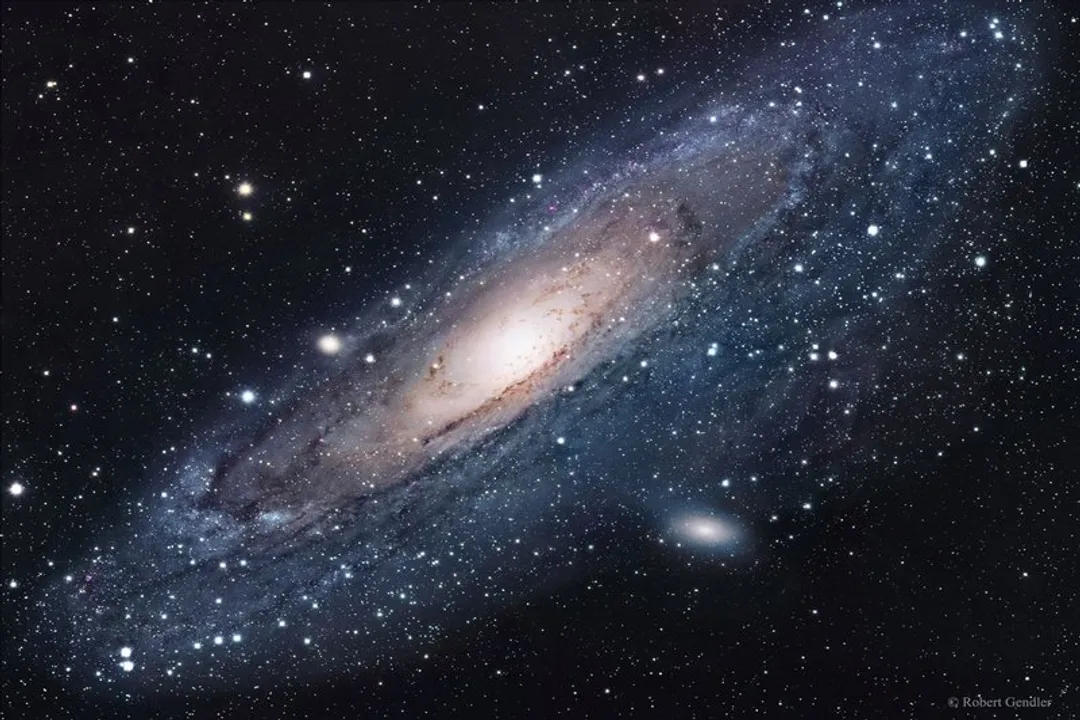
For nearly a century after the Herschels, the prevailing scientific view was that most nebulae were either glowing clouds of gas within our own Milky Way galaxy or that they were the beginnings of new star systems forming inside our galaxy. [7] The true nature of the spiral-shaped nebulae—objects like M31—remained hotly debated. Were they enormous, distant gas clouds, or were they, as some speculated, entirely separate stellar systems?
This ambiguity persisted until technology allowed astronomers to resolve the fine details of these spiral objects. In the 1840s and 1850s, William Parsons, the 3rd Earl of Rosse, observing with his massive 72-inch "Leviathan of Parsonstown" telescope, was able to clearly see the spiral arms in several of these "spiral nebulae," including the Whirlpool Galaxy (M51). [3] Rosse's observations provided tangible evidence that some nebulae possessed internal structure that looked organized, not amorphous like a simple cloud of gas. While Rosse himself did not definitively state they were other galaxies, his detailed drawings provided the strongest evidence yet that these objects were vastly different from the diffuse planetary nebulae within the Milky Way. [3]
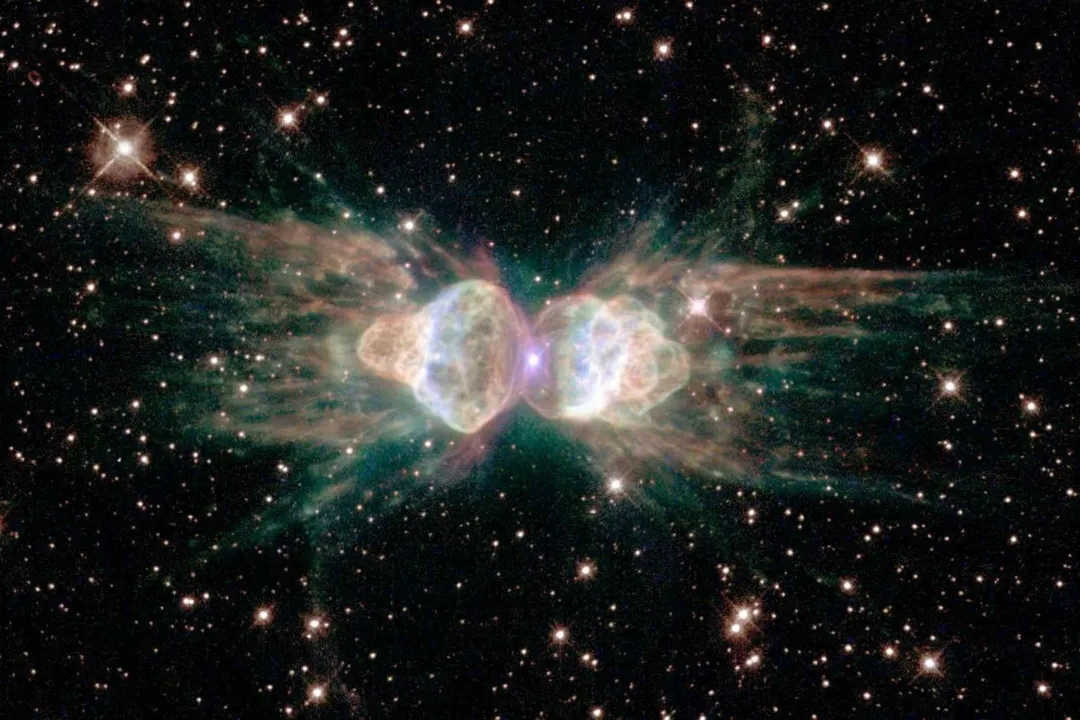
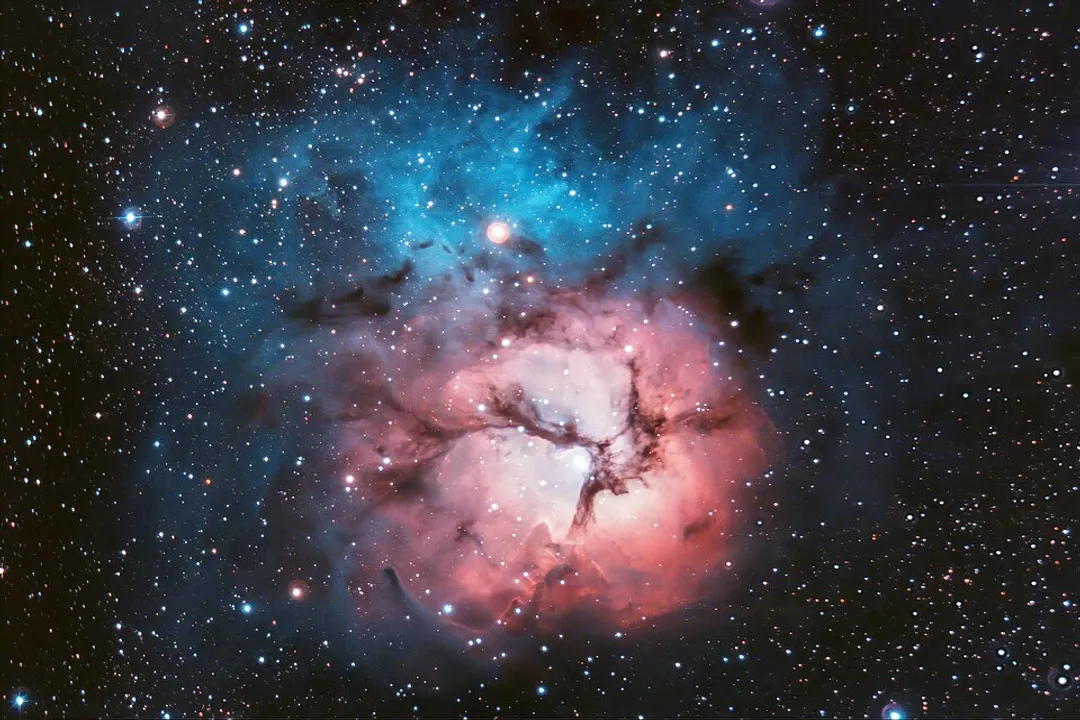
The ultimate resolution of this historical question—the greatest discovery related to "nebulae"—came in the 1920s with Edwin Hubble. [7] Using the powerful Hooker Telescope on Mount Wilson, Hubble was able to identify Cepheid variable stars within several of these spiral nebulae, most famously Andromeda. [7] By measuring the period-luminosity relationship of these variables, Hubble could calculate the true, immense distance to these objects, proving they lay far outside the boundaries of the Milky Way. [7] At that moment, the term nebula formally split in meaning: it described the true interstellar clouds of gas and dust (like the Orion Nebula or the Ring Nebula) that are within our galaxy, and the extragalactic spiral nebulae were correctly renamed galaxies. [1]
The evolution of discovery shows that the first person to see a nebula likely predates recorded history, the first to catalog a permanent set was Messier, and the first to systematically study them was Herschel. However, the first to understand the true scale of the largest ones, thereby separating the galaxy from the nebula, was Hubble. It is a history defined by refinement, where each observer clarified the work of the last, turning a single, mysterious classification into a diverse set of phenomena encompassing stellar nurseries, stellar death, and the very structure of the cosmos. [2][6] When we look at the stunning images captured today by instruments like the Hubble Space Telescope—which itself has studied objects cataloged by Messier, such as M27, the Dumbbell Nebula—we see the culmination of centuries of attempts to understand what those first faint smudges really were. : [5][1] https://en.wikipedia.org/wiki/Nebula: [2] https://spacecenter.org/what-is-a-nebula/: [3] https://www.britannica.com/science/nebula/Historical-survey-of-the-study-of-nebulae: [4] http://ui.adsabs.harvard.edu/abs/2016JAHH...19..305S/abstract: [5] https://science.nasa.gov/mission/hubble/science/explore-the-night-sky/hubble-messier-catalog/messier-27/: [6] https://pa.as.uky.edu/nebulae: [7] https://lco.global/spacebook/galaxies/history-discovery/: [8] https://makingscience.royalsociety.org/in-focus/in-focus-nebulae-herschel: [9] https://www.astronomy.com/science/muse-used-to-study-saturn-nebula/: [10] https://www.gemini.edu/news/press-releases/gemini0605


Related Questions
#Citations
Nebula
What is a nebula?
Nebula - Astronomy, Formation, Gas & Dust
William Herschel's 'Hole in the Sky' and the discovery of ...
Messier 27 (The Dumbbell Nebula)
Nebulae | University of Kentucky College of Arts & Sciences
History of Discovery - Galaxies
A nebula of papers | The Royal Society - Science in the Making
MUSE used to study Saturn Nebula
A Tale of Two Nebulae