What benefits did the Space Race bring?
The intense competition between the United States and the Soviet Union during the Cold War era yielded far more than a race for orbital milestones and lunar landings; it initiated a cascade of technological and societal transformations that fundamentally reshaped modern life. [4][8] What began as a geopolitical struggle for supremacy quickly morphed into an engine of innovation, forcing engineers and scientists to solve complex problems under extreme deadlines and resource constraints. [1] The pursuit of placing a man on the Moon and demonstrating superior rocketry propelled advances that had immediate, practical consequences far removed from the vacuum of space. [3]
# Cold War Driver
The Space Race, beginning in earnest after the Soviet launch of Sputnik 1 on October 4, 1957, was an extension of the ideological battle between communism and capitalism. [4][6][8] The initial Soviet successes, including the first artificial satellite and the first human in orbit, Yuri Gagarin, sent a political shockwave across the globe, suggesting Soviet technological dominance. [4][5][8] This perception of lagging spurred the creation of NASA in 1958 and instigated unprecedented governmental funding into research and development. [4][8] The goal was clear: to prove unchallenged superiority to the international community through scientific and technical prowess. [4][5] While this political motivation was the primary catalyst, the necessary engineering solutions became the lasting legacy we benefit from today. [1]
# Tech Spinoffs

The sheer difficulty of operating machinery and keeping humans alive in space—where conditions are harsh, weightless, and isolated—demanded entirely new solutions across materials science, miniaturization, and computing. [1][3] When engineers devise systems that must function flawlessly millions of miles away from easy repair, the resulting technology often proves revolutionary when adapted for terrestrial use. [1]
One of the most palpable shifts came in the realm of imaging. The need for small, lightweight, and durable image sensors for deep space missions was critical. This research, conducted at NASA’s Jet Propulsion Laboratory (JPL), directly conceptualized the idea of digital photography. [1] This foundational work culminated decades later in the image sensors found in an estimated one-third of all cellphones globally, demonstrating a direct line from lunar exploration to pocket-sized communication devices. [1][9] Furthermore, the advanced digital image processing refined for deep space photography found civilian application in medical diagnostics, helping to create modern CAT scanners and radiography equipment. [3][2]
Consider the materials themselves. Developing protective gear, spacecraft insulation, and durable equipment required breakthroughs in material science. For instance, the lightweight, fireproof materials developed for modern firefighting equipment find their roots in NASA requirements for astronaut safety. [3] Similarly, advancements in shock-absorbing materials, necessary for astronaut seats and lunar landers, drastically improved artificial limbs and even influenced the design of cushioning in athletic gear, such as the Nike Air sole using blow rubber molding techniques. [3][9] Even everyday consumer goods, such as cordless devices, were spurred by the need to eliminate tangled wires for astronauts operating in confined environments. [9]
It is interesting to note that the Space Race’s incentive structure—a state-driven, high-stakes political mandate—allowed for investment in foundational research that a typical commercial market would deem too risky or long-term. [1] For example, the push for better communication and navigation resulted in technologies like GPS. While initially geared toward military precision and weapon targeting, GPS has since become the backbone for nearly every modern logistical operation, from ride-hailing services to global package tracking. [3] This contrasts sharply with today’s typical innovation cycle, where the pace of engineering was dictated by an external, existential competition, rather than quarterly earnings reports. [1]
# Information Flow
Beyond individual gadgets, the infrastructure for global information exchange was fundamentally built during this era. The launch of the first communications satellite, SCORE, by the U.S. in 1958, which broadcast a pre-recorded Christmas message from President Eisenhower, was a profound demonstration of capability. [6] Today, a vast network of satellites in Low Earth Orbit (LEO), Medium Earth Orbit (MEO), and geostationary orbit provides everything from broadband internet to high-definition television. [3][2]
The benefit extends into environmental and logistical planning with weather satellites. These assets allow for constant global monitoring of climate, tracking of pollution, monitoring of volcanic ash, and forecasting of major events like El Niño. [2] An underappreciated aspect of this orbital monitoring is its direct application to terrestrial commerce and resource management. For instance, the data derived from weather satellites is now used to assess the viability of potential solar panel sites by accurately measuring long-term cloud cover patterns. [2] Furthermore, the ability to precisely track assets globally, thanks to satellite navigation, has created efficiencies in shipping and agriculture that simply did not exist when the race began. [3] This systemization of Earth observation, born from the need to track adversaries and map distant celestial bodies, provides a constant, invisible service essential to modern global commerce. [2]
# Health Frontiers
The requirements of keeping humans alive and healthy in an environment hostile to biology accelerated medical research significantly. [2] Studies on human physiology in microgravity revealed much about the human body's fundamental processes, which researchers then applied to Earth-bound health crises. [2][7]
For example, the study of how zero gravity affects the cardiovascular system in astronauts offered new insights into how blood vessels change, aiding our understanding of heart failure and the aging of arteries on Earth. [2] Specialized heart pumps, designed by space engineers to sustain astronauts, are now used to keep patients awaiting heart transplants alive. [2] Research into bone density loss in space has also provided deeper understanding of biomineralization processes. [2] The Biosatellite program, which began in 1967 studying the effects of zero gravity on life forms from bacteria to mice, laid groundwork for understanding how cells and smaller organisms react to extreme conditions, a field now categorized as Space Biology. [2]
The need for sterile, reliable systems also translated directly into consumer health products. Infrared ear thermometers, which measure the energy emitted by the eardrum to quickly determine body temperature—mirroring how infrared astronomy measures stellar temperatures—are a direct technological transfer. [3][9] Furthermore, the rigorous standards NASA and partners like Pillsbury developed to ensure food safety for astronauts—the Hazard Analysis and Critical Control Point (HACCP) concept—is now the mandated standard for safe handling of juice, seafood, and dairy products in many regulatory environments. [3]
# Scientific Growth
The direct scientific returns from the era were immense. The creation of powerful observational tools like the Hubble Space Telescope (developed with ESA contributions) allowed scientists to peer deeper into the cosmos than ever before, leading to major breakthroughs in astrophysics, such as better determination of the rate of the universe's expansion. [2]
The missions to the Moon provided tangible scientific assets: lunar samples. These materials, gathered by probes and the Apollo crews, continue to be analyzed, informing our understanding of planetary formation. [2] Even early, basic orbital experiments, like those performed by Sputnik 1 on the ionosphere, expanded fundamental knowledge of Earth’s environment. [2] Later, the U.S. Explorer 1 satellite carried equipment that led to the discovery of the Van Allen radiation belts surrounding Earth. [6][8]
# Education and Awe
The challenge itself spurred massive investment in the educational infrastructure to create the necessary workforce. Following Sputnik, the U.S. passed legislation like the National Defense Education Act (NDEA) to increase funding for scientific and foreign language studies in schools and universities. [7][8] This national commitment to STEM education helped shift cultural priorities toward scientific literacy. [7] The very act of aiming for the Moon galvanized teachers, students, and researchers globally. [2]
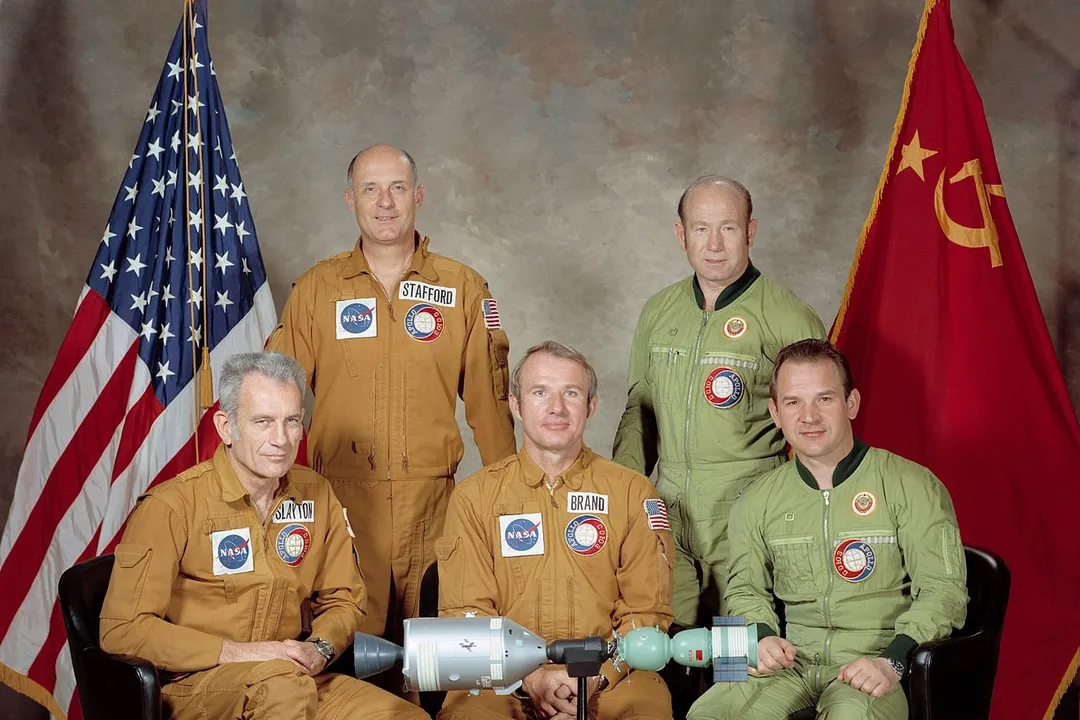
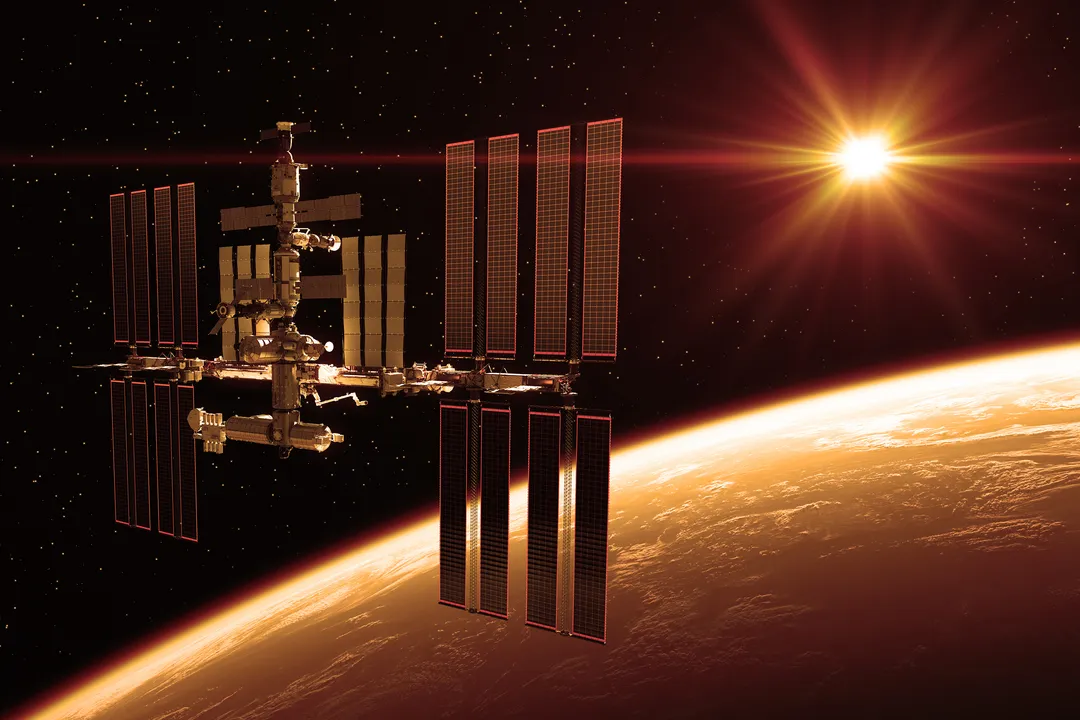
The cultural impact is harder to quantify but equally significant. Achievements like the first spacewalk, the first human orbital flight, and the Moon landing became pivotal moments in human cultural development. [2] The image of Earth as a fragile, blue marble, first captured from deep space, has been cited as an early icon for the environmental movement, implicitly contrasting the planet's vulnerability with the vast blackness surrounding it. [7] Moreover, the shared global experience, televised to hundreds of millions, enriched human culture through the exchange of diverse perspectives among the growing international community of scientists and engineers working in the field. [2] While the race began in an atmosphere of high tension, its later stages pivoted toward international collaboration, most notably the Apollo-Soyuz mission in 1975, which symbolically ended the competitive standoff and laid groundwork for joint projects like the International Space Station (ISS). [4][6][2]

# Resource Prospect
Looking forward, the investment initiated by the Space Race continues to shape economic thinking regarding extraterrestrial resources. The exploration of the Moon and planning for Mars missions involves assessing the potential for space mining. [2] Scientific discoveries pointed toward asteroids rich in precious metals like gold, iron, nickel, and platinum—materials that are relatively scarce on Earth. [2] While regulatory hurdles remain significant, the foundational capability to reach and analyze these bodies—a capability born from Cold War competition—has opened an entirely new economic horizon. [2]
The legacy of the Space Race is not merely a collection of useful inventions; it represents a unique historical period where political will successfully directed intellectual capital toward ambitious, long-term scientific goals, yielding returns that touch nearly every facet of contemporary existence, from the way we communicate to the way we treat heart disease. [1][3][5] The sheer scope of the engineering effort created a lasting standard for problem-solving that future generations, even in commercial endeavors, look back upon for inspiration. [1]
Related Questions
#Citations
How Technology From the Space Race Changed the World
Benefits of space exploration - Wikipedia
The Space Race - Miller Center
Importance of NASA and the Space race - OER Commons
The Space Race | National Air and Space Museum
How the Space Race Built Today's Technology | Aii
Space race timeline | Royal Museums Greenwich
10 inventions we have because of space travel - It's Rocket Science
Space race | Research Starters - EBSCO