Why is there fire in space if there is no oxygen?
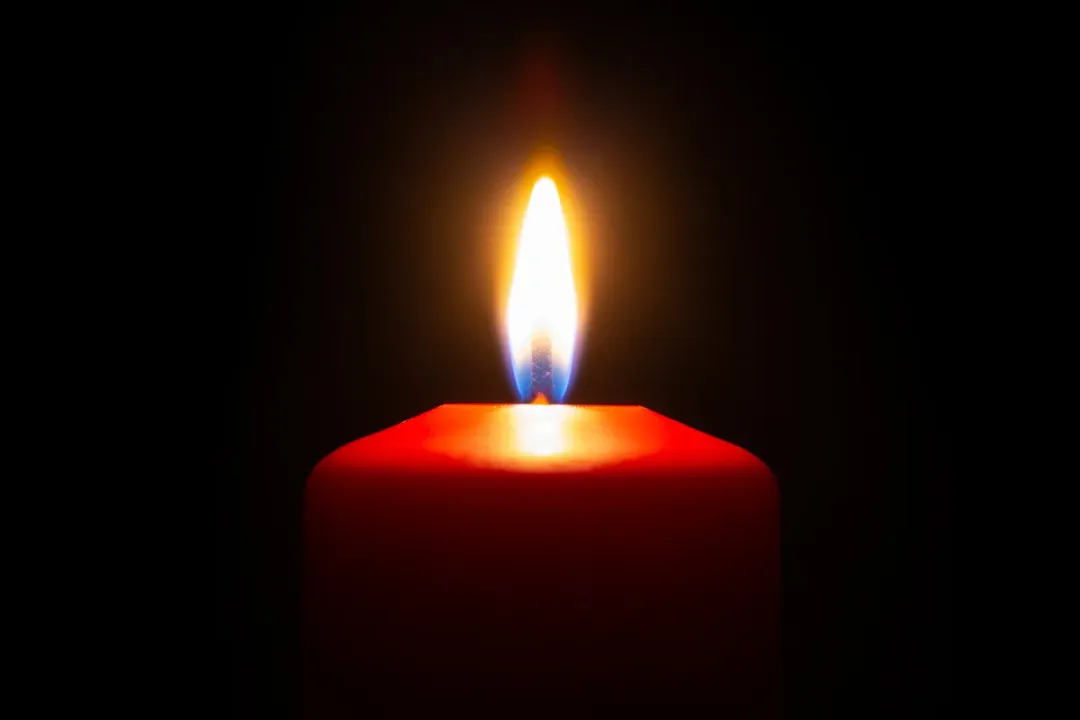
The perception that fire is impossible in space because there is no oxygen stems from our everyday experience here on Earth. Terrestrial fire—the kind we use for cooking or warmth—is a chemical reaction known as combustion, which absolutely requires an oxidizer, typically the molecular oxygen () found in our atmosphere, along with fuel and heat. [4][6] However, when we talk about "fire in space," we must immediately clarify where this fire is occurring, as the environment dictates the rules of the reaction. [4] If we are talking about a blaze in the vacuum outside a spacecraft, then yes, a typical chemical fire cannot exist because there is no ambient oxygen to sustain the reaction. [1][4] But fire does happen in space, both inside pressurized habitats and on celestial bodies like the Sun, for very different reasons.
# Contained Combustion
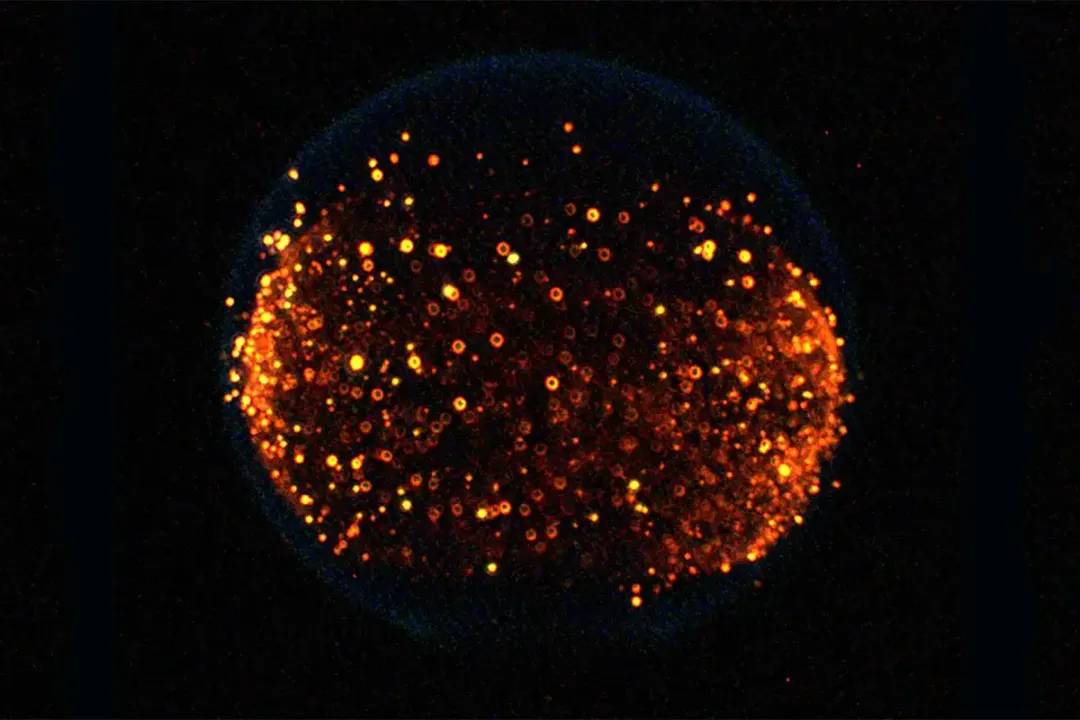
Fires aboard spacecraft, such as the International Space Station (ISS), are possible because these environments are deliberately engineered to mimic Earth's conditions for the crew's survival. [1][2] The ISS atmosphere is pressurized and contains a breathable mix of gases, crucially including oxygen, just like the air we breathe down here. [1] Therefore, if flammable materials are present, a fire can start inside a spacecraft, provided there is a fuel source and an ignition source. [4] The difference lies not in the requirement for oxygen, but in its source—it is carried along or generated within the station, not drawn from the surrounding vacuum. [4][5]
# Microgravity Effects
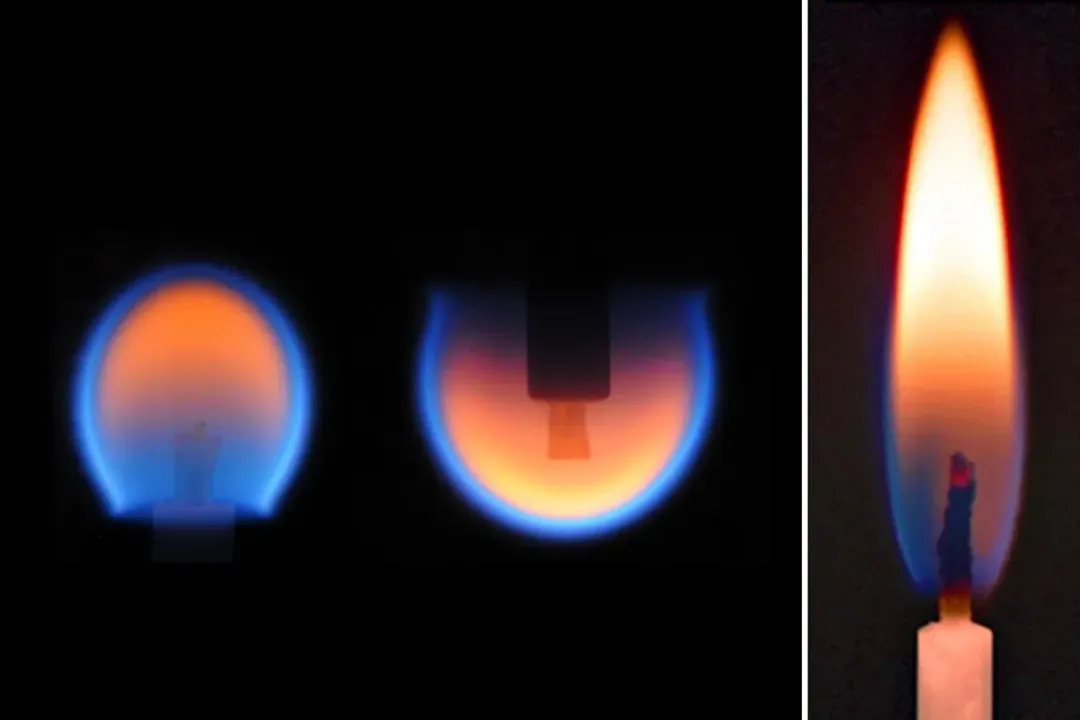
Once ignition occurs within a microgravity environment like the ISS, the nature of the fire changes dramatically compared to what we see on the ground. [3][5] On Earth, gravity plays a fundamental, if unseen, role in fire dynamics. Hot combustion gases are less dense than the surrounding cooler air, causing them to rise; this process, called natural convection, pulls fresh, oxygen-rich air toward the base of the flame, feeding the fire and creating the familiar teardrop shape. [3]
In microgravity, this buoyant mixing disappears. [3][5] Without the upward pull of gravity, the hot gases and smoke do not naturally rise and drift away; instead, they remain immediately surrounding the flame. [3] This lack of convection means that the flame must rely on diffusion—the slow process of gas molecules spreading out—to draw in fresh oxygen. [3]
This diffusion-limited process leads to several distinct characteristics:
- Spherical Flames: Flames in microgravity tend to burn more slowly and take on a nearly spherical shape because the hot gases cannot easily escape the reaction zone. [3][5]
- Cooler Temperatures: Because oxygen supply is restricted by slow diffusion rather than fast convection, the combustion is less efficient, often resulting in cooler flames. [3]
- Soot Accumulation: A significant byproduct of this inefficient burning is the production of soot, which is uncombusted carbon particles. [3] In a normal fire, convection carries this soot away quickly, but in microgravity, the soot can accumulate around the flame or even cling to surfaces. [3] Astronauts must be extremely careful about the types of materials they allow to burn because the smoke and soot can clog air filters or obscure vision long before the fuel is fully consumed. [3]
Studying these unique flame behaviors in space is not just a matter of curiosity; it directly informs combustion science relevant to Earth. [9] By observing how fire behaves when buoyancy is removed, scientists gain cleaner data, isolating the effects of diffusion and chemical kinetics from the complicating factor of gravity. [5][9] This research helps engineers develop cleaner, more efficient combustion systems for power generation on Earth, such as cleaner-burning engines or more effective systems for converting biomass into energy, as the fundamental chemistry revealed in space can lead to better terrestrial designs. [9] For example, understanding how to manage soot formation in a diffusion-limited environment could directly translate to designing burners that minimize harmful particulate emissions in our atmosphere. [9]
# Stellar Fusion
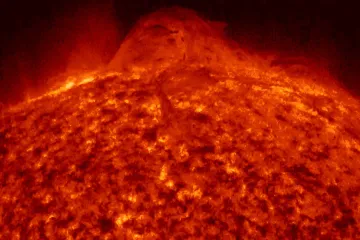
The second type of "fire" that occurs in space—the most prominent example being the Sun—has absolutely nothing to do with chemical combustion or atmospheric oxygen. [6][8] The intense light and heat emanating from stars are generated by nuclear fusion, a process entirely distinct from burning fuel with an oxidizer. [6][7]
The Sun is primarily composed of hydrogen and helium, existing in a state of plasma due to the extreme temperatures and pressures at its core. [8] In this superheated environment, hydrogen nuclei—protons—are forced together under immense pressure, overcoming their natural electrostatic repulsion. [8] This process fuses hydrogen into helium, releasing colossal amounts of energy in the form of light and heat. [6][8] This is the engine of the star, and it operates independently of any external oxygen supply. [6]
It is vital to recognize this fundamental difference:
| Feature | Chemical Fire (ISS) | Stellar Fire (Sun) |
|---|---|---|
| Energy Source | Chemical bond rearrangement (Oxidation) | Nuclear fusion (Mass-energy conversion) |
| Requirement | Fuel and an Oxidizer () | Extreme Heat and Pressure |
| Products | Ash, Carbon Dioxide, Water, Soot | Helium, Neutrinos, High-Energy Photons |
| Environment | Requires a contained, pressurized atmosphere | Occurs in the core of a massive object |
This comparison highlights that when the public asks how the Sun is "on fire," the answer lies in physics, not chemistry. [7] If we tried to "burn" the Sun chemically, it would extinguish instantly if the necessary atmospheric oxygen were somehow introduced into the vacuum around it; it would simply continue its fusion process unabated. [6] The sheer scale and energy of stellar fusion dwarf any terrestrial chemical reaction. [7]
# Oxygen in Near-Vacuum Space
When considering space between the stars or far from any habitat, the premise that there is no oxygen is largely correct, though it requires careful phrasing. [4] Outer space is a near-perfect vacuum, meaning the density of any gas particles—including oxygen, nitrogen, or noble gases—is incredibly low. [4] While trace amounts of atomic oxygen do exist, particularly in Earth's upper atmosphere, they are too sparse to support the sustained chemical chain reaction we recognize as fire. [1][4] A small, contained chemical flame on the ISS would flicker out almost instantly if suddenly exposed to the vacuum because the fuel would vaporize, and the required concentration of oxygen molecules would be absent. [1][4]
To achieve even a brief chemical flame in a vacuum chamber, scientists must actively pump in an oxygen supply alongside the fuel. [4] This necessity underscores the main challenge for long-duration space missions: life support, which includes providing that , becomes just as critical as propulsion or navigation. [2] A failure in the life support system effectively removes the fuel for any potential fire, but also the oxidizer needed to sustain it, leading to a different set of survival challenges.
# Safety and Design Implications
The differing nature of fire in space—chemical versus nuclear—has direct consequences for engineering and crew safety. On the ISS, the primary fire risk is the chemical kind, which is why material selection is rigorously controlled. [3] Astronauts cannot simply use any material; everything must be tested for flammability and soot production under low-gravity, diffusion-controlled conditions. [3] Any material that burns easily or produces toxic smoke is strictly prohibited. [3] This contrasts sharply with the Sun, where the challenge is containment, not prevention. The Sun's structure is a balance between the outward pressure of fusion energy and the inward crushing force of its own immense gravity. [8]
Thinking about the safety measures necessary on future long-haul missions, such as to Mars, one must consider that reliance on stored oxygen introduces a finite resource risk. [2] A key design insight, derived from understanding the microgravity fire mechanism, suggests that for any contained system that relies on stored consumables, the rate of consumption for life support (including oxygen for crew and combustion control) becomes a critical metric for mission duration, perhaps even more so than structural integrity in some scenarios. [2] If a fire does occur, immediate suppression is paramount, not only to stop the flames but to manage the resulting soot cloud which can degrade equipment and pose respiratory risks long after the heat dissipates. [3]
Another practical consideration arises when comparing the physics. While the Sun's fusion reactions are relatively stable over billions of years due to the sheer mass holding the reaction together, a small chemical fire in an orbiting habitat can become hazardous in seconds because it lacks the natural gravitational confinement to manage its heat and exhaust products. [3][5] Understanding the slow, steady nature of nuclear energy versus the rapid, runaway potential of chemical reactions informs how we design emergency protocols for both environments. For instance, the very slow, clean-burning nature observed in some microgravity experiments might eventually inform the design of small, safe, long-duration power sources that operate on carefully controlled, diffusion-limited chemical reactions, though this is highly speculative compared to the proven reliability of fusion for stellar power. [9]
This understanding confirms that the question is not really about if fire can exist in space, but rather what kind of fire, and whether the necessary ingredients—be they stored oxygen or crushing gravitational forces—are present. The vacuum itself prohibits the common fire we know, but the ingenuity of human engineering and the sheer power of astrophysics provide two very different, yet equally potent, forms of "fire" in the cosmos. [1][6]
Related Questions
#Citations
eli5 If there is no oxygen in space, how do our rockets produce fire ...
How can fire burn in space when in space there's no air for ... - Quora
Fire in space and flames in microgravity | BBC Sky at Night Magazine
Why can there be fire in space while there is no oxygen?
Fire in Microgravity | American Scientist
We know that fire needs oxygen in order to burn.Then how come ...
People Are Asking If There Is No Oxygen In Space, How Is The Sun ...
How can the Sun "burn"? - StarChild - NASA
Lighting fires in space is helping us make greener energy on Earth