Do bodies decompose faster in space?
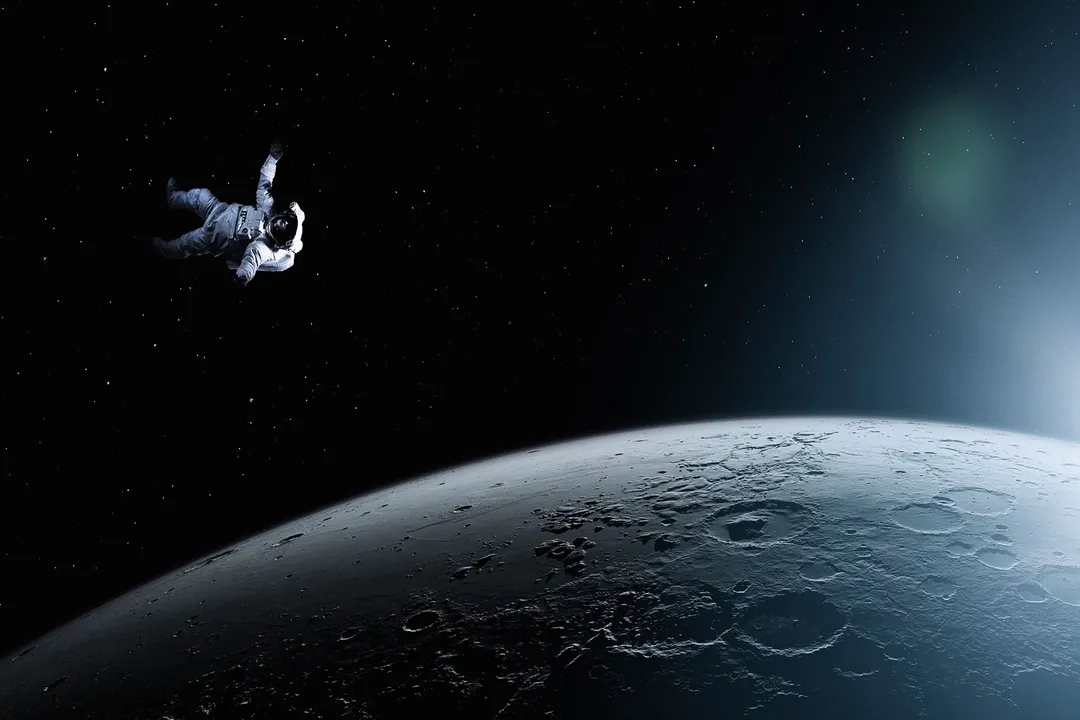
The fate of organic matter, specifically a human body, exposed to the environment of outer space is a morbid yet fascinating question that quickly moves beyond simple biology and into the realm of extreme physics. When we think of decomposition on Earth, we picture bacteria, insects, and the slow breakdown facilitated by moisture and warmth. In the vacuum of space, those familiar agents are effectively neutralized, leading to a process that is fundamentally different and, in the context of putrefaction, far slower. [2][7] The environment isn't conducive to the microbial feast that drives terrestrial decay.
# Vacuum Effects
The primary and most immediate change upon exposure to the near-perfect vacuum of space involves water, which makes up the vast majority of the body's mass. On Earth, liquid water boils at () at sea level. However, boiling is dictated by ambient pressure as much as by temperature. [2] In the near-zero pressure of space, the boiling point of water plummets dramatically.
Even if the body starts at a relatively low temperature, the internal moisture—in the skin, tissues, and blood—will begin to boil and convert directly into gas, a process known as ebullism. [2][5] This rapid escape of water vapor under low pressure would cause the body to swell significantly, though not indefinitely, because the skin and connective tissues possess some elasticity which resists total rupture. [5] This initial stage is rapid, occurring within seconds or minutes of exposure, which might lead some to mistakenly associate it with "faster" decomposition, but it is actually a physical process of desiccation, not biological breakdown. [2][7] The immediate result is that the body essentially blobs up before the next critical phase begins.
# Microbial Halt
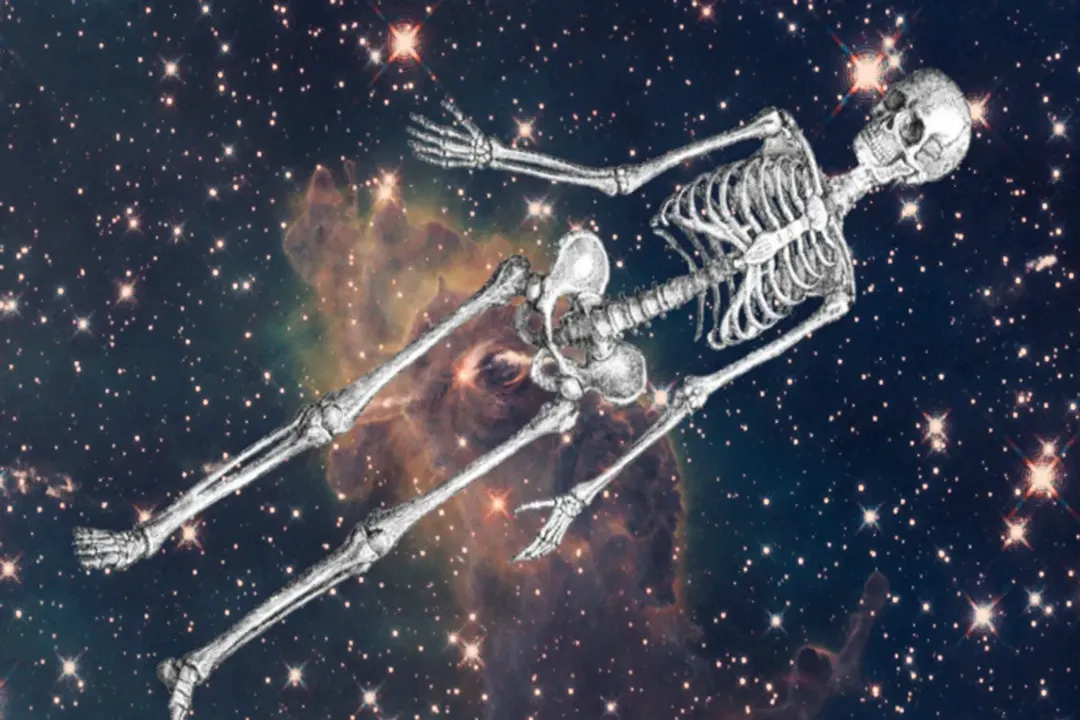
True decomposition, the breakdown of complex organic molecules into simpler ones by living organisms, requires the presence of bacteria and moisture. [7] On Earth, microorganisms thrive in the warm, wet conditions that follow death, consuming tissues and releasing gases that cause bloating and the familiar smells associated with decay. [2]
In space, this biological process grinds to a near halt. [2][7] Aerobic and anaerobic bacteria, which drive putrefaction, cannot function effectively without liquid water and the necessary atmospheric pressure to maintain cellular function. [2][3] Since the vacuum pulls all available surface moisture away and the extreme cold rapidly sets in, the conditions necessary for microbial reproduction and activity are absent. [7] This means the body avoids the messy, rapid decay associated with an Earth burial or being left in an open environment. [2][5]
# Cooling and Mummification
Following the initial ebullism and rapid surface dehydration, the body faces the dual challenges of extreme cold and thermal radiation. [2] While space is often thought of as being incredibly cold, a body exposed to the void does not instantly freeze solid. Heat transfer in space relies primarily on thermal radiation, as there is no air to conduct heat away (convection) or carry heat via fluid movement. [7]
However, since the body is radiating its heat out into the extremely cold background of space—around $2.7$ Kelvin—the process of cooling becomes very efficient over time, though slower than if it were plunged into an ice bath on Earth. [7] The combination of the vacuum aggressively sucking out moisture and the drop in temperature causes the remaining tissues to desiccate severely. [2][5] The end result is not a mushy, rotting corpse, but something closer to a very well-preserved, frozen mummy. [2][5] This preservation contrasts sharply with what happens inside a spacecraft, where internal systems maintain temperatures and atmospheric pressure, allowing decomposition to proceed much as it would on the ISS or a terrestrial environment. [3]
If you were tasked with designing a system for long-term biological sample preservation outside a habitat, the vacuum and radiative cooling of space—if the sample could be shielded from direct sunlight—would serve as an excellent, though harsh, natural deep-freeze and drying system. [4] The key is that the biological process of decomposition stops, even as the physical process of water removal is violently accelerated.
# Long-Term Fate
Once mummified and frozen, how long does the structure last? This is where the time scales stretch into millennia. Without the constant degradation from soil organisms, water erosion, or consistent microbial action, the preserved remains could potentially float in orbit or drift through interstellar space for an incredibly long time. [4][5][6]
The primary threats to the physical structure of the preserved remains become external forces:
- Micrometeoroids and Orbital Debris: Constant bombardment by tiny particles traveling at hypervelocity can erode or fragment the structure over vast timescales. [4]
- Radiation: Prolonged exposure to solar and cosmic radiation breaks down the complex molecular bonds in the remaining organic material. [4][5]
While radiation and impacts will eventually destroy the body, this degradation is a purely physical and chemical process driven by high-energy particles, not the biochemical process of decay. [5] Estimates for how long such remains could remain identifiable vary, but the general consensus leans towards centuries or longer, depending on the orbit and shielding. [6] A body adrift in deep space, far from the Sun's intensity, would be preserved even better than one in Earth orbit, where solar radiation and frequent passages through the van Allen belts accelerate molecular breakdown. [4]
# Comparing Environmental Decay Rates
To better understand the speed of "decomposition," we must clearly define the term. If decomposition means putrefaction (the biological rotting driven by bacteria), then space causes it to stop almost instantly. [2] If decomposition means physical degradation, space is very slow compared to, say, a warm, moist terrestrial environment.
Consider this simple comparison of decay mechanisms for an unprotected human body:
| Environment | Primary Mechanism | Rate of Tissue Breakdown (Putrefaction) | Expected Preservation Time (Intact Form) |
|---|---|---|---|
| Warm, Humid Earth | Microbial Activity & Insects | Extremely Fast (Days to Weeks) | Weeks to Months |
| Deep Space (Shadowed) | Desiccation & Freezing | Biological Action Stops | Centuries to Millennia |
| Deep Space (Sunlit) | Desiccation, Freezing & Intense UV/Radiation | Biological Action Stops; Physical Breakdown Faster | Decades to Centuries (depending on radiation load) |
| Shallow Ocean | Scavenging & Water Erosion | Fast (Days to Weeks) | Years (if protected from currents) |
This table highlights a crucial distinction: the rate of change is high initially in space (boiling/freezing), but the rate of decomposition is near zero compared to Earth. [7]
An interesting thought experiment arises when considering the human gut contents. While the body's larger tissues are desiccated and frozen, the bacteria within the intestines—which are somewhat insulated—might persist longer in a dormant state. However, the explosive depressurization would likely kill the majority instantly, and the subsequent freezing would halt any latent activity. It is unlikely that a viable microbial biome could survive the initial trauma long enough to initiate Earth-like decomposition. [3]
# Insights into Space Preservation
When examining the physics at play, one often overlooked factor is the geometry of the exposed surface relative to the nearest heat source. On Earth, heat flows in from the environment (even at night, the ground retains some heat). In space, the body is constantly radiating heat out into the near-absolute zero background. [7] This means the heat transfer away from the body is remarkably efficient, driving the freezing aspect of preservation much faster than simple ambient temperature would suggest. If the body were oriented such that one side faced the Sun, that side would experience rapid sublimation and radiation damage, while the shadowed side would enter a state of deep, efficient cold storage. This creates a thermal gradient across the remains that doesn't exist in standard terrestrial environments.
Furthermore, for anyone involved in long-duration spaceflight planning, this process underscores the absolute necessity of robust environmental control systems. A failure leading to depressurization is catastrophic not only due to the lack of pressure but because the exposed organic materials immediately begin a process of physical destruction (desiccation) that is irreversible and fundamentally different from decomposition. It changes the material structure from living tissue to dry, inert organic matter, making any subsequent study or recovery of biological signals significantly more challenging than if the body had simply decayed via natural terrestrial means. [2] The body becomes a "space artifact" rather than a biological sample.
In summary, the answer to whether bodies decompose faster in space is a firm no regarding biological putrefaction, as the required microorganisms are disabled by the vacuum and cold. Instead, the body undergoes rapid physical transformation—swelling, boiling of internal fluids, and immediate, deep freezing—resulting in a desiccated, mummified state that can persist for geological timescales, preserved not by life, but by the sheer emptiness and cold of the void. [2][4][5]
#Videos
Would an Astronaut's Body Decompose on the Moon? - YouTube
Related Questions
#Citations
Would a body decompose in space? - Reddit
What Would Happen to a Decomposing Body in Space?
If something died in outer space, would its body degenerate or float ...
If you die in space, your body will not decompose in the normal way ...
What happens to the unprotected human body in space? - CNET
How long does it take for biological matter to decay in space?
If an astronaut died in space, would he decompose? (no bacteria but ...
Would an Astronaut's Body Decompose on the Moon? - YouTube
What would happen to a dead body in space? - Live Science