Which stars evolve faster?
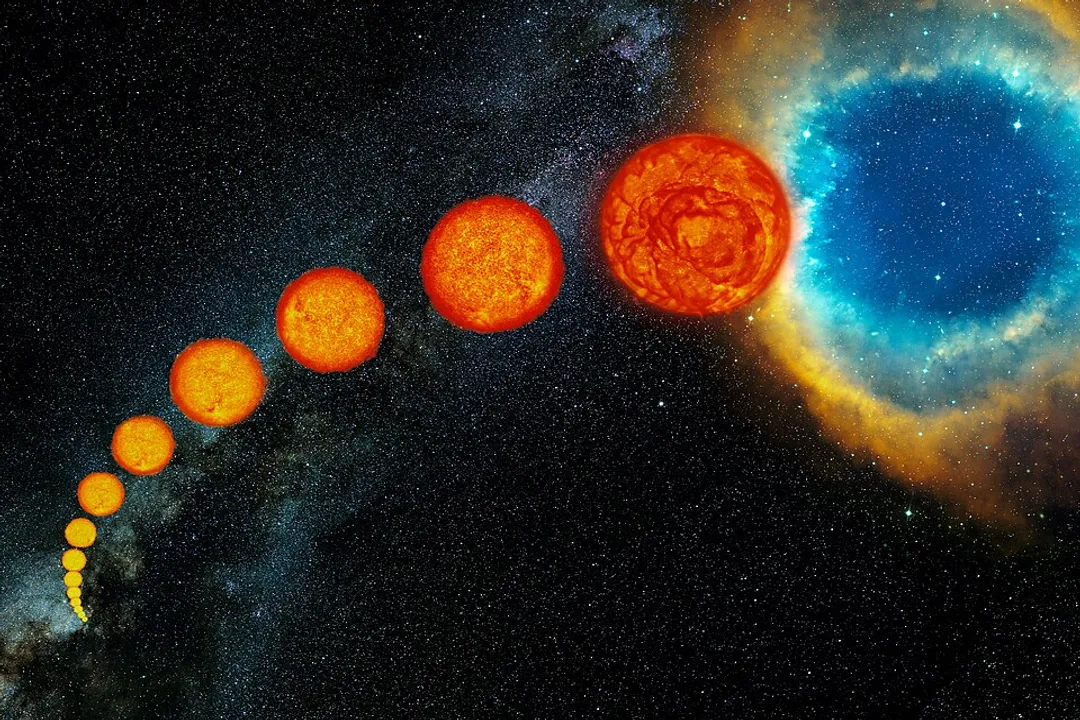
The pace at which a star lives out its existence, from the moment it ignites its core to its final, dramatic exit, is not set by chance, but by one overwhelming factor: its starting mass. [1][4] The simple truth in astrophysics is that big stars burn bright, live fast, and die young, while their smaller siblings are content to glimmer faintly for epochs that stretch far beyond the current age of the cosmos. [3][4] Stellar evolution is a process where the mass dictates the entire tempo; a star with many times the heft of our Sun might complete its life cycle in mere millions of years, while a star one-tenth the Sun’s mass could remain fusing hydrogen for trillions of years. [4][10]
The initial mass of a celestial body arriving on the main sequence—the long, stable period of hydrogen core fusion—is the single most important determinant of its entire evolutionary track. [1][4] A star’s energy is generated by nuclear fusion, where gravity’s inward crushing force is perfectly balanced by the outward thermal pressure from the core reactions; this state is known as hydrostatic equilibrium. [3][8]
# Mass Dictates Pace
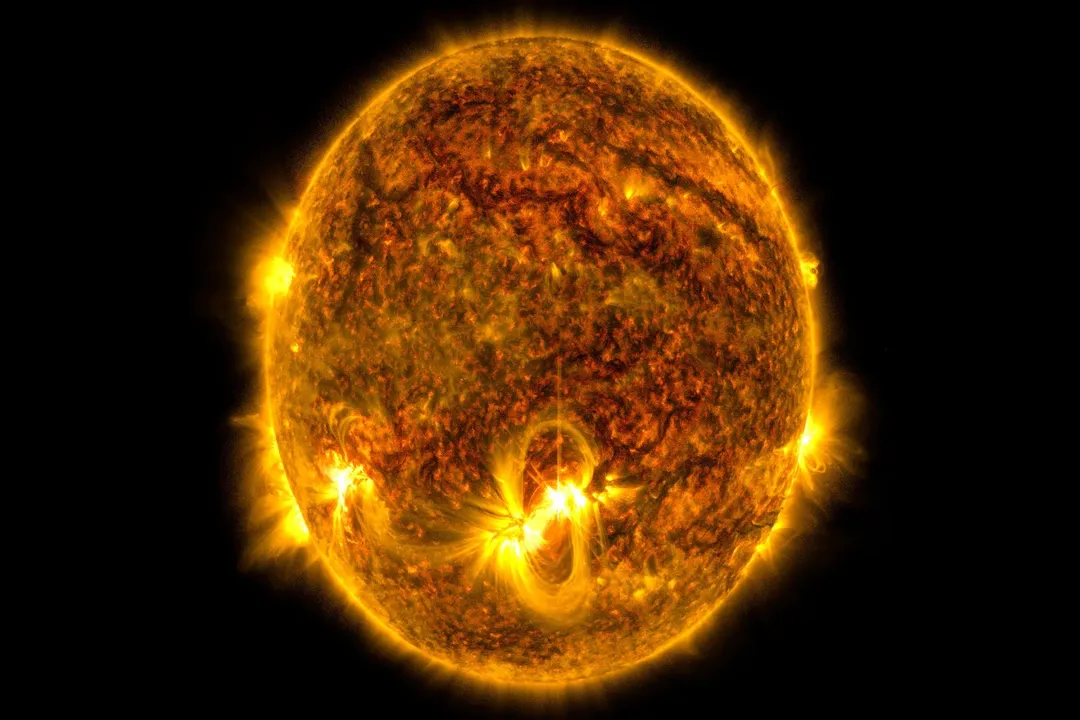
To maintain this critical balance, the more mass a star packs, the greater the weight its core must counteract. [10] This necessity translates directly into requiring a higher central temperature and pressure to support the massive overlying layers. [8][10] Since the rate of nuclear fusion is exquisitely sensitive to temperature, higher core temperatures mean that the fuel is consumed at a prodigious, ravenous rate. [10]
For a mid-sized star like the Sun, which is a yellow dwarf, this period of stable hydrogen burning lasts for approximately 10 billion years. [10] Our own star is currently thought to be about midway through this stage, having enjoyed roughly 4.5 billion years of its stable life. [3][10] In contrast, a star with only about 0.4 times the Sun’s mass, a Red Dwarf, burns so slowly and coolly that models suggest its main-sequence life could extend to 200 billion years or even trillions of years, significantly longer than the universe has existed so far. [4][10]
The trend accelerates dramatically for heavier stars. A B-type star, perhaps five times the mass of the Sun, will depart the main sequence in only about a hundred million years. [5] Moving up the scale, a massive O-type star, ten times the Sun’s mass, burns through its core hydrogen in perhaps only 20 million years. [5] The sheer intensity of their energy production means that for these luminous behemoths, their entire active life from birth to explosive death might pass in the blink of a cosmic eye, measured in the small single-digit millions of years for the very most massive specimens. [5][7]
When we map these stars on the Hertzsprung-Russell (H-R) diagram, the difference in lifespan translates to position and movement. Stars begin on the zero-age main sequence, a line representing stars of similar chemical makeup that have just started core hydrogen fusion. [10] As hydrogen converts to helium in the core, the core contracts, raising the temperature, increasing the fusion rate, and gradually lifting the star away from that initial line. [10] The less massive a star is, the more subtly and slowly this movement occurs over billions of years. [4]
# Giants and Supergiants
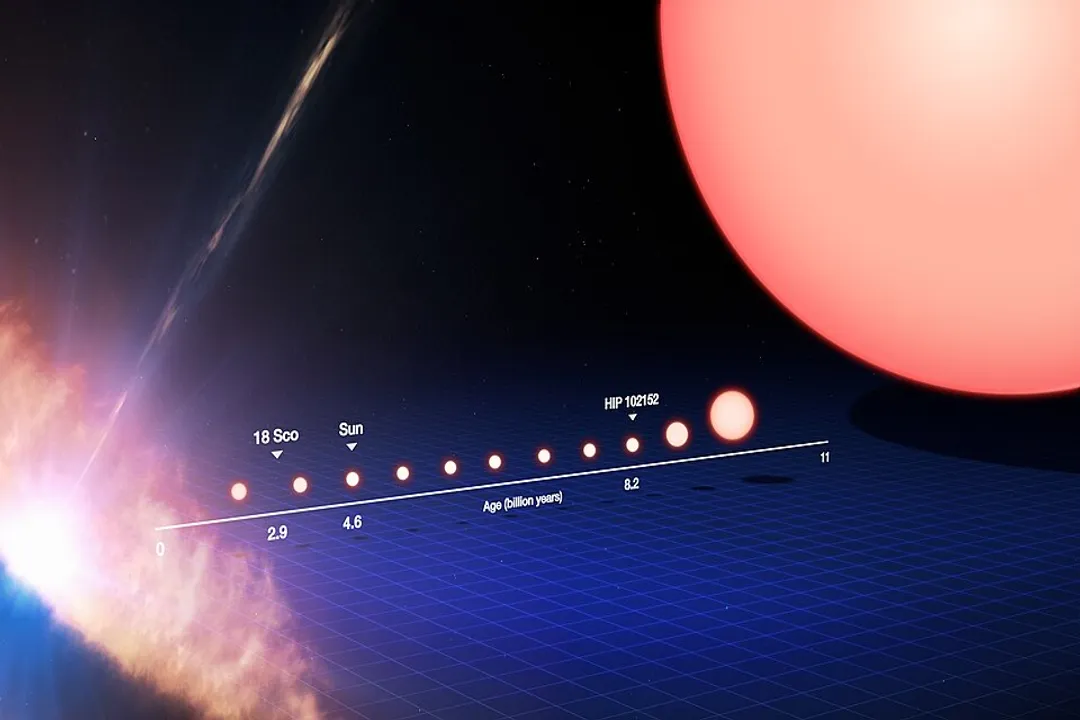
The inevitable end of core hydrogen fusion forces all stars off the main sequence, pushing them into the giant or supergiant phases. [1][10] However, even at this juncture, mass dictates the subsequent evolutionary choreography. [9]
For stars comparable in mass to the Sun (roughly $0.6$ to $10$ solar masses), once the core hydrogen is exhausted, the core—now primarily inert helium—contracts and heats up. [4][9][10] This forces hydrogen fusion to ignite in a shell surrounding the core. [4][10] This new, vigorous shell burning releases more energy than the star produced when fusion was confined solely to the core, causing the star’s outer layers to swell enormously and cool down, turning it into a Red Giant. [10] If the star is in the middle-mass range (about $0.6$ to ), the contracting core eventually gets hot enough—around 100 million Kelvin—to ignite helium fusion via the triple-alpha process, forming carbon. [4][9] In stars around the Sun's mass, this ignition can happen suddenly as a helium flash. [4][9] This core helium-burning phase is fleeting, lasting only about a hundredth of the time spent on core hydrogen burning. [9] The track on the H-R diagram for these stars, like the Sun, ascends almost vertically as they become giants. [5] After helium is spent, the star may move to the asymptotic giant branch (AGB) before finally puffing off its outer atmosphere as a planetary nebula, leaving behind a dense, Earth-sized White Dwarf composed mostly of carbon and oxygen. [1][4][9]
For high-mass stars—those exceeding roughly 8 to 10 solar masses—the story post-main sequence is one of escalating intensity and ever-shorter timelines. [5][7] These stars become Red Supergiants or may even avoid the dramatic cooling and reddening altogether, remaining hot Blue Supergiants due to rapid mass loss from intense stellar winds. [2][4] Crucially, their cores are already massive and hot enough when helium fusion begins that the ignition is smooth and stable; there is no destructive helium flash. [5][8]
# The Iron Deadline
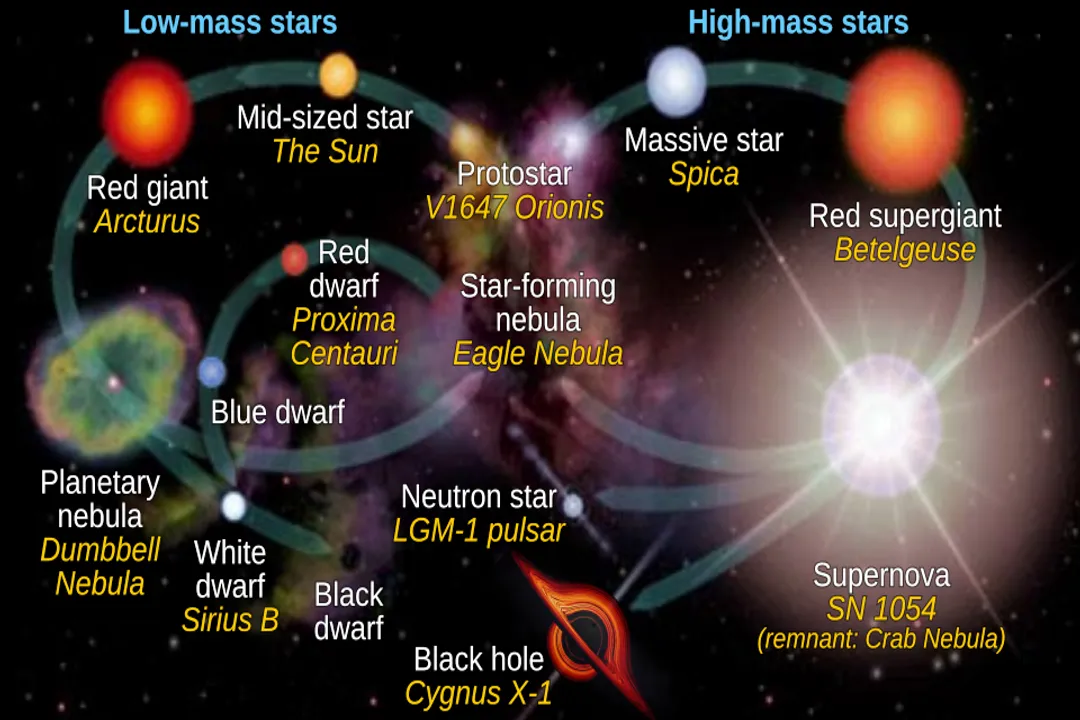
The most telling divergence in evolutionary speed occurs once these massive stars begin burning elements heavier than helium. Because their immense gravity ensures continued core contraction and rising temperatures, they can sequentially fuse carbon, then neon, oxygen, and finally silicon, building up heavier elements in an onion-like structure of shells. [6][7]
For a star that began at 15 solar masses, the process of fusing elements up to iron in the core happens with terrifying speed. [5] While hydrogen fusion might last 10 million years, the subsequent helium burning might only last 1 million years. [6] The timescale for carbon fusion might be a mere thousand years, and the silicon-burning phase that produces iron can be completed in just a few hundred years. [4][6]
This rapid escalation is not just a matter of pace; it is a fundamental change in the physics of energy production. All fusion reactions up to silicon create energy because the product nucleus has less mass than the input nuclei (the mass defect is converted to energy). [6] However, the fusion of iron into even heavier elements requires an input of energy rather than releasing it. [6][7]
When the inert iron core builds up, the star loses its primary energy source instantly. [6] The pressure supporting the core vanishes, and gravity wins its final battle. The core collapses in on itself, and the entire process from the onset of iron burning to the catastrophic rebound is estimated to take just minutes. [6] This rapid shutdown of the energy source is what makes the evolution of massive stars so incredibly swift in their final moments; they go from a state of dynamic equilibrium to total collapse almost instantaneously from an external observer's perspective. [7]
# Violent Endpoints
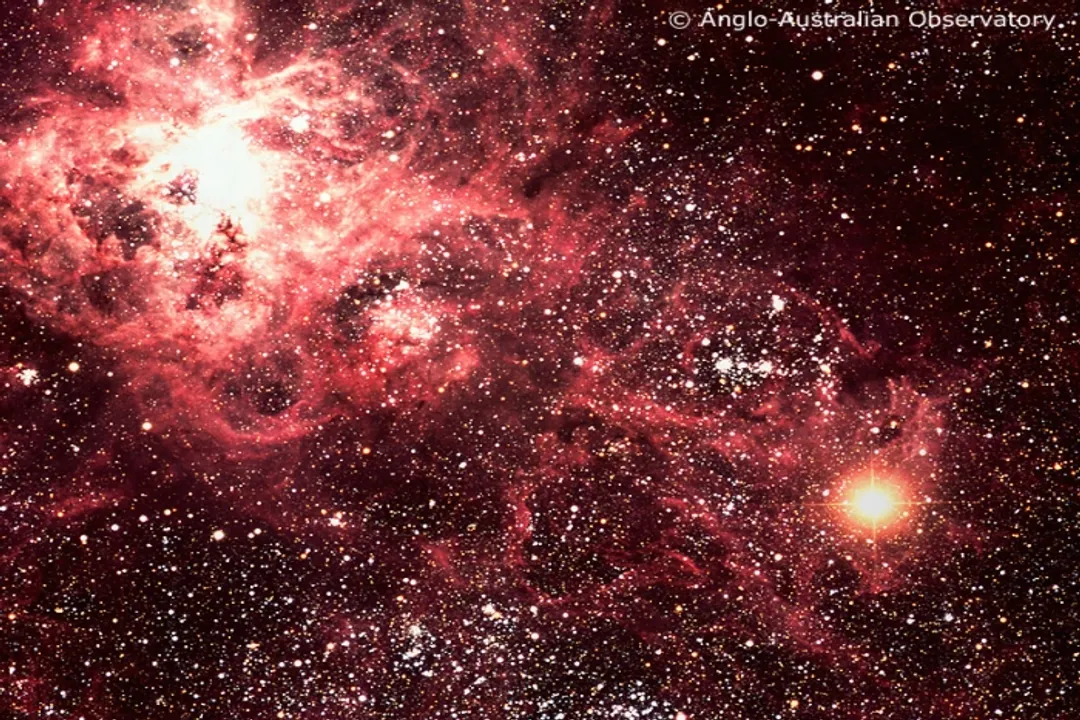
The collapse of the iron core in a massive star triggers a rebound shock wave, resulting in a cataclysmic Type II Supernova explosion. [1][7] This explosion briefly outshines entire galaxies and disperses the heavy elements—including elements heavier than iron, created during the explosion itself—into the interstellar medium. [2][6][7] The collapsed core remains as an ultra-dense object: either a Neutron Star or, if the initial core mass exceeded a certain limit (the Tolman–Oppenheimer–Volkoff limit, estimated to be above for the remnant), a Black Hole. [1][4][7]
In sharp contrast, a star like the Sun, too small to achieve the temperatures necessary to fuse carbon beyond oxygen and neon, simply sheds its outer layers as a planetary nebula, leaving the stable, cooling White Dwarf behind. [4][9] The ultimate fate is determined entirely by this initial mass threshold, creating distinct stellar remnants: White Dwarf, Neutron Star, or Black Hole. [1][4]
When considering the sheer difference in lifespan across the stellar mass spectrum, it is telling to examine the ratio of time spent on the main sequence versus the time spent expanding into a giant. For a Sun-like star, the core hydrogen burning phase consumes approximately 90% of its total life, with the red giant phase being a relatively short prelude to death. [3][10] However, for the most massive stars, the time spent after leaving the main sequence until explosion is so brief compared to their main sequence life that they might as well have died the moment they stopped burning core hydrogen. [5] If a star spends 20 million years on the main sequence, the subsequent few million years of post-main sequence evolution leading to iron core formation feel like an almost negligible delay before the inevitable supernova—a truly short-lived existence overall. [5]
The speed disparity is so profound that if we were to compare a star 40 times the mass of the Sun (living a few million years) to a Red Dwarf (living trillions of years), the massive star experiences time about one million times faster in terms of total stellar lifetime. This incredible compression of a star's life cycle underscores the absolute dominance of mass in determining stellar destiny and its time scale. The faster a star consumes its fuel, the less time it has to foster the stable, long-term conditions necessary for complex planetary systems like ours to fully develop around it. [10] The Sun's relatively slow, 10-billion-year lifespan seems almost luxurious by comparison, providing the necessary stability for life on Earth to evolve over billions of years, a luxury not afforded by the O-type stars that might burn out in less time than it took for the Earth's first complex multicellular life to emerge. [10] This suggests that the best places to look for life mirroring our own might be around G-type stars or dimmer, long-lived M-dwarfs, rather than the fleeting, brilliant giants. [10]
Related Questions
#Citations
Stellar evolution - Wikipedia
Stellar Evolution - | The Schools' Observatory
20.4 Evolution of Stars More Massive than the S
STELLAR EVOLUTION - Massive stars
Star Basics - NASA Science
The Evolution of Massive Stars and Type II Supernovae | ASTRO 801
The Evolution of More Massive Stars – MCC AST
Stellar Evolution - Chandra X-ray Observatory
Star - Formation, Evolution, Lifecycle | Britannica
Evolution from the Main Sequence to Red Giants | Astronomy