Why don't bodies decompose on Mars?
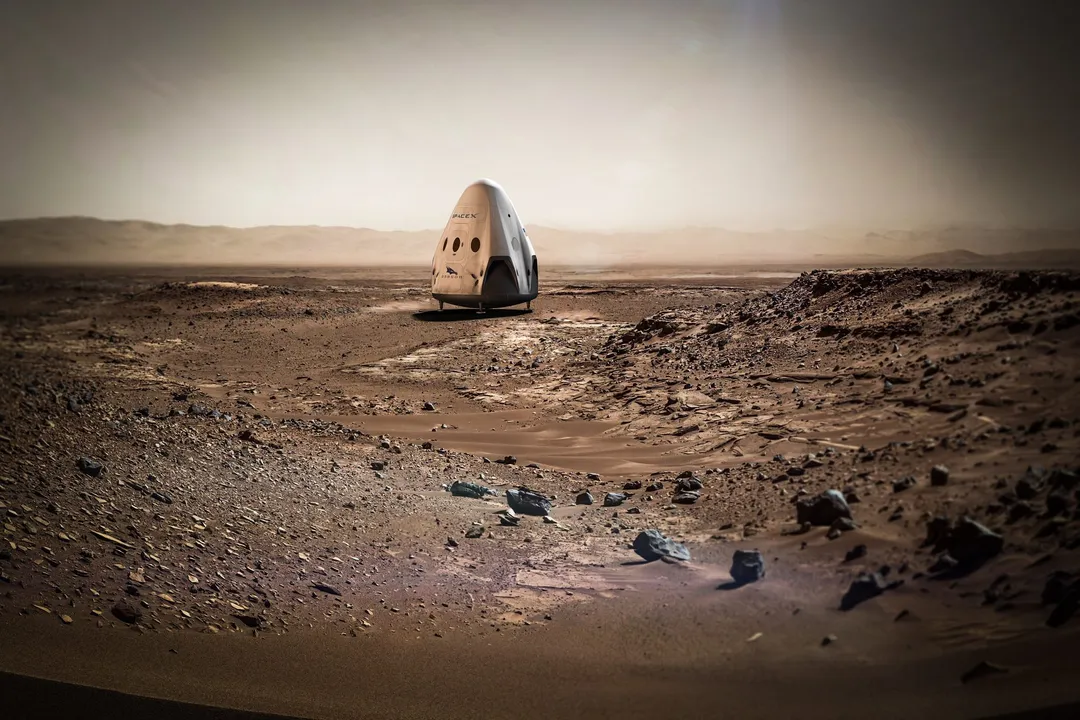
The cessation of life on the Martian surface does not lead to the familiar, albeit unpleasant, process of decomposition we witness on Earth. Left exposed, a human body on Mars would not be consumed by microbes, rendered down by insects, or returned to the soil through the natural cycles that define biology here. Instead, the environment itself acts as a highly efficient, if unintentional, preservation system. The key to this remarkable stasis lies in the fundamental differences between Earth's biosphere and the extreme, near-vacuum conditions of the Red Planet. [2][4]
# Life Absent
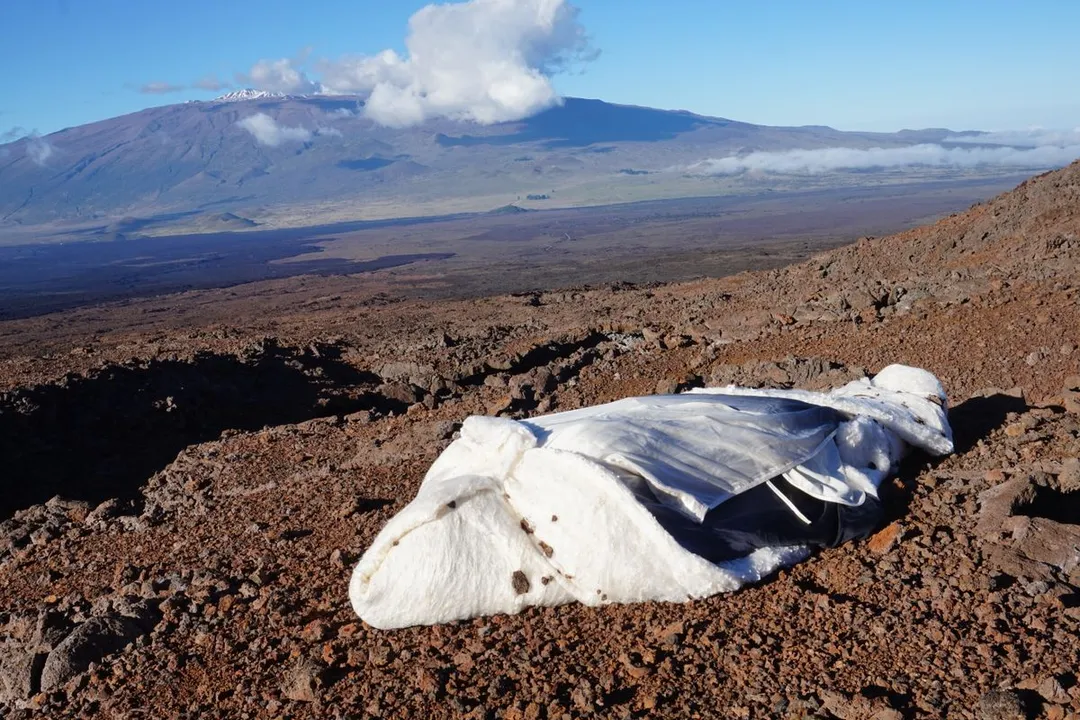
On Earth, the breakdown of organic matter is orchestrated by a massive workforce of microscopic life, primarily bacteria and fungi, aided by macro-scavengers. [2] This biological recycling system requires liquid water, moderate temperatures, and a suitable atmosphere—all ingredients critically missing on Mars. [2] Without the agents of decay—the bacteria, fungi, and invertebrates that thrive in the damp, warm soil of our home world—the complex structures of a body simply cannot be broken down chemically through microbial action. [2][4] The organic processes that define decay are entirely absent from the Martian environment. [2]
# Low Pressure
The Martian atmosphere is incredibly thin, possessing a surface pressure less than one percent of Earth's sea-level pressure. [2][4] This near-vacuum condition has immediate and dramatic effects on any exposed organic material. Water, which makes up a significant portion of the human body, cannot remain in a liquid state under such low pressure; it will rapidly boil away or sublimate directly into vapor, even at freezing temperatures. [2] This rapid phase transition means that fluids within the tissues will escape quickly, an essential first step in the Martian preservation process. [2] While this differs from the simple putrefaction seen on Earth, the immediate depressurization and subsequent evaporation play a critical role in preventing microbial growth, as life as we know it cannot function without adequate internal pressure and liquid water. [4]
# Martian Cold
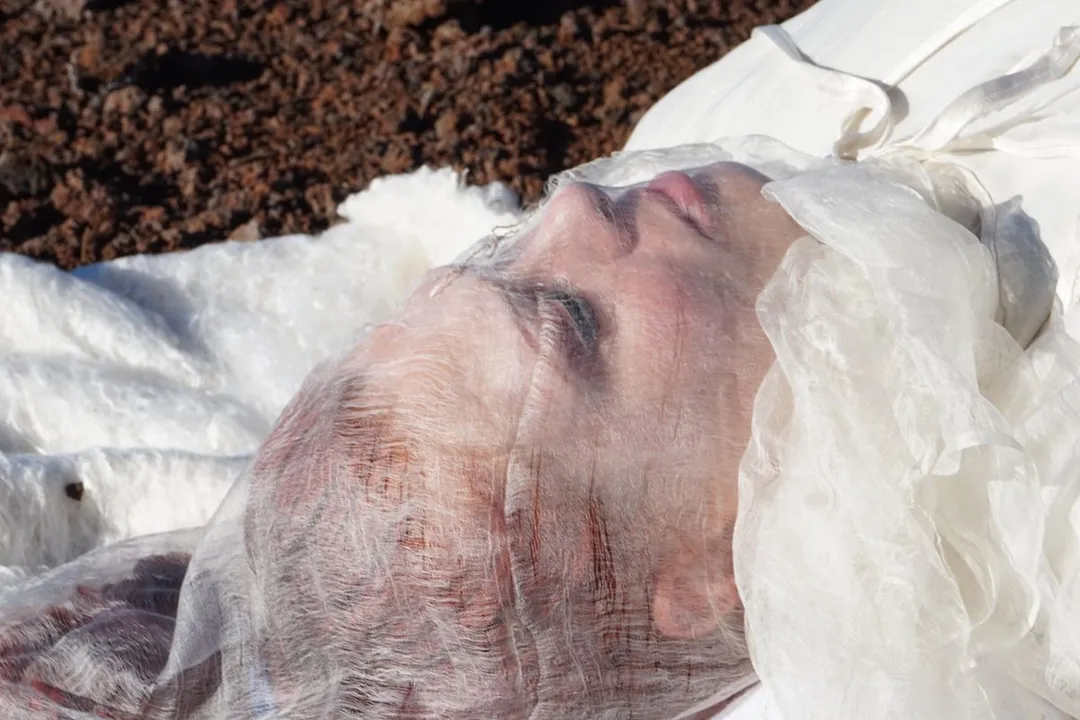
The temperature profile of Mars is far too low to support the enzymatic reactions necessary for decomposition. While temperatures can briefly reach around () near the equator at high noon during summer, the average temperature hovers around (). [3] Any body arriving on the surface would rapidly freeze solid. [3][6] Freezing effectively halts almost all biological and chemical reactions, placing the body in long-term suspended animation, albeit a permanent one, as the agents that would cause thawing and subsequent decay are not present. [3] This deep-freeze state acts as a powerful preservative barrier, akin to placing organic material into the world's largest, deepest freezer. [6]
# Extreme Dryness
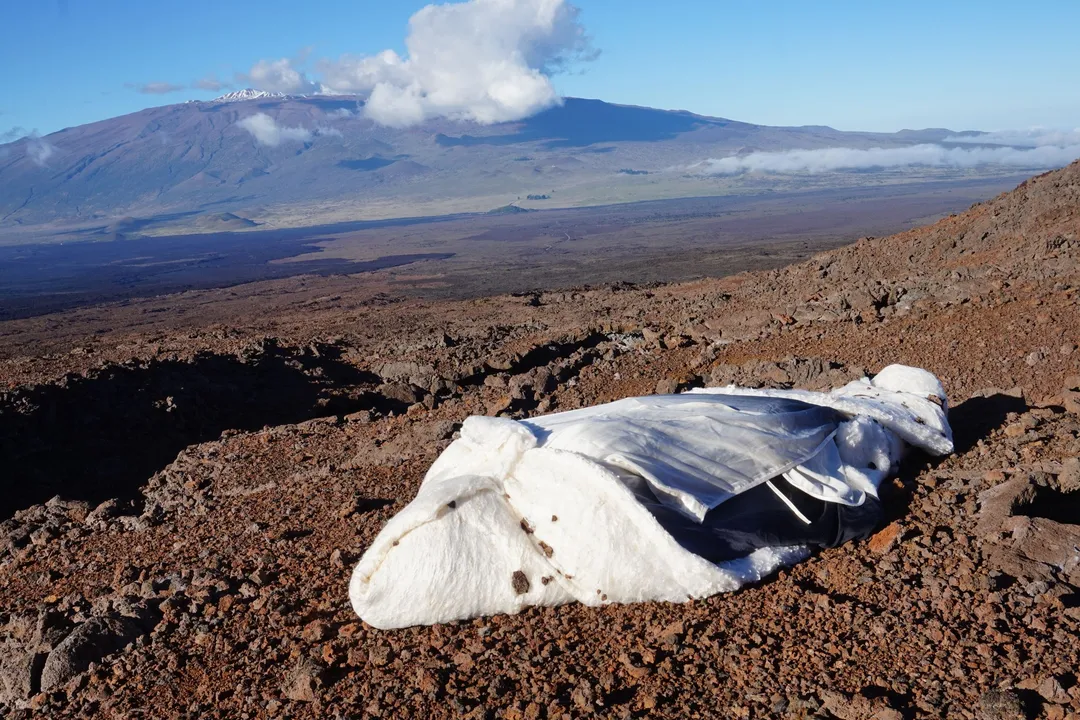
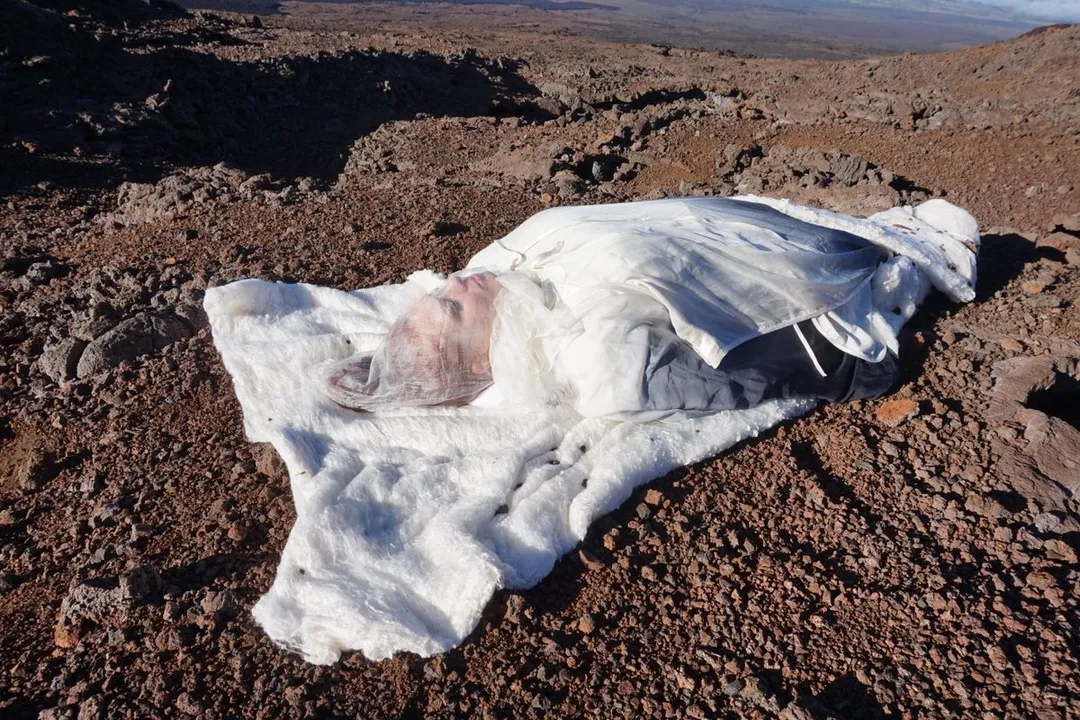
The combination of low pressure and cold leads to an almost perfect environment for desiccation, or drying out. [1][3] Water is aggressively pulled out of the tissues due to the extreme aridity of the Martian environment. [1][6] This results in a process that closely resembles mummification. [3][6] On Earth, mummification occurs when bodies are rapidly dried, often in hot, arid climates like ancient Egypt. On Mars, the process is driven by the near-vacuum pressure causing evaporation and the ambient cold ensuring that any residual moisture is locked away as ice or sublimates over time. [1][6] The resulting structure would be brittle, desiccated, and remarkably intact from a microbial perspective. [3]
If we consider the environmental drivers in a comparative sense, the contrast is stark. Earth's decomposition relies on a delicate balance of moisture, warmth, and biological activity, leading to tissue liquefaction and return of nutrients to the soil, often completing within months or years. [2] Mars, conversely, presents a tripartite defense system: near-zero moisture content prevents chemistry, extreme cold arrests movement, and the vacuum prevents fluid retention. [4] This implies that the time it takes for a body to structurally fail on Mars, absent biological action, will be determined primarily by physical stresses like micrometeorite impacts or dust abrasion, rather than internal chemical breakdown. [3]

# Surface Sterility
Beyond the temperature and pressure issues, the thin Martian atmosphere offers negligible protection from the harsh radiation bombarding the surface. [3] Ultraviolet (UV) radiation from the Sun and high-energy cosmic rays penetrate deeply enough to sterilize the surface layers of any material left exposed. [3][4] This intense radiation environment would further inhibit the survival of any terrestrial bacteria or spores that might have inadvertently arrived with the body, ensuring that even if a transient pocket of liquid water were somehow available, the biological spark needed for decomposition would be extinguished by radiation. [3]
# Subsurface Fate
What if a body were buried rather than left exposed? While burial might offer some limited insulation from the most extreme surface temperature swings and perhaps shield against some UV radiation, it would not fundamentally alter the outcome. [9] The environment beneath the surface is still intensely cold, extremely dry, and lacks the necessary liquid water or biological agents for decomposition. [9] Burial might slow the sublimation of any internal ice and potentially shield the material from direct solar irradiation, but the body would still essentially become a deeply frozen, desiccated object preserved in the regolith. [9]
# Preserved Relic
The final state of a body left on Mars would be a freeze-dried, radiation-scorched artifact. [3] Soft tissues would be reduced to incredibly dry husks, potentially remaining recognizably human for millennia, barring physical disturbance. [3] The bones, being mineral structures, would take vastly longer to degrade, essentially only subject to physical erosion. [4] A fascinating implication of this long-term preservation is the potential for future recovery. If a mission were to find a site containing a deceased astronaut, that individual might be far more information-rich than a skeleton found after decades on Earth, potentially retaining protein structure or even DNA fragments, though heavily damaged by radiation. [7] This level of preservation is a consequence of environmental antagonism, not active protection. [3]
When considering the timelines involved, one can posit that the speed of physical breakdown due to thermal cycling (expansion and contraction due to temperature swings) and abrasive dust transport might become the dominant long-term degradation factors far sooner than any chemical or biological process could begin to act. [4] Imagine a body subject to day/night cycles where temperatures shift by over (); this constant mechanical stress would lead to micro-fractures in the desiccated tissues and the bone matrix over geological timescales, a sort of slow, physical pulverization rather than decomposition.
For any future hypothetical Martian settlement or long-term mission, understanding this preservation effect is key to long-term resource management and ethical considerations regarding human remains. [8] The concept of a "funeral" on Mars, as discussed in relation to potential long-duration habitation or colonization, must account for the fact that disposal via burial or encapsulation is not about decay, but about containment and isolation from the physical environment, as opposed to simply letting nature take its course. [8] Unlike Earth where burial returns mass to the local ecosystem, on Mars, a buried body remains an inert, frozen contaminant within the pristine geological record until physical forces break it down or a future excavation recovers it. [8] The Martian environment, by its very nature, ensures a form of stark, unintended immortality for any organic material left upon it.
Related Questions
#Citations
A dead body left on Mars would dry out and mummify so ... - Reddit
Will a body really not decompose on Mars like they claim in ... - Quora
If Someone Died On Mars, What Would Happen To Their Body?
If a person were to die on the Moon or Mars, would the body ...
What happens to a human body on Mars after death? - Facebook
What Happens If Someone Dies on Mars? - Atlas Obscura
How to die on Mars | Space
Funeral - Marspedia
Dead Body on Mars: Outside or Buried?