How much of your body is made of Stardust?
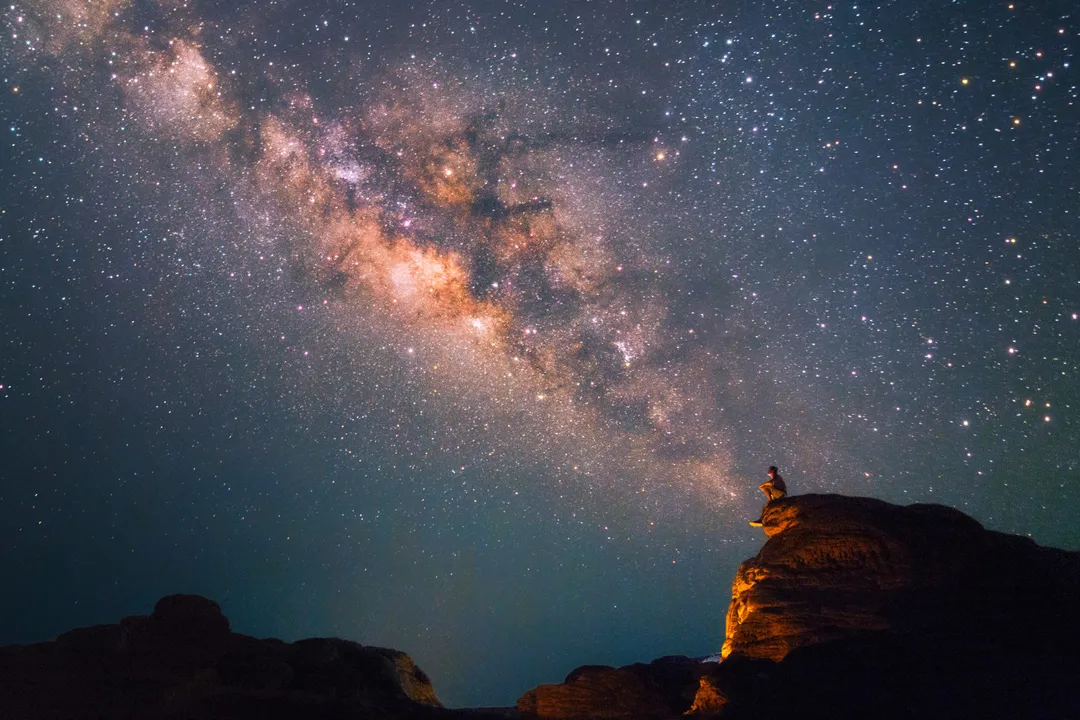
The atoms that constitute your physical being—the iron in your blood, the calcium in your bones, and the carbon that forms the scaffolding of your very cells—were not created on Earth. They were forged billions of years ago in the violent, superheated cores of long-dead stars that exploded across the cosmos. [1][4][9] This powerful concept, that we are literally built from the remnants of stellar cataclysms, is not mere poetic license; it is a statement of fundamental physics and chemistry. [4][9] Every living thing on this planet shares this profound, ancient ancestry, a direct line traceable back to the earliest moments of the universe and the lifecycle of massive celestial bodies. [1][4]
# Cosmic Origin
The universe began with an initial state overwhelmingly composed of the two lightest elements: hydrogen and helium. [1][5] These elements were created during the Big Bang, but to form anything more complex—anything that can build a planet or a person—required a furnace far hotter and more energetic than the early universe provided. [1][4] Stars are those furnaces. [1][4]
# Stellar Fusion
Inside a star, like our Sun, the immense gravitational pressure and heat drive nuclear fusion, beginning with hydrogen atoms smashing together to form helium. [1][4] As stars age and exhaust their primary fuel, gravity compresses them further, raising the temperature enough to fuse helium into heavier elements like carbon and oxygen. [1][4] This process continues up the periodic table, creating elements until the star reaches iron. [1][4] Elements heavier than iron, such as gold or uranium, require even more extreme energy, typically found only during the catastrophic final moments of a star's life: a supernova explosion. [4]
A common point of comparison involves understanding the scale of this creation. Our Sun is currently fusing hydrogen into helium, contributing to the overall composition of our solar system, but it will not create the heavy elements like carbon or oxygen necessary for complex life before it dies. [1][4] Those vital building blocks for you and me were manufactured in much larger, more massive stars that lived fast, died young, and seeded the galaxy long before our Sun even ignited. [1][4] When one of these giant stars collapses, it throws these newly forged elements—the carbon, oxygen, nitrogen, and iron—out into the vastness of space. [1][4]
# Recycling Elements
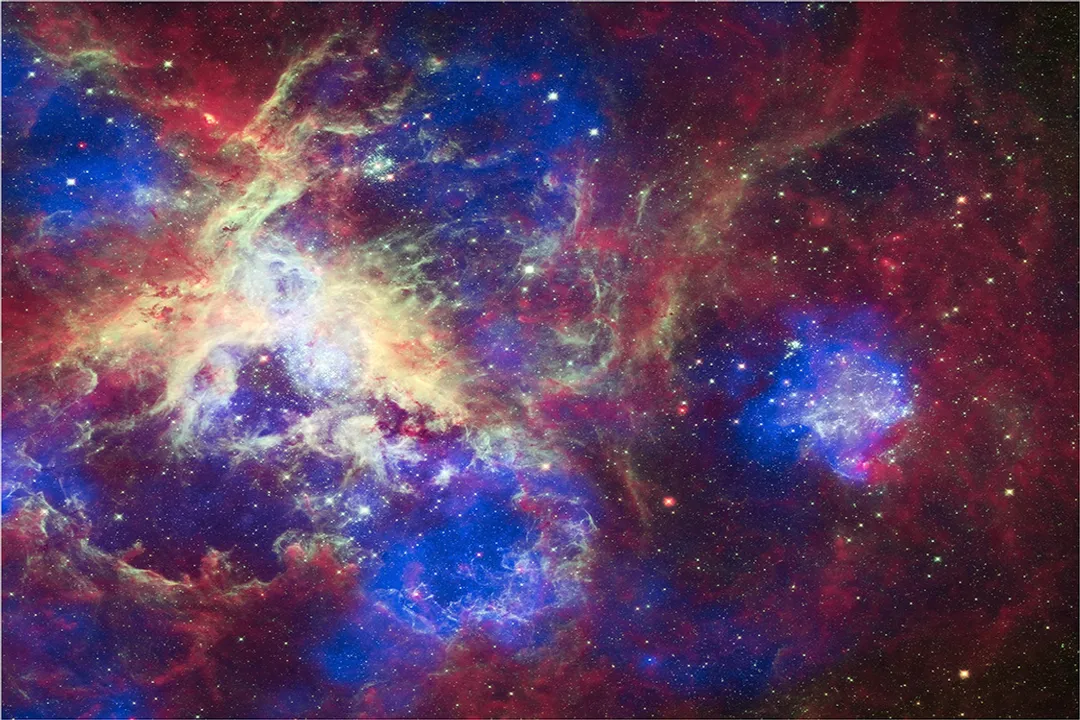
The journey from a stellar core to a human cell involves an immense cosmic recycling process. [1][9] After a massive star explodes, the ejected debris—the "stardust"—mingles with existing gas and dust clouds in interstellar space. [1] These clouds are the raw material for the next generation of stars and planetary systems. [4] Our own solar system, including the Earth, formed from one such recycled cloud roughly 4.6 billion years ago. [1]
Think of it as an astronomical version of composting. The stellar ash collects, cools, and clumps together under gravity until a new star system ignites, forming planets like Earth from the leftover material. [4] The iron in your hemoglobin, which carries oxygen through your bloodstream, spent time in the core of a star that may have existed billions of years before our solar system began forming. [4] This cycle means that the matter composing you is not new; it is ancient, having been processed through multiple stellar lifecycles. [4]
# Blood Flesh Connection
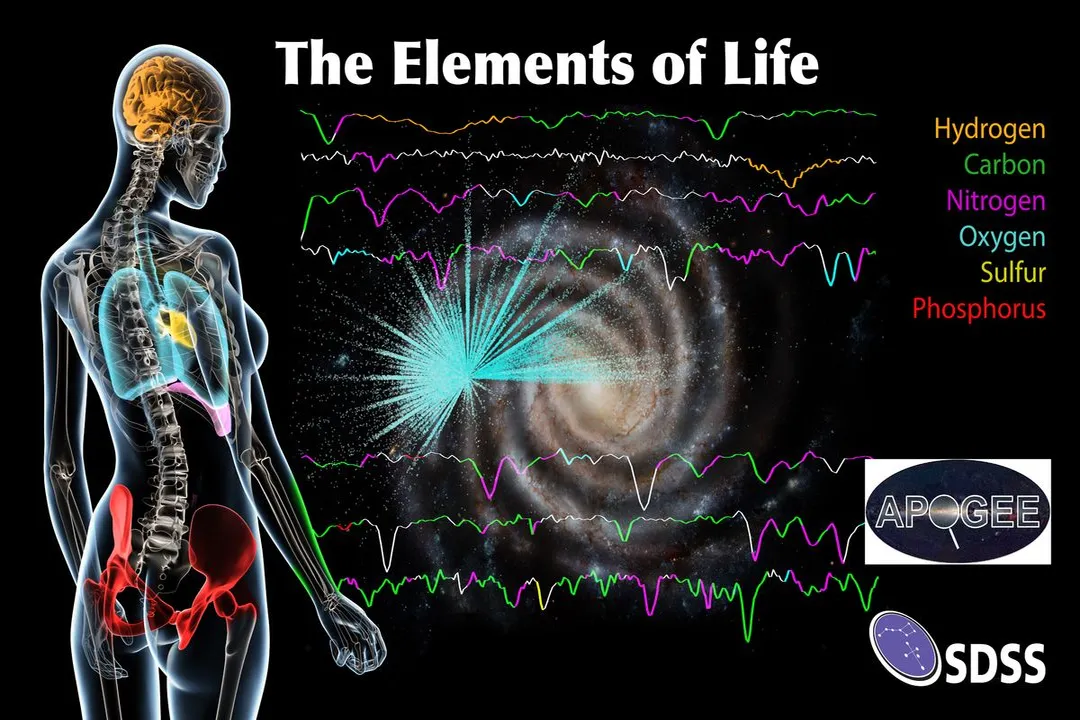
If we look at the actual materials that make up our bodies—our blood and flesh—we see these stellar products everywhere. [5] The four most abundant elements in the human body by mass are oxygen, carbon, hydrogen, and nitrogen, which together account for about 96% of our weight. [5] Oxygen, carbon, and nitrogen were all products of stellar fusion, while hydrogen is the primordial element left over from the Big Bang. [1][5] Therefore, the vast majority of your biological structure is either the result of stellar alchemy or the universe's earliest output. [5]
When considering the percentage breakdown, it is important to clarify what "stardust" means in this context. If stardust refers to elements heavier than helium (i.e., everything produced in stars), then the percentage is extremely high, perhaps over 90% of your mass, given that hydrogen is only about 63% of the atoms, but a smaller percentage of the mass, and helium is almost negligible by mass. [5]
For example, let us consider a person weighing 70 kilograms (about 154 pounds). Carbon atoms form the backbone of all organic molecules, comprising about 18.5% of the body's mass. [5] In a 70 kg individual, that is roughly 13 kilograms of carbon. [5] If we imagine that 13 kg of carbon, every single atom of it was once trapped within a star that lived and died, the sheer scale of that cosmic legacy becomes quantifiable. This is a more concrete way to grasp the statement than simply saying "you are stardust"—it means 13 kilograms of you were once stellar exhaust. [1][4]
# Quantifying Matter
The claim that we are made of stardust is scientifically accurate, but the composition isn't uniform. The universe’s initial composition was roughly 75% hydrogen and 24% helium by mass, with only trace amounts of everything else. [1] Earth, and subsequently life, is built from the leftover, processed material. [4]
If we look at elemental abundance by mass in the human body:
| Element | Approximate Mass Percentage | Primary Origin |
|---|---|---|
| Oxygen | 65% | Massive Stars (Fusion/Supernova) [5] |
| Carbon | 18.5% | Massive Stars (Fusion) [5] |
| Hydrogen | 9.5% | Big Bang [5] |
| Nitrogen | 3.2% | Massive Stars (Fusion) [5] |
| Calcium | 1.5% | Massive Stars (Fusion) [5] |
This table immediately highlights a point of contrast: the most massive component, Oxygen (65%), is entirely stellar-derived, placing it firmly in the stardust category. [5] Carbon (18.5%) is also purely stellar. [5] The only significant non-stellar contributor by mass is Hydrogen (9.5%), which stems from the Big Bang. [5]
This leads to an interesting analytical distinction. If "stardust" strictly means elements created by stars (i.e., everything heavier than helium), then the percentage of your body made of stardust is approximately: . [5] The remaining fraction, the 3% mentioned in some contexts, is primarily the primordial hydrogen that remains integrated into the water () and organic molecules that form your mass. [5]
# Atomic Age
Another way to approach this is through the concept of atomic age, which is not directly provided by the sources but is an insightful extrapolation of the idea of ancient atoms. Consider an atom of iron in your red blood cells. That specific iron atom was likely formed when a star perhaps 10 to 20 times the mass of our Sun burned out, maybe 8 to 10 billion years ago. [4] The hydrogen in your water molecules, however, might be nearly 13.8 billion years old, having existed since moments after the Big Bang. [1]
This means that when you hold your hand, you are holding matter that has existed in at least two distinct cosmic eras: the pristine, primordial era of the Big Bang, and the energetic, element-forging era of mature stars. You are a temporary collection of atoms that have witnessed vast stretches of cosmic history, locked together by chemistry on a small, watery planet. [4]
# Elements Beyond Oxygen
While oxygen dominates the mass because it is a key component of water, the elements that truly define biological complexity—the elements of life—are carbon and nitrogen. [5] Carbon, the basis of organic chemistry, is the second most abundant element by mass in your body. [5] Its creation through triple-alpha processes in helium-burning stages within ancient stars is the foundational step that allows for complex molecular structures like DNA and proteins. [4]
Nitrogen, essential for amino acids and nucleic acids, is also a stellar product, forged under intense conditions. [5] Even the smaller constituents, like the 1.5% of your mass accounted for by calcium in your bones, or the trace amounts of potassium, sulfur, and phosphorus, all owe their existence to stellar fusion or supernova dispersal. [5]
For instance, when considering the trace minerals, such as the tiny amounts of copper or zinc, these are also synthesized in stars, sometimes requiring the extreme energy of a supernova explosion or even rarer events like neutron star mergers. [4] The overall takeaway is that while hydrogen is a Big Bang relic, virtually every atom required for the structure and function of life beyond simple water molecules has an origin story tied to a star's death. [1][4]
# From Nebula to Nurture
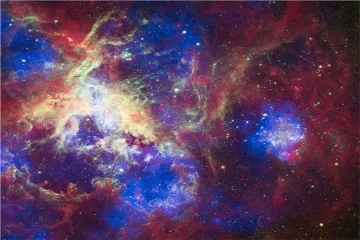
The physical continuity between a dying star and a living person is often obscured by the scale of time and space involved. It is easy to think of the elements as simply "stuff" that was always present on Earth. However, early Earth would have been barren without these imported materials. [4] If Earth had formed only from the Big Bang's hydrogen and helium, there would be no carbon to form life, no iron for magnetism, and no silicon for rocks in the way we know them. [1]
The fact that the Earth formed in a region of space already enriched by previous stellar generations is precisely why life could arise here. [4] The abundance of heavy elements in our solar nebula allowed for the formation of rocky planets capable of holding onto the atmosphere and water necessary for biological processes. [1]
To put the sheer volume of stellar contribution into perspective, one might perform a simple thought experiment regarding an element like phosphorus, which is vital for ATP (the energy currency of cells). While phosphorus is only about 1% of the body's mass, in a 70 kg person, that’s 0.7 kg—or 700 grams. This relatively small mass represents a tremendous amount of stellar output condensed down. If you visualize a small bag of sugar weighing 700 grams, every grain within that bag traces back to the nuclear reactions occurring deep within a star that perished long before our sun was born. [4] This constant, yet invisible, connection to the cosmos underlies our physical reality. [9]
# The Role of Water
Since oxygen and hydrogen are the top two elements by mass, water () makes up about 60% of an adult human's weight. [5] As noted, the hydrogen is primordial, but the oxygen is not. This means that the vast majority of the substance that keeps us hydrated, facilitates chemical reactions, and maintains our body temperature is composed of atoms forged inside stars. [1][5] The hydrogen, brought along for the ride from the very beginning of the universe, simply acts as the lightweight carrier for the heavy, star-forged oxygen atom. [5] When we examine the chemical makeup, the stellar contribution is overwhelmingly dominant, framing life as a temporary arrangement of ancient stellar residue stabilized by the universe's first element. [1][4]
# The Final Connection
The declaration "we are made of stardust" remains one of the most humbling and accurate scientific statements available. [9] It bridges the gap between the vast, impersonal scale of astrophysics and the intimate, personal reality of our own biology. [4] Every time we breathe, move, or think, we are enacting a continuation of a cosmic process that began with the collapse and rebirth of stellar giants. [1] There is no true separation between the distant, shining celestial bodies and the matter that currently makes up your physical self. [9]
#Videos
Are we made of stardust? | Surprising Science - YouTube
Related Questions
#Citations
Are we made of stardust? | Natural History Museum
ELI5: how exactly are we made of stardust : r/explainlikeimfive - Reddit
Are We Really Made of Stardust? | Psychology Today
Humans Really Are Made of Stardust, and a New Study Proves It
If 97% of the human body is made of stardust, what about ... - Quora
Are we made of stardust? | Surprising Science - YouTube
If we are made of stardust, does that mean we're technically “stars”?
Are We Really All Made Of Stardust? - IFLScience
Dr Karl: Yes, humans are stardust - Australian Geographic