Are we technically made of stardust?
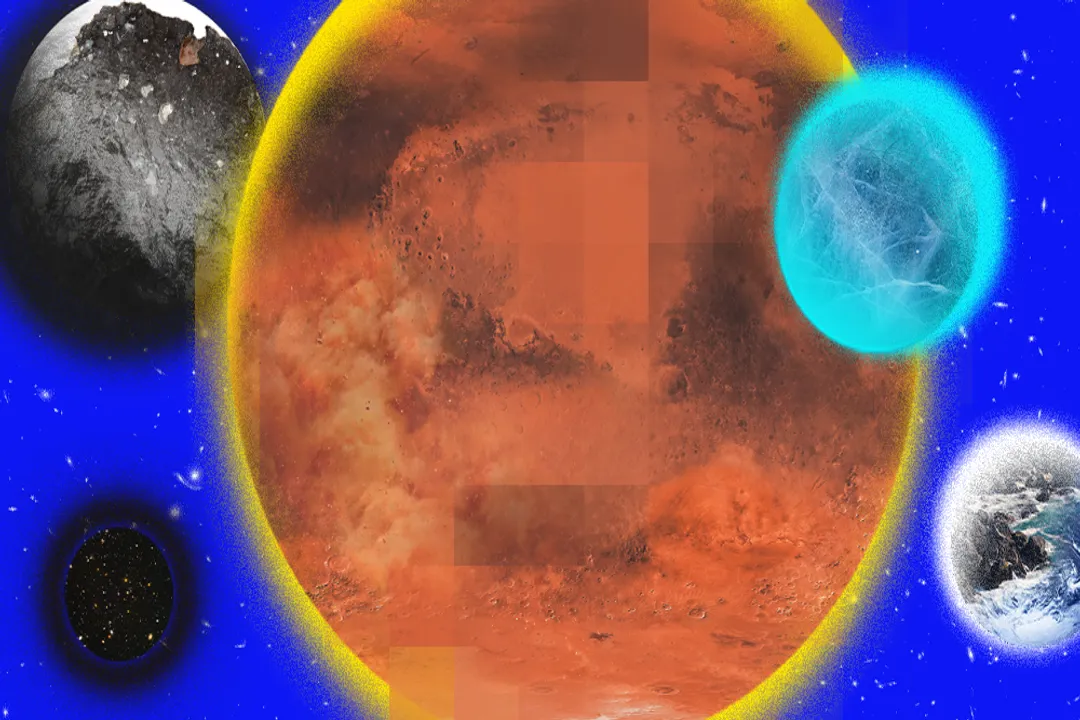
The assertion that we are fundamentally made of stardust is far more than a poetic flourish; it is a literal description of our elemental origins. Every atom that constitutes your body—the carbon in your muscles, the calcium in your bones, the iron circulating in your blood—was forged in the nuclear furnace of a star long before the Sun even came into existence. This cosmic lineage connects every living thing on Earth to the spectacular deaths of ancient suns.
# Primordial Soup
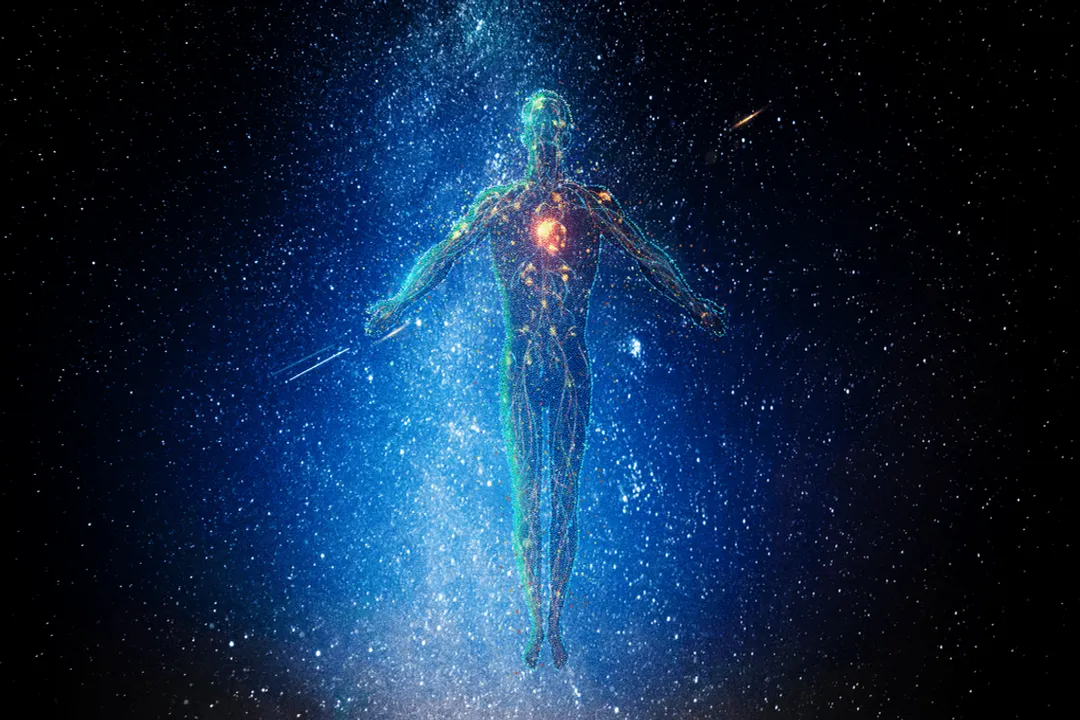
The story of this material begins not with stars, but with the universe itself, approximately 13.8 billion years ago. In the immediate aftermath of the Big Bang, the cosmos was a searingly hot, dense soup of subatomic particles. As the universe expanded and cooled, these particles coalesced, forming the very first, lightest elements: primarily hydrogen and helium, with only trace amounts of lithium. For a long time, this primordial matter was all that existed. In fact, the hydrogen that makes up a significant portion of your body—up to 10% of its mass by some estimates—is the only material component that is not a product of stellar processes.
# Star Furnaces
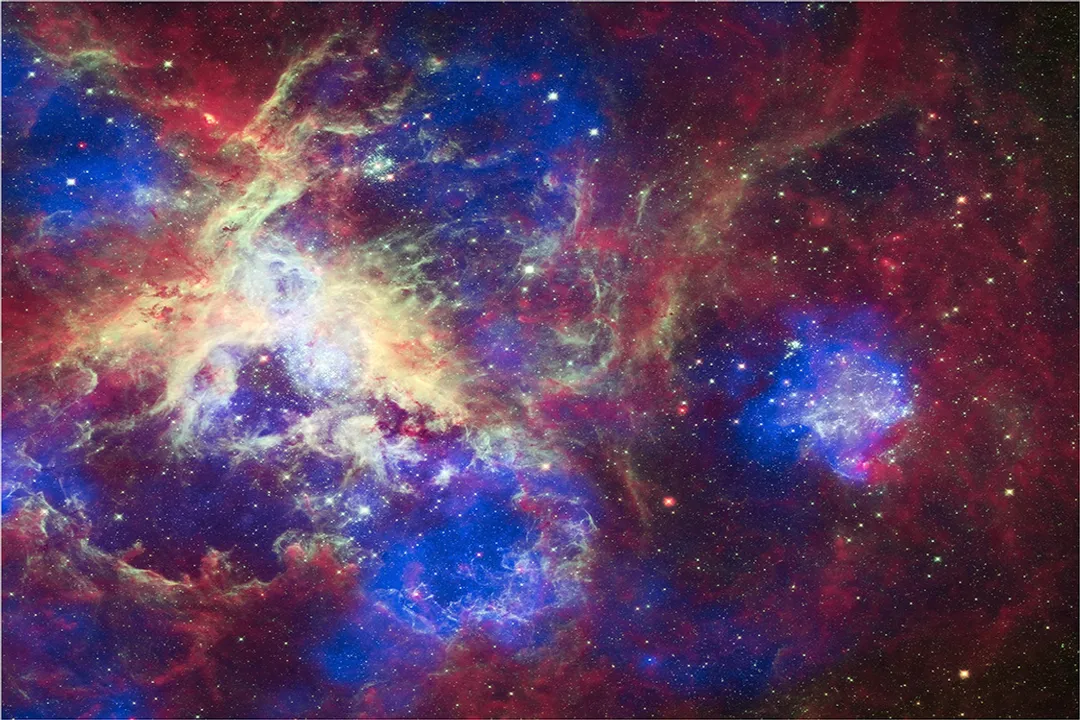
To progress beyond hydrogen and helium, a more energetic environment was needed, which gravity eventually provided by clumping the primordial gas into massive clouds that ignited to form the first generation of stars. Within these massive objects, the process of nuclear fusion began—the cosmic alchemy that creates the building blocks of matter.
Inside a star, immense gravitational pressure forces atomic nuclei together in a continuous reaction, slowly fusing lighter elements into heavier ones. This process, known as stellar nucleosynthesis, powers the star and builds elements such as carbon, nitrogen, and oxygen. For stars similar to our Sun, this fusion sequence generally continues until the core produces iron. Iron represents a crucial energetic barrier: fusing iron requires more energy input than it releases, which causes the star's internal outward pressure to fail against the inward crush of gravity.
# Supernova Legacy
When the core turns to iron, the star faces imminent doom. For the most massive stars, this instability triggers a catastrophic collapse, culminating in a massive explosion known as a supernova. It is in this fleeting, violent cataclysm that elements heavier than iron—such as copper, silver, and even gold and uranium—are formed. Furthermore, new research points to another incredible source for the heaviest elements: the collision and merger of neutron stars. These energetic events are thought to be responsible for producing elements like iodine, a key metabolic element in the human body, through a process called rapid neutron capture (the r-process).
When these massive stars die, they eject all the elements they have created—both those made steadily in their core and those forged in their final moments—out into the interstellar medium. This expelled material, this cosmic debris, seeds the next generation of gas clouds. This continuous creation and dispersal is what scientists call galactic chemical evolution.
# Galactic Recycling
Our own solar system, which formed about 4.5 billion years ago, is the product of this cycle repeating over eons. The Sun is not a first-generation star; it is likely a second or even a third-generation star, meaning its building materials came from the ejected remnants of previous stars that lived and died before it. The heavy elements necessary for rocky planets like Earth, and for life itself, condensed out of these enriched interstellar clouds as our solar system took shape.
A 2017 survey of 150,000 stars found that humans and our galaxy share about 97% of the same kinds of atoms, confirming this ancestral link with remarkable precision. Astronomers can map the abundance of life's building blocks—carbon, hydrogen, nitrogen, oxygen, phosphorus, and sulfur (CHNOPS)—across the Milky Way, essentially mapping a “temporal galactic habitable zone”.
# Elemental Inventory
The six most common elements making up a human body by mass are oxygen (about 65%), carbon (about 18.5%), hydrogen, nitrogen, calcium, and phosphorus. While the building blocks for almost everything are stellar in origin, the proportions in a human look distinctly different from the proportions found in space. For instance, while oxygen is the most massive component of your body, it makes up less than 1% of the elements measured in the spectra of distant stars.
A fascinating comparison arises when we look at the elemental makeup of Earth versus the human body. While the Earth itself is composed of materials derived from stellar remnants, our biology exhibits a strong preference for specific elements forged under different conditions. For example, the iron in our blood is formed readily through standard fusion inside massive stars, whereas the gold in that same body (in trace amounts) must have survived a supernova or neutron star merger. This specialization, where life selects for both the common, steadily-made elements like carbon and the rare, violently-made elements like gold, suggests that the very possibility of terrestrial biology depended not just on one type of stellar death, but on the entire spectrum of stellar evolution across billions of years.
| Element | Approximate % of Human Body Mass (By Mass) | Primary Origin |
|---|---|---|
| Oxygen | ~65% | Stellar Nucleosynthesis (Massive Stars/Supernova) |
| Carbon | ~18.5% | Stellar Nucleosynthesis (AGB Stars) |
| Hydrogen | ~9.5% | Big Bang (Primordial) |
| Nitrogen | ~3.2% | Stellar Nucleosynthesis |
| Calcium | ~1.5% | Stellar Nucleosynthesis |
| Iron | ~0.004% | Stellar Nucleosynthesis/Supernova |
| Iodine | Trace Amounts | Neutron Star Collision (r-process) |
# Atomic Inheritance
The elements that make up your body are not static within you. Atoms are constantly exchanged with the environment through breathing, eating, and waste elimination. Your body cannot transmute elements; it cannot turn an oxygen atom into a carbon atom—that requires the power of a star or a nuclear reactor. Therefore, the iron in your blood now came from the food you ate, which derived its iron from the soil and water, which in turn are composed of ancient stellar debris.
It is entirely likely that the carbon atom in your left hand and the sulfur atom in your right ear came from entirely different, long-dead stars, separated by millions or billions of light-years before finally collecting in our solar system. Considering this, it’s humbling to realize that the carbon atoms comprising the structure that allows you to read these words have been engaged in a continuous, epic cycle of creation, destruction, and reassembly for perhaps ten billion years, making this singular moment of consciousness an extremely rare and complex cosmic event.
The concept of "stardust" is therefore a simplified, though largely true, summary. It is more accurately "star stuff," encompassing the entire chemical history of the universe resulting from Big Bang nucleosynthesis, stellar fusion, and explosive stellar death. When our lives end, those atoms are returned to the cycle, ready to be borrowed again by the next collection of matter, whether it forms a tree, a rock, or another living being. We are, quite literally, the mobile, thinking collection of the universe’s oldest ashes.
#Videos
Are we made of stardust? | Surprising Science - YouTube
Related Questions
#Citations
ELI5: how exactly are we made of stardust : r/explainlikeimfive - Reddit
Are we made of stardust? | Natural History Museum
We Are Stardust | AMNH
Are we made of stardust? | Surprising Science - YouTube
1.1. Are we really made of star stuff? - NASA Astrobiology Program
Are we all made of stardust? - Quora
Humans Really Are Made of Stardust, and a New Study Proves It
Are We Really Made of Stardust? | Psychology Today
Are We Really All Made Of Stardust? - IFLScience