What exactly is Stardust?
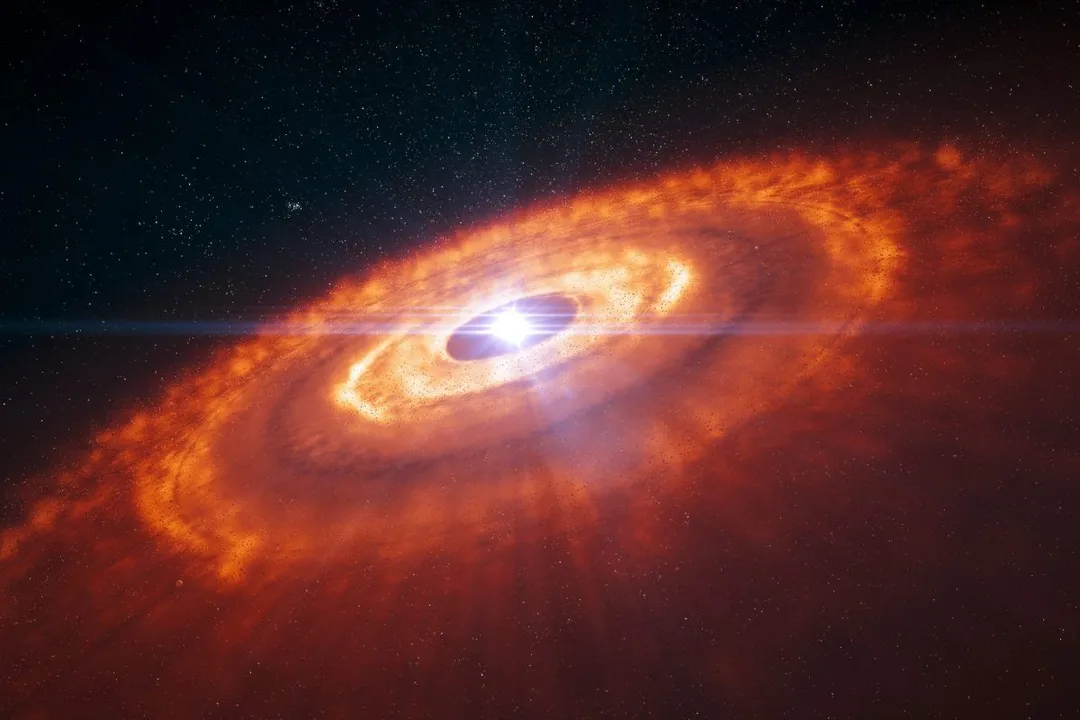
The material that makes up everything we see around us, from the Earth beneath our feet to the complex structures of living organisms, has a truly epic origin story rooted in the death of ancient stars. This material is often poetically referred to as stardust, and while the phrase sounds lovely, it describes a very real physical process of cosmic recycling where elements essential for life are forged in stellar interiors and then scattered across the galaxy. [1][7] To understand what stardust is, we must look past the simple definition and examine the life cycle of stars, the physics of element creation, and the subsequent gathering of that material into our solar system. [3][5]
# Cosmic Origin
The fundamental concept underpinning the "we are made of stardust" idea is that the elements that constitute our bodies—things like carbon, oxygen, iron, and calcium—were not present at the very beginning of the universe. [1][7] When the universe first began, it was predominantly composed of the simplest elements: hydrogen and helium, with trace amounts of lithium. [1][5] Everything heavier, the elements necessary for rocky planets and biology, had to be manufactured later. [3][5]
This manufacturing process happens inside stars. Stars spend the majority of their existence fusing hydrogen into helium in their cores, releasing vast amounts of energy in the process. [1][3] This is the first stage of element creation, known as stellar nucleosynthesis. [5] However, to create heavier elements, such as carbon, which is the backbone of organic chemistry, the star must evolve past its main-sequence phase and become massive enough to initiate subsequent fusion stages. [1][3]
When stars far more massive than our Sun exhaust their core fuel, they begin fusing heavier and heavier elements—helium into carbon, carbon into neon, and so on, building up the periodic table layer by layer, almost like an onion. [1][5] This continues until the star develops an iron core. [1] Iron marks a cosmic dead-end in standard fusion because fusing iron consumes energy rather than releasing it. [1]
# Stellar Death
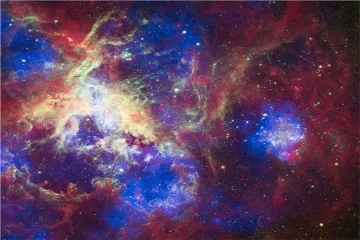
Once the iron core forms, the star rapidly collapses under its own immense gravity, leading to one of the universe’s most energetic events: a supernova explosion. [1][7] It is in the fiery crucible of this explosive death—or sometimes in the merger of neutron stars—that the very heaviest elements are created through rapid nuclear capture processes. [1][5] Elements like gold, silver, and uranium are formed in these extreme environments and are flung out into space at high velocity. [1][3] This ejected material, rich in newly forged, heavy elements, mixes with existing interstellar gas and dust clouds. [1][3][7] These enriched clouds are the pristine source material for the next generation of stars, solar systems, and, eventually, life. [3][7]
Considering the sheer volume of hydrogen and helium that constituted the early universe, it strikes one as remarkable that the necessary heavy elements for Earth-like chemistry were created at all. Most of the universe remains in that primordial state. The fact that our Sun is a second- or third-generation star means it formed from gas already seeded by multiple stellar deaths. The percentage of "stardust" (elements heavier than helium) in our solar system is quite high compared to the galactic average, which emphasizes how specialized our particular corner of the Milky Way is, having benefited from multiple cycles of stellar birth and destruction before our Sun ignited. [5]
# Material Components
The term "stardust" can be interpreted in a few ways, depending on context, but scientifically, it most commonly refers to the material ejected from stars or material that has passed through the interstellar medium. [5][8] The Merriam-Webster dictionary simply defines stardust as "dust in space," which is broad but captures the general idea of material suspended between stars. [4]
For the purpose of explaining our connection to the cosmos, stardust generally means those heavy elements. If we examine the composition of the human body, roughly 99% of our mass is made up of just six elements: oxygen, carbon, hydrogen, nitrogen, calcium, and phosphorus. [1] Hydrogen is the only one readily available from the Big Bang. Carbon is formed in massive stars; oxygen is created late in the life of massive stars; and calcium and iron are products of core collapse supernovae. [1] Therefore, virtually every atom in your bones, blood, and brain, apart from the hydrogen (which is mostly ancient), has a history of intense stellar heat and explosive dispersal. [1][7]
To put this into a comparative perspective, consider the scale of an atom. While the Earth is built from this ancient "stardust," the total mass of that heavy, processed material incorporated into our planet over its formation history is incredibly small when compared to the initial primordial hydrogen and helium gas cloud that formed the Sun. If one could hypothetically represent the entire mass of the Earth with a large pile of sand, the portion of that pile representing the elements heavier than hydrogen and helium—the true processed stardust—would likely only amount to a few grains, yet those few grains contain the entire chemical recipe for life. [5]
# Space Dust
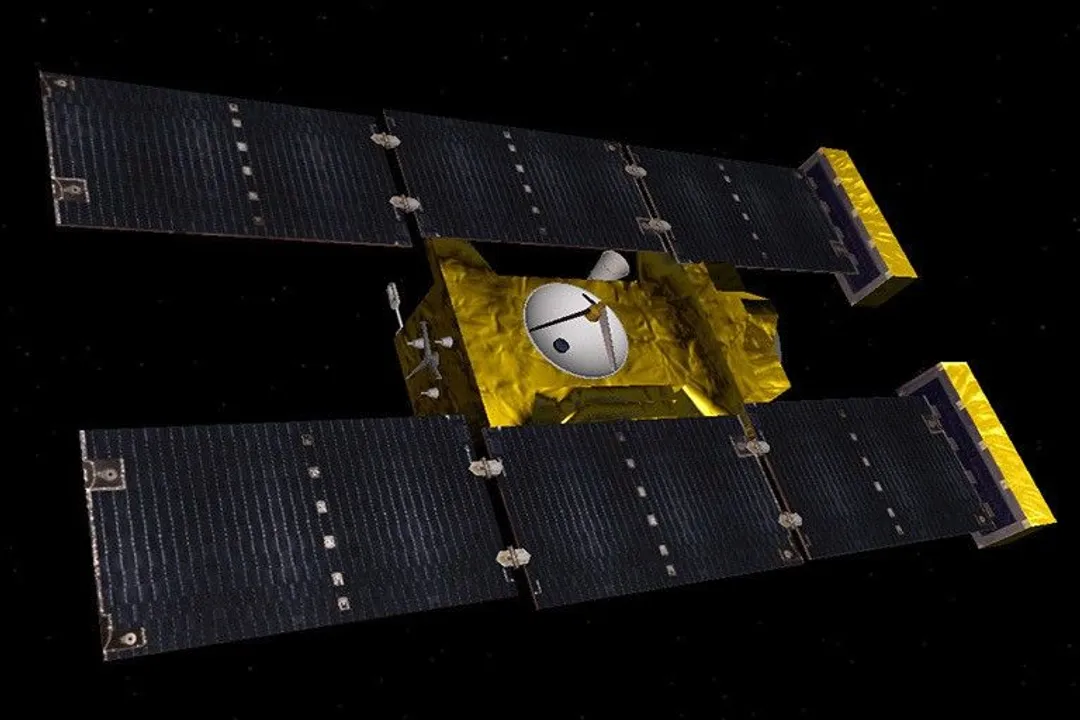
The term "stardust" is also used to describe actual, physical particles collected from space, often via specialized missions. [6] NASA’s Stardust mission is a prime example of this literal interpretation. [6] This mission was designed to fly through the coma of Comet Wild 2 and collect samples of interstellar dust and cometary particles. [6] The spacecraft used a special aerogel collector, a low-density solid material, to gently slow down and capture these high-velocity cosmic grains. [6]
The material collected by the Stardust mission provided scientists with tangible pieces of the early solar system and genuine interstellar material that had traveled across the galaxy for billions of years. [6] Analyzing these samples allows researchers to bypass relying solely on telescopic observations and instead study the composition and structure of these ancient grains in terrestrial laboratories. [6] The mission successfully returned its samples to Earth in 2006. [6] This mission validates the concept that cosmic dust is real, collectible, and holds direct physical evidence of processes happening far beyond our planet. [6]
# Formation Context
The specific nature of the dust cloud from which our Sun and Earth formed has a direct bearing on what we are made of today. This primordial cloud, known as a solar nebula, was not uniform; it contained varying concentrations of elements depending on how close it was to previous supernova explosions. [5]
If our nebula had been slightly less enriched with heavier elements, Earth might have formed as a gas giant like Jupiter, lacking a solid, life-supporting surface. [5] Conversely, if it had been too enriched or poorly mixed, the resulting planet might have been iron-heavy or unstable. The precise historical context of our stellar neighborhood dictated the availability of key components like silicon for rock formation and carbon/nitrogen for organic chemistry. [5] This suggests that "stardust" isn't just a single type of material; it's a spectrum of chemically processed matter, and the quality of our local supply determined our planetary fate. [3]
# Scientific Terminology
In astronomical literature, the material that forms planets, asteroids, and moons—which is the stuff that ultimately built Earth and us—is often technically referred to as metals when discussing stellar composition, a term that might confuse the general reader. [5][8] In this specialized context, a "metal" is defined as any element heavier than hydrogen and helium. [5][8] Therefore, the Sun, which is composed of about 98% hydrogen and helium, is considered relatively metal-poor, whereas Earth, being composed overwhelmingly of heavier elements, is incredibly metal-rich compared to the overall composition of the galaxy. [5][8]
The term stardust serves as a more accessible, descriptive synonym for this collection of heavier elements—the silicon, oxygen, iron, and carbon—that were manufactured by stars and subsequently incorporated into the dust and gas that clumped together to form our solar system. [1][7] Stardust is the cosmic debris of stellar evolution. [3]
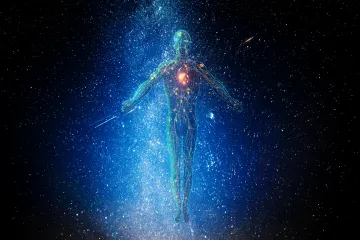
# Making Life Possible
The conversion of raw stellar remnants into living matter involves several crucial steps that occurred after the initial creation of heavy elements. [7] First, the gas and dust had to coalesce under gravity to form a star (our Sun) and a protoplanetary disk. [5] Second, within that disk, dust grains needed to stick together, grow into pebbles, then rocks, then planetesimals, eventually forming a planet like Earth. [5]
Third, once Earth formed, these inorganic materials needed the right conditions—liquid water, energy, and time—to begin forming complex organic molecules, leading to biology. [7] The presence of elements like carbon, oxygen, and nitrogen from that ancient stardust provided the necessary chemical ingredients for this biological leap. [1] Without the violence of supernovae, the carbon in your body could never have existed in a stable, accessible form on a terrestrial planet. [7]
When we examine the sheer persistence required—from the star that forged an element, to the supernova that scattered it, to the nebula that collected it, to the planet that formed from it, to the biology that arranged it into life—the concept of being "made of stardust" becomes less a poetic notion and more a statement of direct material inheritance from cosmic history. [1][3] The hydrogen in your water molecules may be nearly as old as the universe itself, but the carbon atoms that define your structure are definite relics of stellar furnaces that burned and died long before the Sun ever formed. [1][7]
# Analyzing the Dust Collection
The sheer volume of material cycling through the galaxy is hard to grasp. Astronomers estimate that the Milky Way galaxy alone contains billions of solar masses worth of interstellar medium, much of which is dust. [8] This dust is not just inert grit; it plays a vital role in blocking visible light and radiating heat in the infrared spectrum, influencing star formation by cooling gas clouds. [8]
To maintain a clear distinction between the literal and figurative:
| Stardust Interpretation | Common Material | Origin/Process |
|---|---|---|
| Figurative/Biological | Carbon, Oxygen, Iron, etc. | Nucleosynthesis in stars and supernovae [1][5] |
| Literal/Physical | Micron-sized particles | Ejected from comets, asteroids, or interstellar clouds [6] |
The actual interstellar dust particles collected by missions like Stardust are typically tiny, measuring between 0.01 and 10 micrometers across. [6] These particles are samples of the material that has survived the harsh radiation and turbulence of interstellar space, representing the physical carriers of the heavier elements that ultimately built us. [6]
The process relies on the fact that a solar nebula must be dense enough to pull these small particles together efficiently. If the initial concentration of heavy elements (metals) in the nebula is too low, the process stalls, potentially leading to the formation of gas giants without substantial rocky cores, or systems lacking the chemical diversity needed for biology. [5] Our existence is therefore a consequence of cosmic abundance at the right moment in the right place. [3]
#Videos
How We're All Made of Stardust! - Spectacular Science Ep. 143
Related Questions
#Citations
Are we made of stardust? | Natural History Museum
ELI5: how exactly are we made of stardust : r/explainlikeimfive - Reddit
What is stardust? Understanding the secrets of the Solar System
STARDUST Definition & Meaning - Merriam-Webster
How We're All Made of Stardust! - Spectacular Science Ep. 143
Stardust Definition - Intro to Astronomy Key Term | Fiveable
Stardust / Stardust NExT - NASA Science
Stardust - Wikipedia
Are We Really All Made Of Stardust? - IFLScience