Is it true that we are all stardust?
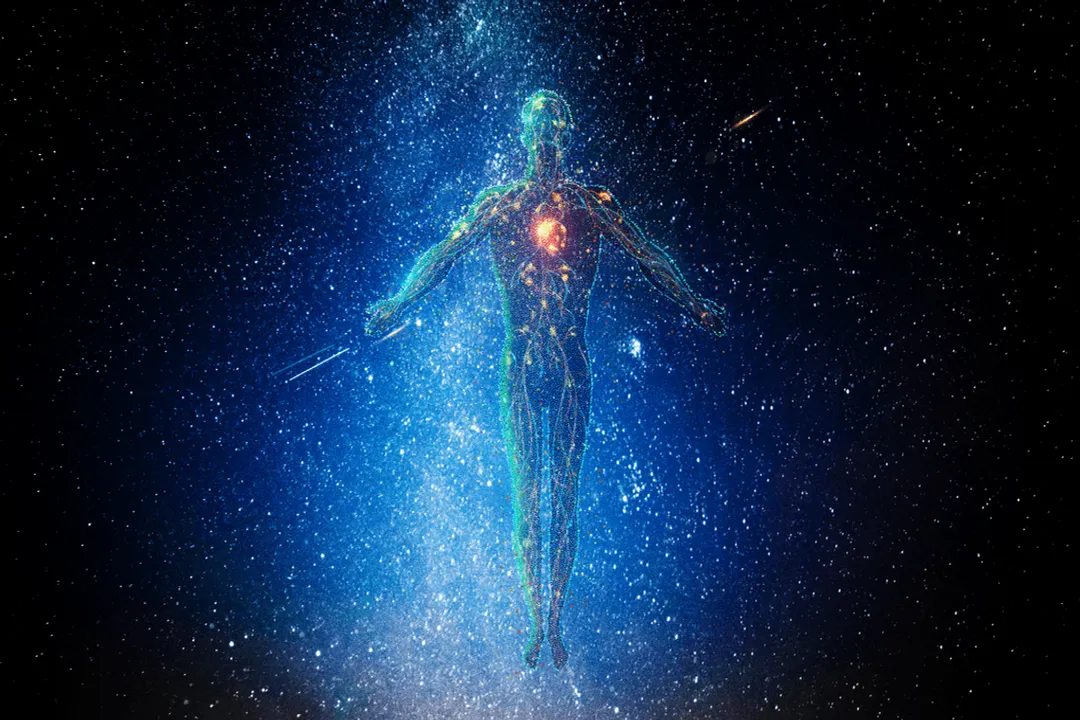
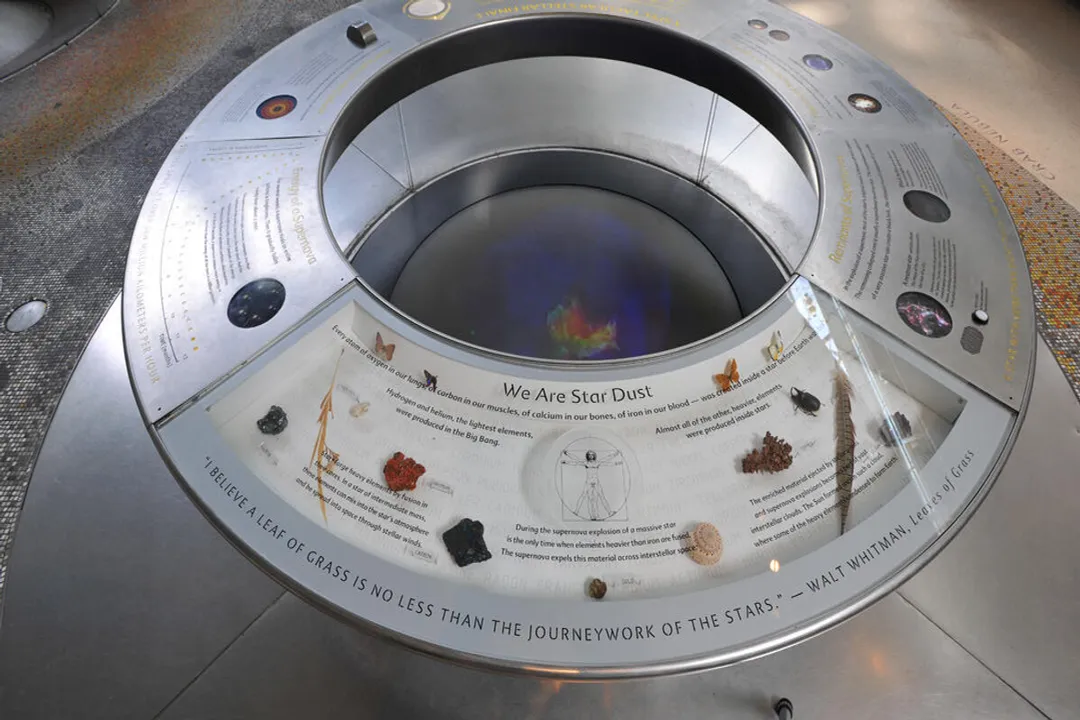
The phrase that we are made of stardust has become a poetic shorthand for connecting humanity to the vastness of the cosmos, an idea famously championed by Carl Sagan. While profoundly true in spirit, the statement benefits from a little scientific precision. It might be more accurate to say we are made of star stuff, a subtle but important distinction that lets us appreciate the full, violent, and ancient history required to construct every cell in our bodies. Everything that constitutes a human being—the very atoms that form our bones, our blood, and our brains—was forged in the extreme conditions found within stars and their spectacular deaths.
# Primordial Matter
To understand where our body’s materials originated, we must rewind the clock to the universe’s infancy, approximately 13.8 billion years ago. In the immediate aftermath of the Big Bang, the universe was an intensely hot, dense soup of subatomic particles. As the cosmos expanded and cooled over the first few minutes, these particles assembled in a process called Big Bang nucleosynthesis. This event was highly efficient at creating only the lightest elements.
The initial material that resulted was overwhelmingly composed of hydrogen and about 25 percent helium by mass, with only trace amounts of lithium. Hydrogen, which is simply a single proton, is the only element in the human body whose creation predates stellar processes. For any element heavier than these primordial gases, a different kind of extreme environment was needed—one that only a star could provide.
# Stellar Forges
The birth of the first stars, which condensed from these clouds of hydrogen and helium due to gravity, marked the beginning of stellar nucleosynthesis. Within the scorching cores of these massive objects, lighter atoms are crushed together to form heavier ones in a constant process of nuclear fusion, which releases the energy that allows the star to shine.
Stars act as cosmic element factories, taking hydrogen and fusing it into helium, then fusing helium into heavier elements like carbon and oxygen. Our Sun, an intermediate-mass star, is currently engaged in this process. However, the fusion process has a hard stop: iron (element number 26). Fusing iron into anything heavier actually consumes more energy than it releases, which removes the outward pressure that counteracts the crushing force of the star’s own gravity.
When a star's core turns to iron, it runs out of fuel for outward pressure. Gravity wins catastrophically, causing the star to collapse in on itself. This collapse generates a shockwave that bounces outward, triggering the star’s magnificent and destructive end: a supernova explosion.
# Violent Endings
It is the violence of stellar death, not just the quiet life of a star, that provides the necessary building blocks for complexity.
# Supernova Synthesis
The supernova explosion itself is so energetic that it temporarily forces nuclei to combine into elements heavier than iron. Elements like gold, platinum, and others crucial to our biology are forged in this immense, brief firestorm. The supernova then expels this newly synthesized, enriched material across interstellar space. This material, mixed with older material, eventually forms the vast interstellar clouds from which new stars and solar systems, including our own, will coalesce.
# Merging Corpses
An even more extreme mechanism for creating the heaviest elements is the collision of neutron stars. This event allows for a rapid neutron capture process, known as the r-process, responsible for roughly half of the elements heavier than iron. For human physiology, the neutron star collision process is notable because it is the primary way elements like iodine—a key, albeit trace, component of our metabolism—are created. This means that the iron in our blood might have come from a massive star’s supernova, while the iodine necessary for our thyroid function might have been created when two stellar corpses slammed into each other billions of years ago.
# Composition Versus Dust
When we talk about "stardust," we must consider the physical manifestation of this material. In astrophysics, cosmic dust refers to fine particulate matter, often smaller than smoke, found floating in the space between stars. While stars do eject molecules and dust as they shed outer layers, only about 6 percent of all cosmic dust is directly created by stars.
The elements themselves are the star stuff that forms the basis of everything, while the dust is one way that matter is distributed. These dust grains are then processed in the interstellar medium, where they can be destroyed or built up, sometimes forming complex organic molecules like precursors to amino acids—the building blocks of life. Therefore, while the elements we are made of are overwhelmingly stellar in origin, the term "stardust" specifically refers to only a fraction of that material.
Looking at our own bodies, the heavy inventory comes from stellar processes. Approximately 99 percent of the human body's mass is composed of just six elements: oxygen, carbon, hydrogen, nitrogen, calcium, and phosphorus. Oxygen accounts for about 65 percent of our mass, and carbon makes up nearly 18.5 percent. In contrast, hydrogen—though making up the vast majority of atoms—accounts for about 10 percent of our mass. One calculation suggests that 93 percent of our body mass is literally stardust (star stuff). The fact that our Sun is a second or third-generation star means the cloud that formed our solar system was already enriched with elements forged in the deaths of stars that lived and died long before the Sun ignited.
| Element | Approx. % of Human Mass | Primary Origin |
|---|---|---|
| Oxygen | Fusion in massive stars, Supernovae | |
| Carbon | Fusion in stars (Stellar Nucleosynthesis) | |
| Hydrogen | The Big Bang (Primordial) | |
| Nitrogen | Stellar processes | |
| Calcium | Remainder of top 6 | Stellar/Supernova processes (e.g., white dwarfs) |
| Phosphorus | Remainder of top 6 | Stellar processes |
We can see a powerful implication when comparing the chemistry of life to stellar creation. Our Sun is only old enough to have created elements up to iron, yet our bones require calcium and our blood requires iron, all of which demand the life cycle of larger, more massive stars that burn out quickly. This means that the material composing our structure had to be recycled across multiple stellar generations before it was ready to form Earth.
# From Star Stuff to Self
It is a common point of confusion—and a testament to the cosmic distance—to wonder how the elements forged in an exploding star billions of years ago found their way into us. The answer lies in continuous recycling and our biological reality. Your body cannot create new atoms; the oxygen you breathe is chemically rearranged into water, and the carbon in your food is incorporated as different molecules, but an oxygen atom will never become a carbon atom inside your lungs or cells. That transmutation is solely the domain of nuclear furnaces.
Therefore, every piece of iron in your hemoglobin, every calcium atom locking your skeleton into shape, and every carbon atom that forms your proteins, must be ingested. We absorb these ancient, processed elements through the food chain—from plants that draw them from the soil, or from animals that consumed those plants. The matter is the same, regardless of whether it came directly from the planetary accretion disk that formed Earth or arrived more recently via an asteroid impact.
Considering this history, it is remarkable to pause and think about the sheer improbability of the sequence: the universe had to expand, cool, form the first generation of stars, have those stars die, enrich the interstellar medium, form a new generation of stars and planets, have those stars die, and so on, for billions of years before a body could evolve the capacity to contemplate this lineage. This deep material connection suggests a shared physical foundation for all life, prompting some to observe that this shared source is the grounding for a recognition of universal connection, regardless of philosophical or spiritual belief. We are not just like the universe; we are a currently self-aware, temporary collection of its oldest ingredients, momentarily organized through the laws of chemistry and gravity on a small, wet rock orbiting a medium-sized star.
# Ancient Carbon
The age of our components is as stunning as their origin. Since hydrogen and helium formed near the beginning, and carbon is formed inside stars that live and die over vast timescales, the carbon atoms in our bodies are likely many billions of years old. The specific elemental composition of life on Earth means that we are constrained to a specific historical window within the galaxy—a "temporal galactic habitable zone"—where the necessary heavy elements had accumulated sufficiently to form rocky planets and complex biochemistry. The very atoms that make up your right hand were likely part of a stellar cloud that condensed, formed a star, exploded, and then contributed to the nebula that birthed our Sun, all before Earth even existed. The universe, in effect, needed countless stars to perish so that we could be temporarily assembled here and now.
Related Questions
#Citations
1.1. Are we really made of star stuff? - NASA Astrobiology Program
ELI5: how exactly are we made of stardust : r/explainlikeimfive - Reddit
Are We Really Made of Stardust? | Psychology Today
We Are Stardust | AMNH
Are We Really All Made Of Stardust? - IFLScience
Humans Really Are Made of Stardust
Dr Karl: Yes, humans are stardust - Australian Geographic