Are we actually made up of stardust?
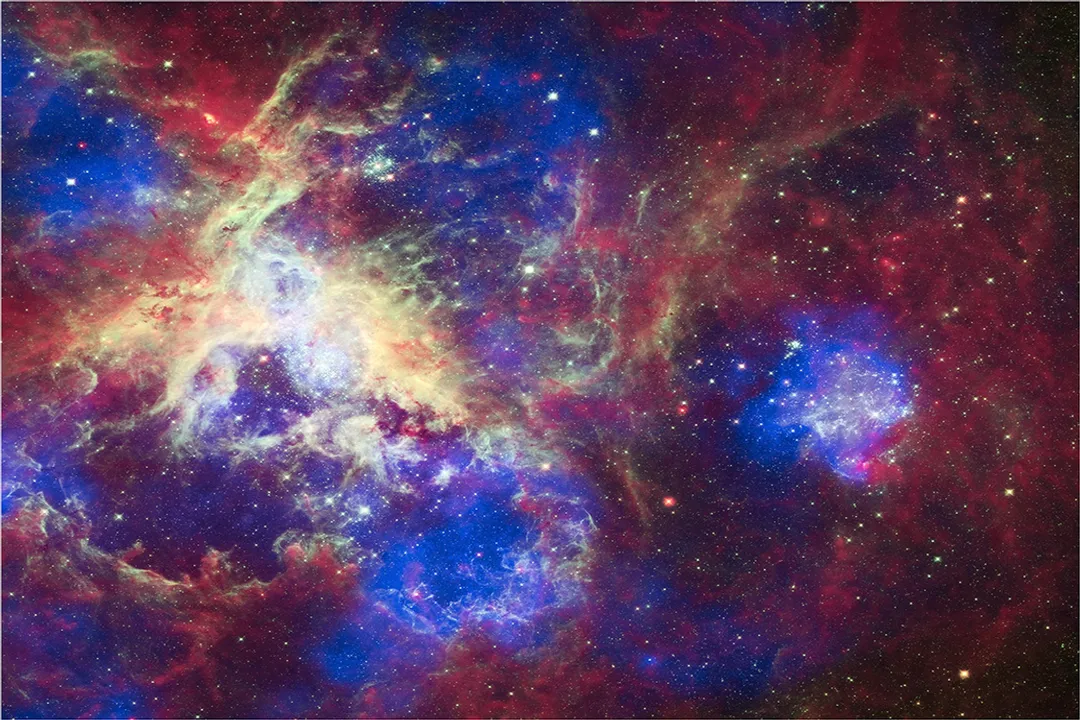
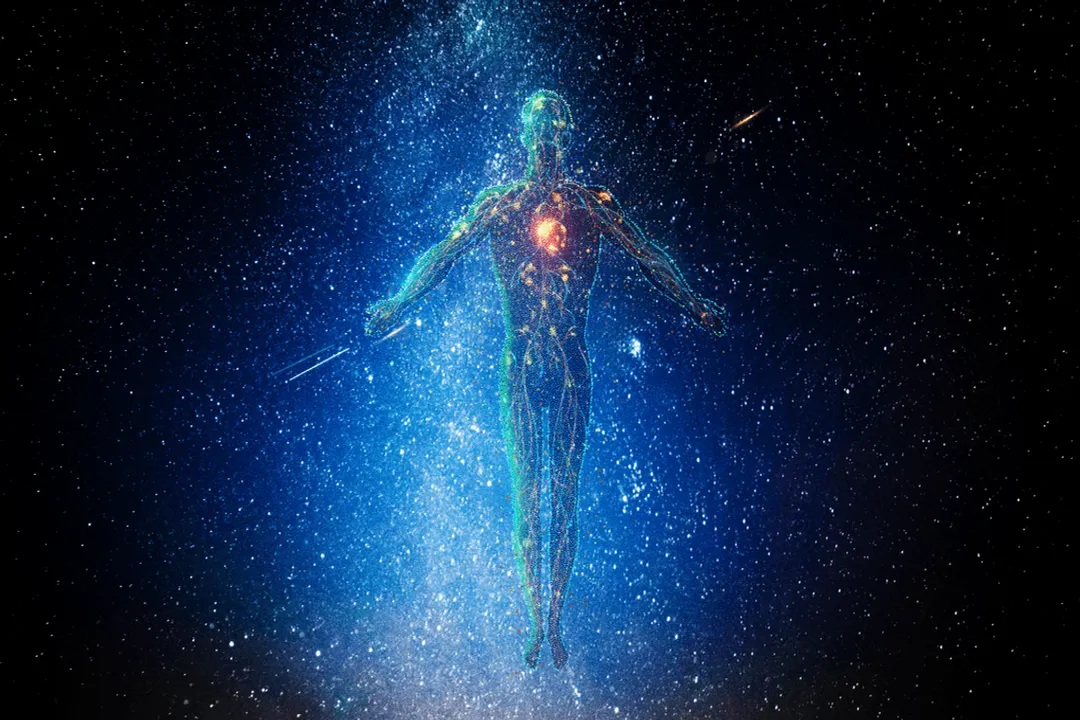
The atoms that form your hand, the oxygen you just inhaled, and the iron circulating in your blood were, quite literally, manufactured inside stars that exploded billions of years ago. [1][4][7] This concept, often stated poetically, is a fundamental scientific truth describing the cosmic provenance of nearly every atom in our bodies, save for the most basic elements. [4] We are intrinsically linked to the lifecycle and death of massive celestial bodies because those dying suns are the only natural factories capable of creating the complex ingredients necessary for life as we know it. [1]
# Elemental Genesis
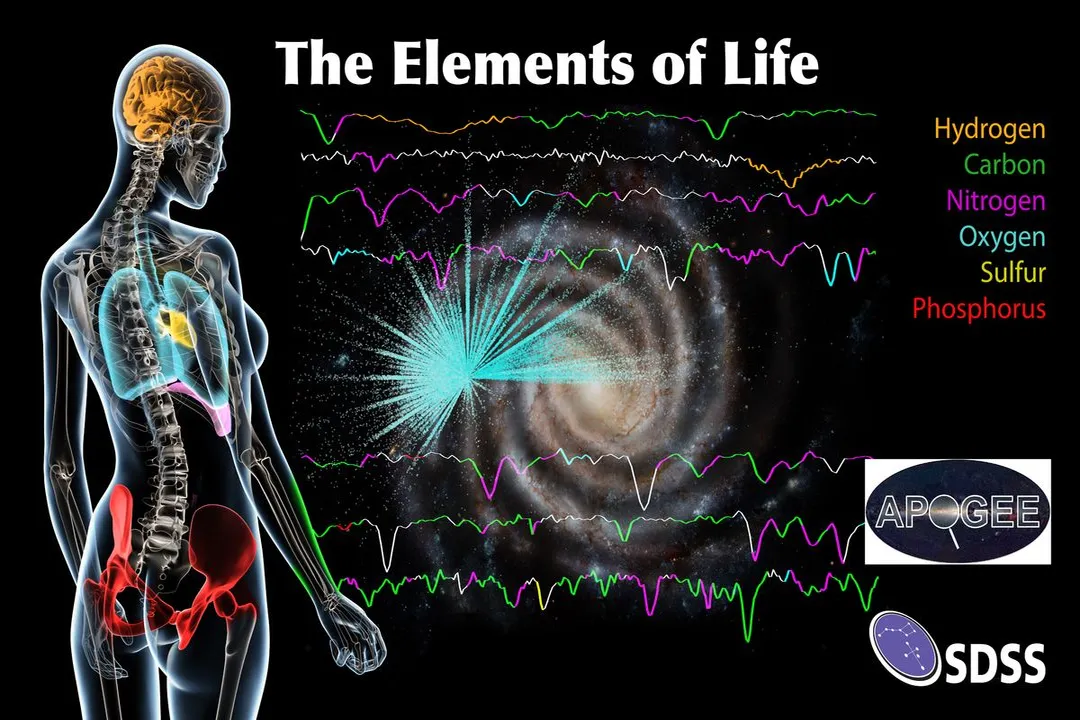
The universe began with a relatively simple inventory of matter following the Big Bang: overwhelmingly vast quantities of Hydrogen and Helium. [1] These two lightest elements make up about 99% of the normal matter in existence today. [1] While we certainly contain these primordial elements—Hydrogen is a component of water, which makes up a large portion of our mass—the building blocks for complex organic life required a much more energetic environment to form. [1]
For elements heavier than Helium, such as Carbon, Oxygen, and Nitrogen, the conditions of the early universe were insufficient. These elements needed the immense pressure and temperature found deep within the cores of stars, a process scientists call nucleosynthesis. [1]
# Stellar Forges
A star spends the majority of its active life fusing lighter elements into heavier ones in its core. [1] When a star is on its main sequence, like our Sun currently is, it converts Hydrogen into Helium. [1] As the star ages and the central supply of Hydrogen dwindles, the core contracts, heats up, and begins fusing Helium into elements like Carbon and Oxygen. [1]
This process continues, building heavier and heavier elements in successive shells around the core, provided the star is massive enough. Elements up to Iron () can be created through sustained fusion within the star's life. [1] Iron represents an end-point for standard stellar fusion because fusing iron atoms actually consumes energy rather than releasing it, meaning the star cannot support itself through further fusion reactions. [1]
# Giant Explosions
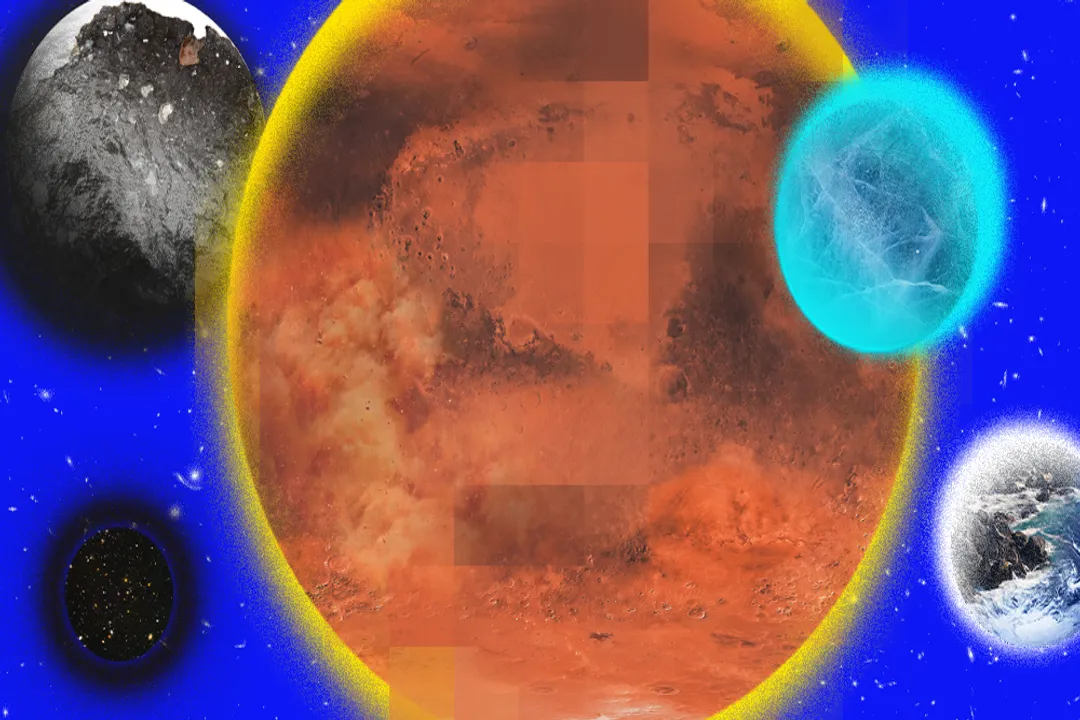
Once a star has fused its core elements all the way up to Iron, its life is rapidly coming to an end. [1] Without the outward pressure generated by fusion, gravity causes the massive star to collapse catastrophically inward. [1] This collapse culminates in a spectacular explosion known as a supernova. [1][7]
It is in the incredible, brief violence of a supernova that the heaviest elements—everything beyond Iron, such as Gold, Silver, and Uranium—are forged. [1] The shockwave from this explosion then scatters all these newly manufactured elements, both the heavy ones and the lighter ones forged during the star's life, out into the galaxy. [1][7] This ejected material mixes with existing interstellar gas and dust, forming nebulae that will eventually condense to create new generations of stars, planets, and everything on them. [1][7]
# Body Ingredients
The elements that sustain us are directly traceable back to these ancient cosmic events. Consider the major constituents of the human body:
- Oxygen (): Crucial for respiration; formed in massive stars. [1]
- Carbon (): The structural backbone of all organic life; formed in stars. [1]
- Hydrogen (): The most abundant element; formed in the Big Bang. [1]
- Nitrogen (): Essential for proteins and DNA; formed in massive stars. [1]
- Calcium (): Necessary for bones and teeth; formed in supernovae. [1]
- Iron (): Central to hemoglobin in the blood; formed by fusion up to Iron. [1]
While Hydrogen is primordial, the specific atoms of Carbon in the DNA helix of a living creature were very likely created in a star that perished long before our Sun ignited. [1][5]
| Element | Relative Abundance in Universe (Approx.) | Primary Origin | Role in Human Body |
|---|---|---|---|
| Hydrogen | $75%$ | Big Bang | Water, general mass |
| Helium | $24%$ | Big Bang | Trace amounts |
| Oxygen, Carbon, Nitrogen | $<1%$ combined | Stellar Fusion/Supernovae | Essential organic molecules [1] |
# Life's Inheritance
A common question that arises when contemplating this connection is how this celestial origin relates to biological processes like growth and cell division, or mitosis, which seems like an entirely terrestrial mechanism for creating new matter. [5] If we grow by multiplying existing cells, are we not simply building new structures from existing Earthly matter?
The answer lies in the source of that initial terrestrial matter. [5] While mitosis rearranges and duplicates the molecules present in our environment and our bodies, those initial molecules—the carbon in the sugars we eat, the oxygen in the water we drink—were themselves sourced from that expelled stellar debris. [5] The Earth itself is a collection of recycled cosmic dust that accumulated around our young Sun. [7] Therefore, the mechanism of growth is cellular, but the raw materials themselves originated in space. [5] The atoms do not vanish during life; they are merely reorganized from the environment into complex biological forms, maintaining their identity as star stuff. [5]
If we look at the material composition of an average adult, the sheer quantity of stellar output incorporated into our structure is staggering. We are not just connected to the cosmos; we are composed of its residue. [7]
# Cosmic Recycling
The process that allowed for our existence involves incredible timescales and distances. A single atom of Carbon in your body might have spent its first few billion years powering a massive star, followed by millions of years drifting as dust across the Milky Way after that star exploded, before finally being incorporated into the rocky accretion disk that formed our planet. [5] This continuous cosmic recycling ensures that elements are distributed widely enough for planetary systems like ours to form with the requisite heavy elements needed for liquid water and organic chemistry. [4]
The fact that the necessary elements are relatively rare in the universe—only making up about one percent of its total normal mass—underscores how unusual the formation of a life-bearing planet must be. [1]
# Reflecting on Scale
It is easy to view the stars as distant, irrelevant points of light, entirely separate from daily life on Earth. However, realizing that the elements making up our structure are the same as those in distant nebulae creates a profound sense of physical intimacy with the universe. Consider the sheer number of stellar lifetimes required to build up the concentration of heavier elements needed for a complex organism like a human. The early universe could only produce simple hydrogen gas; our existence required multiple generations of stars living, dying, and seeding the cosmos with the raw materials for geology, chemistry, and eventually, biology. [1] This necessitates a continuous, multi-stage cosmic manufacturing process spanning billions of years before any biological process could even begin to operate. [1][4] We are essentially the final, most complex product of this long, violent, and necessary stellar evolution.
#Videos
Are we made of stardust? | Surprising Science - YouTube
Related Questions
#Citations
Are we made of stardust? | Natural History Museum
ELI5: how exactly are we made of stardust : r/explainlikeimfive - Reddit
Are we made of stardust? | Surprising Science - YouTube
1.1. Are we really made of star stuff? - NASA Astrobiology Program
How is it possible that humans are 'literally' made of Star Dust, when ...
If we are made of stardust, does that mean we're technically “stars”?
Humans Really Are Made of Stardust, and a New Study Proves It
Are We Really Made of Stardust? | Psychology Today
Are We Really All Made Of Stardust? - IFLScience