What gas is a cloud made up of?
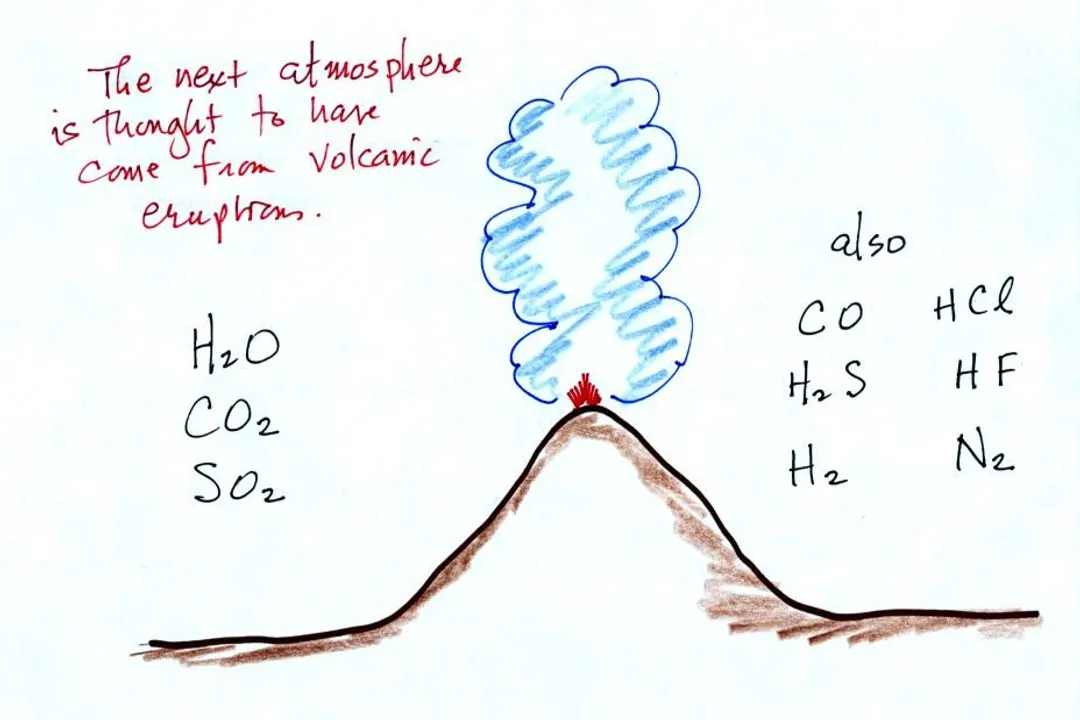
The immediate perception when looking up at a cloudy sky is often that we are witnessing a massive volume of gas, perhaps slightly thicker than the clear air around it. However, this visual intuition misses the critical physical state of the matter that constitutes the cloud itself. What appears to be a homogenous, fluffy, or wispy gaseous structure is, in reality, a suspension of incredibly minute liquid water droplets or ice crystals floating within the atmosphere. [1][2][6][8] The cloud itself is not a gas you can see. [6]
The confusion stems from the fact that the majority of the atmosphere—the very medium the cloud floats in—is gas. If you were to analyze the air volume occupied by a typical cumulus cloud, you would find that the vast majority of its mass is the invisible atmospheric gases that surround the droplets. [9] It is this mixture of liquid or solid particles suspended in the gaseous matrix that defines the visible cloud structure. [4][7]
# Atmospheric Gases
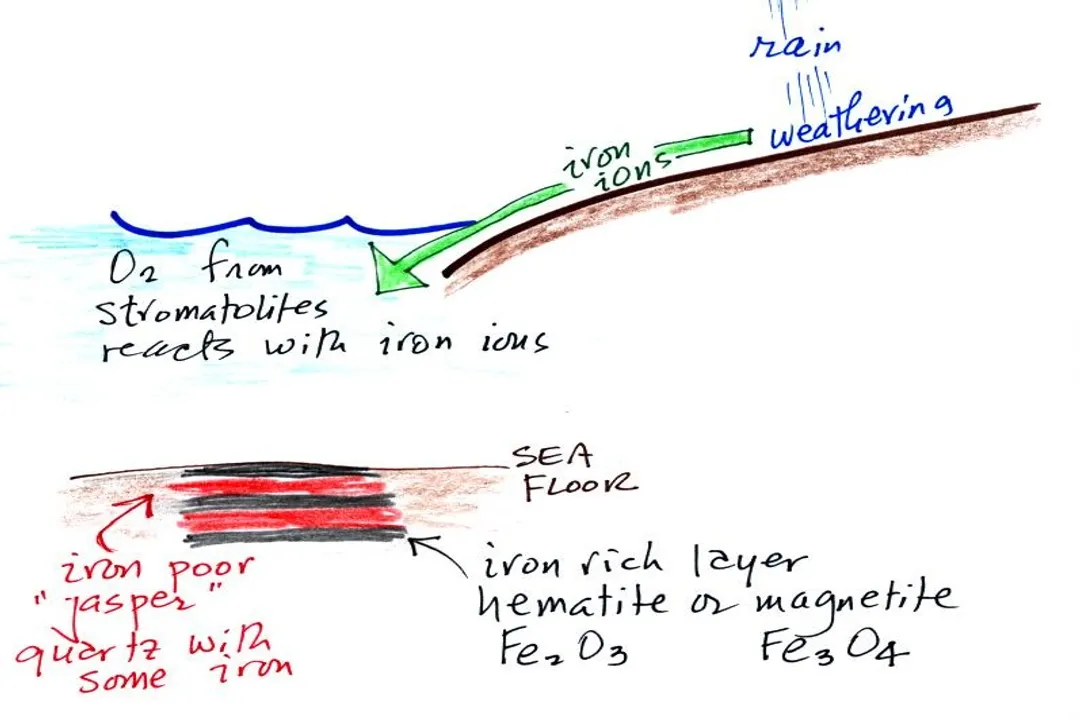
To understand what a cloud is not made of, we first need to establish the composition of the air it resides within. Earth’s dry atmosphere is overwhelmingly composed of two primary gases: nitrogen () and oxygen (). [9] Nitrogen accounts for approximately $78%$ of the dry air volume, while oxygen makes up about $21%$. [9] The remaining $1%$ consists of trace gases like argon, carbon dioxide (), and others. [9]
It is important to note that this composition describes dry air. The atmosphere always contains water in its gaseous form, known as water vapor. [6][8] The percentage of water vapor is highly variable, depending on location and temperature, usually ranging from about $0.1%$ to $4%$ of the total atmospheric volume. [9] This water vapor is itself an invisible gas, but it is the essential ingredient before a cloud forms.
# Invisible Vapor
Water vapor, the gaseous state of , is the precursor to all terrestrial clouds. [7] The transition from this invisible gas to the visible cloud is the key step in meteorology. When the air parcel containing this water vapor rises, it cools. [2][7] As the temperature drops to the dew point, the water vapor has insufficient energy to remain in its gaseous state and begins the process of condensation. [7]
The process requires something for the gas molecules to condense onto. These necessary microscopic surfaces are called condensation nuclei—tiny specks of dust, pollen, salt, or pollution. [7] When the water vapor cools enough, it changes phase, transforming from an invisible gas into liquid water molecules clustering around these nuclei, forming the visible droplets that make up the cloud. [6][8]
# Visible Substance
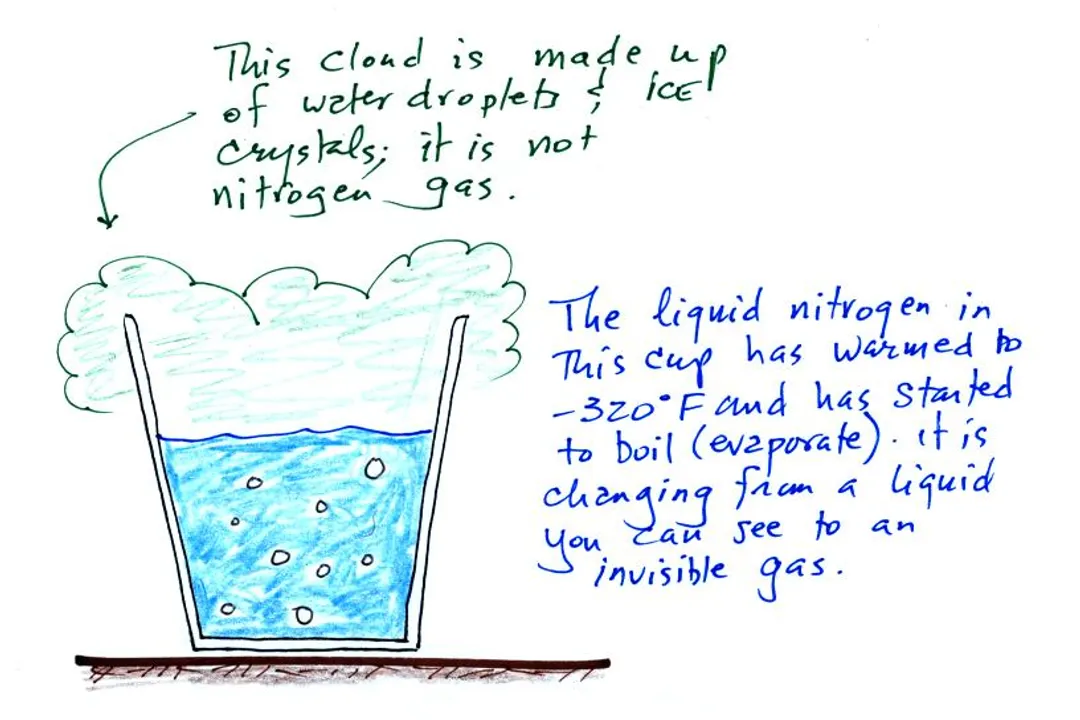
The visible essence of the cloud, therefore, is liquid water or ice. [1][2][6] The droplets or crystals are exceedingly small. A typical cloud droplet has a diameter of about $0.02$ millimeters. [4] While individually they are too small to fall as precipitation, their sheer number within a concentrated volume makes the collective mass optically dense enough to scatter sunlight, rendering the cloud visible. [4]
Consider the density difference. In a cubic meter of clear air, you have a massive quantity of nitrogen and oxygen gas molecules making up the bulk of the mass. [9] In that same cubic meter of cloud, the actual liquid water content might be less than one gram, meaning the cloud's visible mass is a tiny fraction compared to the invisible gaseous mass it displaces. [9] It’s the light interaction with that tiny fraction of suspended liquid that gives the cloud its form and texture, creating the illusion that the entire volume is composed of the material we see. [4] This optical effect is why we perceive the cloud as a 'thing' separate from the air, even though it is fundamentally integrated within it.
# Formation Process
The mechanism dictating where and when a cloud appears centers entirely on cooling the air mass containing water vapor to its saturation point. [7]
- Lifting: Air must rise, usually through convection (heating from the ground), forced lifting over mountains (orographic lift), or convergence (where air masses collide and are forced upward). [7]
- Cooling: As the air parcel ascends into lower pressure, it expands and cools adiabatically (without exchanging heat with its surroundings). [7]
- Condensation: When the temperature drops sufficiently, the relative humidity reaches $100%$, and the water vapor condenses onto condensation nuclei, forming liquid droplets or ice crystals. [7]
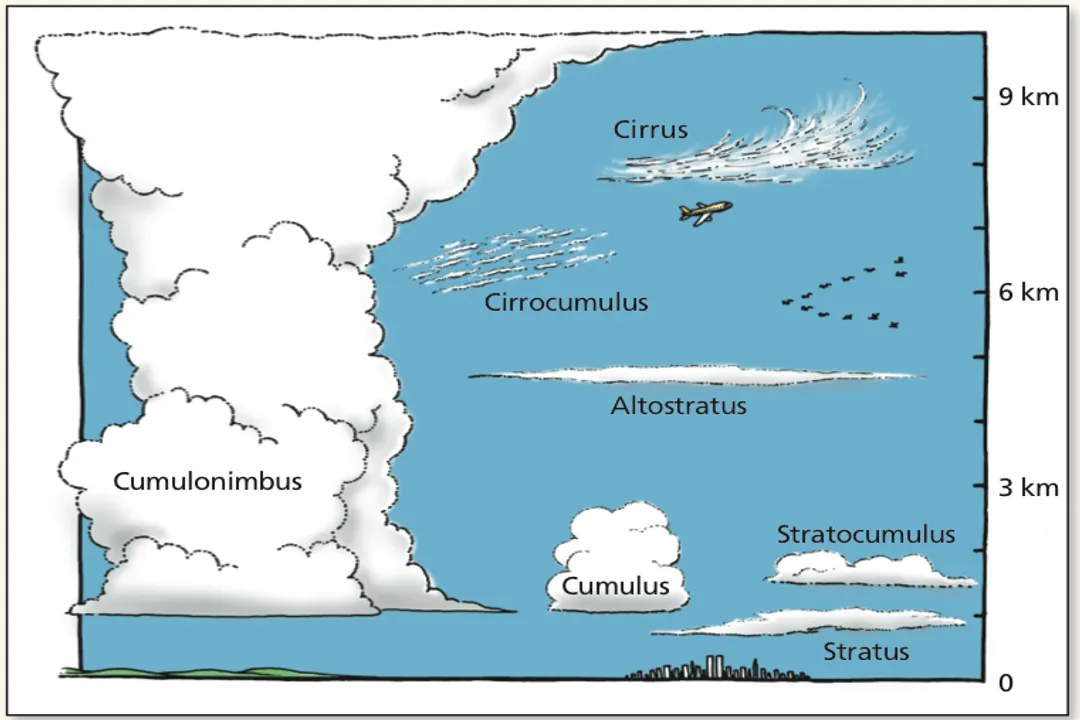
If the temperature high in the troposphere remains below freezing, the water vapor deposits directly into ice crystals instead of liquid droplets, leading to high, wispy clouds like cirrus. [2] The altitude of the cloud base is a direct indicator of the temperature and moisture profile of the atmosphere at that location. [8]
# Interstellar Clouds
While we typically discuss clouds in the context of Earth's weather, the term applies to astronomical phenomena as well, though their composition is radically different. [5] An interstellar molecular cloud, for example, is an extremely cold, dense region of the interstellar medium. [5] These cosmic clouds are composed primarily of molecular hydrogen () and helium, with trace amounts of other molecules and dust. [5]
Comparing the two highlights the specific nature of our terrestrial clouds. An Earth cloud is a transient, localized phenomenon involving liquid water suspended in a nitrogen-oxygen atmosphere, driven by solar energy and local temperature shifts. [8] A molecular cloud, conversely, is a vast, cold reservoir of fundamental elements existing in a near-vacuum, where gravitational forces, not convection, dictate its structure. [5] The composition contrast is stark: droplets in air versus vast quantities of molecular in space. [1][5]
# Light Scattering
The whiteness or grayness of clouds is another element that might mislead an observer into thinking they are dealing with a pure gas. A pure gas, like the clear air surrounding the cloud, appears transparent because its molecules are too small relative to the wavelength of visible light to scatter much of it uniformly (Rayleigh scattering explains why the sky is blue, scattering shorter wavelengths more effectively). [4]
Clouds, however, are made of water droplets that are significantly larger than the wavelength of visible light. [4] These larger particles scatter all wavelengths of visible light equally (Mie scattering). [4] When all colors of light are scattered equally toward the observer, the cloud appears white. [4] If the cloud becomes very deep or dense—meaning there are many layers of droplets piled up—less light penetrates all the way through to the bottom, causing the base to appear gray or dark. [4] Therefore, the color is purely a function of how much liquid/ice scatters sunlight, not the presence of a different type of atmospheric gas.
When observing a developing cloud, especially in humid, warm conditions, pay attention to the air just above the point where the visible moisture begins. That boundary marks the precise temperature where the invisible water vapor gas has ceased to exist as a gas and has begun aggregating into the visible liquid phase. You are witnessing the phase change in real time—the transition from to —a critical distinction for understanding local atmospheric energy balances. The apparent thickness, which we sometimes confuse with high concentrations of a "cloud gas," is actually a measure of droplet density multiplied by the vertical distance the light must travel through that suspension before reaching your eye. [4]
#Videos
NASA Spotlite: What are clouds made of? - YouTube
Related Questions
#Citations
Are clouds a gas, liquid, and/or solid? - Earth Science Stack Exchange
What Are Clouds? | Smithsonian Science Education Center
NASA Spotlite: What are clouds made of? - YouTube
Of what gas are white clouds made up of? - Quora
Molecular cloud - Wikipedia
A cloud is a gas you can see - Science-Education-Research
How Do Clouds Form? - Let's Talk Science
What are clouds and how do they form? - Met Office
Composition of the atmosphere - atmo.arizona.edu