What is the local lynx of cold clouds?
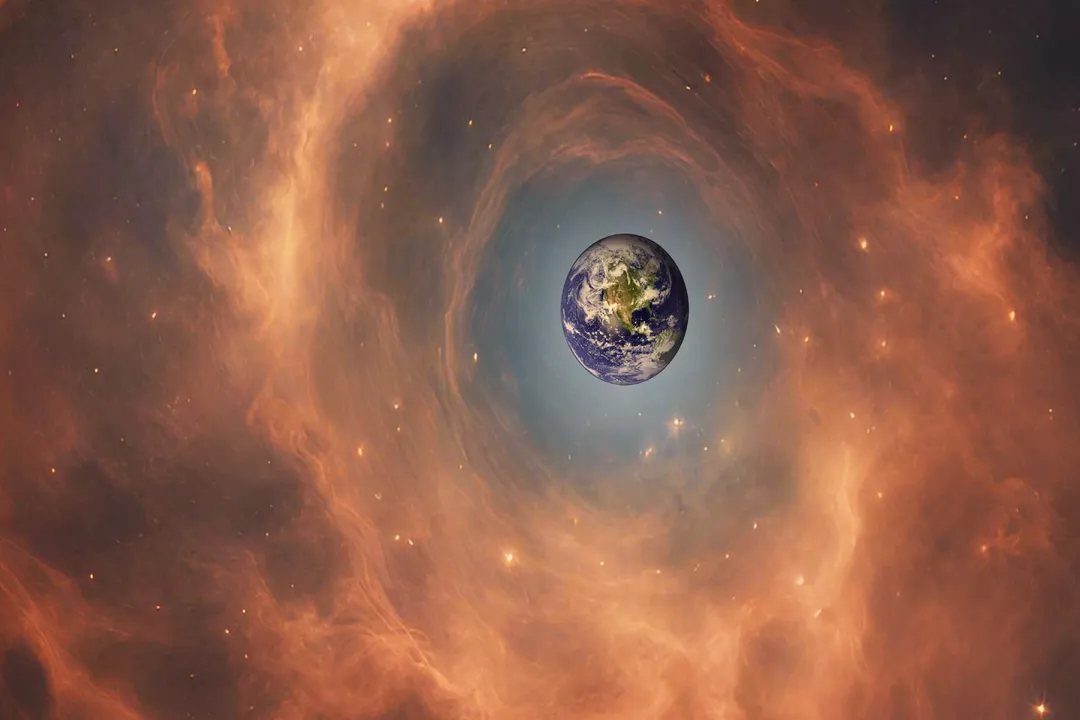
The term "local lynx of cold clouds" points toward a fascinating feature in our immediate galactic neighborhood: the Local Leo Cold Cloud (LLCC). [1][3] This is not a creature of myth but a specific, cold, and dense patch of gas and dust drifting through interstellar space, which our own Solar System has likely passed through or interacted with in the relatively recent past of cosmic timescales. [2][4] Understanding this cloud involves appreciating that the space between stars is far from empty; rather, it is populated by complex structures like the Local Interstellar Cloud (LIC) complex, of which the LLCC is a distinct, colder component. [3]
# Cloud Structure
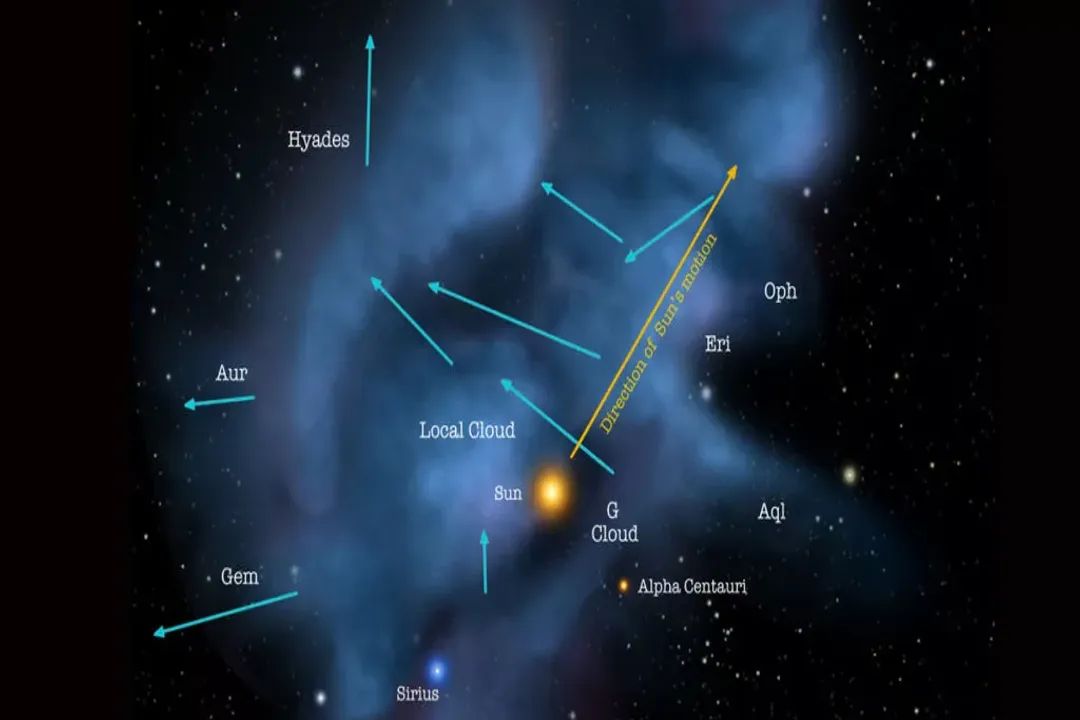
The interstellar medium (ISM) is incredibly sparse, containing only a few atoms per cubic centimeter on average, but it organizes into vast structures that influence star formation and planetary environments. [3] The Local Leo Cold Cloud is described as an anomaly or structure within the broader LIC complex that surrounds us today. [2][3] While the Solar System is currently embedded within the Local Interstellar Cloud (LIC), the LLCC represents a distinct region characterized by its cold nature. [3] Its density appears to be higher than the surrounding environment, which is crucial when considering how it might affect the heliosphere—the protective magnetic bubble surrounding our Sun and planets. [2][6]
The scientific investigation of these clouds relies on observing how their density variations perturb the magnetic fields and plasma flow encountered by the heliosphere. [8] The very nature of the cloud—its temperature, velocity, and density—determines the severity of the boundary conditions imposed upon our Solar System as it moves. [6] The LLCC is specifically noted for being a cold, dense cloud that has been implicated in models of our recent galactic motion. [6][9]
# Solar Movement
Our Solar System is not stationary; it orbits the center of the Milky Way galaxy, causing it to move relative to the surrounding ISM. [4] This movement means that over millions of years, the Sun sweeps through different clouds and voids in the local galactic environment. [4] These passages are mapped out by analyzing various forms of evidence recorded in Earth's geological or atmospheric history. [2]
Crucially, research has focused on identifying specific moments when the Sun encountered a particularly dense cloud, causing a measurable change in its environment. [7] One significant event identified by researchers is estimated to have occurred between 2 and 3 million years ago (Myr ago). [4][7][9] This period coincides with the Sun's transit through, or extremely close proximity to, the Local Leo Cold Cloud. [1][9] This encounter is distinct from the current passage through the general LIC, representing a denser, more profound interaction. [3][5]
It is helpful to think of the interstellar space not as a uniform sea but as a variable terrain. The Sun moves through relatively empty "local bubbles" and then plunges into denser "clouds," like the LLCC. [3] The specific density of the LLCC is what makes its potential passage so scientifically compelling when trying to reconstruct past environmental conditions. [8]
# Evidence of Encounter
Determining that the Solar System passed through a structure like the LLCC millions of years ago requires looking for tell-tale signs imprinted on Earth or the heliosphere itself. [2] The primary method involves modeling the interaction between the interstellar cloud and the heliosphere's boundary, the termination shock. [8] When the heliosphere encounters a significantly denser medium, its shape and size change, which alters the level of shielding it provides against galactic cosmic rays (GCRs). [2][5]
A significant piece of evidence supporting this past interaction comes from analyzing the historical shielding capability of the heliosphere. [5] Researchers have suggested that during the 2-3 Myr event, the density of the cloud encountered—potentially the LLCC—was substantial enough to significantly compress the heliosphere, thereby decreasing the protection Earth received from deep-space radiation. [2][4][9] This compression is calculated using known cloud densities and plasma physics models. [8]
It is important to differentiate this scenario from our current state. We are presently situated within the general LIC, which provides a baseline level of shielding. [3] The LLCC passage represents a temporary dip into a much more restrictive environment, a state that lasted long enough to potentially leave a marker in the terrestrial record. [5]
| Feature | Current LIC Environment | Local Leo Cold Cloud (LLCC) Encounter |
|---|---|---|
| Density | Lower, allowing for larger heliosphere | Significantly higher (denser structure) |
| Shielding | Moderate protection from GCRs | Reduced or compressed shielding |
| Timing | Present Day | Approximately 2–3 Million Years Ago |
| Nature | Part of the wider interstellar medium | A distinct, cold, dense knot/anomaly |
| Impact Focus | Ongoing study of solar wind interaction | Reconstructing past cosmic ray flux |
| [3][4][7] |
# Terrestrial Signatures
If the heliosphere was compressed by the LLCC passage, the resulting flux of high-energy galactic cosmic rays reaching Earth would have increased substantially. [2][4] This is where the intersection with Earth science becomes critical. The increased radiation could have had tangible effects on our planet's atmosphere. [7]
One area of proposed impact is the mesosphere, the layer of the atmosphere situated roughly 50 to 85 kilometers above the surface. [7] Increased GCR flux can ionize atmospheric gases, potentially leading to changes in atmospheric chemistry or energy deposition within this layer. [7] While direct fossilized evidence of this atmospheric change 2-3 million years ago is challenging to isolate definitively from other geomagnetic or solar variations, the physical mechanism linking a denser cloud encounter to higher GCR flux is well-supported by modeling. [5][8] The possibility remains that these atmospheric shifts could correlate with other environmental changes observed in the geological record from that time, such as those influencing climate or biological evolution. [9]
Considering the context of planetary habitability, this past event serves as a natural experiment. It suggests that the level of cosmic protection afforded to a planet is not static but dependent on the local galactic weather. [6] For a planet orbiting a star like the Sun, the density of the ambient ISM is a critical, albeit slow-changing, variable determining the radiation dose received over geological timescales. [1]
The research modeling this passage suggests that the heliosphere's size can shrink by nearly half when interacting with these denser pockets of gas, moving from its current size down to perhaps 60 AU (Astronomical Units) or less, meaning the boundary protecting the inner Solar System was much closer to Earth. [2] This dramatic reduction in the protective radius represents a significant environmental stress test for any life evolving beneath that shield.
# Reconstructing the Past
The research team credited with these findings has been working to refine the timeline and the characteristics of the cloud responsible for this ancient exposure. [5][8] One of the main efforts involves using computer simulations to trace the Sun's path backward through known structures in the ISM, specifically looking for a match with the LLCC's known properties. [6]
A fascinating element of this reconstruction is the recognition that there may have been multiple episodes of significant exposure, not just one isolated incident. [7] While the 2-3 Myr ago event is prominent, some models hint at a second encounter around 7 million years ago, perhaps with a different feature or a less intense part of the LLCC structure. [7] Examining the mesosphere's chemical composition during these various potential encounters allows scientists to test the model predictions against atmospheric proxies, such as the presence of specific isotopes or compounds created by high-energy particle bombardment. [7]
From a broader astronomical perspective, the study of the LLCC underscores the importance of understanding our immediate galactic surroundings for assessing long-term stellar system stability. [1][3] The conditions near our Sun are not an anomaly but a transient snapshot of a dynamic galactic environment. The data suggests that the LLCC represents a region of exceptionally high density encountered by our system, pushing the heliosphere to its limits. [6][8] If we compare the calculated required density of the LLCC to the density of the current LIC, the LLCC appears to be several times denser, creating a much more imposing barrier for the solar wind to push against. [3] This difference explains why the consequences of passing through it are modeled to be so much more severe than our current, relatively calm, passage through the broader interstellar cloud complex. [2]
This detailed modeling effort, supported by the data synthesized from sources like the Nature publication, moves the understanding of the LLCC from a mere catalog entry in interstellar geography to a tangible historical event that shaped the radiation environment of early human ancestors. [5][9] It offers a concrete mechanism by which the radiation environment near Earth can shift dramatically on geological timescales, independent of changes in the Sun itself. This realization recalibrates how we assess the long-term habitability of exoplanets orbiting other stars, as their environment will always be dictated by the density of the interstellar material they are currently traversing. [1]
Related Questions
#Citations
The Local Lynx of Cold Cloud - Stephen Bodio
An interstellar cloud may have caused an ice age on Earth. Here's how
Local Leo Cold Cloud - Wikipedia
Earth Possibly Exposed to Interstellar Anomaly Millions of Years Ago
A possible direct exposure of the Earth to the cold dense interstellar ...
Solar System Passed Through Cold Interstellar Cloud About 2 ...
Earth's Mesosphere During Possible Encounters With Massive ...
Impact of Galactic Cosmic Rays on Earth's Climate During an ...
A possible direct exposure of the Earth to the cold dense interstellar ...