What is an example of a molecular cloud?

The vast, cold interiors of space are not entirely empty; they are populated by immense reservoirs of gas and dust known as molecular clouds. These clouds represent the interstellar medium (ISM) in its densest and coldest state, serving as the primary ingredient factories for the next generation of stars and planetary systems. [1][2][3][9] Far from being uniform voids, they are complex structures where gravity is beginning to win the battle against internal pressure, slowly gathering material for stellar birth. [4]
# Defining Features
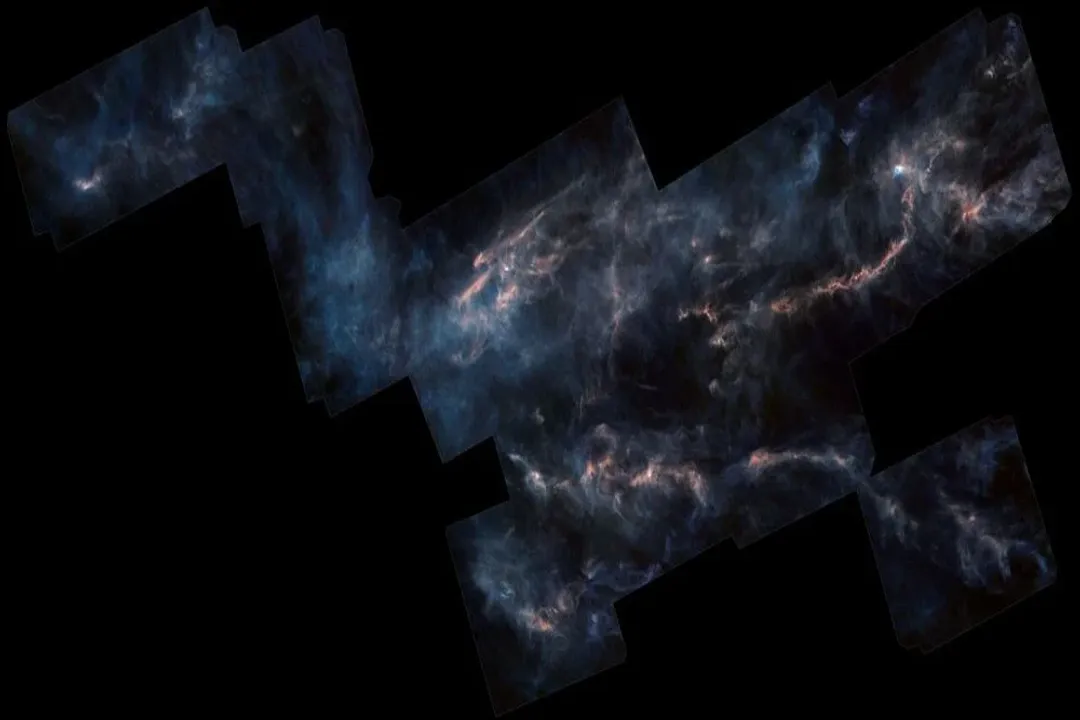
A molecular cloud is fundamentally defined by the abundance of molecules present within it, primarily molecular hydrogen (). [1] For these molecules to survive the harsh environment of space, the conditions must be extremely restrictive. Temperatures within these regions typically settle down around to Kelvin (), making them incredibly frigid environments. [1][3] Furthermore, the density of matter must be significantly higher than the surrounding interstellar medium. [3]
The extreme cold—often hovering just above absolute zero—is not just a side effect; it’s a prerequisite. At warmer temperatures, energetic photons from nearby stars would easily break apart molecules like , preventing the formation of these dense stellar nurseries in the first place. The dust grains present in these clouds act as crucial shields against this destructive radiation, absorbing high-energy light and allowing the molecules to form and remain stable. [1][3]
# Dominant Gas
While the entire category is named for the presence of molecules, the dominant gas component, molecular hydrogen (), is notoriously difficult for astronomers to observe directly. [1] Molecular hydrogen does not radiate efficiently at the long wavelengths needed for easy detection, especially at such low temperatures. [3]
This observational hurdle means that scientists must rely on proxy molecules, or "tracers," to map out where the bulk of the cold, dense gas resides. [1][2] The workhorse tracer for these regions is carbon monoxide (). [1][3] is abundant enough to be present in significant quantities within the cloud, and critically, it does radiate detectable energy in the microwave and radio parts of the spectrum, allowing instruments like radio telescopes to map the cloud’s extent and internal motion. [3]
# Observation Techniques
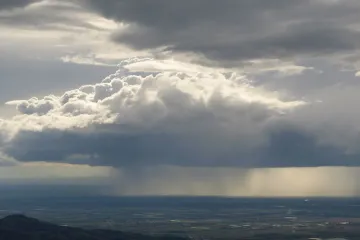
Because molecular clouds block visible light, they appear as dark patches against the brighter background of the Milky Way, sometimes referred to as dark nebulae. [9] This characteristic opacity confirms their density and coldness. [3] Observing them requires looking away from the visible spectrum entirely. [9]
The reliance on emission is a key component of galactic surveys. By mapping the location and intensity of the signal, astronomers can infer the distribution of the much more common, yet invisible, gas. [1][3] Modern observatories are exceptionally sensitive to these faint molecular line emissions, providing detailed insights into the complex chemistry occurring within these stellar incubators. [7]
# Known Examples
Molecular clouds span an enormous range in scale and mass. The most colossal types are classified as Giant Molecular Clouds (GMCs), which can harbor up to $10^6$ solar masses of material. [1]
Here are a few notable examples that illustrate the diversity of these interstellar structures:
- The Orion Molecular Cloud Complex: Perhaps the most famous example, the Orion Nebula region is a massive, active site of star formation visible even in amateur telescopes. [2] It provides a nearby, easily observable laboratory for studying the processes that build stars and protoplanetary disks. [2]
- The Taurus Molecular Cloud: Located relatively close to our solar system, this complex offers a less extreme, yet still active, environment for star formation. While the massive GMCs can hoard up to a million times the mass of our Sun, a region like the nearby Taurus Molecular Cloud offers a much more accessible laboratory for studying star formation, containing only a few thousand solar masses, showing that stellar birth isn't limited only to the galaxy's absolute largest structures. [1][5][9]
- Sagittarius B2: This cloud complex resides near the crowded center of the Milky Way galaxy. It is exceptionally massive and rich in complex organic molecules, offering a glimpse into the chemical potential for planet formation at a galactic core. [3]
- Sh-G152: This serves as an example of recent discovery, illustrating that even large structures near us can remain hidden for a long time. This vast cloud complex, located near the solar system, was only recently characterized after remaining largely invisible using previous survey methods. [5]
# Cloud Architecture
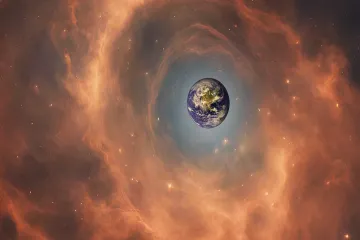
Molecular clouds are rarely smooth, amorphous blobs. Instead, they exhibit intricate internal structures, often organized into vast networks of filaments. [4] These filaments are narrower, denser structures where gravity has managed to pull the gas and dust into elongated threads. [4]
The filamentary structure is critically important because it dictates where star formation will initiate. Within these extended filaments, localized gravitational instabilities cause pockets of material to collapse further, leading to the formation of dense cores that eventually become individual stars or small clusters. [4] Observations reveal that the star-forming activity is highly concentrated along these denser, thread-like structures rather than being spread uniformly throughout the entire cloud volume. [4] The larger GMCs are essentially collections of these smaller, denser, star-forming filament systems held together by their collective gravity. [1] The study of the interstellar medium, including these clouds, forms a major area of astrophysical research aimed at understanding galactic evolution and stellar life cycles. [7]
Related Questions
#Citations
Molecular cloud
Molecular Cloud | COSMOS
Molecular Clouds - an overview
Before These Clouds Form Stars, They Form A Complex ...
A vast molecular cloud, long invisible, is discovered near solar ...
Vast Molecular Cloud Discovered Near Our Solar System
Interstellar Medium and Molecular Clouds
Molecular clouds
Molecular cloud | Astronomy, Star Formation & Interstellar ...