What defines an acid–base reaction at the molecular level?
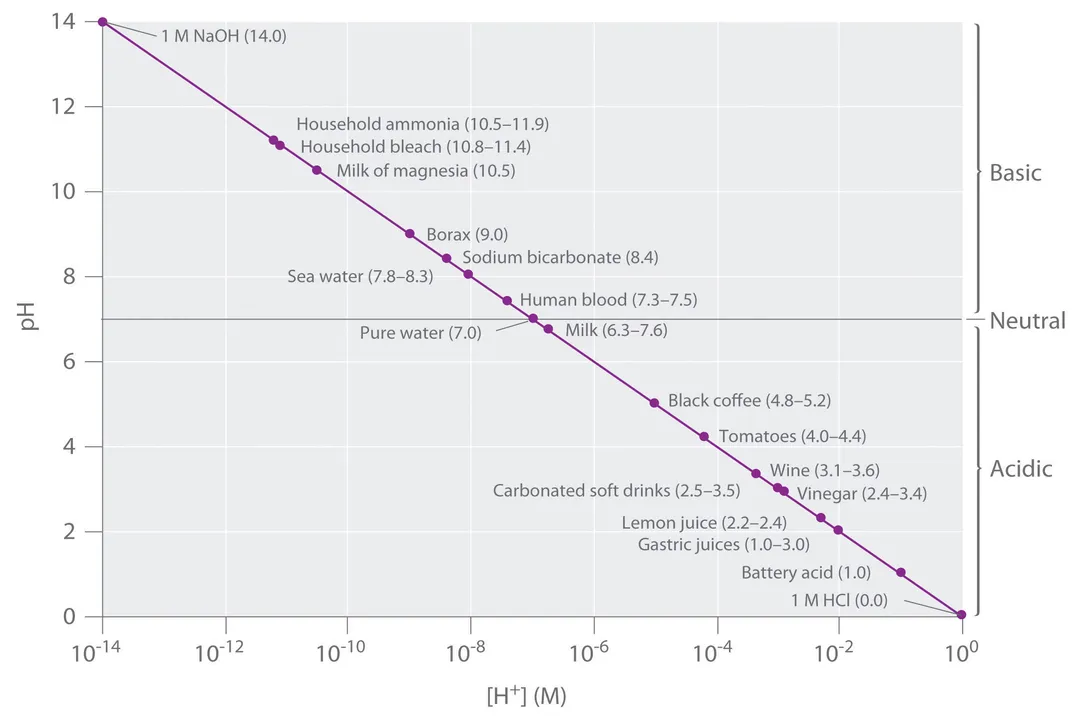
Chemical reactions involving acids and bases are fundamental to chemistry, yet pinning down the precise molecular event that defines them requires looking past simple labels like "sour" or "slippery" and examining the actual transfer of charge or particles. [5][6] At its most basic level, an acid–base reaction describes a chemical dynamic where one molecule or ion relinquishes a specific particle while another accepts it, leading to a chemical shift in composition. [2][4] The definition has evolved significantly over time, expanding its scope from reactions occurring only in water to encompass virtually any chemical interaction involving electron pair shifts. [6][1]
# Defining Transfer
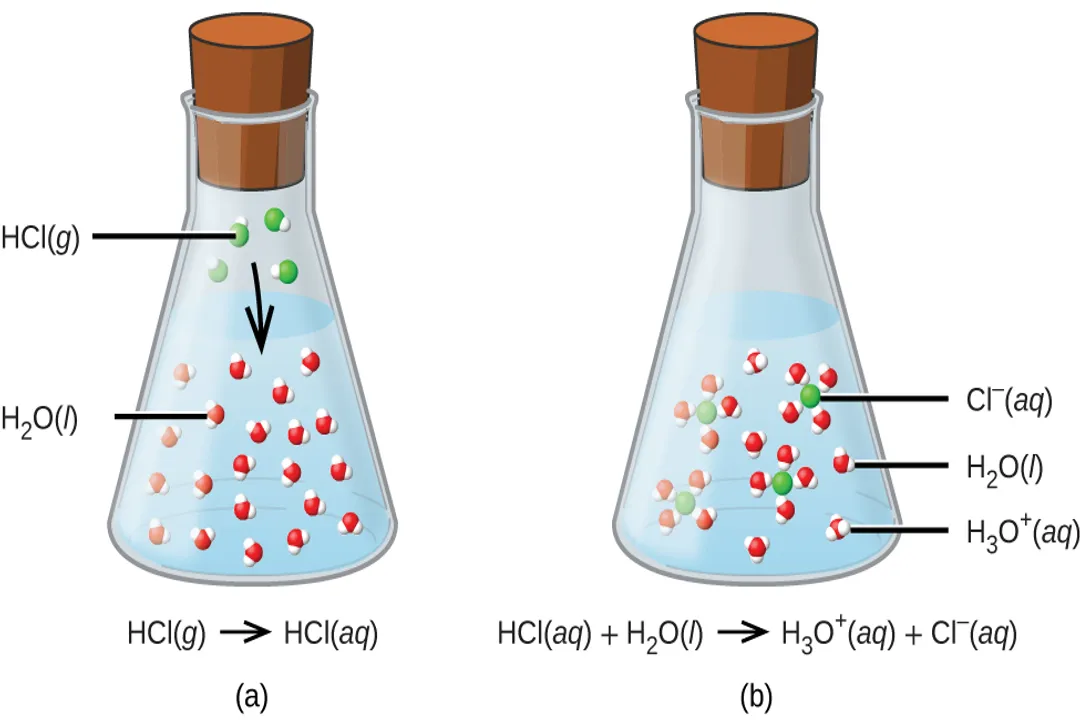
Historically, the earliest definitions, known as the Arrhenius theory, restricted the reaction to aqueous environments. [6] An Arrhenius acid was defined as a substance that increases the concentration of hydrogen ions () when dissolved in water, while an Arrhenius base increases the concentration of hydroxide ions (). [7][6] While this model is useful for describing simple reactions in water, such as the reaction between hydrochloric acid and sodium hydroxide to form water and salt, [7] it fails to explain why ammonia (), which lacks a hydroxyl group, acts as a base, or why reactions can occur in non-aqueous solvents. [6][1]
# Proton Donors
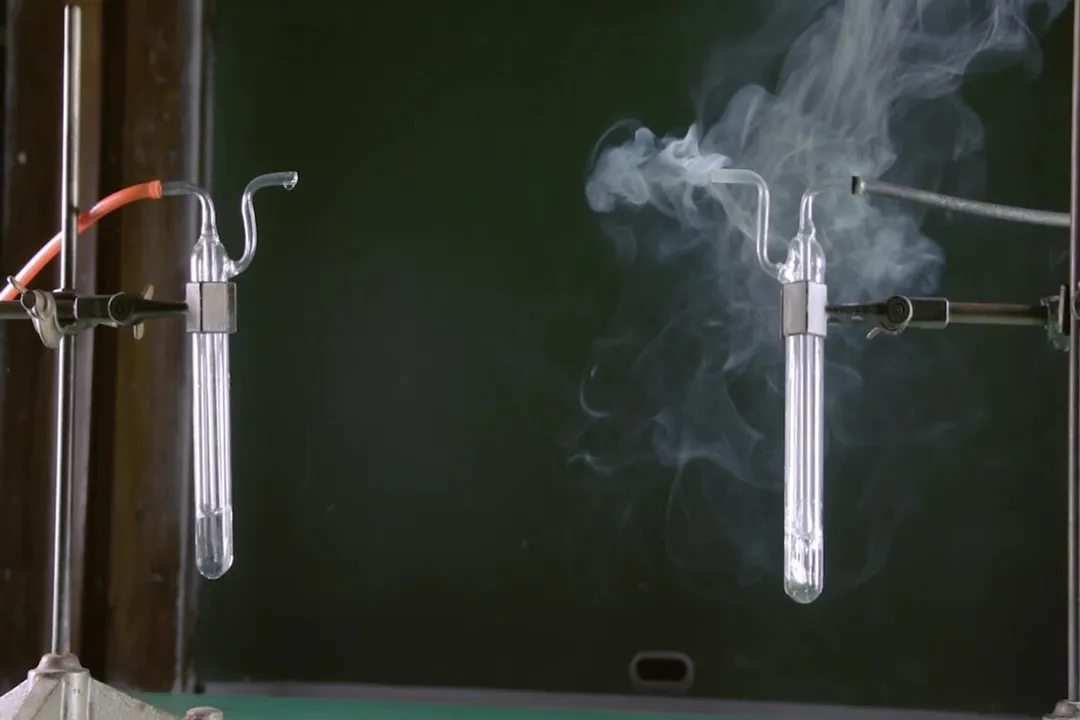
The Brønsted-Lowry theory provided a much broader and more molecularly descriptive definition that is central to modern chemistry. [4][1] In this framework, an acid is defined simply as a proton () donor, and a base is a proton acceptor. [1][4][3][5] The molecular event is the physical transfer of a hydrogen nucleus—a single proton—from the acid to the base. [9]
Consider the reaction between acetic acid () and water (). The acetic acid molecule gives up its acidic proton to the water molecule. [2]
In this snapshot of the reaction at the molecular level, the acetic acid acts as the Brønsted-Lowry acid, and water acts as the base by accepting the proton. [2] Crucially, this theory introduces the concept of conjugate pairs. [4] Once the acid () donates the proton, what remains (, the acetate ion) is its conjugate base. [4] Similarly, when the base () accepts the proton, it becomes the conjugate acid (, the hydronium ion). [2] This means that every acid–base reaction inherently creates a new conjugate acid and a new conjugate base. [4] The entire process is defined by the movement of a single, positively charged particle.

# Solvent Influence
The nature of the solvent plays a significant role in how these molecular transfers manifest in a laboratory setting. [8] While Brønsted-Lowry acids and bases are defined by their behavior regardless of the medium, the actual species reacting often involves the solvent itself. [8] In pure water, for instance, water can act as both an acid and a base—a process called autoionization—which is an essential equilibrium that defines the scale. [8]
When a strong acid is dissolved, the proton transfer to water is essentially complete, resulting in the formation of the stable hydronium ion (). [2][8] If we were to observe this interaction under high magnification, we would see the highly electronegative oxygen atom of the water molecule forming a coordinate covalent bond with the incoming proton, creating the three-proton configuration of hydronium. The sheer abundance and readiness of water to accept a proton is why it is such an effective solvent for studying these reactions.
One interesting thought experiment stems from examining reactions in non-protic solvents, like benzene, where the Brønsted-Lowry definition becomes less descriptive of the entire chemical transformation. If an acid is mixed with a base in a solvent that cannot accept or donate a proton, the transfer of might be inhibited or altered, making the solvent environment a critical factor in observing the predicted molecular behavior, even if the inherent proton-donating/accepting potential of the reactants remains. [8] This scenario highlights the limitations of relying solely on proton movement when the physical medium changes dramatically.
# Electron Acceptors
Moving away from proton transfer, the Lewis theory offers the most fundamental molecular description, focusing on the movement of electron pairs. [4][1] A Lewis base is defined as an electron-pair donor, and a Lewis acid is an electron-pair acceptor. [1][6] This definition broadens the scope to include reactions where no proton is transferred at all, such as the reaction between boron trifluoride () and ammonia (). [4]
In the Lewis context, the molecular action involves the formation of a new covalent bond where both electrons originate from the same atom—the base. [4] The ammonia molecule has a lone pair of electrons on the nitrogen atom, making it the Lewis base and the donor. [4] The boron atom in has an incomplete octet, creating a vacant orbital, thus making it the Lewis acid and the acceptor. [4]
This results in an adduct, a single molecule formed by the joining of the two species. [4] Comparing the Lewis and Brønsted-Lowry definitions reveals a clear hierarchy: every Brønsted-Lowry acid is a Lewis acid because it lacks an electron pair to hold onto its proton (it's ready to accept electrons), and every Brønsted-Lowry base is a Lewis base because it possesses a lone pair available for donation. [4][6] However, the reverse is not true; species like are Lewis acids but not Brønsted-Lowry acids because they do not possess or donate a proton. [4]
| Theory | Acid Definition | Base Definition | Defining Molecular Event | Scope |
|---|---|---|---|---|
| Arrhenius | Produces in | Produces in | Ion formation in water | Narrow (Aqueous only) |
| Brønsted-Lowry | Proton () Donor | Proton () Acceptor | Transfer of | Medium (Protic solvents) |
| Lewis | Electron Pair Acceptor | Electron Pair Donor | Formation of a coordinate bond | Broadest (All solvents) |
| [1][4][6] |

# Ionic View
When these reactions occur in an aqueous solution, like the neutralization of stomach acid () by an antacid (), it is often easier to understand the net molecular change by writing the net ionic equation. [8] This involves stripping away the ions that remain unchanged throughout the process—the spectator ions. [8]
For instance, when hydrochloric acid reacts with sodium hydroxide:
In its fully dissociated ionic form, this is:
The sodium ions () and chloride ions () appear unchanged on both sides; they are the spectators. [8] The core, defining molecular event of this neutralization is the direct combination of the hydrogen ion (the acid component) and the hydroxide ion (the base component) to form a neutral water molecule. [7][8]
This simplification reveals that, at the molecular action level in water, nearly all strong acid-strong base reactions are fundamentally the same chemical event: the neutralization of the solvated proton by the solvated hydroxide ion. [7]
# Bond Dynamics
Ultimately, any acid–base reaction, regardless of which definition we use, is a reaction defined by the breaking and forming of chemical bonds. [4] The Brønsted-Lowry reaction involves the breaking of the bond (where is the rest of the acid) and the formation of a new bond between the proton and the base. [9] The Lewis reaction is entirely about the formation of a new coordinate covalent bond between the donor pair and the acceptor atom. [4]
If we consider the strength of an acid or base—which dictates how far the reaction proceeds—this is directly tied to the stability of the resulting bonds. A very strong acid readily breaks its bond to release the proton because the resulting conjugate base is very stable and thus less inclined to reclaim the proton. [2] Conversely, a weak acid holds onto its proton more tightly because the resulting conjugate base is relatively unstable and has a greater affinity for the proton. [2] This interplay of bond energies and electron affinity determines the equilibrium position, which is the final molecular state observed after the reaction completes or reaches its stable point. [2] The molecular definition, therefore, isn't just about the transfer itself, but about the energetic preference for the electrons (or proton) to reside on one side of the reaction arrow versus the other.
#Videos
What Is An Acid-Base Reaction In Chemistry? - YouTube
Related Questions
#Citations
Acid–base reaction - Wikipedia
5.3: Acid-Base Reactions - Chemistry LibreTexts
Chapter 1: Acid–Base Reactions – OCLUE
Introduction to Acid-Base Reactions - Master Organic Chemistry
What's The Reaction Between An Acid And A Base?
4.3 Acid-Base Reactions - Open Oregon Educational Resources
Acid-Base Neutralization Reactions | Overview & Examples - Lesson
What Is An Acid-Base Reaction In Chemistry? - YouTube