Why are some reactions endothermic?
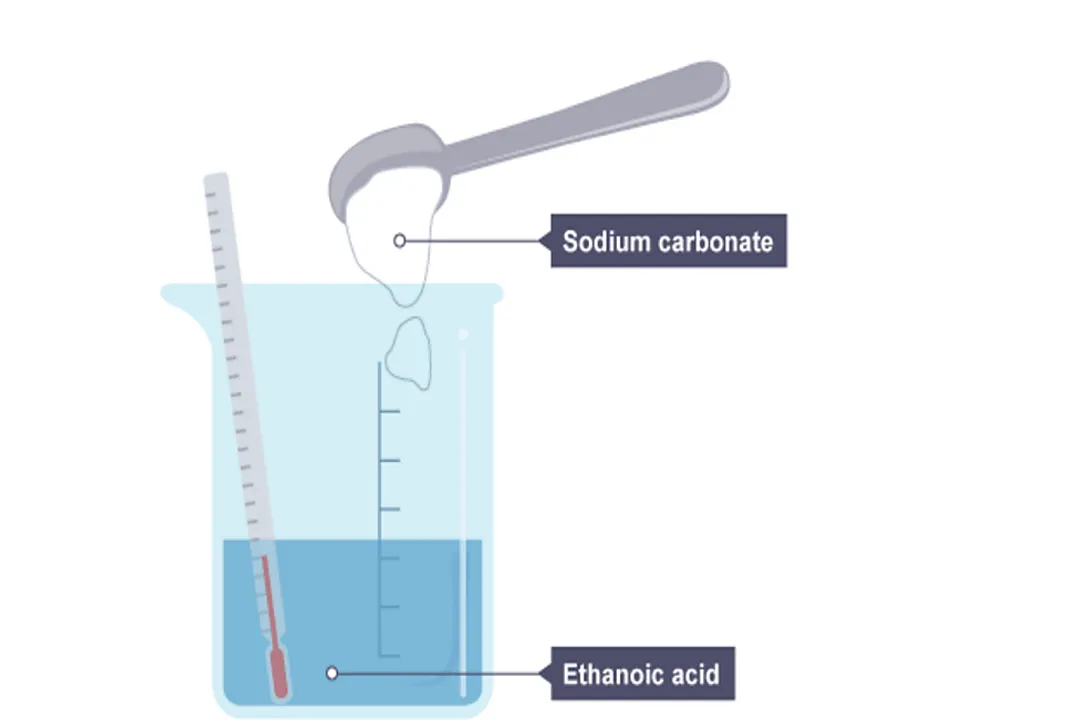
When we talk about chemical reactions, most people immediately think of fire, explosions, or something that produces obvious heat—those are exothermic reactions, releasing energy into the world around them. [3][5] But chemistry is a balanced game, and for every reaction that throws off heat, there is an equal and opposite process: the endothermic reaction, which seems to swallow energy instead. [2][4] These are the reactions that make their immediate environment noticeably cooler, often by drawing thermal energy straight out of whatever they are touching. [2][10]
The simplest way to grasp why a reaction needs to absorb energy is to visualize it as a chemical transaction. Energy, in the form of heat or light, must be supplied just to get the process moving, and for an endothermic reaction, the total energy you put in to rearrange the atoms is greater than the energy you get back when the new structure settles into place. [1][7] It’s a net energy cost, meaning the system takes on an energy deficit, which it covers by cooling down its surroundings. [6]
# Heat Exchange
At the most fundamental level, endothermic reactions are defined by this exchange with their environment. If a chemical process causes the temperature of the water, air, or container holding it to drop, you are observing an endothermic process in action. [2][10] The reaction is essentially running a deficit, and to cover that debt, it borrows heat energy from the surroundings. [1]
This contrasts sharply with the exothermic reactions you might be more familiar with, like burning wood or setting off a sparkler. In an exothermic process, the energy released by forming the new, stable chemical bonds is larger than the energy required to break the initial bonds of the reactants, resulting in a surplus of energy released as heat. [3][5] For endothermic reactions, the opposite is true: the required energy input outweighs the energy output from bond formation. [1][3]
If we think about the energy state of the chemicals themselves, an endothermic reaction means that the products end up holding more potential energy than the starting materials did. That extra stored energy had to come from somewhere, and that ‘somewhere’ is the surrounding environment. [6]
# Bond Energy Balance

To understand why the input energy is greater than the output energy, we have to look closely at the work involved in rearranging atoms. Every chemical reaction involves two main steps at the molecular level: breaking old bonds and forming new ones. [5][6]
Breaking the existing chemical bonds within the reactant molecules always requires an input of energy. [1][5] You have to put work in to pull atoms apart. Conversely, when new, more stable bonds form to create the product molecules, energy is released. [1][5]
For a reaction to be endothermic, the energy necessary to achieve the first step—breaking the reactant bonds—must be significantly higher than the energy that is subsequently gained when the new product bonds are established. [1][3][6] This is the core chemical arithmetic. If you use more energy to pull the pieces apart than you get back when they snap together in their new arrangement, the overall process is endothermic, and you feel the chill. [7]
Imagine this chemical rearrangement as a complex construction project. Breaking down the old building (the reactants) requires a massive demolition charge (high energy input). Building the new structure (the products) is easier and releases some useful energy (heat from bond formation), but the energy released is less than what you spent on the demolition. The net result is that you are left with a construction site that has absorbed heat from the surrounding neighborhood to power the initial blast. [1] This imbalance in the energy required to overcome the initial chemical linkages versus the energy released in forming the final ones dictates whether heat flows into the system or out of it. [7]

# Visible Effects
The macroscopic effects of endothermic reactions can be quite dramatic, ranging from slow biological processes to rapid consumer products. One of the most significant natural examples is photosynthesis. [2][10] Plants must absorb light energy from the sun—a form of energy input—to convert carbon dioxide and water into glucose (a sugar, the product) and oxygen. [2][10] If you consider the light energy as the necessary input, the overall chemical transformation results in storing that energy within the chemical bonds of the sugar molecule, making it a classic endothermic process driven by radiation rather than ambient heat. [2]
In everyday life, the most immediate experience of an endothermic reaction is often found in first aid or cooling applications, such as instant cold packs. [2][4] These packs work by mixing two substances, often a salt like ammonium nitrate with water, inside a sealed pouch. [4][10] The dissolution process itself requires energy to break the ionic bonds in the salt crystal and form new bonds with the water molecules. The energy needed for this separation is significantly higher than the energy released upon hydration, so the pack pulls heat from your skin or the surrounding area, making it feel very cold. [4] A simpler, though less dramatic, example is ice melting; the solid water structure requires an energy input (heat) to break the hydrogen bonds and transition into liquid water. [2][10]
# Enthalpy Concept
Chemists quantify this energy change using a thermodynamic property called enthalpy, symbolized by . [6] The change in enthalpy () is the crucial metric for determining the reaction type. [6]
When the energy absorbed is greater than the energy released, the resulting change in enthalpy () is positive. [6] A positive signifies that the reaction is endothermic, meaning the system has gained energy overall. [6]
While it might seem counterintuitive to intentionally start a reaction that costs energy, there are significant reasons why we seek out these processes. For instance, endothermic reactions are fundamentally about energy storage. [2] Unlike exothermic reactions which release energy immediately, endothermic reactions capture energy (whether light, heat, or electrical) and lock it into new molecular bonds for later use. [10] This is the entire basis of storing solar energy chemically via photosynthesis or the potential energy stored in fuels like gasoline before they are burned (which is the exothermic step that releases the stored energy). Understanding the allows engineers to predict how much cooling capacity a chemical mixture will provide or how much light energy a plant needs to survive. [6]
A simple comparison of the energy requirements might look like this, though remember these are conceptual groupings, not universal laws:
| Reaction Type | Energy to Break Bonds | Energy Released Forming Bonds | Net | Common Outcome |
|---|---|---|---|---|
| Endothermic | High | Lower | Positive | Absorbs Heat (Feels Cold) |
| Exothermic | Lower | High | Negative | Releases Heat (Feels Hot) |
It is important not to confuse the energy input required to start any reaction (the activation energy) with the overall energy balance that defines whether the reaction is endothermic or exothermic. Even an extremely exothermic reaction, like burning propane, needs a tiny initial spark—the activation energy—to overcome the initial barrier and begin the process of bond breaking. [7] However, once that tiny initial push is supplied, the massive energy released from forming the new, very stable and bonds drives the reaction forward, making it decidedly exothermic overall. [3] In the endothermic case, that activation energy is just the first part of a much larger energy bill that the reaction must pay from its surroundings. [7]
Related Questions
#Citations
Can someone explain in very very simple terms why endothermic ...
Exothermic & Endothermic Reactions
Why are some reactions exothermic while others are endothermic?
Endothermic process - Wikipedia
Why are some reactions exothermic and some are endothermic?
7.3: Exothermic and Endothermic Reactions - Chemistry LibreTexts
Endothermic Reactions Explained | The Chemistry Blog
What are exothermic and endothermic reactions? - BBC Bitesize
Endothermic Reaction - Equation, Definition, Examples and Energy ...