If the temperature of the container holding a chemical reaction drops, what is happening at a fundamental level?
Answer
The reaction is running a deficit and borrowing heat energy from the surroundings.
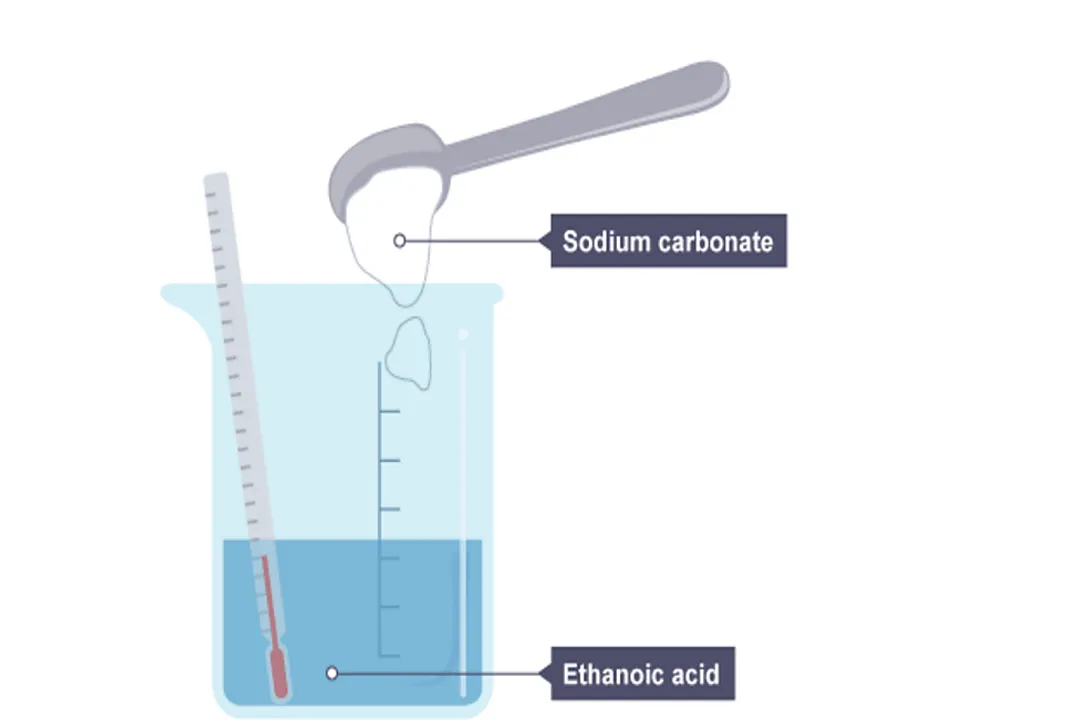
A temperature drop in the environment signifies that the reaction is endothermic, meaning it is consuming thermal energy from whatever it is touching to cover its net energy cost.
Related Questions
What characterizes an endothermic reaction?What does a positive change in enthalpy ($\Delta H$) signify for a chemical process?In the bond energy arithmetic of an endothermic reaction, how do the energy inputs and outputs compare?What is true about the potential energy of the products in an endothermic reaction compared to the starting materials?Which biological process is given as a classic example of an endothermic reaction driven by absorbing radiation?How does the mechanism of an instant cold pack demonstrate an endothermic process?Which statement accurately describes the overall energy balance in an exothermic process?If the temperature of the container holding a chemical reaction drops, what is happening at a fundamental level?What is the primary chemical utility or role of endothermic reactions mentioned in the text?How does activation energy relate to the overall classification of a reaction as endothermic or exothermic?