What is an example of a failed star?
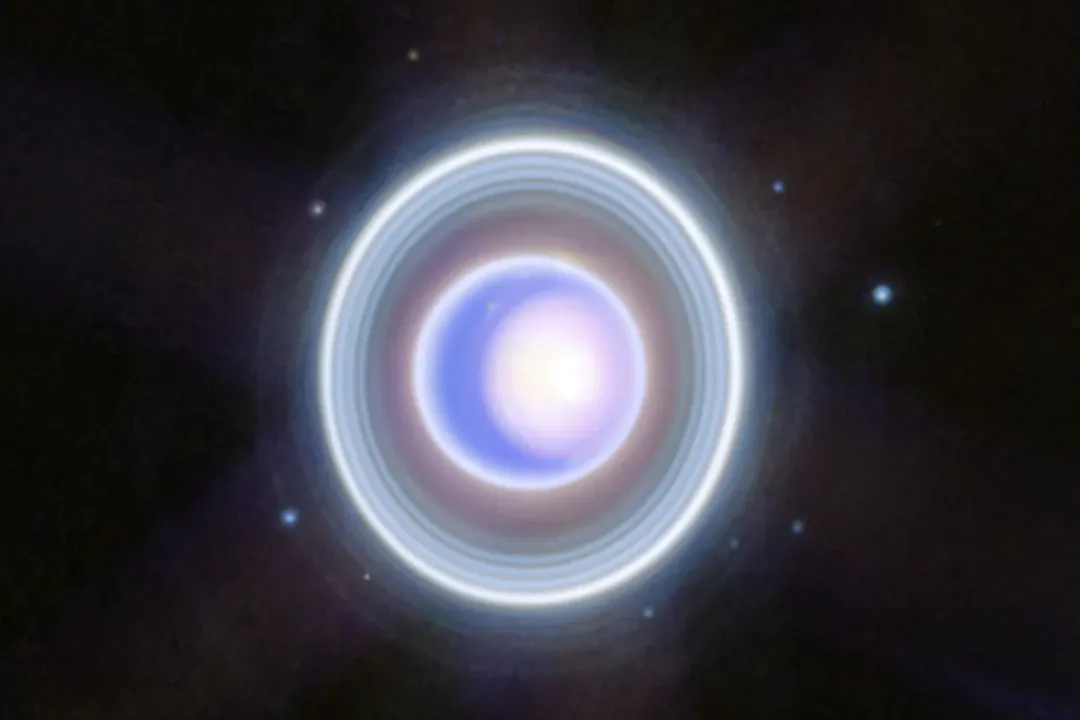
The term "failed star" often conjures images of cosmic disappointment, but in astrophysics, it describes an object that nearly met the strict criteria for stellar life—sustained hydrogen fusion—but ultimately fell short. [8] These celestial bodies exist in a fascinating middle ground, straddling the line between the largest planets and the smallest true stars, occupying a unique niche in the universe's population census. [1][3] Understanding what causes this failure involves looking directly at the fundamental physics governing stellar birth: mass. [3][8]
# Ignition Threshold
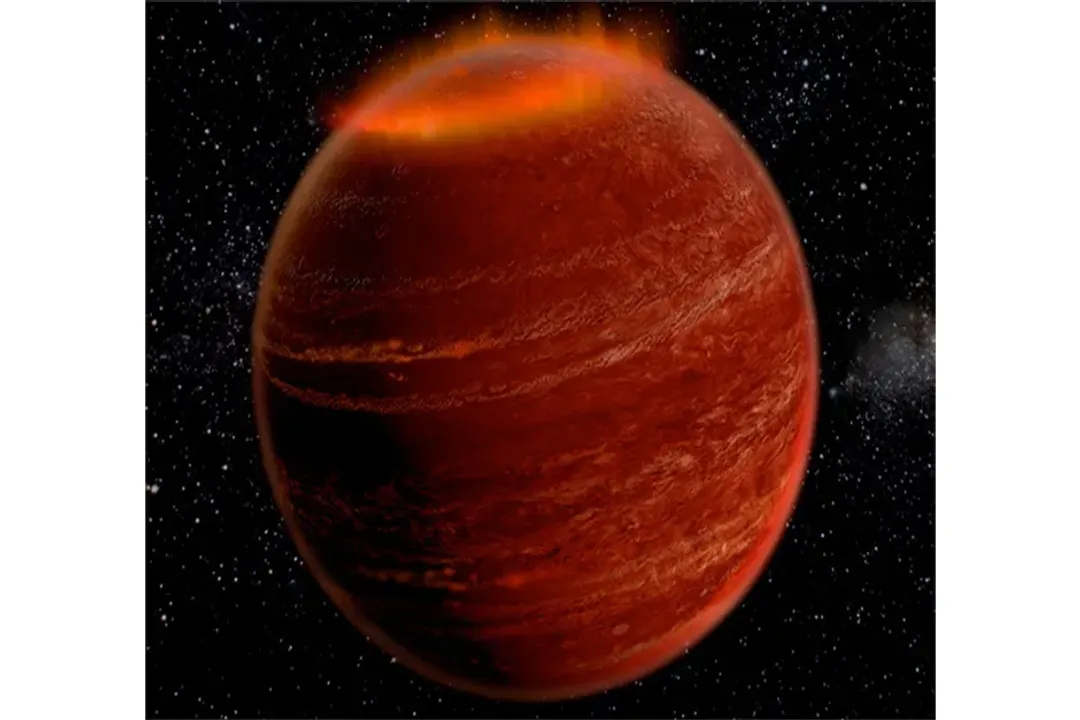
For an object to truly earn the title of a star, it must achieve and maintain nuclear fusion of ordinary hydrogen (protium) in its core. [1][3] This process releases the tremendous energy that makes stars shine for billions of years. [8] However, this feat requires reaching a critical minimum mass, often cited as being about 0.08 times the mass of our Sun (). [3][5] If an object falls below this threshold, gravity, while powerful, is insufficient to generate the necessary core temperature and pressure to force hydrogen nuclei to fuse. [1][3][8] The object might briefly fuse heavier isotopes, like deuterium, but once that fuel is exhausted, the energy production ceases, and the object settles into a long, slow fade. [1]
Contrast this with objects that succeed. A star like our Sun begins its life by gathering vast amounts of gas and dust. As it contracts under its own gravity, the core heats up dramatically. When it reaches about 15 million Kelvin, sustained hydrogen fusion begins, marking its entry onto the main sequence. [3] The distinction is purely one of gravitational squeeze: too little mass, and the core never reaches that ignition temperature; just enough mass, and a star is born. [8]
# Dwarf Objects
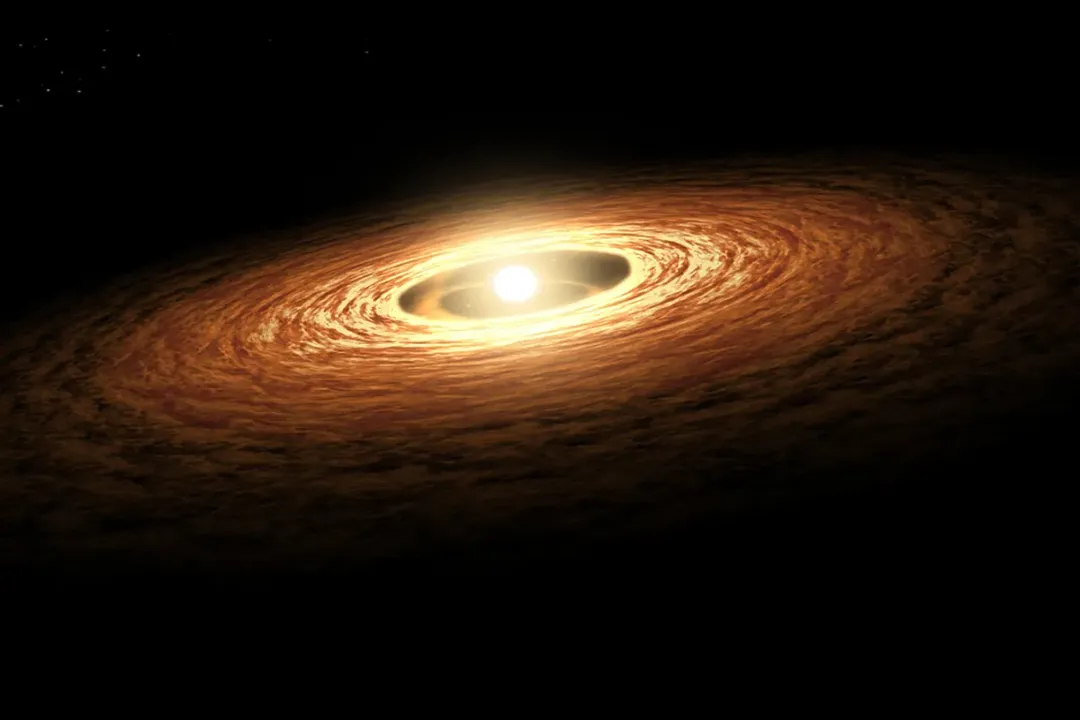
The resulting objects that fail to ignite sustained hydrogen fusion are designated brown dwarfs. [1][7] These are the quintessential "failed stars." Their existence was theorized for decades before the first confirmed observations were made. [1] They are defined by a mass range that sits above the maximum mass for a gas giant planet (roughly 13 times the mass of Jupiter, ) and below the minimum mass for a true star (). [1][3]
A key characteristic differentiating them from true stars is their primary energy source over long timescales. While they might briefly burn the relatively rare isotope deuterium (heavy hydrogen) via deuterium fusion, this process is short-lived compared to the hydrogen-burning lifespan of a main-sequence star. [1] After this brief phase, brown dwarfs cool down and contract slowly, eventually becoming dim, cold stellar remnants. [1] They are not entirely inert, however; their cooling process generates faint heat and infrared radiation, meaning they are not truly "dead" or "black" in the way a cold planet is. [1][7]
An interesting side note in the study of these objects is that the upper mass limit for a brown dwarf is often set by the point where deuterium fusion can occur, while the lower limit is set by the minimum mass required for hydrogen fusion. [1] The transition zone is narrow, leading to intense scientific interest in objects right on the boundary. For instance, an object that is just above the deuterium-burning limit but still below the hydrogen-burning limit is a very rare find, offering a crucial check on evolutionary models. [1] The ability to distinguish a very massive planet from a very low-mass brown dwarf often hinges on detecting this faint deuterium signature. [1]
# Planetary Confusion

When discussing failed stars, the conversation inevitably turns to the giants in our own solar system, particularly Jupiter. [4][5] Jupiter is frequently called a failed star, which generates considerable debate among the public and even within scientific circles. [4][6] This comparison stems from the fact that Jupiter is enormous by planetary standards—it contains more than twice the mass of all other planets in the Solar System combined. [5] However, even at its current mass, Jupiter is far too light to ever achieve hydrogen fusion. [5]
To become a true star, Jupiter would need to be roughly 80 times its current mass—or about 25 times its actual mass to initiate deuterium fusion, which is the lower tier of stellar activity. [5] Because Jupiter lacks this necessary mass, it cannot initiate the nuclear reactions required to be called a star, successful or failed. [5] From a purely physical perspective, Jupiter is classified as a planet because it orbits a star (the Sun) and has not cleared its orbital path of other debris, a defining feature of a true planet. [4]
The confusion arises because the term "failed star" is often used colloquially to describe any object massive enough to be in the planetary/stellar transition zone but which did not become a star. [4] Some might argue that an object that achieves deuterium fusion but not hydrogen fusion—the upper-range brown dwarfs—fit the description best, relegating Jupiter to the category of a mere planet that is simply star-like in size. [5] In fact, some experts suggest that labeling Jupiter a "failed star" is something only a "fool" would do, implying a misunderstanding of the fundamental physics that separates planets from brown dwarfs. [6] This highlights the importance of precise terminology: a brown dwarf failed to become a star, whereas Jupiter never even attempted to meet the stellar criterion. [5]
# Observing Companions
Telescopes, particularly the Hubble Space Telescope, have been instrumental in observing these dim, substellar objects. [2][7] By looking into areas where star formation is actively occurring, astronomers search for companions to known stars that fall into this intermediate mass range. [2] One notable observation involved Hubble capturing an image of one of the smallest stellar companions ever seen, an object whose mass placed it right on the difficult boundary between a very large planet and a low-mass brown dwarf. [2]
These observations are tricky because these objects are intrinsically faint, emitting most of their energy in the infrared spectrum as they slowly cool. [1][7]
For general readers seeking to contextualize these findings, imagine a spectrum of mass:
| Object Class | Typical Mass Range (Jupiter Masses, ) | Key Energy Source |
|---|---|---|
| Planet | < | Reflected light, residual heat |
| Brown Dwarf (Low Mass) | to | Deuterium fusion (briefly) |
| Brown Dwarf (High Mass) | to | Deuterium fusion (more substantial) |
| True Star | > | Sustained Hydrogen Fusion |
This table illustrates that the failure point isn't a single mass but a zone where the object achieves a limited, temporary form of fusion (deuterium) but misses the sustained main-sequence burning required for stellar status. [1][5] The ability to visually confirm the existence of objects in the lower range of the brown dwarf category, through instruments like Hubble, helps solidify our understanding of stellar birth processes. [2]
# Stellar Catastrophe Avoided
While the focus is often on objects too small to ignite, there is another way a star can be considered a "failure"—when it fails to complete its predicted life cycle, specifically by not exploding when expected. [9] Massive stars, those significantly larger than the Sun, are slated to end their lives in spectacular fashion as Type II supernovae. [9] This requires the star to accumulate enough mass—typically exceeding about eight times the Sun's mass—to fuse elements all the way up to iron in its core. [3][9]
When such a massive star runs out of fuel and its core collapses, the resulting shockwave creates a supernova explosion, scattering heavy elements across the galaxy. [9] However, if a star is massive enough to begin this advanced fusion process but perhaps just shy of the critical mass needed for a core-collapse supernova, it might "fail" in its explosive destiny. [9] The Large Binocular Telescope Observatory has discussed a case where a star was observed that could not become a supernova, suggesting it fell into a mass gap where it was too big to just quietly fade away like a Sun-like star, but too small to explode dramatically. [9]
This scenario provides a valuable, albeit somber, example of stellar failure from the opposite end of the mass spectrum. A star that begins the process of consuming its nuclear life rapidly, only to stall before its grand finale, presents a different kind of astronomical puzzle than the small, cool brown dwarfs. [9] It suggests a fine-tuning in stellar evolution where a small difference in initial mass dictates the entire spectacular nature of the death, turning a potential supernova into a less dramatic, though still complex, end-of-life phase. [9]
The concept of a failed star, therefore, is not singular. It is a broad category encompassing substellar objects that lack the mass for true stellar ignition (brown dwarfs) and massive stars that may lack the mass for the explosive end-state expected of their larger brethren. [1][9] In both cases, the underlying principle remains the same: the laws of physics, dictated by mass, set an uncompromising pass/fail grade for stellar life and death. [3][8] Any object found in these intermediate zones offers astronomers a chance to test the very boundaries of what constitutes a star, deepening our knowledge of how cosmic structures evolve from collapsing clouds of gas. [2]
Related Questions
#Citations
Brown dwarf - Wikipedia
Planet or failed star? One of smallest stellar companions seen ... - ESA
Failed Stars: Brown Dwarfs | ASTRO 801
Which planet is called a failed star? - Quora
No, Jupiter isn't a failed star, despite what you may have heard ...
I'll explain why only a fool can say that Jupiter is a "failed star" - Reddit
Failing Stars - NASA Science
Why do some stars fail to ignite? | Live Science
The big star that couldn't become a supernova