What is the name for a black cloud?

The appearance of a truly black cloud often prompts immediate inquiry, whether driven by curiosity about the sky or a sense of impending change in the weather. In everyday language, the term "black cloud" serves as a descriptor for any cloud mass that appears exceptionally dark, often signaling heavy precipitation or a significant storm system. [3][9] However, meteorology offers more precise nomenclature, and even astronomy has its own interpretation of the phrase. [6] The name given to this phenomenon depends entirely on the context—is it overhead, far above, or perhaps even in a distant galaxy?
# Cloud Coloration
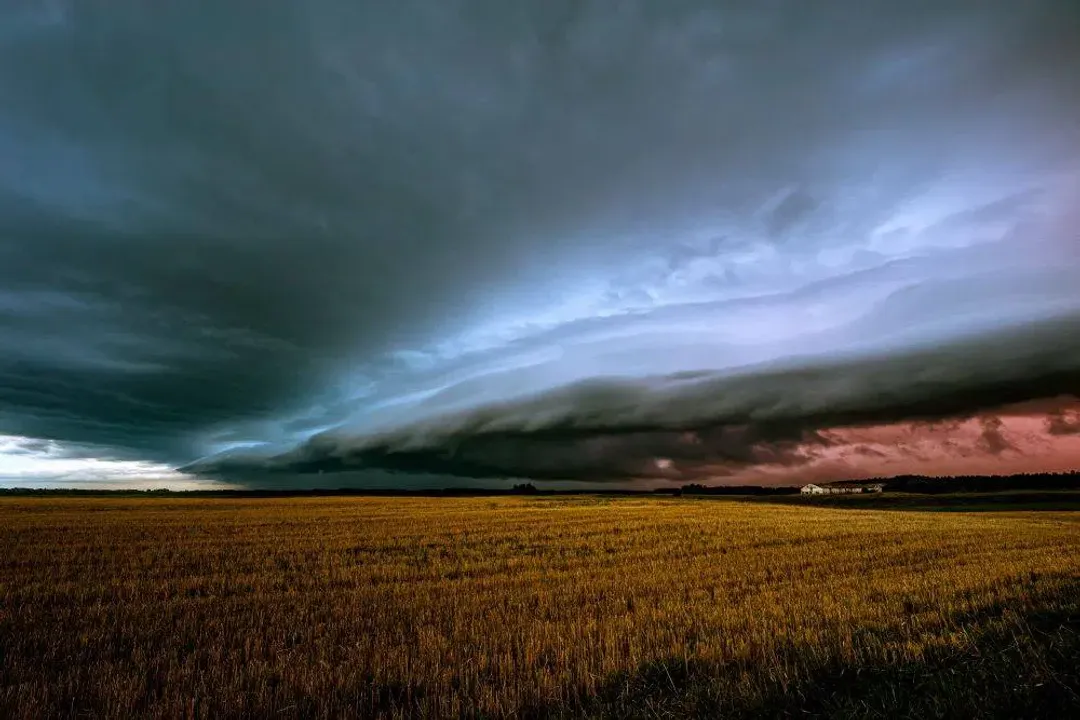
The perception of a cloud as "black" is primarily an optical effect related to how sunlight interacts with the water droplets or ice crystals that constitute it. [8] Clouds are white when sunlight is scattered uniformly by their small components. [4] As a cloud thickens or increases in depth, less light can penetrate all the way through to the viewer below. [8]
When a cloud base appears dark, it signifies a substantial vertical extent or an extremely high concentration of liquid water, preventing sunlight from passing through effectively. [4][8] This opacity is what creates the stark, shadowy appearance we call a "black cloud." For example, a cloud layer close to the ground but still thick, like a low-lying stratus deck, can look ominously dark from underneath if it is dense enough, even if it isn't actively producing severe weather. [4] The thickness of the cloud dictates the darkness, not necessarily the inherent color of the water itself. [8]
# Storm Cloud Names
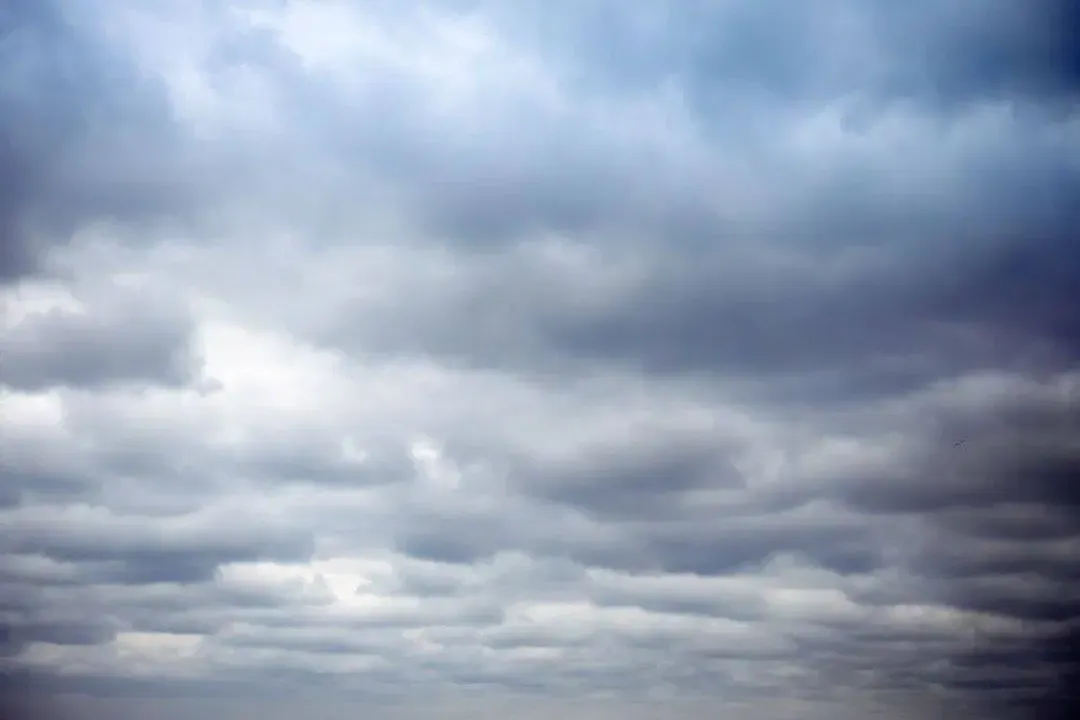
When looking for a specific meteorological term for a black cloud that heralds a storm, several names commonly surface in discussions about severe weather. These dark formations are typically associated with clouds that are either deep or known for producing heavy rain or hail. [3][9]
One of the most common culprits for an intensely dark, threatening sky is the cumulonimbus cloud. [4] These are the classic thunderstorm clouds, characterized by immense vertical development that often towers high into the atmosphere. [4][8] Because of their sheer size and the volume of moisture they hold, their bases are frequently a deep, bruised grey or nearly black when viewed from the ground, especially when they are actively producing heavy rain or hail. [3]
Another term frequently associated with dark, rain-bearing clouds is nimbus, which is Latin for "rain cloud". [9] When combined with other prefixes, it defines the primary rain producers:
- Nimbostratus: These clouds appear as dark, gray, featureless sheets that usually bring continuous, steady precipitation over a wide area. [4][8] Their darkness comes from their consistent depth and low base.
- Cumulonimbus: As mentioned, these are the towering giants responsible for intense, showery precipitation, thunder, and lightning. [4]
While specific synonyms found for "black cloud" include terms like dark cloud, storm cloud, nimbus, and cumulonimbus, [1][5] it is important to recognize that dark cloud is often used interchangeably with black cloud in non-scientific contexts. [9]
It’s interesting to note how perception shapes terminology. For a viewer experiencing a sudden, intense downpour, the cloud overhead is undeniably a storm cloud. Yet, if you were viewing that same cloud from an airplane above it, you would likely see a brilliant white top catching the sun, highlighting that the "blackness" is an artifact of the viewing angle and the thickness of the moisture column. [8] Observing a sky dominated by a vast, low-hanging, uniform darkness—a thick layer of nimbostratus—might evoke a different feeling than the turbulent, towering darkness of a developing cumulonimbus. Both qualify visually, but their associated weather events differ significantly. [4]

# Space Clouds

The concept of a "black cloud" is not exclusive to Earth's atmosphere. Astronomers use the term to describe entirely different phenomena: dark nebulae. [6] These are vast, cold, dense clouds of interstellar dust and gas scattered throughout the Milky Way galaxy and other galaxies. [6]
These cosmic "black clouds" are visible because they block the light from the stars or luminous gas clouds located behind them. [6] Unlike atmospheric clouds, which are composed of water, these interstellar clouds consist primarily of hydrogen, helium, and trace amounts of heavier elements condensed into microscopic dust grains. [6]
A notable example of such an object is the Great Dark Nebula in Orion, often called the Horsehead Nebula, though the Horsehead itself is a small feature within the much larger Rho Ophiuchi cloud complex. [6] The key comparison here is the mechanism of visual obstruction: Earth's clouds block sunlight from above, while space clouds block starlight from behind. Both result in a dark area against a brighter background, but the scale and composition are radically different. [6]
# Metaphorical Usage
Beyond meteorology and astrophysics, the phrase "black cloud" frequently appears in language as a metaphor, often symbolizing impending trouble, misfortune, or a persistent negative situation. [2] This figurative use mirrors the natural anxiety associated with the dark, heavy storm clouds seen in weather—the anticipation of something unpleasant arriving. [3]
One analysis noted that the global circulation of discussion surrounding certain large-scale negative issues, sometimes described as a "black cloud circling the globe," highlights how deeply ingrained this association between atmospheric darkness and societal concern is. [2] In this context, the "black cloud" is not an object but a state of prolonged worry or difficulty that seems to follow or hover over an area or situation. [2]
When trying to name this phenomenon in a non-weather context, synonyms might pivot toward words implying gloom or foreboding, which aligns with the general mood evoked by a low, dark ceiling of stratus clouds. [1][5]
# Identifying Dark Formations
Distinguishing between various dark clouds involves paying close attention to their texture, movement, and associated phenomena. If you are observing a very dark sky, consider these observational points:
- Uniformity and Spread: Is the darkness spread out in a vast, flat layer that seems to cover everything evenly? This suggests a mature nimbostratus deck, pointing toward prolonged, steady rain. [4]
- Vertical Structure: Does the darkness exhibit towering structures, perhaps with an anvil shape, and are there accompanying rumbles of thunder? This strongly indicates a cumulonimbus system, signifying intense, localized weather. [4]
- Wispy Edges: If the dark areas appear somewhat ragged or wispy, especially at higher altitudes, this might relate to high-altitude ice crystals or perhaps even fallstreaks—precipitation falling from a higher cloud that evaporates before reaching the ground, creating dark, stretched-out features underneath a brighter canopy. [7]
Consider a situation where a summer afternoon rapidly darkens. If the transition is swift, marked by rapidly building, towering cloud masses, the name for that darkening mass is almost certainly cumulonimbus. [3][4] If the change is gradual, with the light simply fading as a continuous sheet lowers and thickens throughout the morning, the identification leans toward nimbostratus. [4] The difference in atmospheric dynamics driving these two cloud types means that although they both appear "black," the weather they deliver is fundamentally different in character.
An interesting observation derived from general cloud study is how quickly local conditions can create the illusion of a single "black cloud." Often, what appears as one massive, dark object moving overhead is actually the shadow cast by a large, higher cloud layer onto a lower, thinner, but still dense layer. Because the lower layer is illuminated only by diffuse light that has managed to pass through the upper layer, it appears much darker than it would if standing alone under direct sunlight. This phenomenon means that the name of the visible cloud (e.g., altostratus or stratus) might differ from the description we give it ("black cloud"), which is really a description of the shadow it casts relative to the observer. [8]
# Synonyms Summary Table
To clearly present the vocabulary associated with this dark atmospheric condition, a summary of common and technical terms is useful. While a cloud is rarely just black, these terms capture the visual impression or the scientific reality:
| Context | Term/Name | Basis for Appearance | Citation |
|---|---|---|---|
| General Description | Dark Cloud | High water/ice content blocking light | [9] |
| General Description | Storm Cloud | Association with precipitation/thunder | [1][5] |
| Meteorological (Rain) | Nimbus | General term for a rain-bearing cloud | [9] |
| Meteorological (Thunderstorm) | Cumulonimbus | Immense vertical extent | [4] |
| Meteorological (Steady Rain) | Nimbostratus | Thick, uniform, low-to-mid level layer | [4] |
| Astronomical | Dark Nebula | Interstellar dust obscuring background light | [6] |
In summary, there is no single, universal name for a "black cloud." The most appropriate designation requires context. If the darkness signals the approach of thunder and heavy showers, the structure is likely a cumulonimbus. [4] If it indicates a steady soaking rain, it's nimbostratus. [4] If the term is used metaphorically to describe misfortune, it simply stands as a symbol of gloom. [2] And if one is peering through a telescope at deep space, the blackness is a cosmic dust cloud hiding distant light. [6] The next time the sky darkens dramatically, taking a moment to assess the shape and texture can help translate the everyday term "black cloud" into a more precise scientific classification.
Related Questions
#Citations
What is another word for "black cloud"? - WordHippo
Um, why is there a gigantic black cloud circling the globe? - The Hill
What is the black cloud that appears before a storm? Does it always ...
BLACK CLOUD Synonyms: 53 Similar Words & Phrases
Ten Basic Clouds | National Oceanic and Atmospheric Administration
What are the dark clouds in space? - Cool Cosmos - Caltech
Can anyone identify these black wispy clouds I found? - Reddit
9 Types of Clouds and Their Differences - Climavision
What are dark clouds called? - Homework.Study.com