Who is responsible for cloud seeding?

The responsibility for cloud seeding is not held by a single entity; rather, it is distributed across a complex web involving state governments, specialized scientific institutions, water resource agencies, and private operational contractors. Understanding who manages these atmospheric efforts requires peeling back layers of legislation, funding mechanisms, and local operational needs across different regions in the United States. [7][9]
# Legislative Authority
At the highest level, responsibility often begins with state-level legislative action or mandate. This is particularly evident in regions facing chronic water shortages where weather modification has become an accepted, albeit sometimes controversial, tool for water supply enhancement. States like Colorado and Utah have established formal programs that grant authority to specific bodies to oversee and fund these activities. [7][9]
In Colorado, for instance, the Colorado Water Conservation Board (CWCB) is tasked with managing the state's weather modification program. [7] This body functions under the state's broad legislative framework for water supply management. The CWCB's responsibility involves administering funds, approving projects, and ensuring compliance with state guidelines. [7] This structure implies that the state government assumes ultimate political and regulatory responsibility for authorizing the practice within its borders.
Utah follows a similar, but perhaps more direct, model. The Utah Division of Water Resources (DWRE) administers the state’s cloud seeding program, operating under state statute. [9] This agency is responsible for managing contracts with operational cloud seeding firms and overseeing the state's investment in these projects, which aims to augment the snowpack in key mountain ranges. [9]
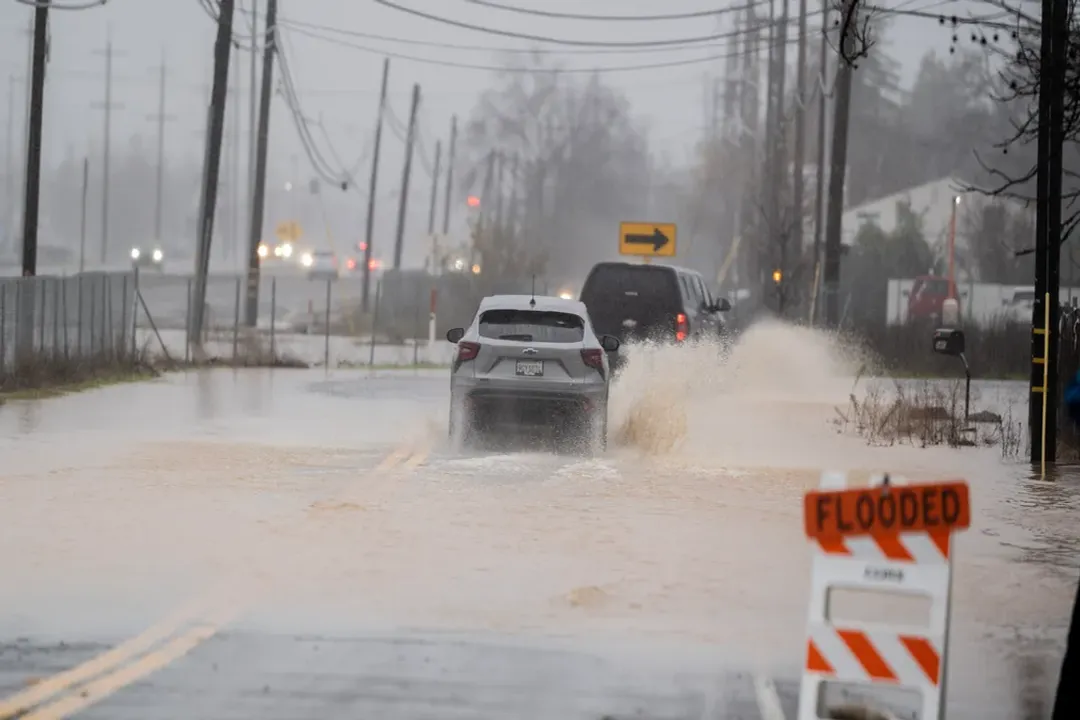
Contrast this with the situation in California, where activity appears more decentralized, often involving local water districts or specific watershed needs, as highlighted by recent flood watch discussions. [10] While historical weather modification attempts have occurred in California, the sources suggest a less centralized, mandatory state structure compared to the programmatic approaches seen in the Mountain West. [10]
A governmental accountability perspective is provided by reports like those from the Government Accountability Office (GAO). While a specific GAO report may focus on general government oversight or budget analysis related to weather modification, it signals that federal or high-level state auditing bodies are interested in the management and effectiveness of these programs, thus holding the funding/mandating agencies accountable for taxpayer dollars. [4] The fact that the federal government may issue reports on weather modification projects suggests a role in oversight or historical documentation, even if direct operational responsibility rests with states or local entities. [3]
# Operational Execution
While the state government creates the mandate and allocates the budget, the physical act of seeding clouds—the hands-on technical responsibility—is typically delegated to specialized scientific or private entities. [1][2] This division separates the political decision-making from the scientific execution.
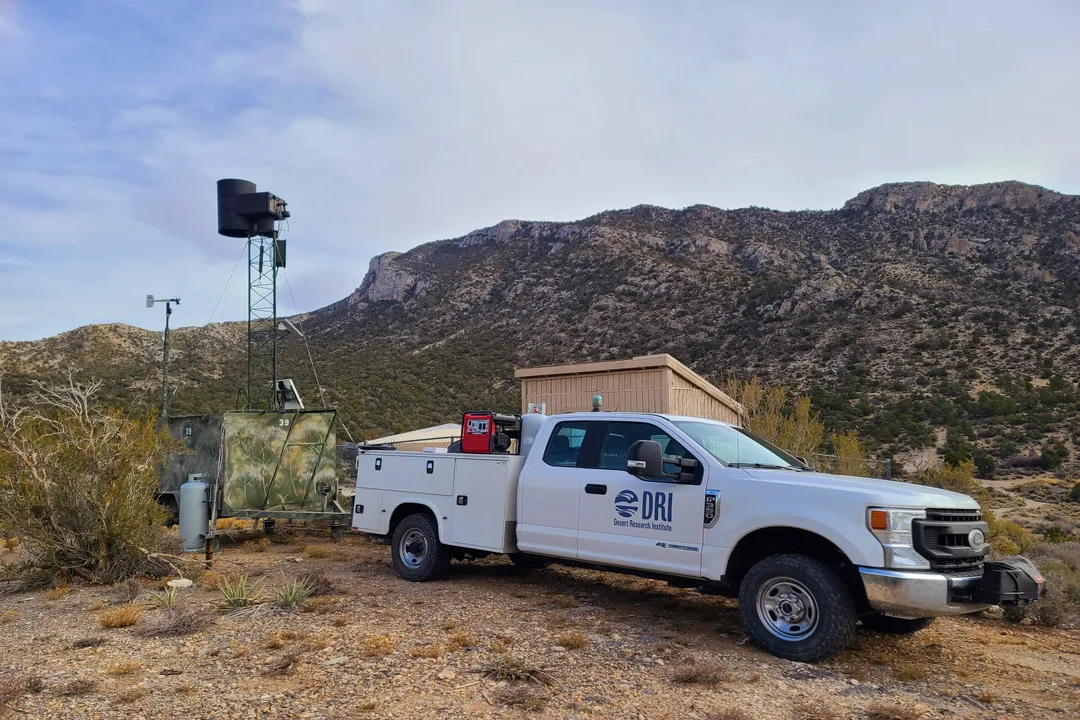
The Desert Research Institute (DRI) stands out as a key scientific player, particularly in the Western U.S. DRI has been actively involved in cloud seeding programs for decades, conducting research and operations, often for state or regional clients. [2] Their responsibility is scientific validation, operational expertise, and execution of the seeding efforts. This arrangement allows state agencies to fulfill their legislative duties without needing to build and maintain highly specialized meteorological and atmospheric chemistry departments internally. [2] DRI, therefore, acts as an essential, high-expertise contractor and research partner.
It is helpful to think of this in terms of a local water manager. If a water manager in a specific Colorado river basin needs more snowpack, they don't usually hire a pilot and buy silver iodide flares; they contract with an organization like DRI or another private firm, operating under the CWCB's general approval. [7] This separation of duties—legislative mandate versus operational performance—is fundamental to understanding program ownership.

# Program Funding Sources

Responsibility also ties directly to funding. Who pays for the silver iodide, the aircraft time, or the ground generators? The answer determines a layer of accountability.
In Utah, the DWRE uses state funds to manage contracts with operational firms. [9] This is taxpayer-funded augmentation managed by the state water agency. [9] Colorado’s program, managed by the CWCB, also involves funding mechanisms, sometimes including local contributions or bonding, to support projects authorized under state law. [7]
For localized programs, responsibility might fall to a specific water conservancy district or an agricultural entity that directly benefits from the increased runoff. In these cases, the local entity is responsible for securing the funds, whether through their own budget, fees assessed to beneficiaries, or by contracting with a vendor. A general FAQ source notes that the expense for cloud seeding operations can be borne by various groups, sometimes including private individuals or groups interested in increasing precipitation. [5] This points to a scenario where responsibility is assumed voluntarily by stakeholders who desire the outcome, distinct from mandatory state programs.
# The Private Sector Role
Many actual cloud seeding operations are carried out by private companies specializing in weather modification technology. These companies are responsible for the logistics: aircraft acquisition, precise delivery of the seeding agent (like silver iodide or dry ice), and adherence to the operational plans approved by the overseeing agency. [1]
The responsibility of these contractors is contractual. They are responsible for doing the work as defined in the contract with the state agency or local district, but they are not responsible for deciding if the seeding should happen or measuring the ultimate efficacy on a macro-level—that remains with the public agency or research institution. [2] They must operate within the legal and environmental guidelines established by the authorizing body. [5]
This reliance on external experts means that oversight bodies must possess the expertise to adequately review contractor performance. The GAO’s interest in weather modification projects often touches upon whether the government entities are effectively managing these contracts and achieving demonstrable results for the public investment. [4]
# Research and Information Governance
Beyond the immediate action of seeding, there is responsibility for the knowledge base surrounding the practice. Who tracks its history, documents its use, and maintains public knowledge?
Organizations dedicated to atmospheric science and weather modification standards share responsibility for the technical credibility of the field. The National Oceanic and Atmospheric Administration (NOAA) maintains records and reports on weather modification projects, indicating a federal agency’s responsibility for documentation and historical archiving related to these activities. [3] This federal interest provides a baseline of authoritative information that state and local programs can draw upon.
Furthermore, entities like the North American Interstate Weather Modification Council (NAWMC) serve as information clearinghouses, addressing common questions about the science and logistics. [5] While perhaps not directly responsible for operational seeding, these organizations bear the responsibility of maintaining public trust by providing factual, accessible information and addressing misconceptions about the practice. [5]
Considering the local perspective, one interesting dynamic arises when state-level programs are in place: the responsibility for local buy-in often falls to the operational contractor or the contracting local water district. A successful program requires community acceptance. If a farmer in a seeded watershed believes the effort is diverting moisture away from their property (a common, though scientifically debated, concern), the local entity must take responsibility for outreach and education, even if the primary funding mechanism is statewide. This grassroots engagement is often an unwritten but critical aspect of sustained responsibility that rests closer to the ground level than the state capital. [8]
# Analyzing the Responsibility Model
The prevailing model for cloud seeding responsibility in the Western US is a Stewardship Model rather than a direct operational model by the primary governmental authority. The state (e.g., Utah or Colorado) acts as the steward of the water resource, creating the program and funding it. [7][9] They delegate the execution to expert scientific bodies (like DRI) or specialized private operators. [2]
This delegation creates an inherent diffusion of accountability. If a program fails to deliver statistically significant results, determining where the failure lies can be difficult: Was the authorizing legislation too vague? Was the funding inadequate? Was the contractor’s delivery flawed? Or was the atmospheric condition simply not conducive to seeding?. [5] The GAO reports serve as a check on this diffusion, attempting to clarify if the managing agency appropriately oversaw the contract. [4]
For example, compare the long-term, research-heavy involvement of an institution like DRI, which often focuses on measurement and scientific rigor across multiple projects, with a local water district managing a single watershed augmentation program. DRI's responsibility centers on how the seeding is done and measuring the effect based on established protocols. [2] The local district's responsibility centers on securing the necessary water rights permissions and ensuring the contracted work is completed to spec within their boundaries. [9] Both are responsible, but for different phases of the overall effort.
Another way to look at the chain of command involves the sheer technical complexity. Seeding requires knowledge of cloud microphysics, advanced meteorological forecasting, specialized aircraft operation, and compliance with environmental regulations regarding silver iodide dispersal. [1] Very few local water boards possess this expertise in-house. Therefore, the transfer of responsibility to a proven scientific contractor is less about shirking duty and more about recognizing the specialized nature of the task. A local municipality, for instance, is responsible for its water pipes and treatment plants; similarly, it delegates the specialized task of atmospheric enhancement to those equipped for it. [5]

# Operational Differences: Research vs. Routine
The definition of responsibility shifts depending on whether the project is primarily a research effort or a routine water supply augmentation effort.
When a program is initiated as a study, such as those documented in NOAA reports or historical projects, the responsibility often lies heavily with the funding research institution (sometimes federal, sometimes university-based) to design the experiment, control variables, and publish transparent results. [3] The goal here is knowledge acquisition, and responsibility lies in scientific integrity.
When the program shifts to routine augmentation, as is common in Utah and Colorado for snowpack enhancement, the responsibility transitions toward demonstrable, ongoing resource contribution. [7][9] Here, the operational contractor’s performance becomes paramount, as the local users (cities, farmers) are expecting a return on investment through sustained water flow increases. The state agency then assumes the political responsibility for justifying the continued expenditure to its legislature and constituents. [9]
To illustrate this, imagine a scenario where a region relies on snowpack augmentation to meet mandated river flow targets. The CWCB in Colorado is responsible for ensuring the program meets the target threshold defined by state policy. [7] If the river flow is low, the public and perhaps the legislature will look to the CWCB. The CWCB will, in turn, examine the contractor's operational logs and the independent verifiers' reports on efficacy. [4] The contractor is responsible for the delivery of the silver iodide; the CWCB is responsible for the outcome of the public investment. The difference between delivering the service and ensuring the service meets its public goal is the crucial separation in responsibility.
# Environmental and Ethical Stewardship
Finally, responsibility extends into the environmental and ethical realm. Any entity authorizing cloud seeding must address concerns about potential negative impacts, such as the possibility of "stealing" rain from downwind areas or the environmental impact of dispersing silver iodide. [1][5]
The oversight agencies (state water divisions) hold the responsibility for ensuring that seeding activities comply with environmental laws and that the concentration of silver iodide remains well below established safety thresholds. [5] This involves rigorous permitting and monitoring protocols, which are then often executed by the contractors under strict guidelines. [2] The acceptance of cloud seeding by communities often hinges on their trust that these environmental responsibilities are being taken seriously by the authorizing state agencies. While a pilot might physically disperse the agent, the legal and ethical responsibility for its environmental impact ultimately traces back to the governmental body that permitted and funded the operation. [10]
In summary, responsibility for cloud seeding is highly layered: Legislatures create the authority; State Water Boards manage the mandate, funds, and contracts; Research Institutes provide the scientific backbone and operational expertise; and Private Contractors perform the physical seeding under contract. Every entity in this chain shares a piece of the responsibility for the practice's success, legality, and public acceptance.[1][2][4][5][7][9]
#Videos
Cloud Seeding EXPOSED: Who Controls the Rain Now? - YouTube
Related Questions
#Citations
Cloud seeding - Wikipedia
Cloud Seeding Program - DRI - Desert Research Institute
Weather and Climate Collections: Weather Modification Project ...
Cloud Seeding Technology: Assessing Effectiveness and Other ...
Frequently Asked Questions – North American Weather Modification ...
Cloud Seeding EXPOSED: Who Controls the Rain Now? - YouTube
Weather Modification Program | DNR CWCB - Colorado.gov
This is a great write-up about cloud seeding by ABC13-Travis ...
Cloud Seeding - Utah Division of Water Resources
What is cloud seeding? Here's what's really fueling California floods