How much does NASA pay astrochemistry?
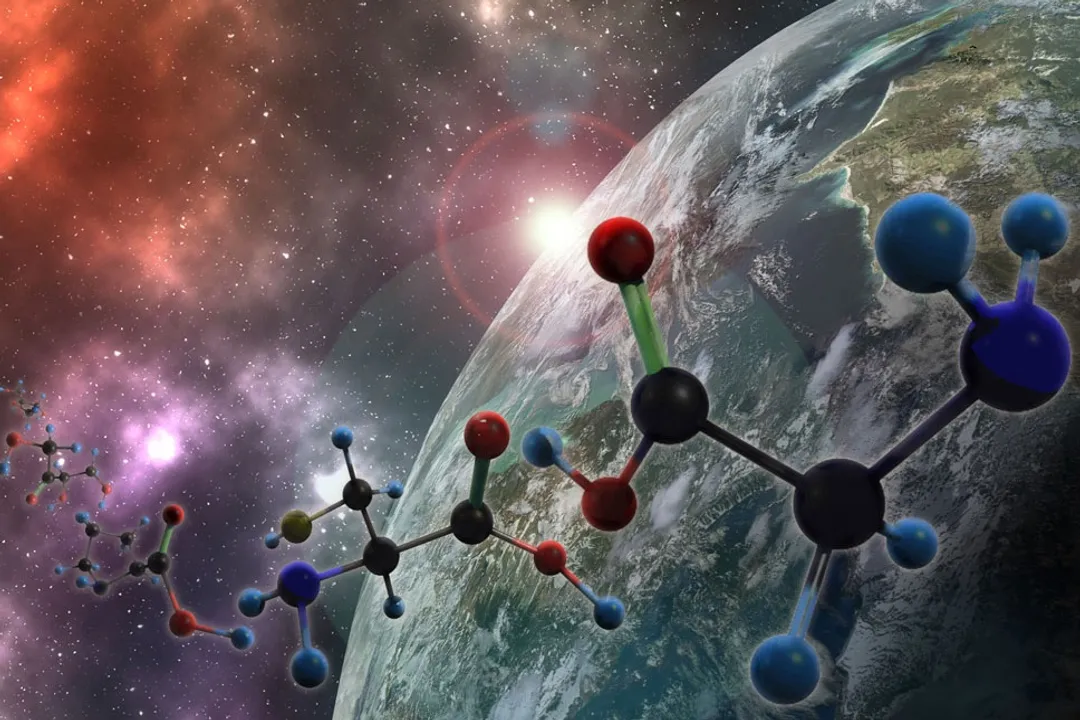
Figuring out exactly what NASA pays an astrochemist involves navigating federal pay scales, private contractor rates, and the wide spectrum of experience levels within the agency’s vast scientific enterprise. Unlike a direct posting for a specific civil service job, which lists a salary range based on the General Schedule (GS) system, data aggregators often provide broader estimates that mix various funding sources and job types. [1][3] Astrochemistry, the study of the formation, evolution, and distribution of molecules in the universe, sits at the intersection of chemistry, physics, and astronomy, meaning salaries can align with physicist, chemist, or astronomer pay bands. [6][9]
# Field Context
Astrochemistry research at NASA is supported across various centers and branches, focusing on areas like planetary atmospheres, interstellar medium analysis, and the origins of life. [10] When examining pay, it’s critical to understand that not every person working on astrochemistry problems for NASA is a direct federal employee. Many brilliant minds contribute through university grants, contractor positions, or fellowships managed under NASA umbrellas. [8] This distinction significantly impacts the take-home pay and benefits structure. [4]
The official role classification often dictates the pay structure. A researcher with a Ph.D. working directly for the agency on a full-time, permanent basis will typically fall under the Civil Service structure, which uses the GS pay scale for salaries up to GS-15, with senior scientific positions often classified under the Scientific and Professional (ST) rank or the Executive Schedule (ES). [9] The specific GS level—for example, GS-12, GS-13, or GS-14—depends entirely on the candidate's education, specialized experience, and the criticality of the position. [4] A recent Ph.D. graduate might start at a lower level, while a seasoned scientist leading a large project could be at the top of the GS scale or higher.
# Pay Estimates
Third-party salary aggregators attempt to quantify the market rate for an "astrochemist," though these figures often pool data from various employers, not just NASA. [1][3] For instance, one source indicated that the average salary for an astrochemist might fall around 62,000 to 120,000. [1] These figures serve as a helpful general benchmark for what specialized chemical expertise commands in the broader aerospace and research sectors.
To establish a more official baseline, we can look at the pay scales for closely related federal jobs. The Bureau of Labor Statistics (BLS) groups many of these scientists under Physicists and Astronomers. [9] According to BLS data for this broad category, the median annual wage in the United States was approximately $132,500 in May 2022. [9] This median suggests that highly specialized, mission-critical roles within federal agencies like NASA are likely to pay at or above this median mark, especially in high-cost-of-living areas where major centers like Goddard Space Flight Center are located.
We can construct a simple comparison table using these various data points to illustrate the general compensation environment:
| Data Source/Role Type | Reported Salary Metric | Context |
|---|---|---|
| General Astrochemist Average | ~$104,000 | Aggregated market data [3] |
| Competitive NASA Astrochemist | ~$120,000 | ZipRecruiter estimate [1] |
| BLS Median (Physicists/Astronomers) | $132,500 | Government/Research Baseline (2022) [9] |
| NASA Astrophysicist (Monthly) | $7,500 – $10,000+ | Quora range (implying 120k+ annually) [7] |
It is interesting to note that the estimated general average for an astrochemist aligns closely with the lower end of the typical earnings for an astrophysicist at NASA, suggesting that the chemist track might be compensated slightly lower than the physicist track, or perhaps the astrochemistry data is weighted by non-Ph.D. holders or less senior roles. [3][7]

# Related Roles
A common point of confusion arises when comparing the pay of an astrochemist to a NASA astrophysicist. While their research subjects overlap significantly—both study the cosmos—their primary methodologies differ, which can reflect in their pay grades. [6] An astrophysicist often focuses more heavily on observational data, instrumentation, or theoretical modeling of large-scale physical phenomena. [9] An astrochemist, conversely, concentrates on the molecular processes, spectroscopy, and the chemistry of gases and solids in space. [6]
One source reviewing monthly income for a NASA astrophysicist suggested a range spanning from about 10,000 per month. [7] Converting the higher end of that range to an annual salary gives us figures exceeding $120,000. [7] This range appears competitive with, or slightly higher than, the general market data for astrochemists specifically. [3] This differential might stem from the higher historical pay ceilings associated with the "Astrophysics" directorates versus some "Chemistry" or "Earth Science" divisions within the broader agency structure, though both require comparable levels of advanced education and specialization.
# Total Compensation
Focusing solely on the base salary misses a significant portion of the value proposition when working for a federal employer like NASA. [4] Civil service positions come with robust benefits packages that substantially increase the total compensation value. These benefits typically include federal employee retirement plans, the Thrift Savings Plan (a 401(k) equivalent), generous paid vacation and sick leave that accrues quickly, and comprehensive health insurance options. [4]
For a researcher making a calculated career move, the security and non-salary benefits offered by a stable government position often outweigh a slightly higher, but potentially less stable, salary offer from a private research firm or a university reliant on competitive short-term grants. [2] Consider a mid-level scientist earning a GS-13 salary; while their base pay might be X dollars, the value of their retirement matching, guaranteed annual raises tied to the cost of living adjustments (COLA), and healthcare subsidies can add an effective 30 to 40 percent to their total guaranteed annual compensation package compared to an industry job that only offers a standard 401(k) match. [4] This stability provides an excellent foundation for long-term financial planning that some high-paying private sector roles simply cannot guarantee.
# Career Tracks
The compensation structure is also heavily influenced by how one is employed at a NASA center. The most direct path is the Civil Service role, where pay is transparently governed by the GS scale, which sets specific steps within a pay grade based on tenure and performance. [4] For example, a GS-14 step 5 salary in the Washington D.C. area—where many high-level positions are located—will be significantly higher than a GS-14 step 5 in a lower cost-of-living area, even if both are performing the same core astrochemistry research at centers like Ames Research Center. [10]
A second major track involves working as a contractor for companies like Booz Allen Hamilton, Leidos, or smaller specialized firms that hold contracts to support NASA missions and research teams. [2] Contractors are not federal employees, so their salaries are determined by the competitive bids their employers submit to NASA. [2] These contracts can sometimes offer higher starting salaries than the entry-level GS grades to attract specialized talent quickly, but the benefits package (retirement matching, vacation time) is entirely dependent on the contractor’s internal policies, which are often less generous than the federal system. [2] Understanding which track you are pursuing is perhaps the most crucial step in accurately estimating your future NASA-affiliated income. If one is aiming for research leadership, transitioning from a contractor role or a postdoctoral fellowship directly into a GS-13 or GS-14 civil servant position is a very common progression designed to lock in that long-term federal benefit structure. [8]
Related Questions
#Citations
The 6 Top Types Of Astrochemistry Salary In Nasa Jobs - ZipRecruiter
is an AstroChemist an unrealistic/far fetched career to chase? - Reddit
Astrochemist Salary - December 2025 - Comparably
Careers - NASA
Veronica Allen - NASA Science
Astrochemistry - American Chemical Society
What is the monthly income of a NASA astrophysicist? - Quora
LAD Newsletter 4 - Laboratory Astrophysics Division
Physicists and Astronomers : Occupational Outlook Handbook