Why did NASA stop to explore the ocean?
The widespread notion that the National Aeronautics and Space Administration (NASA) abruptly ceased its involvement in deep-sea exploration—often fueled by dramatic social media narratives—is fundamentally inaccurate. This perception, which has circulated widely across platforms, suggesting an immediate halt due to some unknown or frightening discovery beneath the waves, does not align with the agency’s actual operations or mandate. [2][7] While it is true that NASA is not currently deploying crewed submersibles to the deepest trenches in the way that a dedicated oceanographic institute might, the claim of a complete stop is a simplification, often stemming from dramatic or fictionalized accounts. [1][3]
# Rumor Origin
The narrative suggesting NASA abandoned the ocean often takes on an almost conspiratorial or sensational tone online. [1][6] On platforms like Reddit, these stories frequently suggest a sudden termination of research after an unsettling encounter or realization about the ocean's depths. [1] This type of content gains traction because it taps into the inherent mystery surrounding the unexplored parts of our planet—the vast majority of which remain unseen by human eyes. [10] The allure of a secret discovery forcing a powerful government agency like NASA to retreat is potent storytelling, even if it lacks factual basis. [3]
For instance, short-form video content on platforms like TikTok has amplified these claims, sometimes presenting the idea as a sudden policy shift rather than acknowledging the agency's evolving, but continued, relationship with Earth science. [6] The core of the misinformation seems to lie in equating NASA's primary focus on space with a complete abandonment of Earth-based ocean science, which is a mischaracterization of how large scientific agencies allocate resources and define their missions. [4]
# Agency Mandate

To understand the current situation, one must look at NASA’s official charter. While the agency’s public face is dominated by Mars rovers, the Hubble telescope, and Artemis missions, its foundational purpose has always been centered on aeronautics and space exploration. [4][9] NASA is fundamentally an agency dedicated to looking outward and operating in space. [4]
This distinction is crucial. When people wonder why NASA isn't sending submersibles to the Challenger Deep, they are often overlooking the fact that direct, hands-on deep-sea exploration is typically the purview of other organizations, such as the National Oceanic and Atmospheric Administration (NOAA) or academic institutions specializing in oceanography. [3] NASA’s expertise, and therefore its primary funding allocation, naturally leans toward remote sensing and planetary science. [4] The agency’s involvement in oceanography is, consequently, executed through the lens of Earth Science—measuring, monitoring, and modeling the planet from above—rather than direct submersible operations. [2][7]
A key contrast in agency focus can be drawn by comparing budgets and goals. While a portion of NASA’s budget is dedicated to Earth Science missions that observe the oceans, the overwhelming majority is directed toward furthering human presence beyond Earth and studying the cosmos. [4][9] This is not a decision to stop exploring, but rather a prioritization based on the agency’s established long-term goals: investigating other worlds and developing space technology. [3]
# Remote Sensing
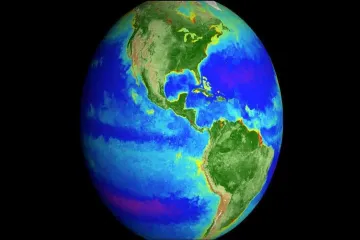
The reality of NASA's continued ocean involvement is visible from orbit. NASA does not need to physically send a submersible down to measure global sea level rise, track ocean currents, or monitor the health of coastal ecosystems; its satellites handle these tasks with unparalleled global coverage. [2][7] The agency operates sophisticated instruments designed to view the Earth as a system.
| Mission Type | Primary Measurement | Agency Focus |
|---|---|---|
| Satellite Altimetry | Sea surface height, tides, currents | Earth Science Division |
| Ocean Color Sensors | Phytoplankton blooms, water quality | Climate Monitoring |
| Gravity Missions (e.g., GRACE) | Changes in ocean mass and ice melt | Global Mass Balance |
These remote sensing capabilities provide data that is often more comprehensive and long-term than what could be gathered by sporadic, dedicated deep-sea expeditions undertaken by a space agency. [2] The type of exploration has shifted toward a macro, systemic view rather than a micro, point-specific view typically associated with direct deep-sea submersibles. [3]
It is important to recognize that the perception of a cessation often comes from the public only noticing the absence of a splashy, headline-grabbing, crewed deep-sea mission sponsored by NASA, overlooking the quieter, persistent flow of critical environmental data collected from space. [7]
# Institutional Separation
The difference between a space agency and a dedicated oceanographic agency clarifies why NASA isn't the primary operator of deep-diving vehicles. While NASA focuses on the "final frontier" above the atmosphere, organizations like NOAA have the specific mandate, the specialized fleet of submersibles (like the Alvin or remotely operated vehicles), and the scientific infrastructure built specifically for in-situ ocean study. [3]
This separation of duties is efficient. Asking NASA to pivot its entire infrastructure—which is geared toward vacuum, microgravity, radiation shielding, and long-duration space flight—to instead focus on high-pressure, underwater exploration would be a massive, inefficient reallocation of expertise and capital. [4] It’s not that the ocean research has stopped; it’s that the agency most equipped for space exploration has prioritized its space work, while the agencies best equipped for ocean exploration continue their work without fanfare from the space community. [9]
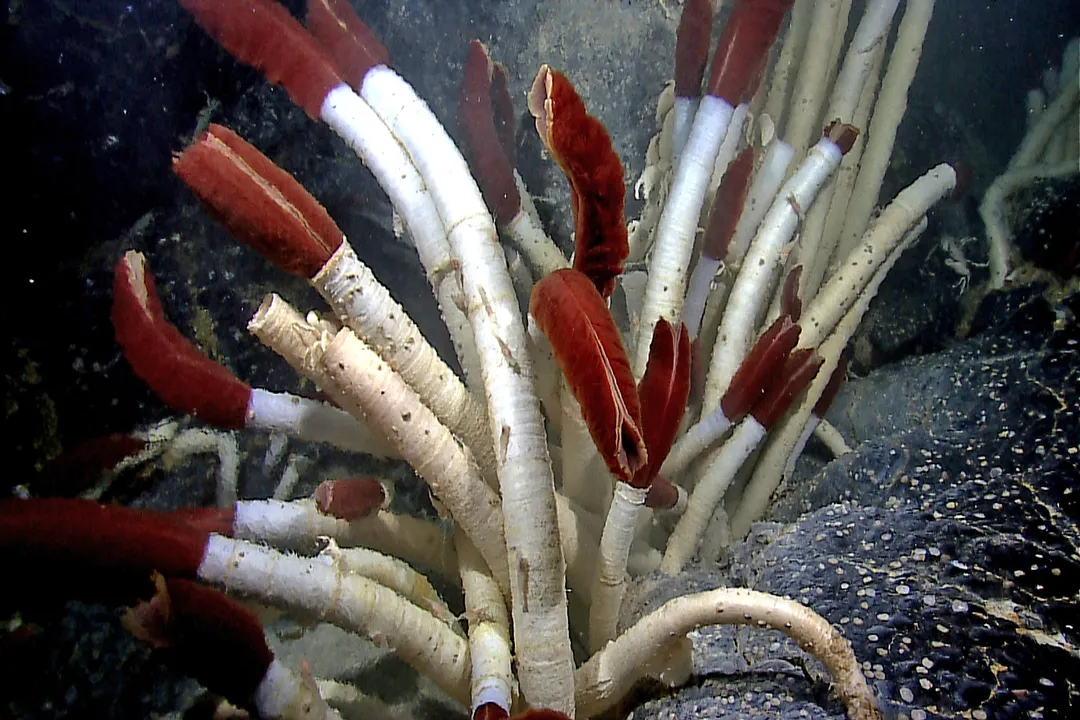
For instance, if a scientist needs high-resolution video of a newly discovered hydrothermal vent community, they are far more likely to consult with a university lab or NOAA than NASA. Conversely, if a researcher needs to analyze Martian atmospheric composition, NASA is the sole destination. [7] This division of labor, while sometimes confusing to the general public, reflects established scientific specialization.

# Budgetary Realities
An unstated, yet critical, factor influencing the visible presence of NASA in deep-sea exploration is budgetary reality and political will. [4] NASA's budget, while substantial, is divided among numerous high-cost, high-profile endeavors: human spaceflight (ISS, Artemis), robotic planetary missions (Mars, Jupiter moons), and astrophysics telescopes. [9] Any new, large-scale, crewed deep-sea mission would require redirecting significant funds from these established space priorities, which is politically difficult and scientifically counterintuitive to the agency’s core mission. [3]
Consider the investment. Launching a major Earth science satellite mission capable of long-term ocean monitoring costs hundreds of millions of dollars, but that single investment yields global, systemic data for years. [2] Developing a new, deep-diving, crewed submersible program that can operate safely in the hadal zone, however, requires similar or greater initial investment for data return that is geographically limited and highly dependent on specific operational windows. [4] When NASA has the capability to see the entire world’s oceans change via satellites, dedicating billions to niche, direct submersibles becomes a hard sell to Congress when the agency is simultaneously trying to return humans to the Moon. [4][9]
If we were to look at the relative spending, it becomes clear. If NASA dedicated even a fraction of its annual budget—say, a billion dollars—to direct ocean exploration, it would still likely be dwarfed by the total combined budgets of NOAA, the NSF, and associated university research programs focused solely on the marine environment. This highlights an important aspect: NASA’s decision is not to stop ocean awareness, but to fund ocean awareness through its unique competency—space-based observation—rather than through competitive allocation against its own core planetary missions. [7]
# The Experience Gap
The perception that NASA has abandoned the ocean might also be subtly informed by the experience of former personnel or the focus of active astronauts. When an astronaut like Chris Hadfield or Alexandra Ainsworth discusses their work, their frame of reference is inherently orbital or interplanetary. [6] They are experts in living and working outside Earth’s protective layers. Their professional lives are dedicated to solutions for extreme environments other than the deep ocean. [4] Therefore, when they speak, they naturally focus on space, which reinforces the public perception that this is where NASA’s true interest—and thus its effort—resides. [3]
This contrasts sharply with the experience of a marine biologist who spends their career descending into the ocean. While both are "explorers," their operational theaters dictate their organizational affiliation. NASA’s identity is so tied to the "final frontier" that any significant, visible action within our first frontier—the deep ocean—feels like an anomaly, leading to the assumption that any past involvement must have ceased. [1][9]
# Analyzing the Shift
The shift away from direct, NASA-led deep-sea missions isn't a sudden stop driven by fear or mystery, as social media suggests. [1][2] Instead, it represents a gradual, logical maturation of the space agency's mandate, coupled with the growth and specialization of other government and academic bodies. [7]
We can synthesize this into a simple model of agency development:
- Early Stages (The Space Race): NASA focused on achieving initial capabilities—getting off the ground, reaching orbit, and landing on the Moon. Earth observation, including early satellite monitoring of oceans, was secondary or tied to technology demonstration.
- Maturity Phase (Focus Refinement): As space capabilities became routine, NASA refined its focus to fundamental science. This led to dedicated Earth Science divisions, where oceanography is viewed through a global, remote sensing perspective that complements, rather than replaces, direct in-situ study. [2]
- Current State (Prioritization): With clear, ambitious goals like sustained lunar presence and crewed Mars missions, resources are heavily skewed toward those objectives, leaving specialized, high-pressure deep-sea work to agencies whose primary function is marine biology and geology. [4][9]
It is a case of specialization rather than abandonment. If NASA were truly abandoning the ocean, we would expect to see a corresponding halt in satellite monitoring for sea ice, ocean temperature anomalies, and coastal erosion—data streams that are actively being collected and processed by NASA's Earth Science missions. [7] The continuity of this remote sensing proves the exploration—albeit a different kind—continues. [2]
# Actionable Context
For a reader interested in the status of ocean research, understanding the agency structure is key. If you are looking for data on global ocean circulation patterns derived from satellite altimetry over the past thirty years, NASA is a primary, authoritative source. [2] If, however, you are looking for video footage of an anglerfish at 8,000 meters, NOAA or a research institution is the place to look. This delineation prevents the kind of confusion that spawns misinformation online, where one agency’s specialized, non-public work is mistaken for total inaction. [3][7] The complexity of modern science means that total awareness of all efforts across all agencies is difficult, making the clear, simple, often false narrative more appealing than the nuanced reality. [10]
Ultimately, the story of NASA and the ocean is less about what they found and more about what they chose to fund as their primary mission evolved from proving we can reach space to staying in space and preparing for the next planet. The ocean remains critically important to the planet NASA is trying to protect and observe, but its exploration is now executed via a telescope aimed downward rather than a submersible aimed downward. [4]
Related Questions
#Citations
There's a Reason NASA Stopped Exploring the Deep Sea : r/nosleep
Fact Check: NASA did not abruptly stop deep-sea research - Reuters
Why Did NASA Stop Exploring the Ocean? | by Ricky - Medium
Why did NASA stop exploring the ocean and now is trying to get us ...
Did NASA abandon its ocean exploration program? - YouTube
Debunking a VERY COMMON claim… NASA never stopped ...
NASA's ocean exploration and research is ongoing; no mysterious ...
Guys,do any of you know why NASA stopped exploring the ocean
Why did NASA stop exploring the Pacific Ocean? - Quora
Why did people stop exploring the ocean? I heard they only ...