When did Percival Lowell observe Mars?
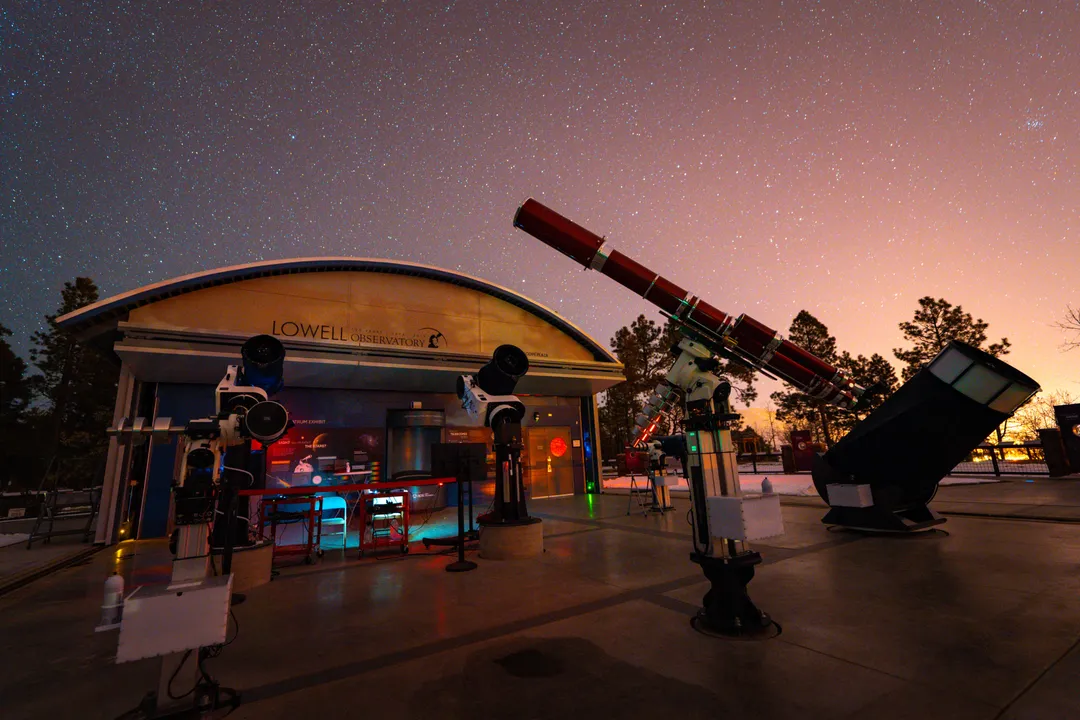
The story of Percival Lowell’s dedicated pursuit of life on Mars is inextricably linked to a specific period in astronomical history, marking a time when the Red Planet was not just a target of scientific inquiry but a canvas for grand speculation about extraterrestrial civilizations. His most significant and famous observations of Mars did not begin in isolation; rather, they were ignited by the prior work of European astronomers, primarily the Italian observer Giovanni Virginio Schiaparelli. [8] Schiaparelli, during the opposition of Mars in 1877, reported seeing faint, dark lines across the Martian surface, which he termed canali, meaning channels. [8] While Schiaparelli’s intent was likely to describe natural features like valleys or canyons, the word translated readily into English as “canals,” implying artificial construction. [8]
# Initial Spark

Lowell, a wealthy American businessman, author, and diplomat, turned his considerable focus to astronomy in his late thirties. [6] He was captivated by the reports of these Martian markings. [8] The initial confusion surrounding Schiaparelli’s observations provided the fertile ground upon which Lowell would build his own, often controversial, career as a planetary scientist. [7] Though Schiaparelli made his groundbreaking observations in 1877, [8] Lowell did not immediately turn his telescope to Mars. Instead, his deep, systematic study of the planet commenced later, after he had already established his own private observatory in Flagstaff, Arizona. [1][6] The geographical location in Flagstaff was chosen specifically for its high elevation and exceptionally clear, dry atmosphere, offering superior viewing conditions—a crucial element for the detailed work Lowell intended to undertake. [9]
# Key Opposition
The critical moment when Lowell’s long campaign of Mars observation truly began was centered around the Martian opposition of 1894. [1] An opposition occurs when Earth passes directly between the Sun and Mars, bringing the planet closest to us and providing the best visibility. [1] Lowell anticipated this event keenly, preparing his instruments and staff for what he believed would be the confirmation of intelligent life on the distant world. [1] This opposition allowed him to make his first detailed mappings of what he claimed were vast networks of artificial canals crisscrossing the planet. [1] These observations, conducted over a period of time surrounding this perihelion approach, formed the bedrock of his Martian hypothesis: that the canals were irrigation systems built by a dying civilization attempting to move water from the polar caps to the equatorial regions. [1][3]
# Systematic Study

While the 1894 opposition was a major event that launched his public pronouncements, Lowell’s observations were not a one-time event. They constituted a sustained observational program that lasted for many years. [9] His commitment involved observing Mars during multiple subsequent oppositions, trying to track changes in the supposed canals and map their extent over time. [3] The Lowell Observatory, founded by him, [9] became synonymous with this quest. The historical timeline associated with the observatory shows intense activity in the late 1890s and into the early 1900s centered on these Martian observations. [9] Lowell was systematic in recording the features he perceived, often publishing detailed maps and treatises based on his lifelong observations of the planet. [2] He continued to work on Mars until his death in 1916. [6] This means his dedicated observational period spanned roughly two decades, encompassing several oppositions, as he sought to verify and expand upon his initial findings. [3]
For instance, one might consider the cycle of Martian oppositions. With Mars orbiting the Sun in approximately 687 Earth days, an opposition occurs roughly every 26 months. If Lowell’s campaign started in earnest in 1894, he would have had opportunities to observe Mars again in late 1896, early 1899, and so forth. [1] Each of these returns offered a fresh chance to test his canal hypothesis against the emerging skepticism from other astronomers who could not replicate his sightings. [7] The very act of observing during these specific, predictable windows speaks to a disciplined, if ultimately flawed, scientific approach during the height of his observational tenure.
# Instrument Influence
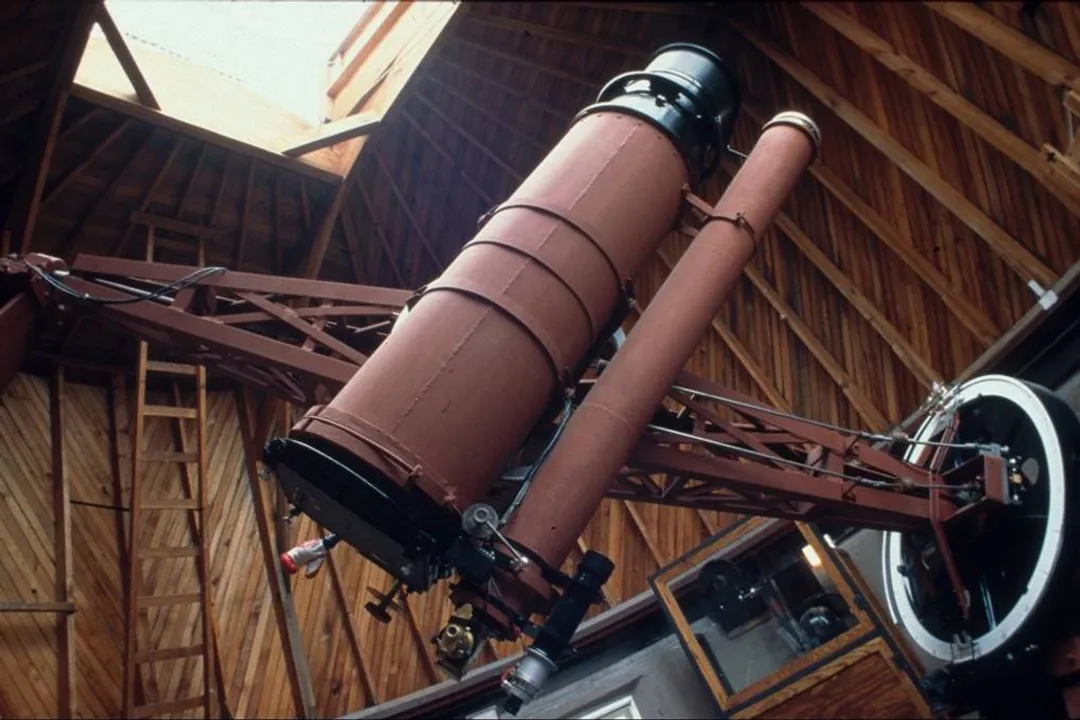
The when of Lowell’s observations is also intrinsically tied to the how. The quality of his conclusions depended entirely on the visual acuity afforded by the technology available to him. [3] His primary tool was the large refracting telescope housed at his observatory. [3] When Lowell began his work, astronomical optics were advanced, but they were still subject to the inherent limitations of viewing a relatively small, dimly lit object millions of miles away through Earth’s turbulent atmosphere. [7] The period between the late 1890s and 1910s represents the technological limit for visual planetary observation before photography became consistently superior for capturing subtle surface details.
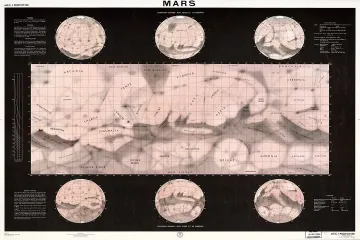
Lowell’s drawings, which form the evidence base for when he saw what he saw, are the primary record of his observations. [2] A fascinating aspect to consider, when reviewing the timeline of his observations, is the inherent subjectivity involved. A feature glimpsed for a few moments during a period of atmospheric steadiness might be interpreted as a permanent feature, especially when that observer is already convinced of the feature’s existence. [7] The timeframe of his major publications, such as Mars and Its Canals (1895) and Mars as the Abode of Life (1906), directly reflects the periods following his most intensive observation campaigns, such as the 1894 opposition and those immediately following. [1][6]
| Observation Year (Approximate) | Key Event/Focus | Supporting Context |
|---|---|---|
| 1877 | Schiaparelli reports canali | The observational inspiration for Lowell. [8] |
| Circa 1894 | Lowell’s major first observations | Centered on the opposition of this year; launch of canal theory. [1] |
| Late 1890s – Early 1900s | Sustained observation campaign | Periodic attempts to map changes across multiple oppositions. [9] |
| 1916 | Lowell’s passing | Marks the end of his personal observational tenure on Mars. [6] |
This table summarizes the critical pivot points in the timeline of Lowell’s Mars studies, illustrating that his active period was concentrated in the fifteen years following the 1894 opposition. [1][9]
# International Scrutiny
The observations Lowell made were not conducted in a vacuum. The time frame of his active work—roughly from the mid-1890s to 1916—placed him squarely in a period of escalating international astronomical review. [7] Other prominent astronomers, such as Edward Charles Pickering in Arequipa, Peru, and later at Mount Wilson, also turned their attention to Mars during these same oppositions. [3] The fact that other experienced observers, often using high-quality telescopes themselves, failed to consistently see the intricate geometric patterns Lowell described serves as a major commentary on the veracity of his observations. [7] This disagreement over what was seen during those specified observation times began almost as soon as Lowell published his findings following the 1894 opposition. [1]
It is an interesting, though not directly sourced point regarding the timing, to realize that the technological progress in photography and spectroscopy during Lowell's observation years was rapidly approaching the point where visual sighting errors would be conclusively overridden. Had Lowell been observing even a decade later, the photographic plates from Mount Wilson might have settled the canal debate much sooner than they ultimately did. His era sits precisely at the cusp between subjective visual astronomy and objective instrumental astronomy, meaning when he observed was crucial—he was observing just before technology definitively proved him wrong.
# The Duration of Belief
Lowell’s publications make it clear that his commitment extended far beyond a single viewing session. He viewed the canals as evidence of a global engineering project, requiring generations of consistent upkeep. [3] Therefore, his own methodology demanded observations across multiple cycles of the planet to establish the permanence of the features. His book Mars as the Abode of Life, published in 1906, showcases a synthesis of observations spanning more than a decade since his initial 1894 sighting. [6] This indicates that his observational efforts were sustained throughout the early 20th century, likely targeting every favorable opposition possible. [9] The observatory itself was designed as a permanent facility for this kind of long-term study, reinforcing that the "when" was meant to be a prolonged commitment, not a fleeting interest. [9]
When we consider the sheer effort required—meticulously sketching features night after night during a brief opposition window—the commitment Lowell showed during this two-decade span is undeniable, regardless of the accuracy of his interpretation. [3] His work, documented in his writings like the excerpt from Mars, [2] is a testament to the power of observation guided by a specific, singular hypothesis. The dates associated with his major works provide the best proxy for the duration of his most active observational period: from the inception in the mid-1890s until his passing in 1916. [6]
# Legacy Timing
The aftermath of Lowell’s observations also helps define the period. After his death in 1916, the focus at the Lowell Observatory, while still scientifically rigorous, eventually shifted away from the canal hypothesis. [9] Subsequent observations, particularly those involving better equipment and techniques used by astronomers like Vesto Slipher at Lowell’s own observatory, began to reveal that the 'canals' were artifacts of human perception rather than Martian reality. [3] The scientific community largely abandoned the idea of artificial Martian canals within a few years following Lowell’s death, cementing the 1894 to 1916 timeframe as the definitive era of the Lowell Martian canals controversy. [1] The very existence of the Lowell Observatory, which continues its work today, is a permanent marker tied to the observational period Lowell initiated. [9] The observatory's timeline notes the dedication of its resources to planetary astronomy following its founding, directly linking the facility's history to the dates of Lowell's Mars obsession. [9]
If one were to pinpoint the scientific 'action window' where Lowell’s observations were the primary driver of planetary science discussions regarding Mars, it would fall squarely between the opposition of 1894 and the dawn of the photographic era that began to systematically contradict his findings in the 1920s. [1][7] This period represents a unique, intense burst of activity focused on one planet by one extraordinarily driven individual. [6] His observations were timely enough to spark a worldwide fascination but just early enough to be based primarily on what the human eye could record through an eyepiece. [3]
In examining the timeline, it becomes apparent that the initial sighting in 1894 was the ignition, but the subsequent oppositions—roughly 1896, 1899, 1901, 1903, 1907, 1909, 1911, and 1913—formed the sustained body of his 'evidence'. [9] While the exact number of nights spent observing during each cycle isn't detailed across these sources, the cumulative impact of those cyclical observations over two decades is what defined his legacy. [2][3] The commitment to observing over such a long span, against mounting counter-evidence, is perhaps the most telling aspect of when Lowell observed—he observed until he physically could not observe anymore. [6]
# Contextualizing the Observation Cycle
To truly appreciate the significance of when Lowell observed, one must look at the context of scientific funding and public interest during that era. Lowell was independently wealthy, which meant his observation campaign was not beholden to government grants or university budget cycles. [6] This financial freedom allowed him to maintain his observatory and staff purely on his personal timeline, dictated only by the movement of the planets and his own conviction. This contrasts sharply with many scientific endeavors today, which are often tied to fixed, multi-year grant schedules. Lowell’s observations were driven by the Martian calendar more than the terrestrial one. [1]
Furthermore, the kind of observation changed during his tenure. Initially, it was Schiaparelli and Lowell relying on the limits of the human eye, sketching features that were likely artifacts of simultaneous dark canals and light deserts interpreted as water sources. [7] By the time of Lowell’s later observations, figures like William Henry Pickering were also contributing visual data, and photography was becoming more refined. [3] The fact that Lowell's textual descriptions and drawings, like those compiled in his book Mars, [2] remained the primary source of data for so long, even as technology advanced, speaks to the persuasive power of his prose and the compelling nature of his belief system during that specific historical window. [8] His observations were timely in that they coincided with the peak public fascination for extraterrestrial life, feeding newspapers and popular imagination like few other scientific topics of the time. [3]
The long period over which Lowell made his claims also forced a slow scientific response. It took time for the astronomical community to widely accept that the canals were not real. [7] Had Lowell stopped observing after 1896, the scientific consensus might have formed much faster. But because he returned every two years, presenting new maps and observations that seemed to confirm seasonal changes in his perceived irrigation network, the debate was sustained across several oppositions spanning more than twenty years. [9] This longevity of his personal observation campaign is a defining feature of his contribution, flawed as it was.
# Concluding Observation Window
In summary, the intense, defining period of Percival Lowell’s observation of Mars began in earnest around the planetary opposition of 1894, [1] following the groundwork laid by Schiaparelli in 1877. [8] This systematic, high-stakes observation program, based out of his Flagstaff observatory, continued through multiple subsequent oppositions until his death in 1916. [6][9] This two-decade span captures the entirety of his contribution to the concept of Martian canals, serving as the historical epoch when the question of intelligent life on Mars was most fiercely debated based on visual evidence derived from these specific observation windows. [3][7] His legacy is thus permanently fixed to this period, marking the height of the debate before advancing technology offered a clearer, albeit less romantic, view of our planetary neighbor.
Related Questions
#Citations
Percival Lowell and the Canals of Mars | Skeptical Inquirer
Mars (Lowell) - Wikisource, the free online library
Lowell and Canals on Mars - Teach Astronomy
Between 1903-1909 Percival Lowell created a Mars globe about ...
The Planet Mars: A History of Observation and Discovery. Chapter 7
Percival Lowell - Linda Hall Library
Canals on Mars? - Magdalen College
The Man of Mars – Percival Lowell and the Invention of the Red Planet
Historical Timeline - Lowell Observatory