What did Lowell find canals on Mars and attributed them to?
The appearance of linear markings on the surface of Mars has captivated astronomical observers for centuries, but it was the intense focus placed upon them by Percival Lowell that cemented the concept of "Martian canals" into popular culture and scientific debate. [1][3] Lowell, an American businessman turned astronomer, dedicated much of his later life to charting these supposed features, drawing conclusions that were as dramatic as they were controversial. [4][5] He didn't just see lines; he interpreted them as definitive evidence of advanced, extraterrestrial engineering struggling against planetary decline. [1]
# Initial Observation
The story doesn't begin entirely with Lowell, but rather with the Italian astronomer Giovanni Virginio Schiaparelli. [2] In 1877, using his observatory in Milan, Schiaparelli mapped the Martian surface during opposition and noted various dark lines he called canali. [2][3] Crucially, the Italian word canali translates literally to "channels" or "grooves," which could describe either natural formations or artificial structures. [2][3] This ambiguity was the seed from which the sensational story would grow. [5]
When American astronomers, including Lowell, began making their own observations a few years later, particularly after setting up his state-of-the-art Lowell Observatory in Flagstaff, Arizona, they read Schiaparelli’s findings through an English translation that rendered canali as "canals". [2][3] This single linguistic shift—from a neutral term for grooves to an explicitly artificial term for waterworks—set the stage for Lowell’s life work. [3] It is a potent example of how the communication surrounding scientific discovery can be altered by translation, much like how a vague geological term today might be sensationalized by the press into an announcement of "evidence for flowing rivers" before more precise data is available. [5]
# Charting Features
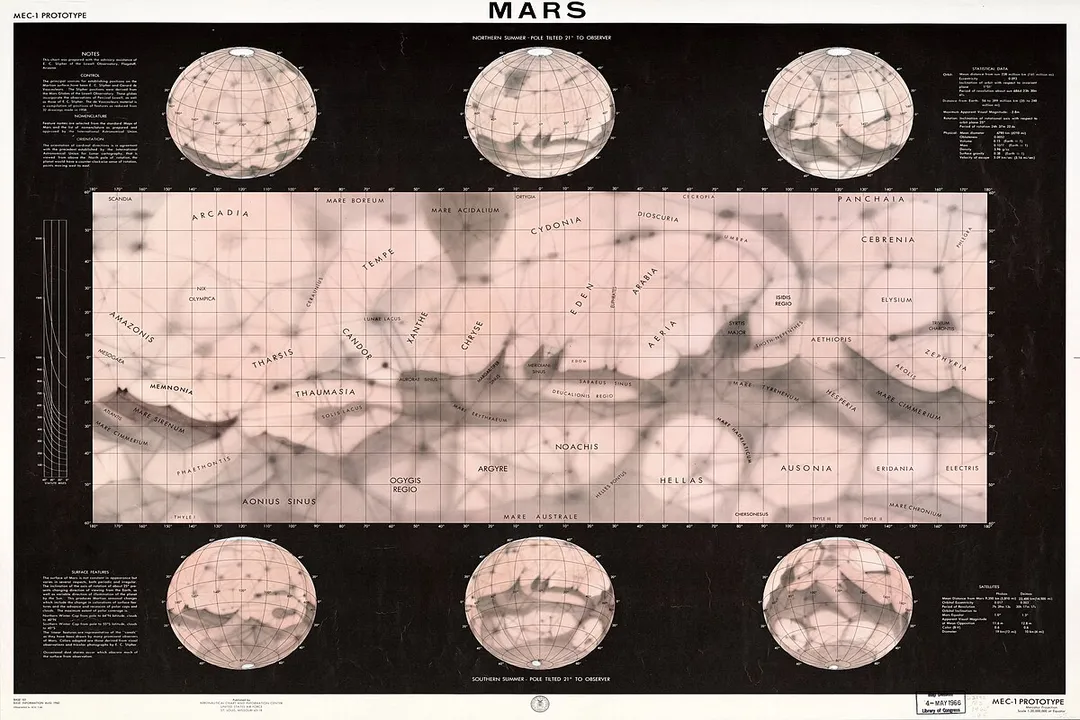
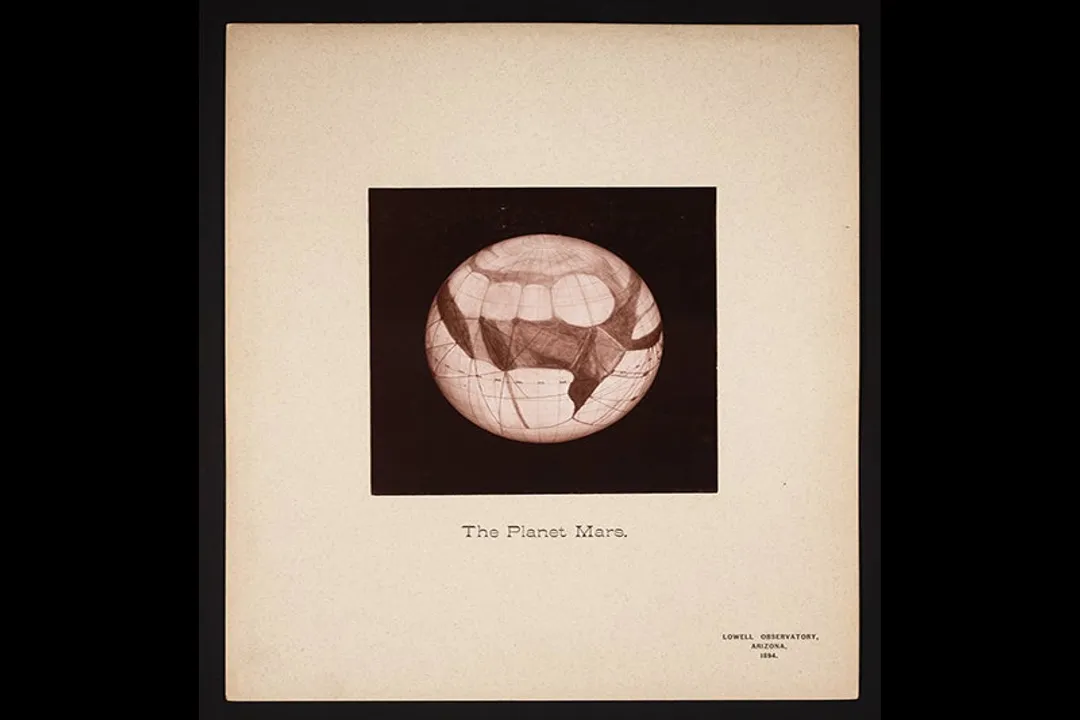
Beginning seriously in 1894, Lowell commenced a systematic survey of the Martian surface, believing he was documenting an engineering marvel. [1][3] He and his assistants spent years mapping the planet, producing detailed charts that depicted a vast, interconnected network of these linear features crisscrossing the reddish globe. [1] These canals often appeared to connect larger, darker areas which he termed "seas". [1]
Lowell’s output was prolific. He published not only detailed maps but also several influential books, including Mars and Its Canals and Mars as the Abode of Life, detailing his observations and his conclusions about the inhabitants. [1][3] He claimed to have observed thousands of miles of these markings, sometimes noting seasonal changes suggesting they were actively maintained. [1] For Lowell, the sheer regularity and geometrical complexity of the network precluded a natural origin; they had to be the work of intelligent beings. [3]
# Intelligent Life
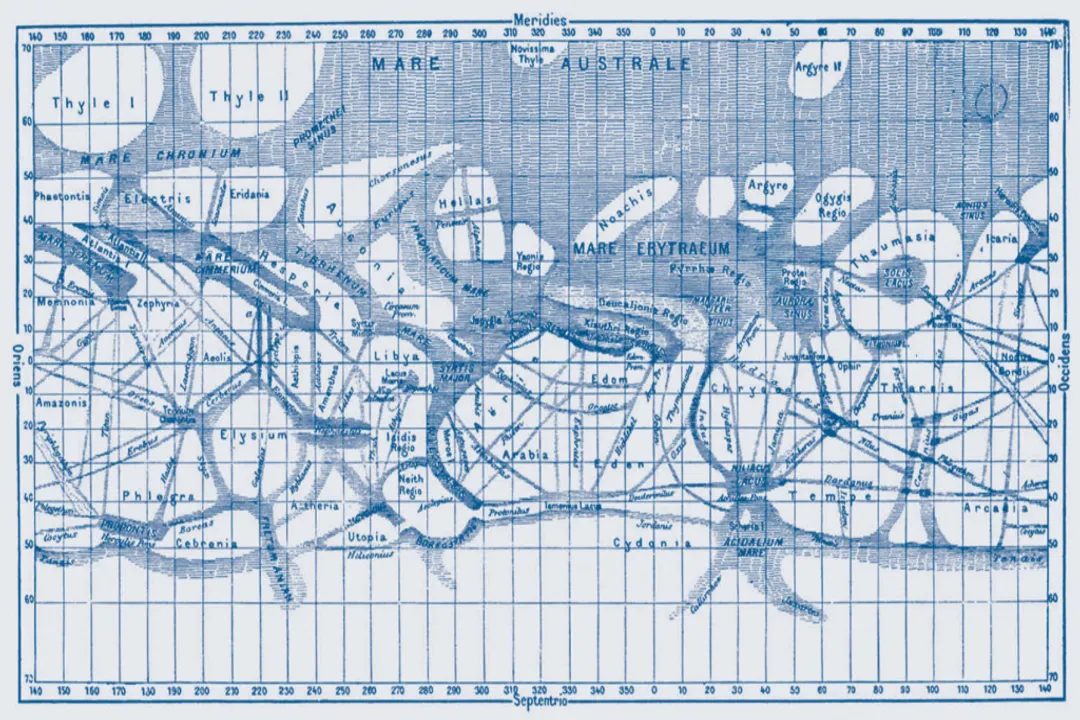
The specific attribution Lowell made was that the canals were constructed by a dying Martian civilization attempting to stave off the desiccation of their world. [1][2][5] As Mars slowly lost its atmosphere and water, the intelligent inhabitants constructed immense irrigation systems—the canals—to draw water from the polar ice caps and transport it toward the equator where life could persist. [1][5]
This interpretation resonated deeply with the public imagination at the turn of the 20th century. It spoke to contemporary anxieties regarding industrialization, resource depletion, and the long-term viability of civilization on Earth. [1] Lowell provided a narrative of a technologically advanced species engaged in a desperate, planet-spanning fight for survival against inevitable environmental collapse. This notion of a magnificent, yet failing, society offered a grand, tragic mirror to contemporary human concerns. [4] Lowell was convinced he was documenting the remnants of this monumental effort. [1]
# Optical Illusion
Despite the captivating nature of Lowell’s claims, his observations were never universally accepted, even during his lifetime. [2] The debate centered on the visibility and nature of the features themselves. While Schiaparelli saw canali as faint, relatively short channels, Lowell perceived them as long, continuous structures. [3]
As astronomical technology advanced, particularly with the introduction of better telescopes and the advent of photography, subsequent observers found it increasingly difficult, if not impossible, to verify Lowell's extensive network. [1][5] The consensus eventually solidified that the "canals" were products of human psychology and optical limits. [2]
What Lowell and others likely saw were combinations of:
- Contrast Effects: The human eye tends to connect faint, disparate dark spots under poor viewing conditions, creating the illusion of continuous lines. [1][5]
- Observation Artifacts: Errors inherent in drawing what one expects to see (confirmation bias) played a significant role. [1]
- Natural Features: Some markings were likely large, naturally occurring geological features like canyons or dark plains, which the mind simplified into straight lines. [2]
By the time robotic probes began returning high-resolution images of Mars decades later, there was no evidence of any artificial waterways. [2] The canals, as Lowell mapped them, simply did not exist. [5]
# Cultural Impact
The story of the Martian canals transcended astronomy and became a major cultural phenomenon. [7][8] Lowell’s work, amplified by sensational reporting in newspapers like The New York Times, captured the public’s imagination about potential neighbors in the solar system. [7] This popular excitement paved the way for widespread acceptance of intelligent life elsewhere, influencing early science fiction and public interest in space long before actual space programs began. [8] The sheer scope of the supposed Martian project—an attempt to manage an entire planet’s hydrology—was irresistible to the public. [1]
Even in the early 1960s, before extensive space probe missions, the debate lingered in some circles, with observers still trying to reconcile photographic evidence with the visual records of earlier, dedicated observers. [5] The legacy of Lowell is complex; while his specific attribution to an alien civilization was scientifically incorrect, his dedication brought significant public attention to Mars as a world worthy of serious study. [4]
| Observer | Year (Approx.) | Term Used | Implication |
|---|---|---|---|
| Schiaparelli | 1877 | Canali (Channels/Grooves) | Ambiguous; possibly natural |
| Lowell | Post-1894 | Canals | Explicitly artificial waterways |
| Modern Probes | Post-1960s | None observed | Natural geology/Optical illusions |
Related Questions
#Citations
Percival Lowell and the Canals of Mars | Skeptical Inquirer
Tracing the Canals of Mars: An Astronomer's Obsession - Space
Martian canals - Wikipedia
Percival Lowell - Linda Hall Library
The canals of Mars, 1962 - Airminded
What is the science behind the canals of Mars?
New York Times Reports Martians Building Canals on Mars
Where Did the Concept of “Martians” Come From? - John M Jennings
Percival Lowell: channels on Mars - Elhuyar Zientzia