Who thought Mars had canals?

The notion that Mars might host vast, constructed networks of waterways has long captured the human imagination, becoming one of the most famous episodes in the history of planetary science. It wasn't a single astronomer but a chain of misinterpretations, fueled by technology just shy of sufficient power, that led to the widespread belief that we were looking at a desiccated world being artificially watered by its dying inhabitants. This saga illuminates how much our understanding of the cosmos depends not just on what we see, but on what we are prepared to believe we are seeing.[1][2]
# Martian Markings
The story truly begins in 1877, when Italian astronomer Giovanni Schiaparelli observed the surface of Mars during its opposition. Using his telescope, he meticulously charted numerous linear features across the reddish globe. [2][3] He named these features using the Italian word canali, which translates most accurately to "channels" or "grooves". [2][3] Schiaparelli’s intention was to describe natural depressions or geological structures; there was no initial implication of artificial construction in his original terminology. [3]
When Schiaparelli’s findings were published and translated into English, however, the word canali was rendered as "canals," a term carrying the strong connotation of deliberate, engineered construction. [2][3] This subtle semantic shift proved monumental. It inserted the possibility of intelligent, extraterrestrial engineering directly into the public and scientific discourse concerning Mars, setting the stage for fervent debate. [7] While Schiaparelli saw features that were likely indistinct groupings of dark surface features, the translation provided the fertile ground upon which later, more passionate observers would sow their theories. [3]
# Lowell's Belief
The figure most singularly associated with the Martian canal obsession is Percival Lowell. A wealthy American businessman, Lowell developed a profound, near-total dedication to the study of Mars. [5][9] After reading about Schiaparelli’s observations, Lowell was convinced these features were evidence of an ancient, intelligent civilization attempting to survive a slow planetary cooling. [1][9]
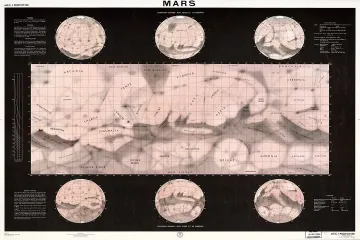
Lowell established the Lowell Observatory in Flagstaff, Arizona, in 1894. [1][5] He chose the location specifically for its high altitude and clear, dry air, believing these conditions offered superior "seeing" for planetary observation. [1][5] He spent the next several decades mapping the Martian surface, often seeing far more intricate and extensive networks of lines than his European counterparts. [4]
For Lowell, the canals were not mere geological accidents; they were irrigation systems. [1] He theorized that as Mars cooled, water became trapped at the poles. Intelligent Martians built these massive channels—some extending thousands of miles—to move the scant remaining water toward the equator where they lived. [1] He even claimed to observe changes in the canals, suggesting they were being repaired or extended seasonally, which reinforced his view of an active, struggling civilization. [1] He published several books detailing his findings, including Mars (1895) and Mars and Its Canals (1906), transforming his personal conviction into a widespread scientific hypothesis. [9]
It is worth noting that Lowell’s rigorous dedication to charting these features, however illusory they proved to be, represented a significant step forward in methodology for planetary astronomy. While his primary subject matter was based on an artifact of observation, his commitment to systematic, long-term surface mapping, using dedicated facilities, set a standard for dedicated observational astronomy that transcended the canal controversy itself. [4][5] This historical moment presents a fascinating paradox: The pursuit of an idea, even a mistaken one, can inadvertently refine the tools and dedication required for future, correct discoveries.
# Cultural Hysteria
The idea of canals on Mars resonated deeply with the turn-of-the-century public fascination regarding life on other worlds. [2][7] Science fiction writers eagerly adopted the premise, leading to stories filled with advanced Martian engineers and subterranean cities. [7] The general public, accustomed to sensational newspaper reports, readily absorbed the idea of a dying but technologically sophisticated race residing just across the void. [9]
Lowell’s detailed maps, often reproduced in popular science journals and newspapers, gave the theory an air of undeniable scientific authority, despite the fact that not all astronomers could replicate his results. [4] When observing conditions were poor, many astronomers saw nothing; when conditions were good, they saw vague, diffuse markings. [6] Yet, Lowell’s observations, made when the planet was far enough from the sun to allow for clearer, though still limited, visual resolution, often revealed crisp, intersecting lines. [1] This discrepancy fueled the public narrative: the best observers saw canals; the naysayers simply needed better equipment or clearer skies.
If we fast-forward to the current era of exoplanet discovery, we see a similar, though more tempered, dynamic at play. Today, our instruments can detect the existence of atmospheres and potential biomarkers on distant worlds, but the interpretation remains heavily reliant on models and the inherent limitations of the data we receive. [2] Back then, the limitation was visual acuity; today, it is the signal-to-noise ratio across light-years. In both cases, the human desire to find neighbors pushes us to interpret faint data points as structured patterns, whether they are irrigation ditches or atmospheric anomalies. [2]
# Illusion Fades
The persistence of the canals depended entirely on the limitations of optical instruments relative to the angular size of Mars. As technology advanced, the supposed structures began to disappear.
Astronomers using telescopes with higher magnification and better optics struggled to confirm Lowell's sharp, linear features. [2] By the 1920s and 1930s, improved observational techniques, coupled with a better understanding of Earth's atmospheric effects on telescopic images, caused the network to thin out considerably. [2] Many features Lowell mapped were likely optical illusions, created by the eye trying to make sense of indistinct, shadowy regions on the Martian surface—a phenomenon sometimes called pareidolia in visual perception. [4] The human brain is remarkably adept at imposing order, like straight lines, onto random or ambiguous visual stimuli. [4]
The final nail in the coffin for the canal theory came decades later with the advent of robotic planetary exploration. When the first high-resolution images from orbiters and landers—like the Mariner missions in the 1960s—reached Earth, the planet was revealed to be a heavily cratered, dry world crisscrossed by natural features like valles (valleys) and chasmata (chasms), but entirely devoid of the neat, intersecting network Lowell had meticulously drawn. [1][2] The great Martian civilization, which had captivated the public for half a century, was proven to be a phantom of flawed vision and powerful suggestion.
# Scientific Memory
The episode of the Martian canals remains a potent case study in scientific history, often cited as a cautionary tale about confirmation bias. [4] Percival Lowell, despite his dedication, allowed his preconceived notions of what should be on Mars—an advanced, dying civilization—to dictate what he saw. [1] He built his entire observatory career around confirming this single hypothesis. The contrast between Schiaparelli’s neutral canali and Lowell’s definitive canals shows how terminology and cultural context can profoundly influence scientific observation. [3]
One interesting comparative element lies in the data itself. Lowell often published detailed seasonal charts of his findings, tracking the perceived appearance and disappearance of canal segments across Martian years. For instance, a line observed in one opposition might be absent in the next, only to reappear later, perhaps slightly shifted. [1] While the underlying cause was atmospheric distortion or simple visual exhaustion, the sheer volume of detailed, if ultimately spurious, data forced the astronomical community to treat the problem seriously for decades. It required sustained, high-quality evidence from independent sources to finally overcome the momentum built by one very dedicated, very well-funded individual.
Ultimately, the question of who thought Mars had canals leads directly to one name: Percival Lowell. [1][5] He inherited a mystery from Schiaparelli's translation and transformed it into a deeply personal, public obsession that defined an era of astronomical speculation. [9] The canals never existed as he mapped them, but the very act of looking for them, and the subsequent, decades-long scientific effort to disprove them, helped shape the rigorous standards necessary for modern planetary science.
Related Questions
#Citations
Tracing the Canals of Mars: An Astronomer's Obsession - Space
Seeing and Interpreting Martian Oceans and Canals
Mars and Schiaparelli's "canals" - Educational Evidence
A Martian Sensation: Maps, delusion, and the Mars Canals
Percival Lowell - Wikipedia
Percival Lowell studied planets through the 24 inch Clark telescope ...
Intelligent Life on Mars and Canals that Put Us Earthlings to Shame
People Used to Believe Aliens Built Canals on Mars. Here's Why ...
The Martian Craze: How Percival Lowell Invented Canals on Mars